The Seasonal Mushroom Calendar: Foraging, Harvesting, and Culinary Applications
— HOOK —
Taking the same mushroom at the same dose throughout the year is one option. But the mushrooms themselves change with the season. And so do the body’s needs.
This calendar proposes a focus species and a protocol for each season. Use it as a reference point — then refine it through your own experience.
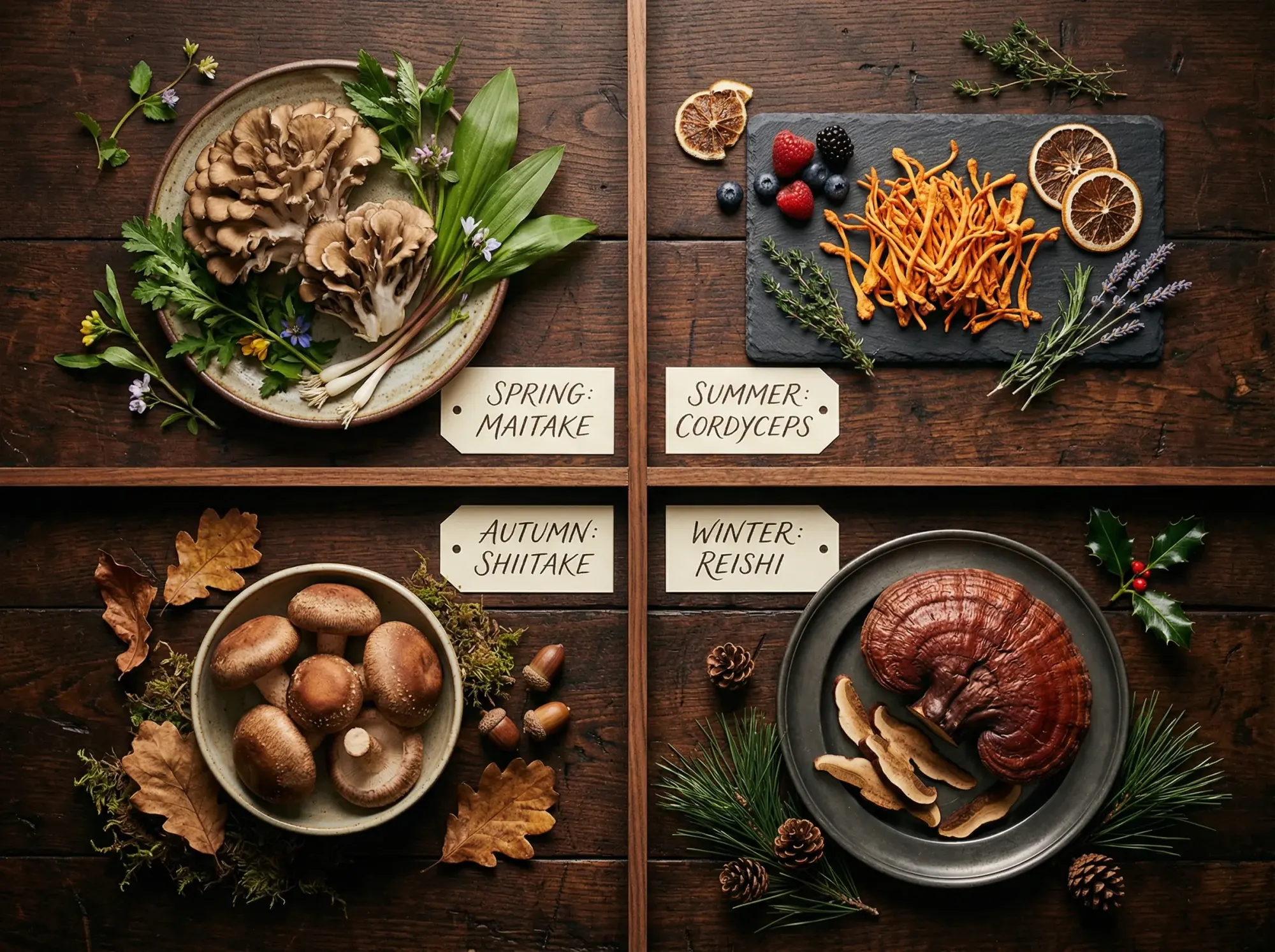
SPRING — March, April, May
Energy and Awakening
Winter has ended. The days are lengthening. Yet the body has not fully caught up — the familiar spring fatigue settles in.
During this transitional period, the body adapts to a new rhythm. Physical activity rises, and energy demand increases.
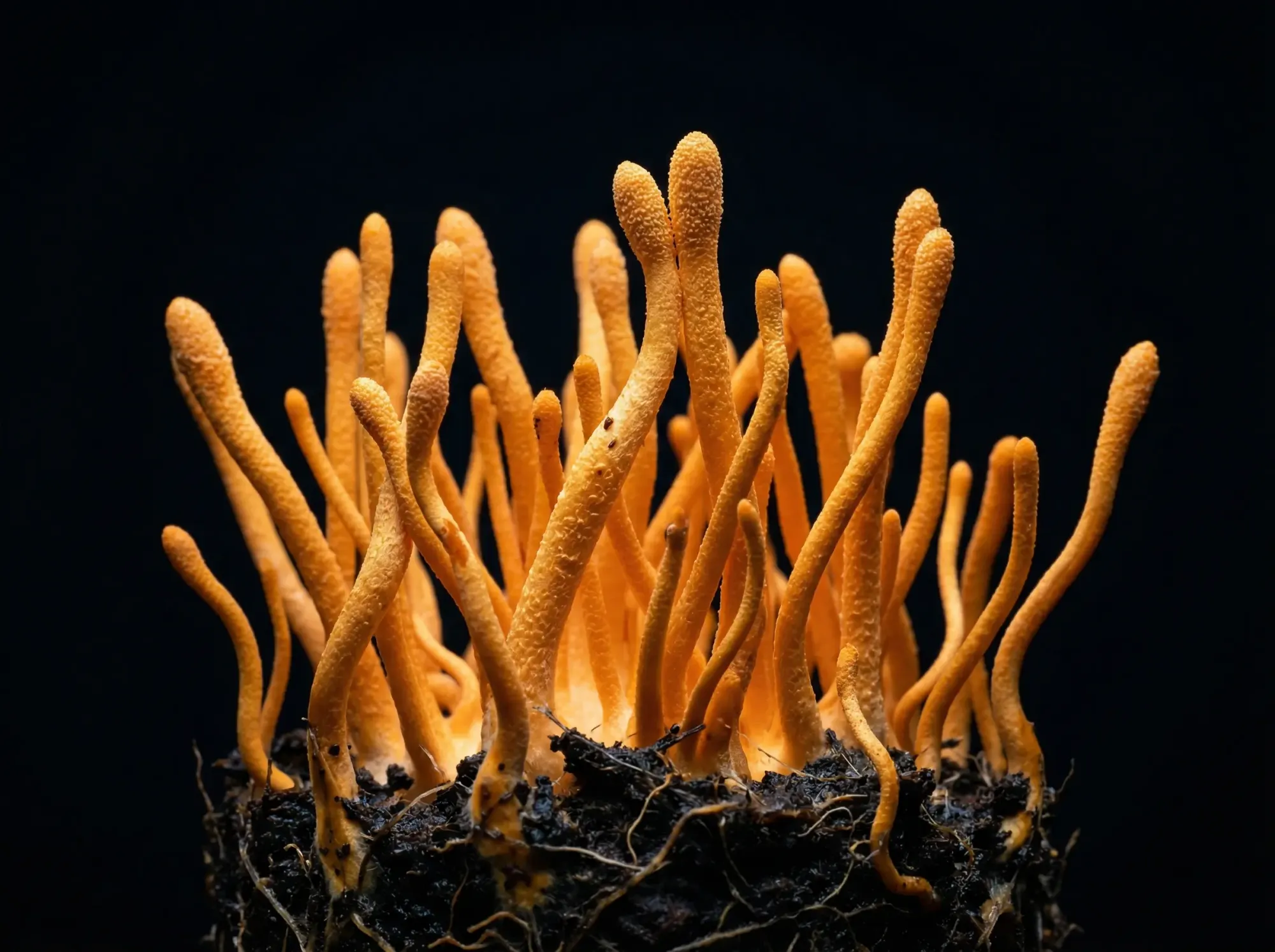
Focus species: Cordyceps
Cordycepin supports mitochondrial energy production. Unlike caffeine, there is no crash — only sustained, steady energy. For those returning to a training season, taking it 45–60 minutes before exercise is ideal timing.
Protocol: Morning or pre-workout · 1–1.5 g · 80–85°C · 5–7 minutes
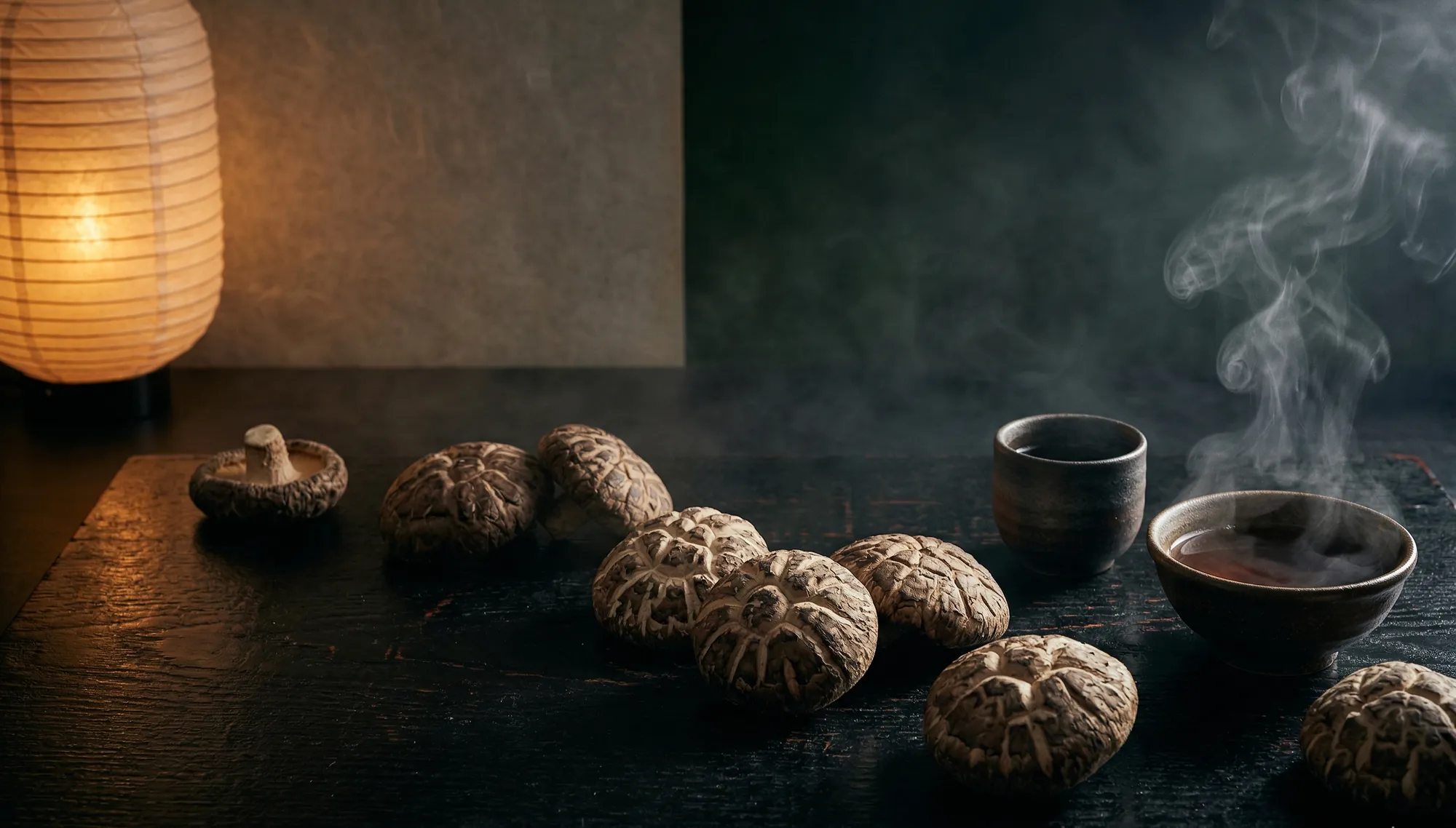
Kitchen: Shiitake Donko dashi as the base for spring soups. Miso + dashi + seasonal vegetables — light yet profoundly deep.
SUMMER — June, July, August
Balance and Recovery
Long days, travel, shifting sleep patterns. The body stays active continuously — but such intensity exacts a toll. Sleep quality declines, and the nervous system fatigues.
In this period, the goal is not to overstimulate immunity — but to balance it.
Focus species: Reishi Black Horn
Its triterpene profile is adaptogenic — it modulates the stress response and supports deep sleep. When combined with the travel protocol, it alleviates jet lag.
Protocol: Evening, 1–2 hours before bed · 1 g · 85–90°C · 10–15 minutes · with coconut milk
Kitchen: King Oyster cold pasta salads. Rehydrate, grill, and chill. A plant-based protein alternative on summer tables.
AUTUMN — September, October, November
Immune Preparation
The weather shifts. The days shorten. In the Black Sea region, this is the most productive mushroom season — moisture and temperature reach a point of equilibrium.
The body enters a similar preparatory phase — the immune system must be reinforced before winter.
Focus species: Maitake (seasonal) + Turkey Tail
Maitake’s D-fraction for immune modulation. Turkey Tail’s PSK for long-term support. Together they form the perfect autumn pair.
At MYCOVITA, Maitake is produced seasonally — it may not always be in stock. Use it while it is available.
Protocol: Maitake: Culinary use at high heat, in large pieces. Turkey Tail: Midday or evening · 1 g · 85–90°C · 10–12 minutes
Kitchen: Maitake stew with oven-roasted vegetables. Do not discard the soaking water — it becomes an autumn dashi base.
WINTER — December, January, February
Immune Shield and Mental Clarity
Indoor spaces, crowded environments, cold weather. The immune system faces its greatest pressure during this period.
And the long winter nights bring lapses in focus — mornings feel heavy, and days turn foggy.
Focus species: Sparassis + Lion’s Mane
Sparassis, with 40–45% beta-glucan content, provides the most potent immune force of winter. Lion’s Mane supports mental clarity — keeping focus steady throughout the short winter days.
Winter Protocol: Morning: Lion’s Mane 1 g + Cordyceps 0.5 g · 75–80°C · 5–7 minutes
Midday: Turkey Tail 1 g · 85–90°C · 10–12 minutes
Evening: Sparassis 0.5 g + Reishi 1 g · 85–90°C · 10 minutes
Kitchen: Shiitake Donko winter stew. Extended cooking transfers GMP into the dish. The most valuable ingredient on winter tables.
YEAR-ROUND BASE — All Seasons
Some species are season-independent and suitable for daily use throughout the year:
| Species | Usage | Reason |
|---|---|---|
| Lion’s Mane | Morning, continuous | Cumulative cognitive support |
| Turkey Tail | Midday, continuous | Long-term immune modulation |
| Shiitake Donko | Culinary, weekly | Umami + Lentinan |
— A NOTE —
This calendar is a suggestion. Your body’s response is the best guide. When introducing a new species, allow at least 4 weeks — cumulative effects require time.
Related reading: Combined Usage Protocols · Functional Mushroom Daily Doses
MYCOVITA’s production philosophy and transparency principles: Why MYCOVITA?
Mycelium Library | Apothecary | Gastronomy | MYCOVITA
You May Also Like
→ Travel Protocol — How to Use While Travelling?
This content is for informational purposes only and does not constitute medical advice. Consult your physician before making any health decisions. Functional mushrooms are not drugs and cannot be used to treat diseases.
Version: 1.0 | Last updated: 20 Apr 2026 | Sources reviewed: 5+ | Method: Editorial Policy | References: Bibliography