The Restaurant Chef’s Mushroom Kitchen Notebook
— THE HOOK —
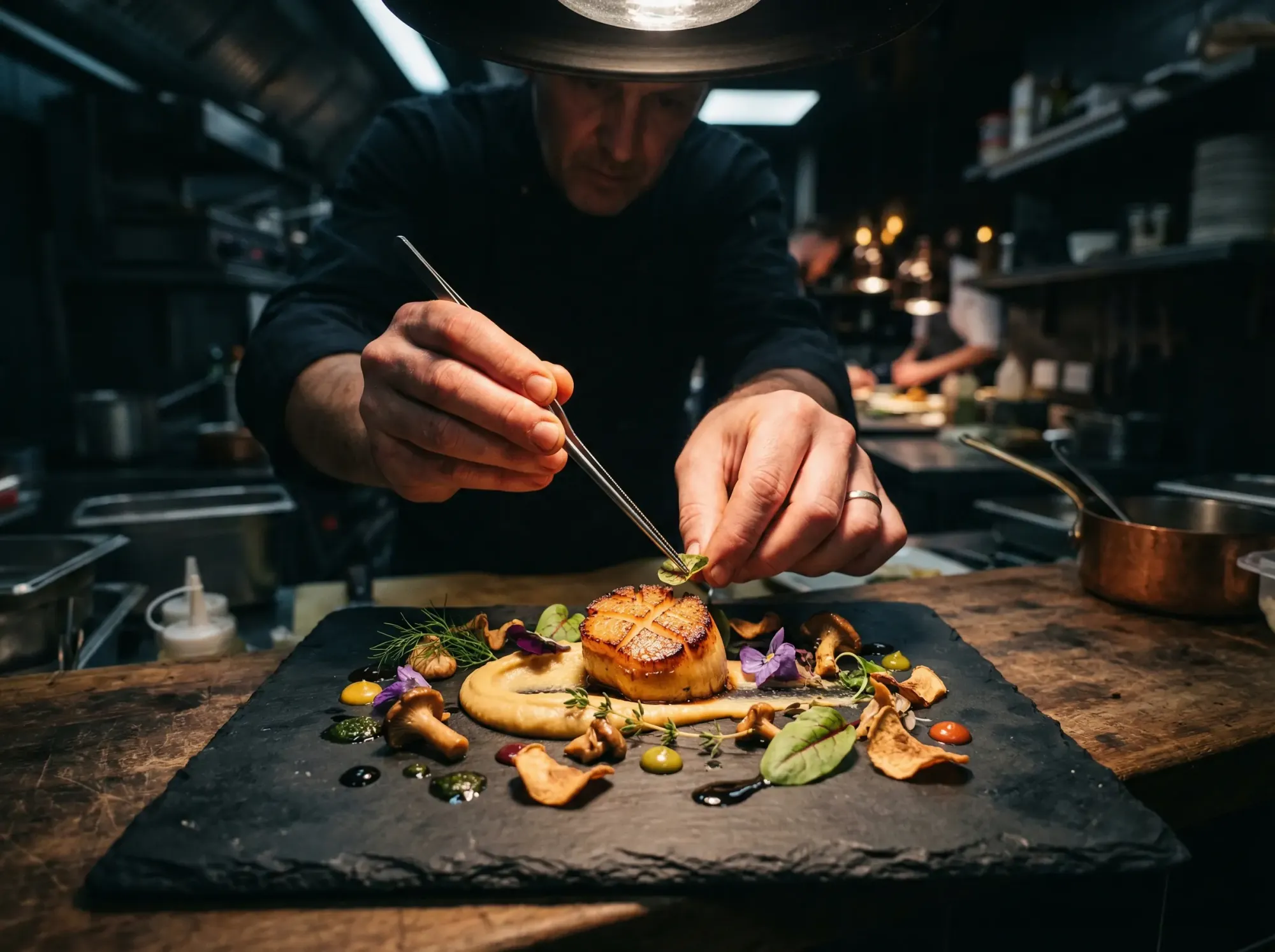
Same mushroom. Same pan. Yet one result emerges golden, crisp, and deep. The other turns grey, rubbery, and waterlogged.
The difference is not the ingredient. The difference is technique.
These notes document how the MYCOVITA Gastronomy Series performs in a professional kitchen — distilled into straightforward techniques entirely applicable in the home kitchen.
— NOTE 1 — WATER IS THE ENEMY OF SEARING King Oyster — MEDALLION | Gastronomy No.01
When King Oyster hits the pan, it releases its water and essentially poaches in its own liquid. Grey. Rubbery. This is not an ingredient flaw — it is a technique flaw.
The goal is not to steam. The goal is to trigger the Maillard reaction. For that, the surface must be absolutely dry.
Technique — Dry Pressing: After rehydration, place the mushroom between two layers of paper towel. Press with the palm — without crushing, applying firm, even pressure. Even micro-droplets of moisture divert heat energy toward evaporation. The surface may appear dry to the eye, yet moisture remains within — use two rounds of paper towel.
Pan temperature: Cast iron pan, maximum heat. You must hear an aggressive sizzle the moment the mushroom contacts the surface. If not, the pan is not ready — remove, wait, and test again. If you are shaking the pan, if you are touching and prodding — you are steaming, not searing. Wait until the underside turns golden brown.
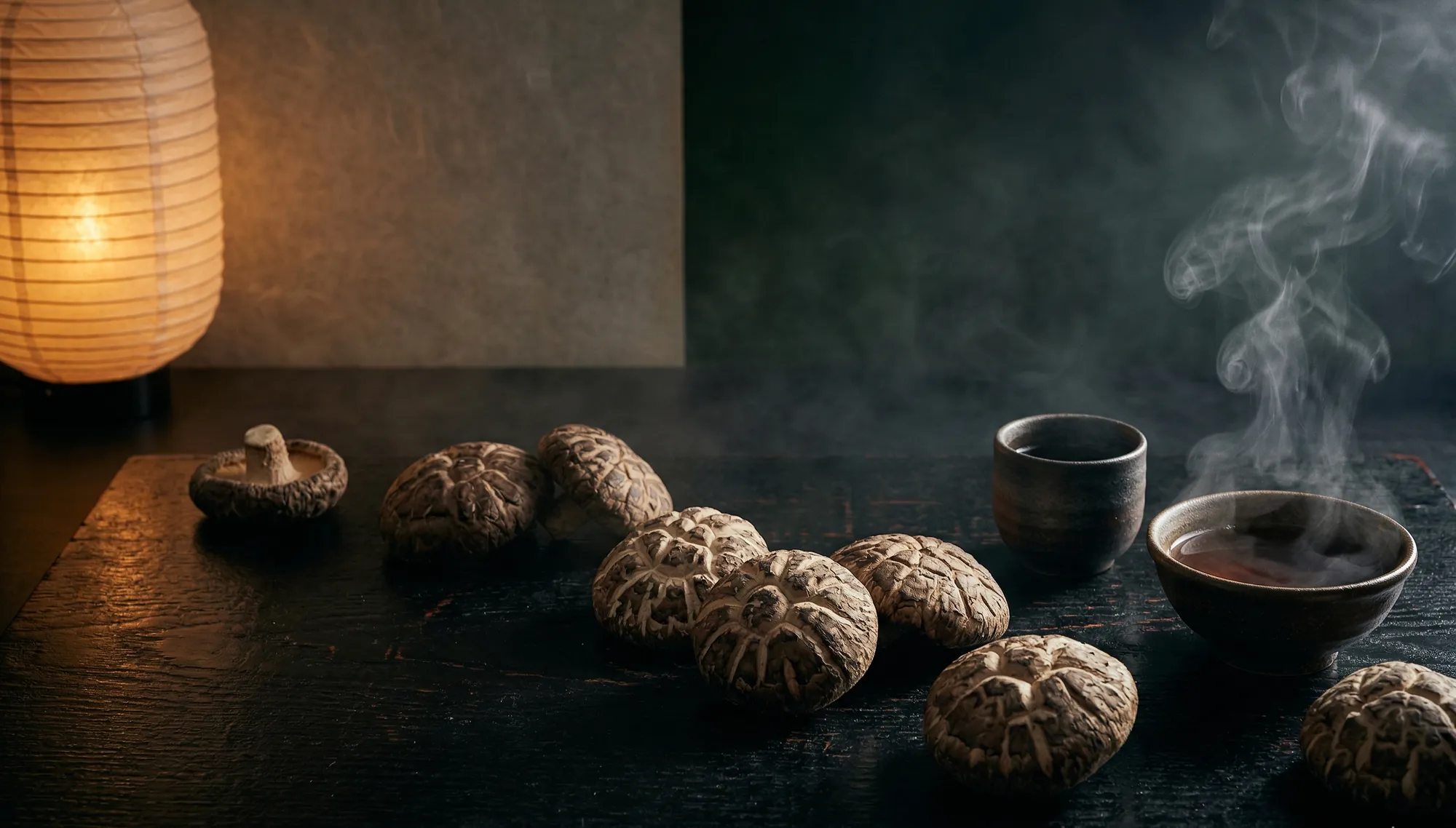
— NOTE 2 — ENZYME TEMPERATURE — Shiitake Donko — CULT | Gastronomy No.02
Think of Shiitake Donko not as a mushroom but as a dormant umami capsule. During drying, RNA stands primed for breakdown — the moment you introduce it to warm water, enzymes awaken and begin producing GMP.
But temperature at this stage determines everything.
100°C boiling water: Kills the enzymes. GMP remains locked. No umami. Cold water: Enzymes remain inactive. The process stretches excessively. 60°C: The golden point. The temperature at which enzymes operate at maximum velocity. Hold at this temperature for 20 to 30 minutes.
If no thermometer is available: Allow water to come to a boil, then let it cool for 10 to 12 minutes. This lands at approximately 60–65°C.
Soaking water — never discard: That amber-coloured liquid is rich in GMP and glutamate. Use it as risotto liquid, sauce base, soup foundation — anywhere you would use stock. Freeze it, pour it into ice cube trays, build a stock reserve.
— NOTE 3 — LAYERS AND CARAMELISATION — Maitake — FOREST | Gastronomy No.03
Maitake's layered architecture is both advantage and risk. The fronds are extremely thin — they burn quickly or turn doughy. The window between the two is narrow.
Technique — Weight Pressing: Spread Maitake pieces across a wide pan. Place a flat, heavy lid or a second pan on top. This pressure forces every layer into simultaneous contact with the cooking surface — the edges crisp while the centre remains juicy and aromatic.
Do not fully cover the pan and drown the mushroom in steam — trapped moisture renders a crisp texture impossible.
Large pieces — Maitake broken into small fragments loses its character. Preserve the layers as you cook.
— NOTE 4 — EXTRACT ENTERS THE KITCHEN —
The Apothecary Series is not confined to tea. The powdered forms work in the kitchen — with the right pairing.
Lion's Mane: Mildly nutty, with a cocoa note. Disappears seamlessly into oatmeal, chia pudding, and dark chocolate sauces — the flavour goes unnoticed while the functional profile remains on the plate.
Turkey Tail: Woody, neutral. Add during the final stage to winter stews, miso soups, and broths. It requires at least 10 to 12 minutes in boiling liquid — PSK extraction is time-dependent.
Reishi: Pronounced bitterness. Use sparingly in chocolate sauces and dark, slow-cooked stews. The bitterness adds aromatic complexity — but control the dosage; it must not dominate.
— A NOTE FROM THE CHEF —
Mushrooms absorb surrounding aromas like a sponge. If garlic, thyme, and rosemary are added to the oil at the start of cooking — the volatile oils penetrate the mushroom's flesh. Garlic added at the last minute remains superficial; garlic added in the first minute works its way inside.
A high-quality product deserves high-quality technique. Neglecting the second devalues the first.
You May Also Be Interested In
→ Can Mushrooms Produced in Turkey Be Trusted?
→ Functional Mushroom Production in Turkey
Related reading: King Oyster in the Kitchen · Shiitake Donko in the Kitchen · Maitake in the Kitchen
MYCOVITA's production philosophy and transparency principles: Why MYCOVITA?
Gastronomy | Mycelium Library | MYCOVITA
This content is for informational purposes only and does not constitute medical advice. Consult your physician before making any health-related decisions. Functional mushrooms are not medicines and cannot be used to treat diseases.
Version: 1.0 | Last updated: 20 Apr 2026 | Sources reviewed: 5+ | Methodology: Editorial Policy | References: Bibliography