Understanding Substrate: The Unseen Bedrock of Mushroom Cultivation
A Common Market Scenario
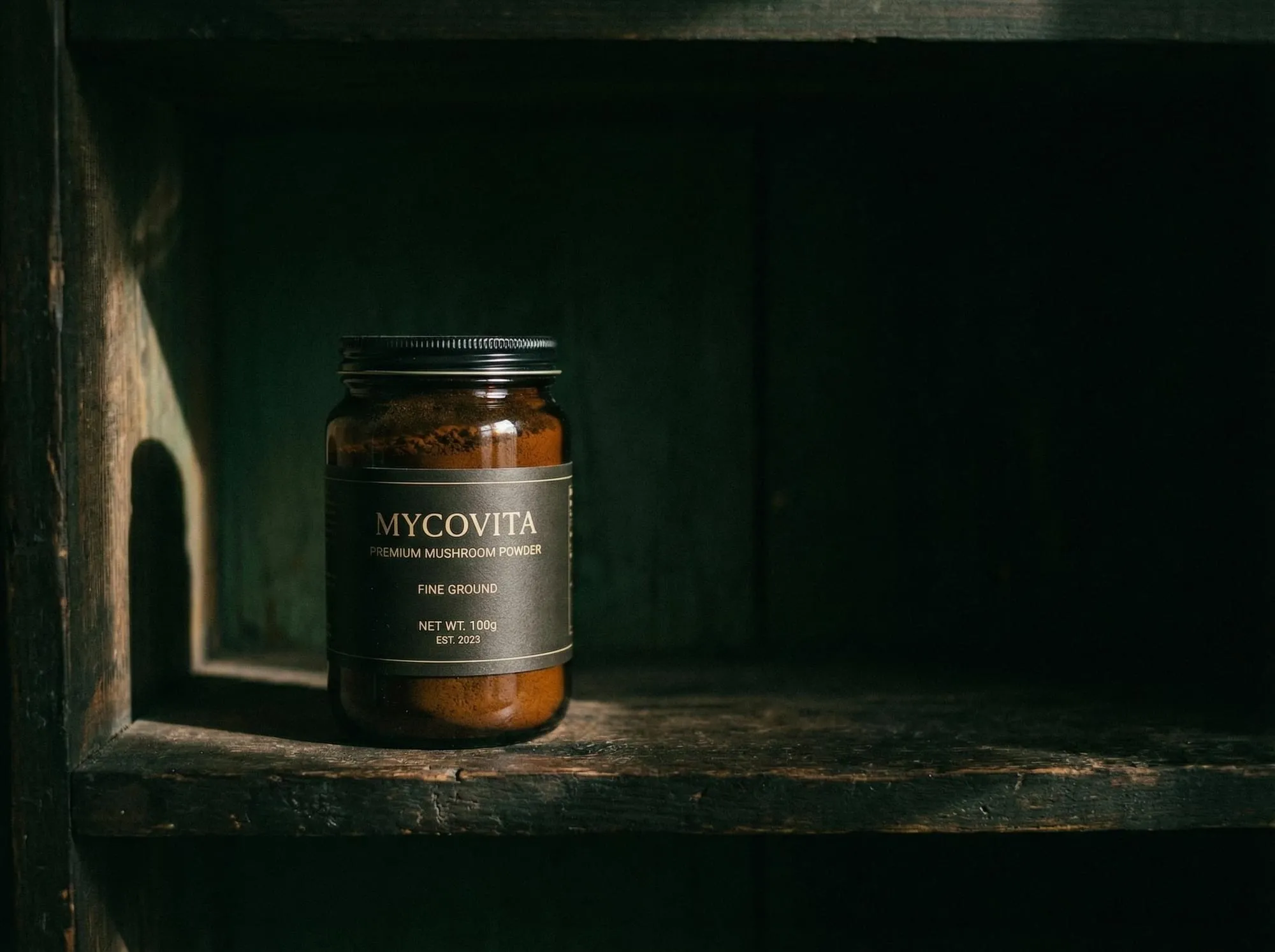
Two mushroom powder containers. Both labeled "Lion's Mane." One costs 200 TL, the other 900 TL. Label information appears similar. What does the price difference signify?
Often the answer lies in a single word: substrate.
After reading this entry, you will be able to understand what you are truly purchasing when you look at any mushroom powder product.
What Is Substrate?
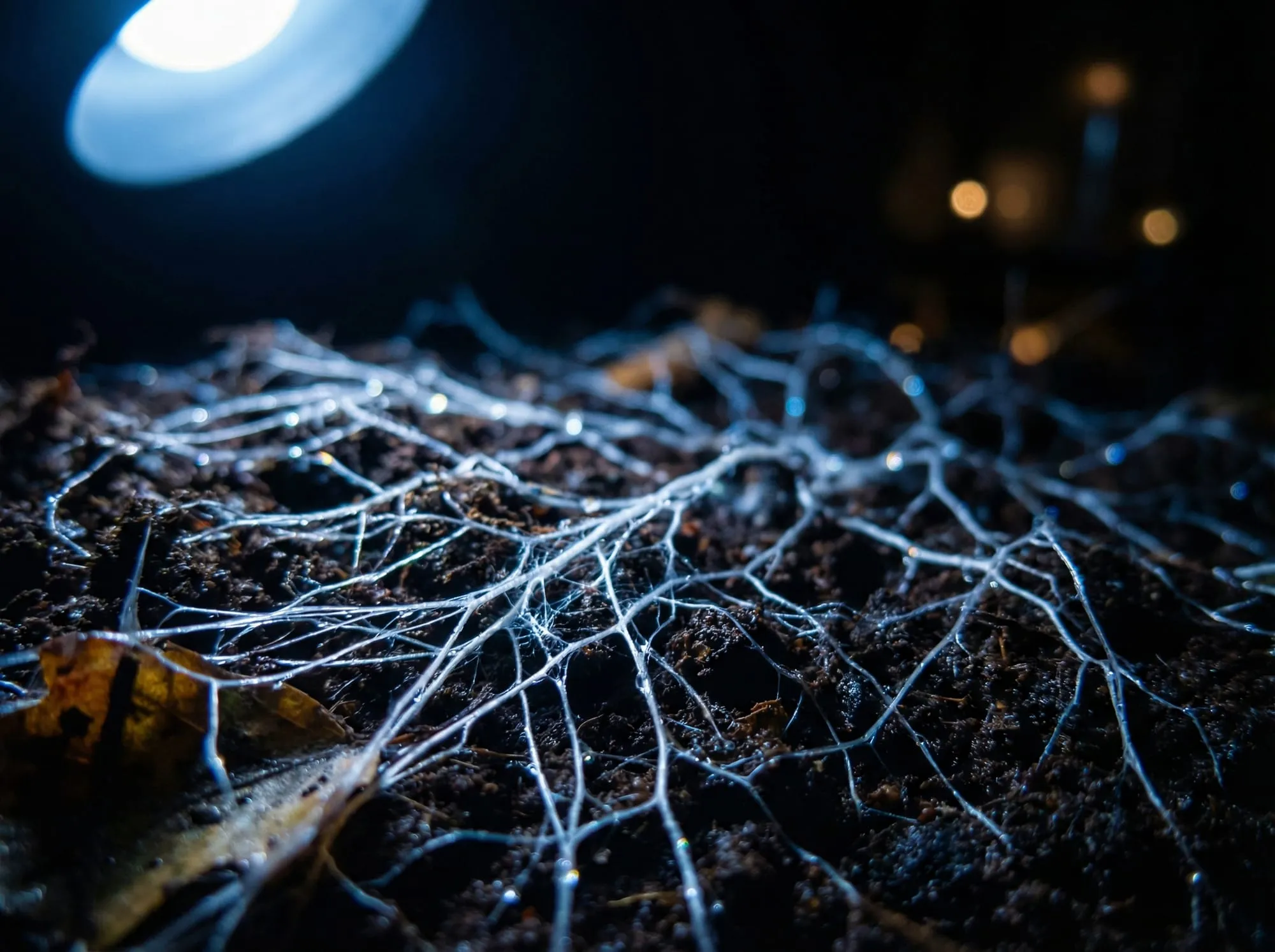
Substrate is the nutritive medium on which the mushroom grows.
Just as a plant grows in soil, a mushroom develops on a substrate. This substrate varies by species: oak or beech sawdust, rice, wheat, bran, corn flour, or mixtures thereof.
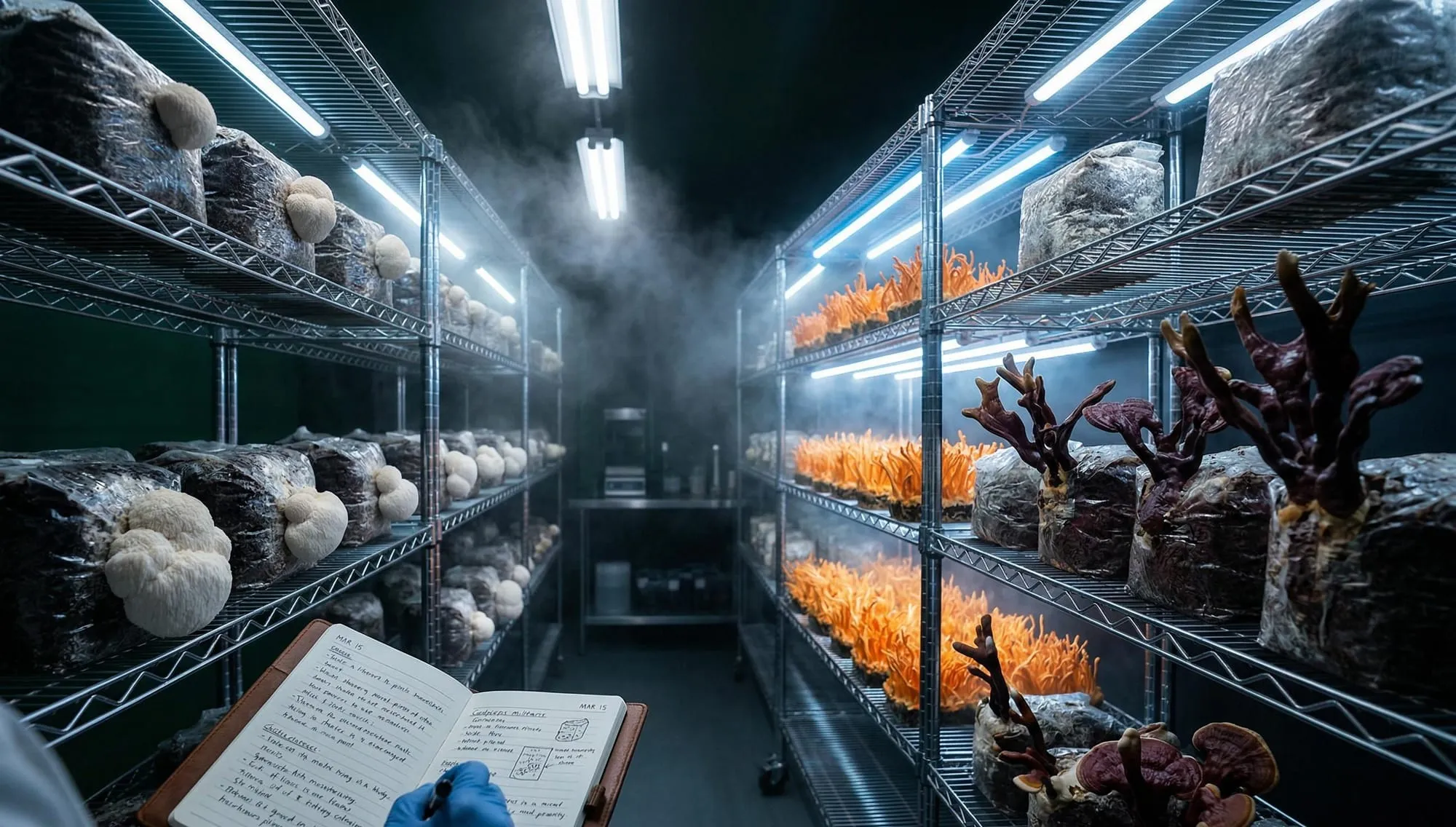
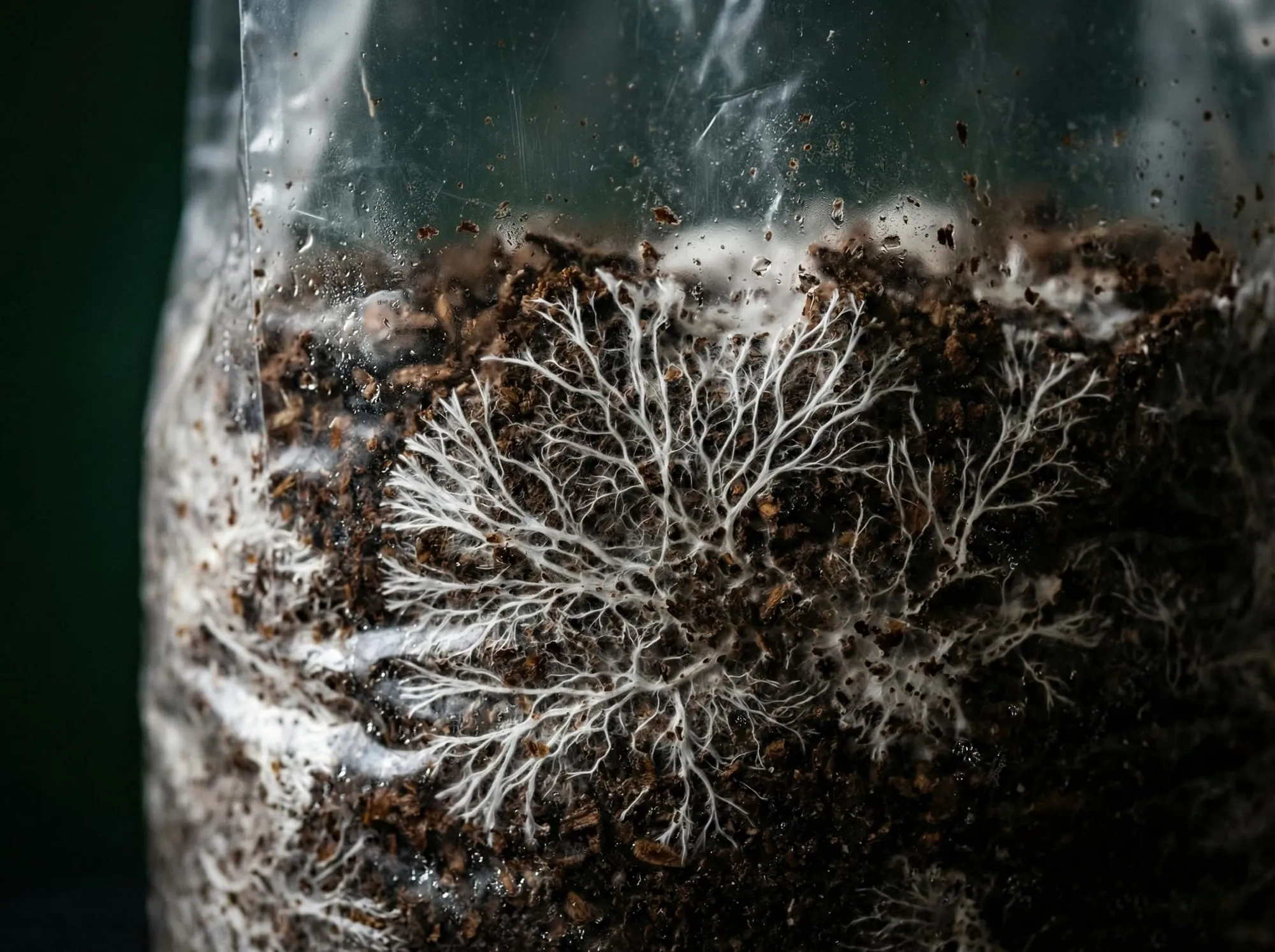
During production, the substrate is sterilized, spawn (mushroom seed) is added, and the mycelium colonizes the growth medium. After colonization is complete, the fruiting body — the visible mushroom — forms.
Substrate (sawdust/grain)
    ↓
Spawn added
    ↓
Mycelium colonizes
    ↓
Fruiting body forms
    ↓
Harvest
Two Different Products, Same Label
Products sold as "mushroom powder" on the market can actually be two entirely different things:
1. Fruit Body Powder
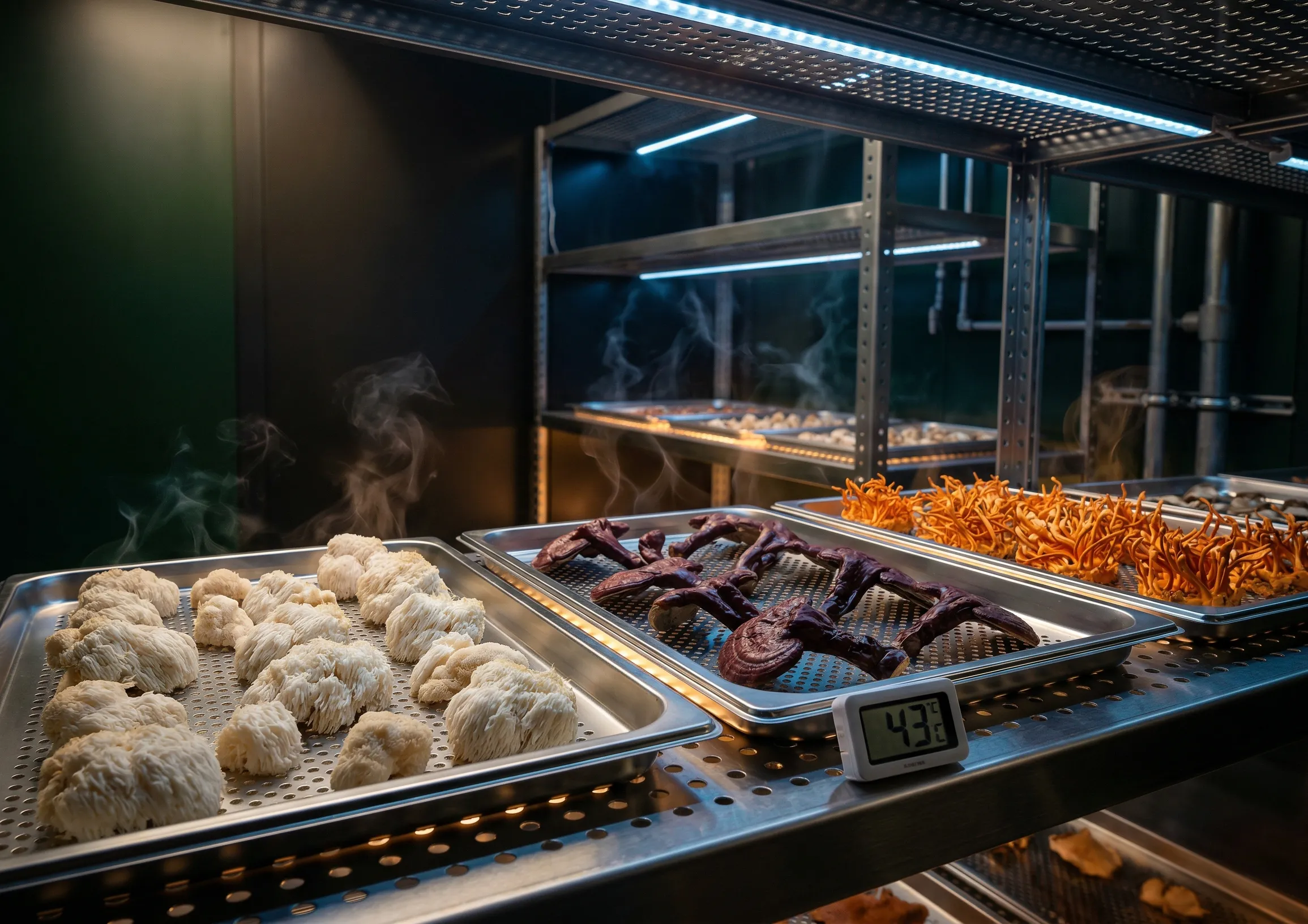
The harvested fruiting body — cap and stem — is dried and ground. The entire product is genuine mushroom. Beta-Glucan and other bioactive compounds are concentrated here.
Content: 100% mushroom fruit body
Beta-Glucan: 10–45% (species dependent)
Starch: minimal
2. Mycelium Powder Including Substrate (Grain from Dutch-certified facilities)
Harvested before the mycelium fully consumes the grain substrate, the product is dried and ground together with the substrate. The package is half fungus, half grain — but the label may not disclose this.
Content: Fungal mycelium + grain substrate
Beta-Glucan: 5–20%
Starch: 30–60%
Reference: Stamets, P. & Zwickey, H. (2014). Medicinal mushrooms: ancient remedies meet modern science. Integrative Medicine, 13(1), 46-47.
Starch Test — A Check You Can Perform at Home
There is a simple way to determine whether your mushroom powder contains substrate: the iodine test.
Add a few drops of iodine to a spoonful of mushroom powder. If the powder turns purple-black, starch is present — meaning it contains substrate powder. Genuine fruit body powder does not produce this color with iodine.
This test is not perfect but provides a practical preliminary assessment.
Is Mycelium Worthless?
No — a key nuance is important here.
Mycelium possesses its own bioactive profile. Certain compounds concentrate in mycelium, while others are found only in the fruiting body. In Hericium erinaceus, the erinacine series (NGF-stimulating components) is present in mycelium, whereas the hericenone series concentrates in the fruit body.
The problem is not that mycelium is worthless, but that it is sold together with the grain substrate. Substrate contains starch, starch is not bioactive, and its unit cost is very low. A high substrate proportion dilutes the actual fungal content.
Reference: Bak, W.C. et al. (2014). Determination of chemical composition and mushroom quality. Scientific World Journal.
MYCOVITA's Choice
MYCOVITA uses only the fruit body.
In practical terms: fruit bodies harvested from each block are processed with the substrate completely separated. This approach means lower volume — but the compound profile is clear and reliable.
After harvest, each batch is sent to an analytical laboratory. Beta-Glucan concentration is measured, moisture content is checked, and all data are recorded with a batch number.
Does Substrate Type Affect Quality?
Yes — substrate selection matters even for fruit body production.
Different substrate formulations directly influence the bioactive compound profile:
Oak sawdust is ideal for Reishi and Shiitake — these species grow naturally on oak, and the substrate chemistry optimizes compound synthesis.
Rice-based substrate is the standard method for Cordyceps militaris — this grain-based system meets the species' specific nutritional requirements.
Mixed formulations For species such as Lion's Mane and Sparassis, mixtures of sawdust, bran, and rice hulls are used — each component serves a different function.
Reference: Royse, D.J. et al. (2017). World mushroom production: trends and opportunities. Edible and Medicinal Mushrooms.
What to Ask When Buying a Product
When evaluating any mushroom powder product, you may ask the following questions:
Is the product made from fruit body or mycelium? Is a Certificate of Analysis (COA) available? What is the percentage of Beta-Glucan? What is the substrate? Where is the production site?
If the answers are missing or vague, the product is most likely mycelium powder including substrate.
Summary
Substrate → the growth medium of the mushroom

Fruit body powder:
→ 100% mushroom
→ High Beta-Glucan
→ Clear compound profile
→ MYCOVITA's choice

Mycelium powder including substrate:
→ Fungus + grain mixture
→ Diluted Beta-Glucan
→ Uncertain compound profile
→ Common on the market
Related reading: Mycelium vs Fruit Body · Production Process
MYCOVITA's production philosophy and transparency principles: Why MYCOVITA?
You Might Be Interested
→ Mushroom Science Glossary — 130+ Terms from A to Z
→ Can You Trust Mushrooms Produced in Turkey?
→ Functional Mushroom Production in Turkey
Scientific References
- Stamets, P. & Zwickey, H. (2014). Medicinal mushrooms: ancient remedies meet modern science. Integrative Medicine, 13(1), 46-47.
- Bak, W.C. et al. (2014). Determination of chemical composition and mushroom quality. Scientific World Journal.
- Royse, D.J. et al. (2017). World mushroom production: trends and opportunities. Edible and Medicinal Mushrooms.
- Wasser, S.P. (2002). Medicinal mushrooms as a source of polysaccharides. Applied Microbiology and Biotechnology, 60(3), 258-274.
Quality and Production — Related Resources
A structured content cluster covering each stage of the functional mushroom production chain:
- What Is Substrate? — The basis of grain and wood-based substrates.
- Certified Mycelium — Spawn source is critical.
- Strain and Intraspecies Variation — The effect of the genetic line.
- Mycelium vs Fruit Body — Compound profile differences.
- Low-Heat Drying — The science of the 42–45°C threshold.
- Extraction Methods — Hot water, ethanol, dual.
- Beta-Glucan Measurement — Megazyme and other methods.
- Reading a COA — How to read a certificate of analysis.
- Contamination and Mycotoxins — Safety protocols.
- Black Sea Climate — Geographic advantage.
- Storage — Shelf life and quality preservation.
This content is for informational purposes only and does not constitute medical advice. Consult your physician before making any health-related decisions. Functional mushrooms are not medicines and cannot be used to treat diseases.
Version: 1.0 | Last updated: 20 Apr 2026 | Sources reviewed: 5+ | Method: Editorial Policy | References: Bibliography