Beta-Glucan: The Defining Polysaccharide of Medicinal Mushrooms
Let Us Begin with a Question
Two jars of mushroom powder. Both read "Lion's Mane." One costs 200 TL, the other 900 TL. What accounts for the difference?
More often than not, the answer resides in a single molecule: Beta-Glucan.
This entry provides the scientific foundation for understanding the true value of mushroom powders. It is not a chemistry lecture — it is a guide to help you grasp why you brew medicinal mushrooms in the first place.
What Is Beta-Glucan?
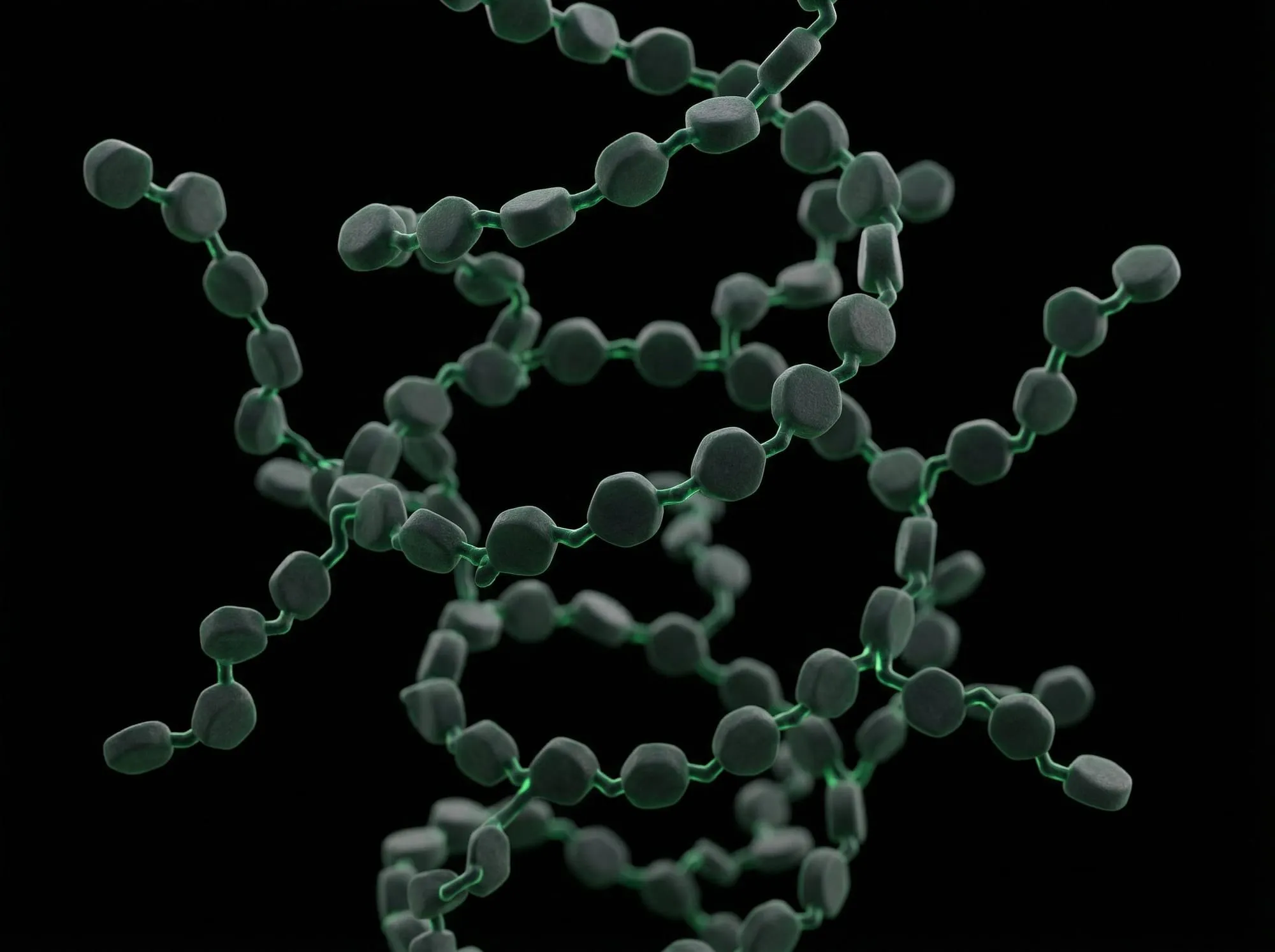
Beta-Glucan is a polysaccharide — a long-chain sugar molecule — formed when glucose units link together at a specific bond angle. The term "beta" designates the chemical configuration by which these glucose monomers are joined.
When the same glucose molecules connect at different angles, entirely different structures emerge. Starch (alpha linkage) is readily digested by the human body and utilized as an energy source. Beta-Glucan (beta linkage), by contrast, cannot be broken down by human digestive enzymes — and this very property directly determines its capacity to interact with the immune system.
Why Structure Matters
All of Beta-Glucan's biological activity originates from its indigestibility.
Unable to be digested in the gut, the molecule encounters specialized immune cells residing in the intestinal wall. These cells display a receptor called Dectin-1 — a molecular "lock" precisely evolved to recognize Beta-Glucan.
When Beta-Glucan engages this lock, a signaling cascade is initiated:
Beta-Glucan
    ↓
Dectin-1 receptor is activated
    ↓
Macrophages are stimulated
    ↓
NK (Natural Killer) cells mobilize
    ↓
Dendritic cells mature
    ↓
IL-2, IL-12, TNF-α cytokines are secreted
    ↓
Immune response is modulated
This cascade represents the foundational mechanism by which Beta-Glucan acts upon the immune system. It primes the system — not through uncontrolled activation, but via a regulatory, modulatory effect.
Reference: Brown, G.D. & Gordon, S. (2001). Immune recognition: a new receptor for beta-glucans. Nature, 413, 36-37.
Are All Beta-Glucans Equivalent?
No — and this distinction is critical.
The biological activity of Beta-Glucan depends not merely on its presence but on its structure. Two parameters are especially decisive:
1. Main Chain Linkage Type
Beta-(1→3)-linked chains exhibit the highest affinity for immune receptors. Mushroom Beta-Glucans are predominantly built upon this backbone — which is why they display a distinct biological profile compared to Beta-Glucans derived from cereals or yeast.
2. Side Branch Architecture
The frequency and length of beta-(1→6) side branches attached to the beta-(1→3) main chain directly influence the three-dimensional conformation of the molecule — and, consequently, its capacity to interact with Dectin-1.
Reference: Vetvicka, V. & Vetvickova, J. (2007). Comparison of immunological effects of commercially available beta-glucans. Applied Biochemistry and Biotechnology.
Beta-Glucan Concentration by Mushroom Species
Each mushroom species contains distinct quantities and structural variants of Beta-Glucan. A comparison, expressed on a dry weight basis, for species within the MYCOVITA portfolio:
Sparassis crispa       %40-45  ← by far the highest
Shiitake (Lentinan)    %15-25
Reishi (Ganoderma)     %10-15
Lion's Mane            %10-20
Trametes versicolor    %15-25
Cordyceps militaris    %8-15
King Oyster            %15-25
Grifola frondosa       %15-30
Reference: Wasser, S.P. (2002). Medicinal mushrooms as a source of antitumor and immunomodulating polysaccharides. Applied Microbiology and Biotechnology.
Fruit Body or Mycelium?
The most consequential quality distinction in the marketplace emerges here.
Fruit Body Powder
The mushroom as you recognize it — cap and stem. Beta-Glucan concentrates within this structure. MYCOVITA uses exclusively fruit body.
Substrate-Inclusive Mycelium Powder
The fungal mycelium grown on grain is milled together with the substrate. The true Beta-Glucan content may be diminished by 30–50%, while the remainder consists of grain starch. On the market, these products may be sold under identical labels.
The method for discerning the difference is straightforward: if the product label does not explicitly state "fruit body" (fruit body), it is most likely substrate-inclusive mycelium powder.
Reference: Stamets, P. & Zwickey, H. (2014). Medicinal mushrooms: ancient remedies meet modern science. Integrative Medicine, 13(1), 46-47.
Heat and Beta-Glucan
Does drying temperature affect the structure of Beta-Glucan?
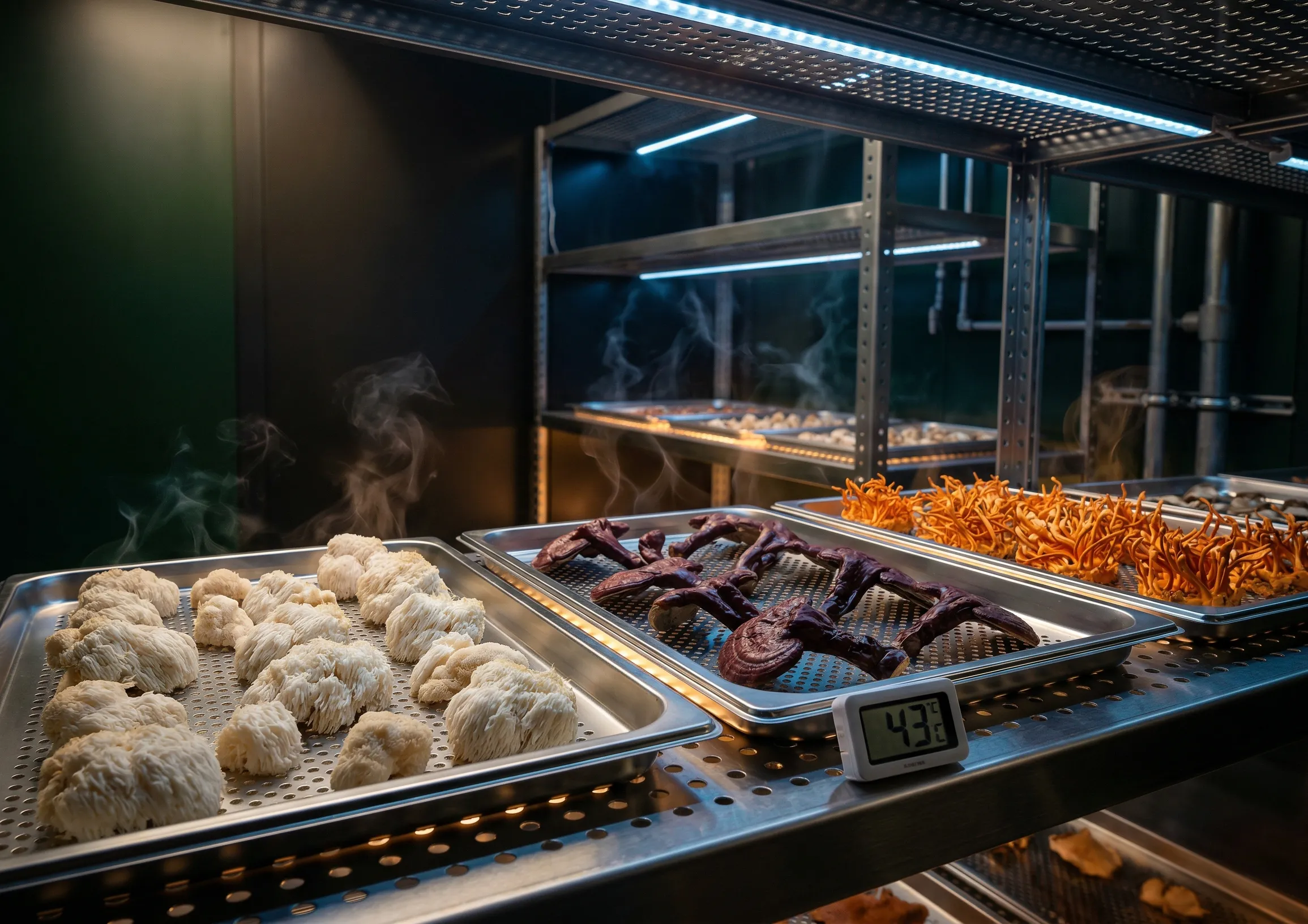
Yes — partially. At elevated temperatures (above 70°C), the solubility and bioavailability of beta-glucan chains may be compromised. This constitutes one of the scientific rationales behind MYCOVITA's preference for a low-temperature drying protocol at 42–45°C.
During brewing, however, hot water (70–90°C) is effective at solubilizing Beta-Glucan — which is why hot water infusion remains one of the most efficient extraction methods.
Conclusion — Why This Matters
When selecting a mushroom powder, ask the following question: How many grams of genuine Beta-Glucan does this product contain?
To arrive at the answer, examine these factors: Is fruit body used? Is substrate included? Is an analysis report available? Which species was used?
For MYCOVITA products, the answers are unequivocal: 100% fruit body, analytically verified, produced in Ordu.
Related reading: Sparassis crispa Encyclopedia · How the Immune System Works · Lentinan, PSK and Beta-Glucan Compared
MYCOVITA's production philosophy and transparency principles: Why MYCOVITA?
You May Also Find Interesting
→ Mushroom Science Glossary — 130+ Terms from A to Z
→ Can Mushrooms Produced in Turkey Be Trusted?
→ Functional Mushroom Production in Turkey
Scientific References
- Brown, G.D. & Gordon, S. (2001). Immune recognition: a new receptor for beta-glucans. Nature, 413, 36-37.
- Vetvicka, V. & Vetvickova, J. (2007). Comparison of immunological effects of beta-glucans. Applied Biochemistry and Biotechnology, 141(2-3), 329-344.
- Wasser, S.P. (2002). Medicinal mushrooms as a source of polysaccharides. Applied Microbiology and Biotechnology, 60(3), 258-274.
- Stamets, P. & Zwickey, H. (2014). Medicinal mushrooms: ancient remedies meet modern science. Integrative Medicine, 13(1), 46-47.
- Akramiene, D. et al. (2007). Effects of beta-glucans on the immune system. Medicina, 43(8), 597-606.
Beta-Glucan and Immunomodulation — Related Resources
A content cluster on mushroom beta-glucan and immune system interaction:
- What Is Beta-Glucan? — Molecular structure and linkage types.
- How the Immune System Works — The Dectin-1 receptor and innate immunity.
- Beta-Glucan Measurement Methods — Megazyme and other laboratory methods.
- Lentinan — Shiitake's approved beta-glucan.
- PSK — Turkey Tail's polysaccharide-protein complex.
- D-Fraction — Maitake's active beta-glucan fraction.
- Lentinan vs PSK vs Beta-Glucan — A comparison.
- Sparassis crispa — The highest natural beta-glucan density.
- Chitin — The cell wall component that encapsulates beta-glucan.
- Extraction Methods — Beta-glucan bioavailability.
This content is for informational purposes only and does not constitute medical advice. Consult your physician before making any health-related decisions. Functional mushrooms are not pharmaceuticals and cannot be used to treat diseases.
Version: 1.0 | Last updated: 20 Apr 2026 | Sources reviewed: 14+ | Method: Editorial Policy | References: Bibliography