The Definitive Guide to Shiitake Donko (Lentinula edodes)
Gastronomy Series — No.02
— THE HOOK —
Everyone knows the word umami now. It appears on restaurant menus, gourmet blogs, chef videos. Yet it is frequently misunderstood: umami is not an ingredient; it is a layer. A sensation. Something that does not end on the palate but continues.
Shiitake Donko is the purest source of this sensation.
Once you have tasted it, dishes prepared without it feel incomplete. This is not exaggeration — it is a chemical fact.
— THE STORY —
In China it is called Xiānggū — 香菇. Fragrant mushroom. Not merely a name, but a definition. For over 1,000 years this species has been cultivated on oak and beech logs in China's southern mountain regions, particularly Fujian and Zhejiang. Records extend back to the Song Dynasty — 960–1279 CE. Agricultural texts of that era place Shiitake cultivation on the same page as rice and tea growing: the three foundational botanical legacies of civilization.
Its arrival in Japan gave birth to an entirely different aesthetic.
In the artisan culture of Japan's Edo period, everything had its dō — its way. The way of tea, the way of the sword, the way of the bow. The art of drying Shiitake found its own path: the Donko method.
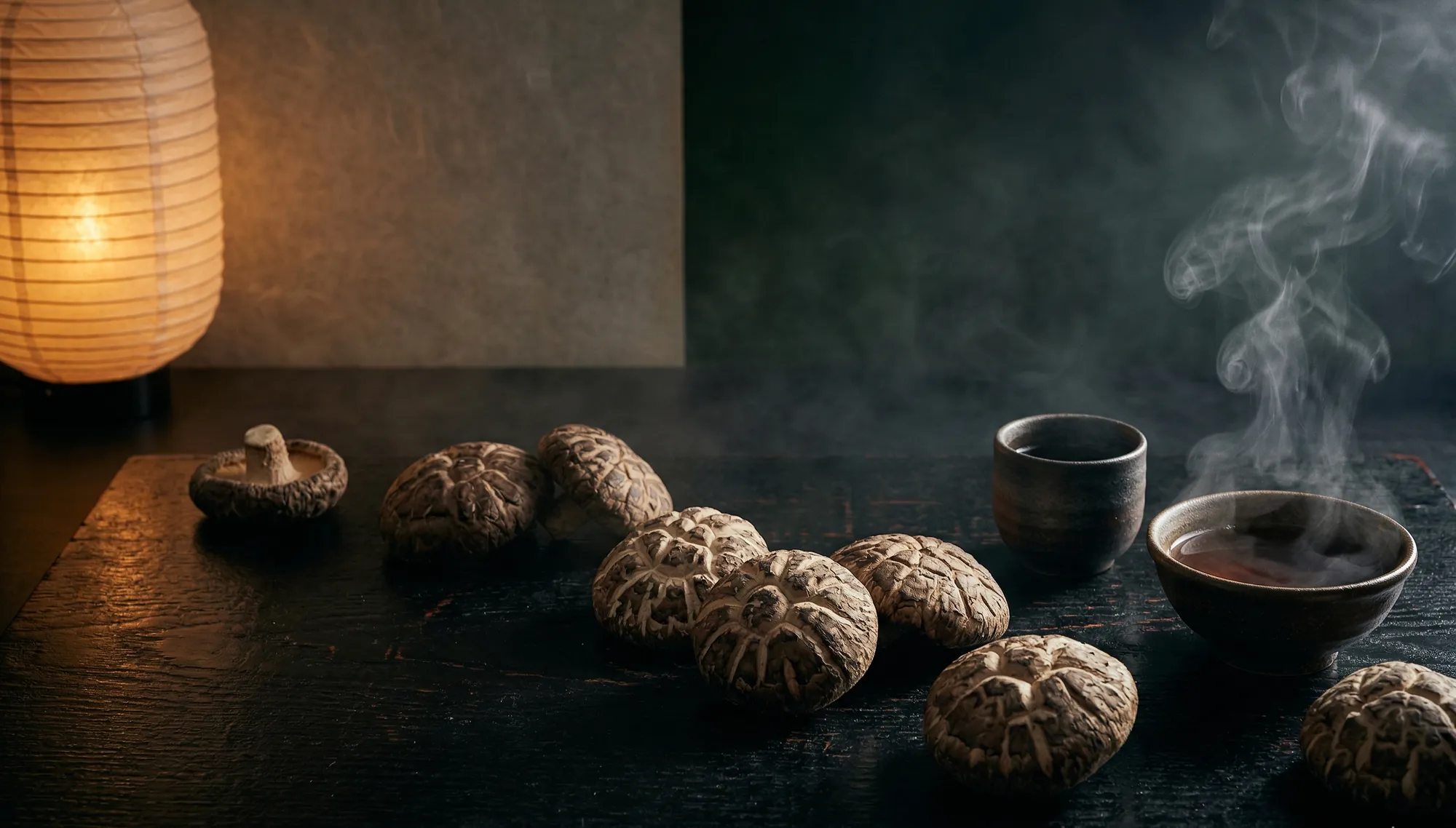
Donko designates Shiitake harvested early, when the cap has not yet fully opened and the edges remain curled inward. This young mushroom is dried according to a specific protocol: first under the sun, then in the shade, then under the sun again. The rhythm has a purpose — exposure to ultraviolet light enables Shiitake to accumulate vitamin D and, more importantly, increases the concentration of Guanosine Monophosphate (GMP). GMP is the molecular language of umami.
The white powder on the surface of a dried Donko cap — furin — is the seal of this process. The visible mark of artisanal quality. From Buddhist monastery kitchens — shojin ryori — to Kyoto's kaiseki restaurants, and onward to three-Michelin-starred tables in Tokyo: Donko's journey has continued uninterrupted for a thousand years.
Western cuisine discovered this species in the 20th century. It began with fresh Shiitake, but the deep sauce culture of the Escoffier tradition opened the door to Donko: the dashi of dried Donko — its steeping water — worked as a sauce base on its own. Could such depth be achieved without any meat stock, bone, or animal-derived ingredient? Donko made it possible.
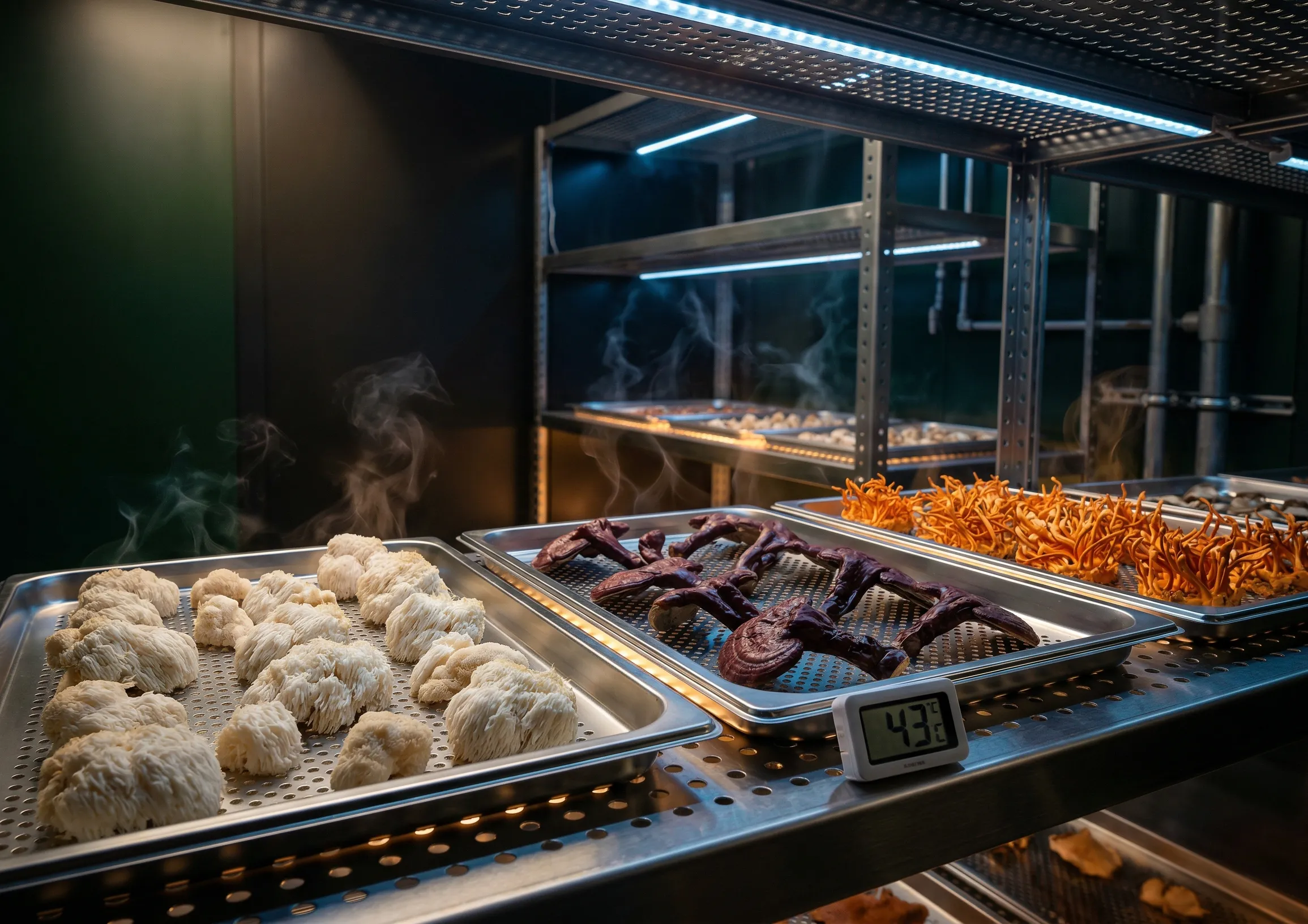
MYCOVITA Shiitake Donko is cultivated on an oak-based substrate at the R&D center in Ordu, Türkiye. The cap is harvested at an early stage — still unopened, edges curled. It is processed using low-temperature drying, faithful to the traditional Donko protocol. The furin layer on the surface is preserved. A process calculated per gram.
— MOLECULE & FLAVOR —
The umami depth of Shiitake Donko is explained by the cooperation of two molecules:
Guanosine Monophosphate (GMP) and Glutamate. When these two compounds are present together — synergistic effect — the perception of umami is felt up to 30 times more powerfully than when either is present alone. This is why Donko sauce creates that inexplicable depth when combined with cheese, meat, or seafood. Chemistry understood this long ago. Japanese artisans sensed it and applied it for a millennium.
Lentinan is a Beta-Glucan derivative unique to Shiitake. This compound, which attracts the attention of researchers, remains one of the most studied mushroom molecules in the literature.
A technical note: Before cooking dried Donko, soak it in lukewarm water for 20–30 minutes. This water — modoshi-jiru — is never discarded. It is the most valuable part: GMP and Glutamate transfer into this water. A portion of this liquid must always be incorporated in every recipe.
— RECIPES —
🍽 Recipe No.1 — Donko Dashi Risotto, Parmigiano & Black Truffle
Umami upon Umami — Italian technique, Japanese depth
Ingredients(serves 2)
- 6 MYCOVITA Shiitake Donko — soaked in lukewarm water, thinly sliced
- Soaking water (Donko dashi) — 400 ml, strained
- 160 g Carnaroli rice (not Arborio — Carnaroli is firmer, superior for risotto)
- 1 small onion, finely chopped
- 100 ml dry white wine (Vermentino or Pinot Grigio)
- 50 g butter (cold)
- 60 g Parmigiano Reggiano, grated
- Black truffle — fresh or high-quality preserved, thinly sliced
- Extra virgin olive oil, fleur de sel
Method In a deep pot, melt the olive oil and half the butter over medium heat. Cook the onion until translucent — 5 minutes. Add the Carnaroli and toast for 2 minutes — the rice should appear slightly translucent. Pour in the white wine and stir until the alcohol evaporates. Add the Donko dashi ladle by ladle — do not add the next ladle until the previous one is fully absorbed. Medium heat, continuous stirring, 18 minutes. Remove from heat. Add the remaining cold butter and Parmigiano — stir vigorously; this process is called mantecatura and is the secret that makes risotto creamy. Arrange the sliced Donko on top. Add the truffle last — heat evaporates its aroma. Fleur de sel.
Serving suggestion: Wide, shallow bowl. Risotto centered, truffle slices fanned on top. A black-cream-gold color palette.
💡 Home Version — Arborio or baldo rice instead of Carnaroli. Instead of black truffle: garlic butter (2 cloves garlic + butter, 5 min low heat). Instead of Parmigiano: aged kashar or tulum cheese. Instead of white wine: 2 tablespoons apple cider vinegar or extra Donko dashi.
🍽 Recipe No.2 — Donko Tare-Glazed Duck Breast
Japanese tare technique, French cooking discipline
Ingredients(serves 2)
- 2 duck breasts (magret)
- 4 MYCOVITA Donko — together with their soaking water
For the Donko Tare:
- 80 ml Donko soaking water
- 40 ml soy sauce (high quality, preferably Tamari)
- 30 ml mirin
- 15 ml rice vinegar
- 1 teaspoon raw honey
- 1 star anise
Method Combine the tare ingredients in a small saucepan and reduce over low heat for 15 minutes — until the volume is halved. Remove the star anise. Score the skin side of the duck breast in a diamond pattern — cutting through the skin but not into the meat. Place skin-side down in a cold pan. Begin over medium heat — the skin should release its own fat, 8–10 minutes. Turn over, 3–4 minutes. Internal temperature 57°C — medium rare. Rest for 5 minutes. Slice, drizzle with Donko tare. Sear freshly sliced Donko in the same pan with the duck fat for 2 minutes.
Serving suggestion: Long rectangular plate. Duck slices arranged diagonally, Donko alongside. Tare sauce brushed onto the plate as a line.
💡 Home Version — Instead of duck breast: beef tenderloin, lamb chops, or chicken thighs. The tare sauce remains unchanged. If sake is unavailable: apple cider vinegar + honey. If mirin is unavailable: honey + a little water. Prepared tare keeps for 2 weeks refrigerated.
🍽 Recipe No.3 — Pure Donko Soup (Shojin Style)
Buddhist kitchen philosophy — zero animal products, maximum depth
Ingredients(serves 2)
- 8 MYCOVITA Donko — soaked overnight in cold water
- Soaking water — 600 ml
- 5 cm kombu kelp
- 1 tablespoon white miso
- 1 teaspoon sesame oil
- Scallion, sansho pepper (or a small amount of Sichuan pepper)
- Thinly sliced Donko — for serving
Method Add the kombu to the Donko soaking water and let it steep cold for 30 minutes. Heat over medium heat — remove the kombu before boiling. Add the Donko, simmer for 10 minutes on low heat. Dissolve the white miso in a small ladle of hot broth, stir in — do not boil; miso contains live cultures. Sesame oil, scallion. Place thinly sliced raw Donko into the serving bowl — the hot soup poured over will cook it gently. Sansho pepper.
This soup has been prepared identically in the monastery kitchens of Kyoto for five hundred years. The recipe does not change — because it is already perfect.
Serving suggestion: Black lacquer bowl, served with its lid. When opened, steam and aroma rise together.
💡 Home Version — Instead of kombu: just the Donko soaking water — deep enough on its own. If white miso is unavailable: soy sauce + a little tahini. Instead of sansho pepper: black pepper or chili flakes.
— DRINK PAIRINGS —
With Donko Risotto: 🍷 Öküzgözü or Merlot. From Turkey: Kavaklıdere Öküzgözü. Non-alcoholic: sour cherry juice. 🍷 Barolo DOCG(Piedmont, Italy — Serralunga d'Alba village) — The tar, rose, and tobacco notes of the Nebbiolo grape create a perfect tension with Donko's earthy umami depth. Decant 2 hours before opening the bottle. Alternative: Côte de Nuits Pinot Noir — softer, a pairing that dances with truffle.
With Donko Tare-Glazed Meat: 🍷 Shiraz or Boğazkere. Beer: Dunkel. Non-alcoholic: black tea or Pu-erh. 🍷 Châteauneuf-du-Pape(Rhône Valley, France) — The spicy, deep fruit character and long finish of this Grenache-based wine converse layer by layer with the soy-mirin complexity of the tare. Alternative: Amarone della Valpolicella — the intensity derived from dried grapes mirrors the concentration of dried Donko. Two "drying" techniques meeting in the glass.
With Pure Donko Soup: Dry white wine — Emir or Narince grape. Non-alcoholic: green tea (Sencha). 🍶 Junmai Ginjo Sake(Kyoto region — Fushimi) — The clean and elegant sake character of Kyoto aligns precisely with the zero-animal-product philosophy of Shojin cuisine. Serve at 12°C. Or: Gyokuro Tea(shade-grown Japanese green tea) — in a non-alcoholic pairing, this tea's umami resonates with Donko's umami. The same sensation from two different sources.
— CHEF'S NOTE —
Never discard Donko's soaking water. Freeze it, pour it into ice cube trays, store it as stock. This liquid — modoshi-jiru — functions like a meat broth. It is the chef's secret weapon.
Fresh Shiitake and Donko are not mixed in the same recipe. They possess two different characters: fresh is light and aromatic; Donko is deep and intense. One must not overpower the other.
Donko never enters a microwave.
CULT. No.02.Lentinula edodes Donko Grade — Ordu, Türkiye.
Culinary Use
Shiitake Donko grade is an ingredient entirely distinct from fresh Shiitake. The drying process increases the production of lenthionic acid — the molecule responsible for Donko's characteristic deep aroma. Proper use begins with unlocking this aroma.
🍽 Recipe No.1 — Shiitake Donko Dashi
The fundamental sauce base of Japanese cuisine. It can be used wherever stock is required.
Ingredients: 4–5 dried Shiitake Donko, 1 liter cold water.
Preparation: Soak the mushrooms in cold water for 30–60 minutes — not hot water. Cold water enables slow hydration, maximizing guanylate release. Strain and reserve the soaking water — this is dashi. Remove the stems from the mushrooms, slice the caps.
Use: Ramen base, miso soup, risotto liquid, braised meat dishes, sauce base. The soaking water keeps frozen for 3 months.
🍽 Recipe No.2 — Teriyaki Glazed Shiitake Donko, Rice & Beaten Sansho
Ingredients: 6 reconstituted Shiitake Donko (caps), 3 tablespoons soy sauce, 2 tablespoons mirin, 1 tablespoon sake, 1 teaspoon sugar, sesame oil, fresh sansho or black pepper.
Preparation: Simmer the teriyaki sauce in a small saucepan over low heat, thickening slightly. In a cast-iron skillet over high heat, sear the Shiitake caps on both sides without oil. Pour the sauce over them, reduce the heat, and turn until fully coated.
Serve: Over white rice, with beaten egg and sansho. Umami layers complement one another.
🍽 Recipe No.3 — Shiitake Donko Powder, Cream Soup Base
Grind Donko into powder (10 seconds in a coffee grinder is sufficient). One teaspoon of powder adds a profound umami layer to a liter of soup — invisible but perceptible.
Application: Potato, pumpkin, pea soups. The main component in mushroom soup. A fortifier for white sauces (béchamel).
Home Recipes — With Basic Ingredients
Shiitake Donko's powerful umami profile means great flavor with few ingredients. Complex techniques are unnecessary — correct soaking and correct heat suffice.
🍽 Recipe No.4 — Shiitake Donko Rice Porridge (Congee Style)
Known as 'zōsui' in Japan and 'jook' in China, this preparation is the food of colds, fatigue, and winter evenings.
Ingredients (serves 2): 3–4 soaked Shiitake Donko + soaking water, 1 cup rice, 4–5 cups water or chicken stock, 2 cloves garlic, fresh ginger (1 cm), soy sauce, sesame oil, scallion.
Method: Place the rice and garlic in a pot. Add the mushroom soaking water plus the remaining water. Cook over low heat for 30–40 minutes — until the rice is fully broken down. Slice the mushroom caps and add, cook 5 minutes more. Season with soy sauce and a few drops of sesame oil. Top with scallion and grated ginger.
Winter version: Crack an egg into it and stir — for protein and creamy texture.
🍽 Recipe No.5 — Garlic Butter Shiitake with Pasta
The mushroom version of aglio e olio. On the table in 20 minutes.
Ingredients (serves 2): 4 soaked Shiitake Donko (sliced), 300 g spaghetti or linguine, 5 cloves garlic, 3 tablespoons olive oil, 1 tablespoon butter, red chili flakes, parsley, salt.
Method: Boil the pasta, reserving 1 cup of cooking water. In a wide pan, sauté the garlic in olive oil until golden. Add the Shiitake slices, 3–4 minutes. Add the pasta and begin incorporating the cooking water; add the butter. Serve with chili flakes and parsley.
Why the cooking water? Starchy pasta water binds the sauce without loss — this is the difference between a home cook who knows the secret and one who does not.
🍽 Recipe No.6 — Shiitake Donko Casserole — With or Without Meat
The method that best reveals the mushroom's aroma, which unfolds during long cooking.
Ingredients (serves 4): 5–6 soaked Shiitake + soaking water, 500 g diced beef (or chickpeas), 2 onions, 3 carrots, 3 potatoes, 3 tablespoons soy sauce, 1 tablespoon tomato paste, bay leaf, thyme, salt, black pepper.
Method: If using meat: sear the diced beef over high heat. Sauté onions and carrots. Place all ingredients into the pot, add the mushroom soaking water (2 cups). Cook over low heat for 1.5 hours. Add potatoes and Shiitake in the final 30 minutes.
Meat-free version: Replace beef with 1 can of chickpeas — for protein and satiety.
Drink Pairing
Red wine: Light Pinot Noir or Merlot — dances with Shiitake's deep umami without conflict.
Sake: The Japanese pairing — junmai ginjo or futsushu. The traditional correct choice.
Beer: Amber lager or dunkel (dark German beer) — roasted grain notes complement Shiitake's earthy aroma.
Non-alcoholic: Brewed black tea (Earl Grey) or Pu-erh — an umami-friendly pairing aligned with East Asian tradition.
Related reading: What Is Lentinan? · What Is Umami? · Shiitake Donko in the Kitchen · Mushroom Dashi — Japanese Base Sauce
About MYCOVITA's production philosophy, technical infrastructure, and transparency principles: Why MYCOVITA?
→ Trendyol · Hepsiburada · Amazon TR
Corporate and wholesale orders: [email protected]
You May Also Like
→ Can You Trust Mushrooms Produced in Türkiye?
→ Functional Mushroom Production in Türkiye
This content is for informational purposes only and does not constitute medical advice. Consult your physician before making any health decision. Functional mushrooms are not medicinal products and cannot be used for the treatment of diseases.
Version: 1.0 | Last update: 20 Apr 2026 | Sources reviewed: 12+ | Method:Editorial Policy | References:Bibliography