Lion’s Mane (Hericium erinaceus): A Definitive Species Compendium
— THE HOOK —
Mid-meeting, the thought vanishes. Right in the middle of a sentence, you forget what you were about to say — reaching the edge of an idea only to have it pull back, staring at the screen unable to recall what you were searching for.
Your morning mind is present. By afternoon, it is gone.
This is not a motivation problem. It is a question of neurotrophic equilibrium.
And the finest answer to that question began 800 years ago in a Japanese mountain temple.
— THE STORY —
Japan. The year 1191. The monk Eisai, who brought Zen Buddhism from China to Japan, carried tea seeds with him. But tea was not his only travelling companion.
Eisai's Kissa Yojoki — "Records of Tea Drinking for Health" — stands as one of the most influential medical reference documents of its era. The text describes various mushroom infusions the monks prepared before morning meditation sessions. Among them was a species that grew in the mountain forests, white and shaggy, with a pendulous structure: Yamabushitake — 山伏茸 — The Mountain Monk's Mushroom.
Why this name? The Yamabushi — Japanese mountain ascetics — were required to develop the mental endurance necessary for meditation practices lasting hours, sometimes days. The substances that nourished this capacity were chosen with great care. Yamabushitake stood foremost among them.
In China, its history reaches far deeper. During the Tang Dynasty — 618–907 CE — this species appeared in imperial court cuisine, known as 猴头菇 (Hóutóu gū) — "monkey head mushroom." Traditional Chinese medicine held it to strengthen the spleen and digestive system while sharpening mental clarity.
Western science eventually turned its serious attention to this mushroom. In 1991, a team led by Hirokazu Kawagishi in Japan published research identifying two families of compounds in the fruiting body of Hericium erinaceus that no one had anticipated: Hericenones and Erinacines. These molecules entered the ranks of the first food-derived substances observed to cross the blood-brain barrier and stimulate Nerve Growth Factor — NGF — synthesis.
The monks knew this long before science gave it a name.
— DEFINITION AND MORPHOLOGY —
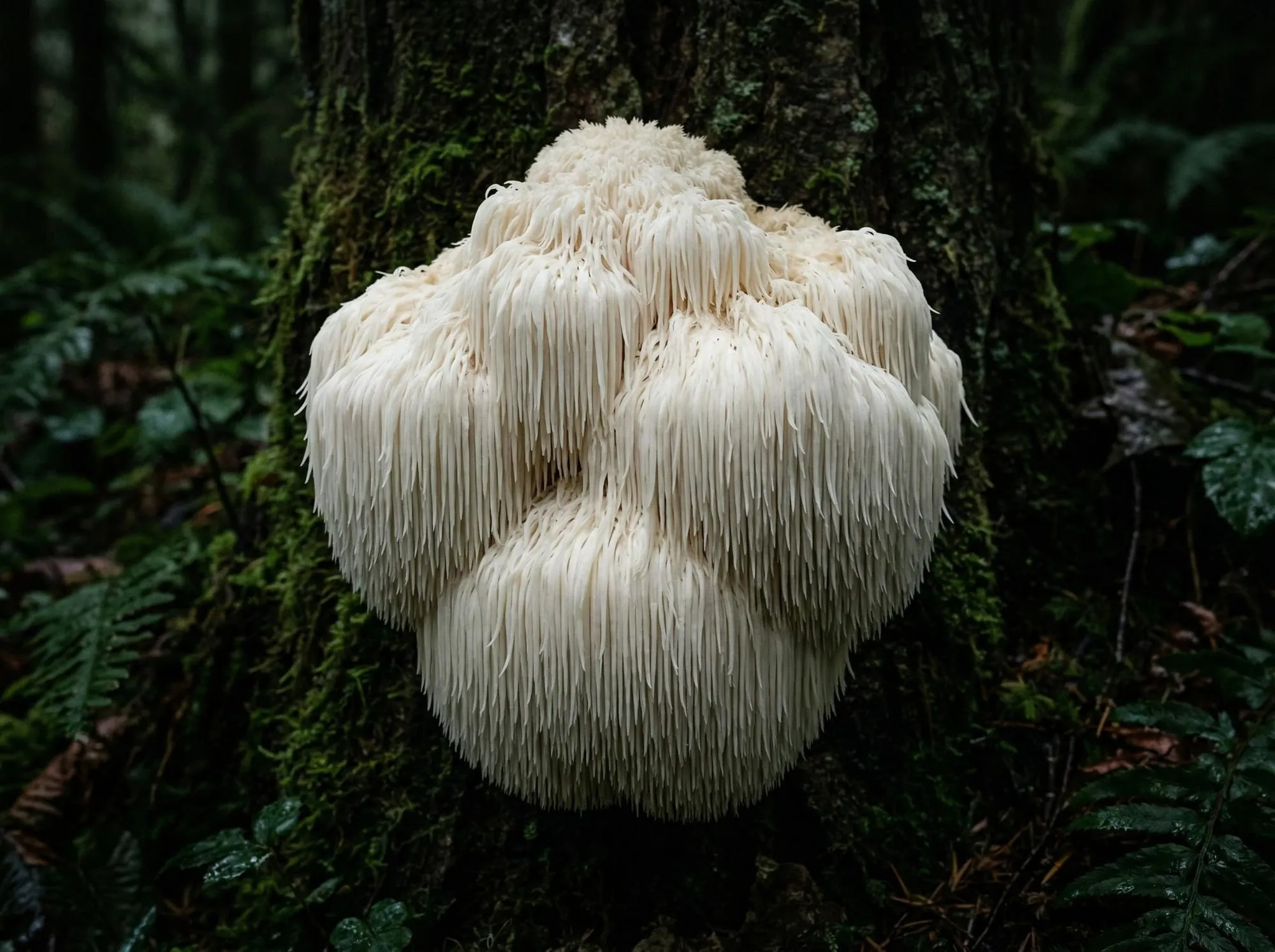
Hericium erinaceus (Bull.) Pers. — Erinaceus is Latin for "hedgehog"; a direct reference to the dense white spines, 1–5 cm in length, that cascade from a central body. These spines are the spore-bearing structures. There is no cap or stem — the entire fruiting body constitutes a single globular mass.
When fresh, its colour ranges from pure white to ivory. As it ages, it shifts to yellow-brown — this colour transition signals a loss of the bioactive profile, making harvest timing critical. The spherical body can reach 5–40 cm in diameter.
Natural habitat: Beech, oak, and maple stumps — particularly in tree wounds and hollows. In Turkey, natural populations exist in the humid forest ecosystems of the Eastern Black Sea region. MYCOVITA cultivates this species on oak-based substrate at its production centre in Ordu.
— BIOACTIVE COMPOUNDS —
Hericenones (C–G) Alcohol-soluble, low-molecular-weight aromatic compounds. Concentrated in the fruiting body. Small molecules capable of crossing the blood-brain barrier — an exceedingly rare property in the botanical world. Hericenones C, D, E, and F are among the first natural compounds demonstrated to stimulate NGF synthesis.
Reference: Kawagishi, H. et al. (1991). Erinacines A, B and C, strong stimulators of NGF-synthesis. Tetrahedron Letters, 32(35), 4561–4564.
Erinacines (A–I) Water-soluble diterpene compounds. Isolated predominantly from the mycelium. Erinacine A and E have been identified as the compounds with the highest NGF-synthesis-stimulating activity. They operate in synergy with hericenones.
Reference: Kawagishi, H. et al. (1994). Hericenons and erinacines: stimulators of NGF-synthesis. Mycologia.
Beta-Glucan 10–20% Beta-(1→3), (1→6)-D-glucan fractions. The polysaccharide group referenced in immune modulation research. Lion's Mane is one of the rare species that carries this component alongside its neurotrophic profile.
Reference: Wang, M. et al. (2014). Mechanism of immunostimulatory activity of Hericium erinaceus polysaccharides. Journal of Ethnopharmacology, 152(1), 189–196.
A Critical Market Distinction: Erinacines, which concentrate in the mycelium, become diluted into the substrate in the "mycelium-on-grain" method used by most producers. MYCOVITA's 100% fruiting body standard delivers a full-spectrum profile weighted towards hericenones.
— CURRENT RESEARCH —
Neuroscience — Clinical Study A double-blind, placebo-controlled clinical trial conducted in Japan in 2009 (Mori K. et al.) reported that 16 weeks of H. erinaceus supplementation in individuals aged 50–80 with mild cognitive impairment was associated with a significant increase in cognitive test scores compared to placebo. A critical finding: the effect was observed to reverse upon discontinuation — cumulative, sustained use is a determining factor in this relationship.
Reference: Mori, K. et al. (2009). Improving effects of Yamabushitake on mild cognitive impairment. Phytotherapy Research, 23(3), 367–372.
Peripheral Nervous System In rat models, H. erinaceus extract has been shown to accelerate regeneration following peripheral nerve crush injury.
Reference: Wong, K.H. et al. (2012). Peripheral Nerve Regeneration Following Crush Injury. Evidence-Based Complementary and Alternative Medicine.
Neurodegenerative Disease Research In vitro and animal model findings have been published indicating that Erinacine A reduces beta-amyloid plaque accumulation associated with Alzheimer's disease.
Reference: Zhang, J. et al. (2016). Neuroprotective effects of erinacine A on ischemic damage. Natural Product Research, 30(12), 1413–1417.
Comprehensive Review The most comprehensive current review covering the chemical constituents, nutritional properties, and health research of H. erinaceus.
Reference: Friedman, M. (2015). Chemistry, Nutrition, and Health-Promoting Properties of Hericium erinaceus. Journal of Agricultural and Food Chemistry, 63(32), 7108–7123.
— MYCOVITA —
The majority of Lion's Mane products on the market grow mycelium on grain and grind the entire mass. Forty to eighty percent of the product you receive is, in reality, oats or rice. In such cases, hericenone concentration is negligible.
MYCOVITA Apothecary No.01 is produced exclusively from 100% fruiting body. Mycelium, including substrate, does not enter the product.
CO₂ control is critical. MYCOVITA Room 2 maintains CO₂ at <800 ppm. Exceeding this threshold disrupts fruiting body morphology. For a quality fruiting body, this limit is a hard parameter.
Harvest window: When the spines reach full length, at the white-to-cream stage, before yellowing begins. This window is 24–48 hours. Late harvest means bioactive profile loss and bitterness.
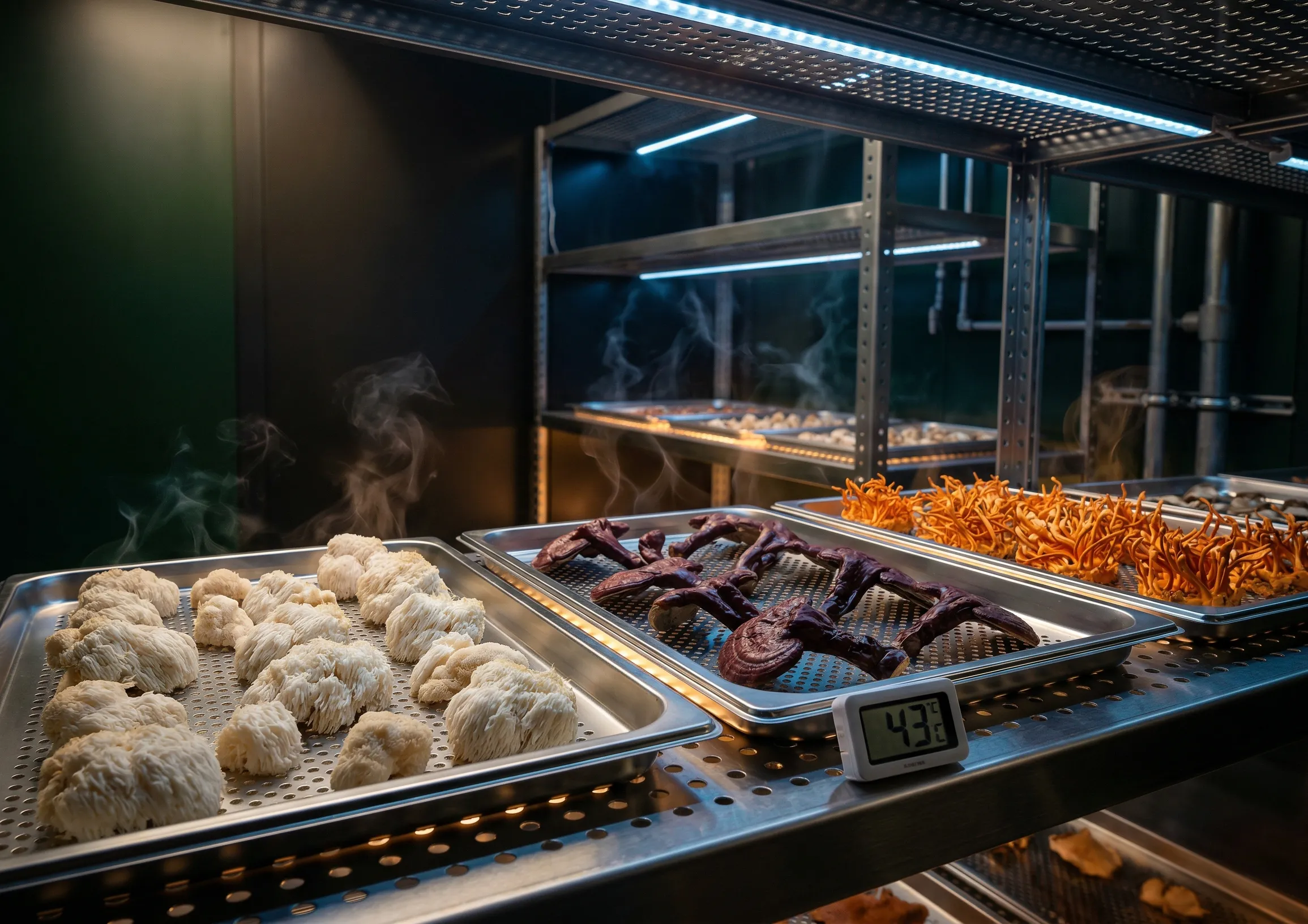
Drying: 42–45°C. Hericenone structures carry heat sensitivity — they begin to degrade above 60°C. MYCOVITA never exceeds this threshold.
Mycelial source: Netherlands-certified production facilities. Genetically stable strain. 100% fruiting body. Certificate of Analysis on every batch.
— HOW TO USE —
Lion's Mane begins to lose its sensitive compounds above 75°C. Temperature genuinely matters with this species.
Classic Infusion 1 g / 200 ml water · 70–75°C · 5–7 minutes · Stir gently · Strain and drink
Morning Mushroom Coffee Prepare filter coffee or espresso. Add 1 g powder to coffee cooled to 70°C. Froth with oat or almond milk. Caffeine + neurotrophic profile — the most intentional start to the day.
Cold Infusion (prepare overnight) 500 ml cold water · 2–3 g · Refrigerate 8–12 hours · Strain in the morning The compound profile dissolved by cold water differs from that of hot infusion — alternating between the two delivers a full spectrum.
Evening Tonic 1 g Lion's Mane + 1 g Reishi · 250 ml water · 75°C for 10 minutes End-of-day nervous system protocol — Lion's Mane neurotrophic, Reishi adaptogenic.
Morning Tonic 1 g Lion's Mane + 500 ml warm water (below 70°C) · Lemon juice · Fresh ginger · Steep 5 minutes A coffee-free morning start. Light, clean, focused.
Smoothie Addition 1 g powder can be added to any smoothie. Compatible with any liquid below 70°C. Flavour is near-neutral — undetectable in banana, coconut milk, or oat-based smoothies.
Adaptive Duration Research has based findings on a minimum of 8 weeks of regular use. A single-use expectation is inaccurate. This is a food, not a pharmaceutical — it requires accumulation.
Flavour profile: Mildly sweet, neutral, with a faint nutty background. Among the easiest functional mushrooms to drink.
Related reading: What Is NGF? · What Is Beta-Glucan? · Morning Protocol · 30-Day Lion's Mane Experience · The Gut-Brain Axis and Lion's Mane
On MYCOVITA's production philosophy, technical infrastructure, and transparency principles: Why MYCOVITA?
Hericium erinaceus is classified as a food within the scope of the Turkish Food Codex. The scientific research presented on this page is compiled from academic literature and serves informational purposes.
MYCOVITA's Hericium erinaceus products are food products. They make no claim to treat, prevent, or cure any disease. If you have a health condition, consult your physician.
— SCIENTIFIC REFERENCES —
Kawagishi, H. et al. (1991). Erinacines A, B and C, strong stimulators of NGF-synthesis. Tetrahedron Letters, 32(35), 4561–4564. Kawagishi, H. et al. (1994). Hericenons and erinacines: stimulators of NGF-synthesis in Hericium erinaceum. Mycologia. Mori, K. et al. (2009). Improving effects of Yamabushitake on mild cognitive impairment. Phytotherapy Research, 23(3), 367–372. Wong, K.H. et al. (2012). Peripheral Nerve Regeneration Following Crush Injury. Evidence-Based Complementary and Alternative Medicine. Wang, M. et al. (2014). Mechanism of immunostimulatory activity of Hericium erinaceus polysaccharides. Journal of Ethnopharmacology, 152(1), 189–196. Zhang, J. et al. (2016). Neuroprotective effects of erinacine A on ischemic damage. Natural Product Research, 30(12), 1413–1417. Friedman, M. (2015). Chemistry, Nutrition, and Health-Promoting Properties of Hericium erinaceus. Journal of Agricultural and Food Chemistry, 63(32), 7108–7123.
You May Also Find Interesting
→ Travel Protocol — How to Use While Travelling
Corporate & B2B: Restaurants, hotels, wellness centres, and bulk supply: [email protected].
The NGF Axis — Related Resources
A structured content cluster on the Lion's Mane neurotrophic pathway:
- Lion's Mane Species Encyclopedia — The complete species profile.
- Hericenone — NGF synthesis stimulators in the fruiting body.
- Erinacine — The blood-brain-barrier-crossing form found in mycelium.
- NGF — The biological role of nerve growth factor.
- Gut-Brain Axis — Enteric nervous system interaction.
- 30-Day Profile — Timeline of the neurotrophic process.
- Nootropic Stack — Combination assessment with other compounds.
This content is for informational purposes and does not constitute medical advice. Consult your physician before making any health decision. Functional mushrooms are not pharmaceuticals and cannot be used to treat diseases.
Version: 1.0 | Last updated: 20 Apr 2026 | Sources reviewed: 12+ | Methodology: Editorial Policy | References: Bibliography