Laboratory Logbook: Documenting the Production of MYCOVITA
Related reading: Production Process · What Is Substrate?
MYCOVITA's production philosophy and transparency principles: Why MYCOVITA?
Mycelium Library No.20
— THE ANCHOR —
There is no other way to begin this entry:
During our first growth cycle, the contamination rate was 34%.
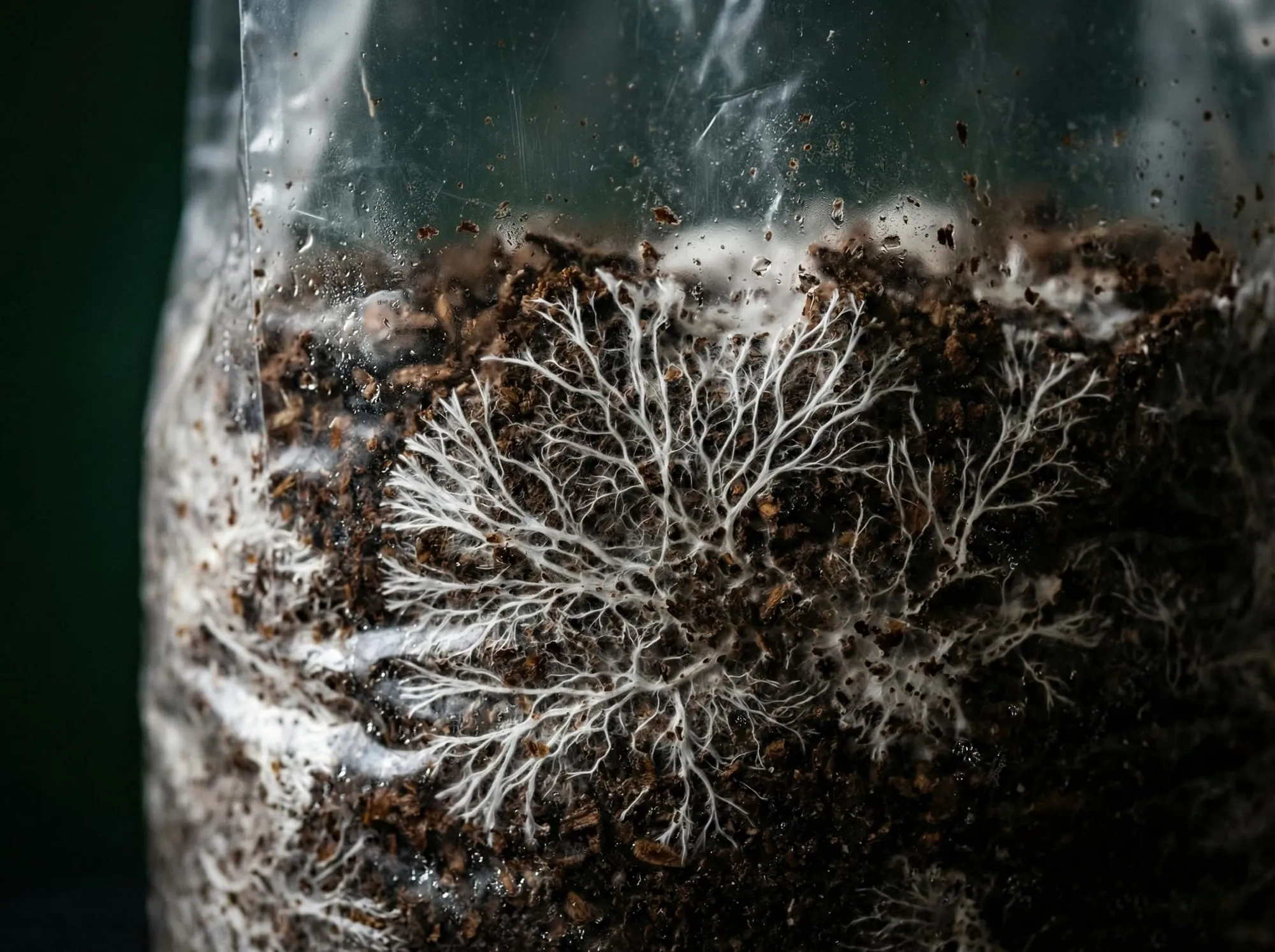
One in every three bags was discarded. Trichoderma — green mold — is the nightmare of mushroom cultivation, afflicting even the most esteemed institutions. And it found us.
We did not want to share this note. Then we reflected: we use transparency as a slogan. If we were genuinely transparent, what would we write?
We would write this.
Learning Through Trichoderma
Overcoming Trichoderma does not happen all at once. The sterilization protocol, bag-filling speed, filter-cap quality, air circulation during filling — each of these constitutes a variable. And testing each variable individually consumes weeks.
We devoted six months. We drove the contamination rate from 34% down to 18%, then to 7%, and it now stands below 3%.
Three percent. This rate is comparable to that of reputable producers in the industry. But without those first six months, reaching this level would have been impossible.
Substrate Formula: 14 Distinct Trials
Identifying the correct substrate composition for Lion's Mane was among our longest research endeavors.
We varied the oak sawdust ratio. We added bran, then removed it. We trialed poplar sawdust. We adjusted moisture content with ±2% precision.
Fourteen different formulations were tested. Nine failed to produce the expected growth profile. Five proved adequate. Two were good. One was correct.
That formula is the one we use now. And we do not alter it — because we understand precisely why it is correct.
Harvest Timing: The 48-Hour Difference
The harvest window for Lion's Mane is narrow. A fruiting body harvested too early contains immature biochemistry. One harvested too late begins releasing spores — and shelf life drops dramatically.
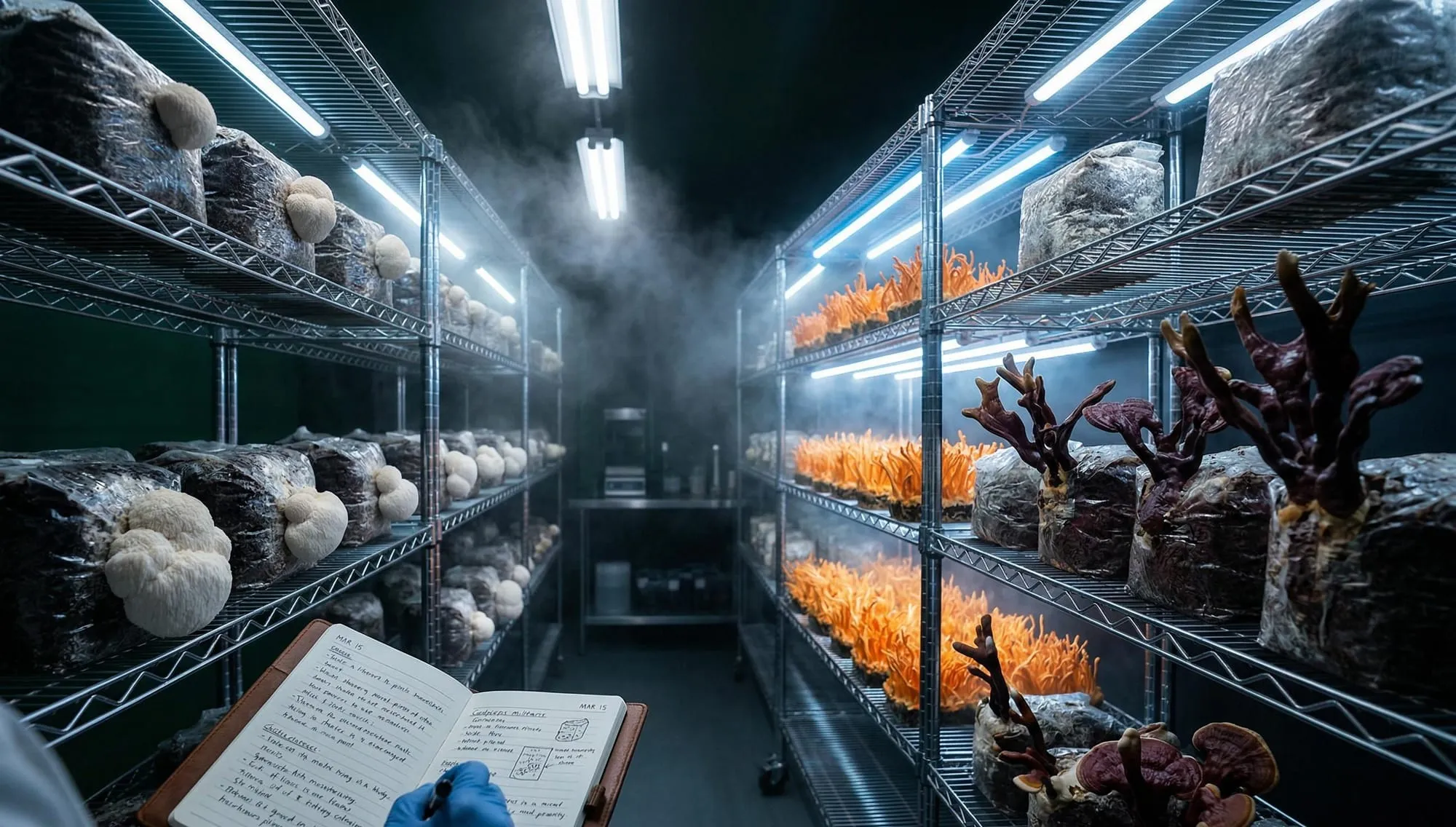
To identify the correct window, we inspected the grow rooms morning and evening. We measured at the millimeter scale. We documented with photography.
Currently, every harvest occurs within a 4-to-6-hour optimal window determined each day.
Low-Heat Drying: A Deliberate Decision
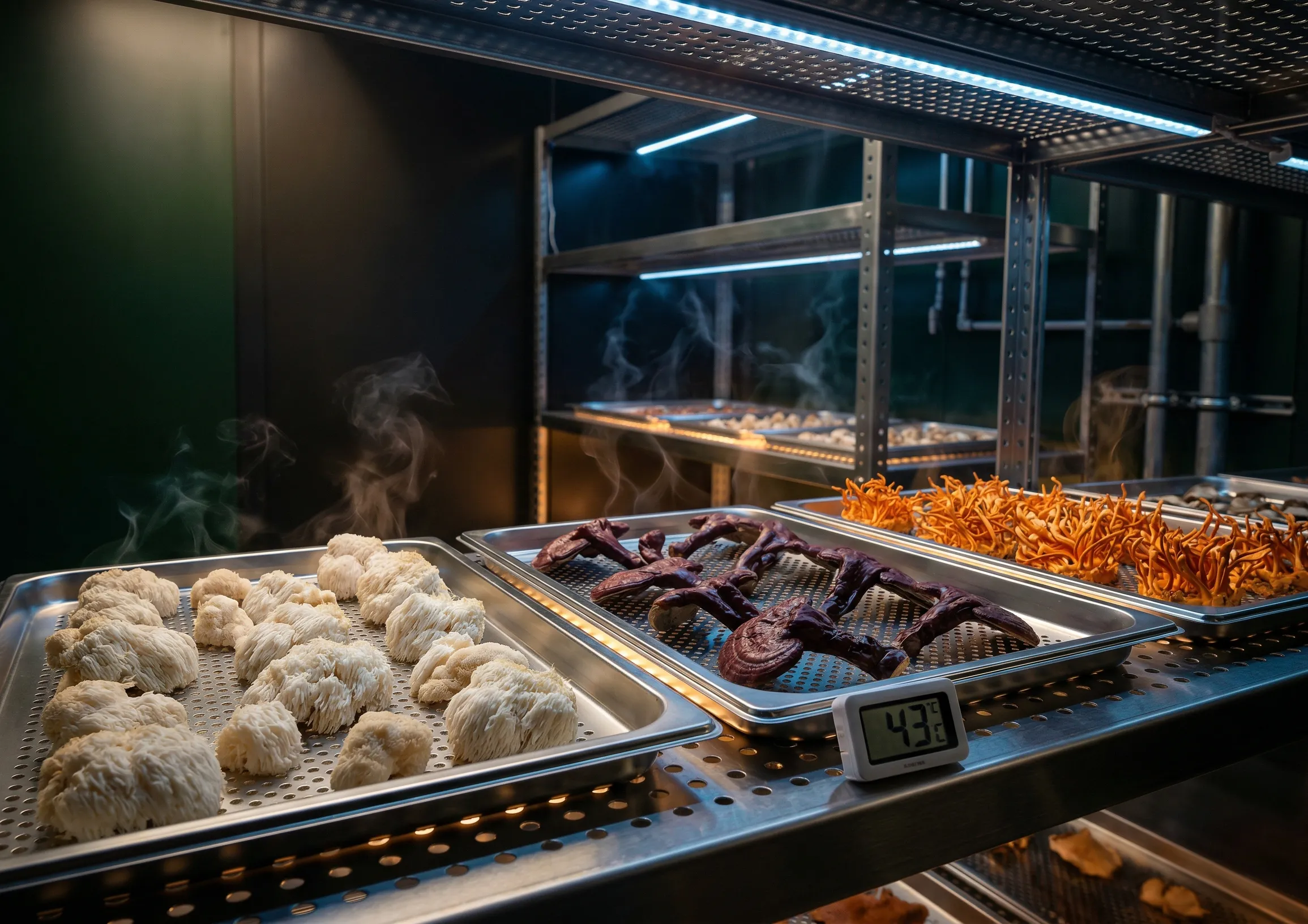
Industrial drying equipment typically operates at 60–80°C. It is fast, efficient, and standard.
We operate at 42–45°C. Drying at this temperature requires 22–42 hours — twice the duration of the industrial process.
Why?
Beta-glucan polymers may undergo structural degradation at elevated heat. Thermo-sensitive compounds such as hericenones and erinacines can exhibit loss of activity above 60°C. This finding is documented in the academic literature.
Can the difference be analyzed? Yes. When the same batch is analyzed at different drying temperatures, a measurable difference in beta-glucan content emerges.
That difference justifies the additional 15–20 hours. Every single time.
Katya's Role
MYCOVITA is a family enterprise. Kemal manages the production process and technical infrastructure. Katya Tutkun oversees product quality and standardization.
Wherever Katya's eye lingers, the process improves. A color inconsistency noticed leads to a drying protocol review. A texture deviation signals harvest-timing adjustments.
The laboratory notebooks are kept jointly. Every observation is recorded with date and batch number. These records serve as both a troubleshooting resource and a learning archive.
What We Learned
Producing high-quality mushroom powder is not a matter of good intentions alone. It requires building systems, testing patiently, and learning from error.
Many products on the market that appear high-quality lack this process behind them. Appearance is easy — a system takes time.
We invested the time. And we continue to invest it.
Mycelium Library | Laboratory Notebooks | MYCOVITA — Ordu, Türkiye
MYCOVITA products are food products. They make no claim to treat, prevent, or cure any disease. If you have a health concern, consult your physician.
You May Also Find Interesting
→ Can Mushrooms Produced in Turkey Be Trusted?
→ Functional Mushroom Production in Turkey
→ The Functional Mushroom Market in Turkey
This content is for informational purposes only and does not constitute medical advice. Consult your physician before making any health decisions. Functional mushrooms are not pharmaceuticals and cannot be used to treat diseases.
Version: 1.0 | Last updated: 20 Apr 2026 | Sources reviewed: 5+ | Methodology: Editorial Policy | References: Bibliography