The Definitive Guide to Preserving Mushroom Powder: Moisture, Light, and Longevity
— THE SNAG —
The finest substrate. The most meticulous harvest. Low-temperature drying. A Dutch-certified strain.
Improper storage can degrade all of this within a few weeks.
Mushroom powder is more delicate than it appears — color does not change, odor does not change. Yet the bioactive profile silently declines. By the time you notice, it is too late.
— TWO ENEMIES: MOISTURE AND LIGHT —
Moisture: Beta-glucans, triterpenes, and cordycepin begin to degrade in the presence of moisture. Clumping is the visible indicator — yet bioactive loss starts before clumping even appears.
The refrigerator is deceptive: the interior seems dry, but each time you retrieve the powder, condensation forms from the temperature shift. These micro-droplets of moisture silently degrade the powder. Do not store in the refrigerator.
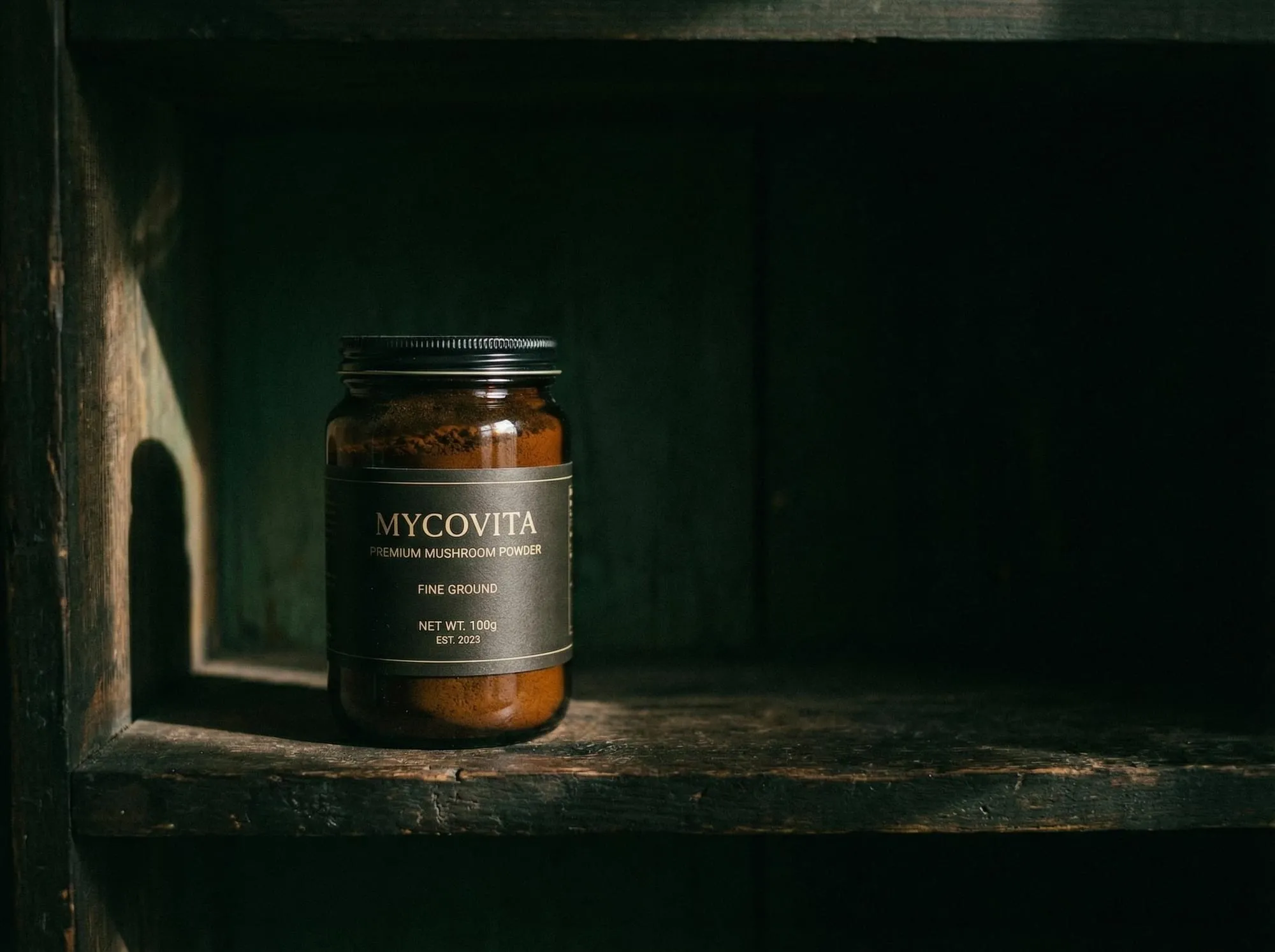
Light: Especially UV light — it breaks down polyphenols and sensitive compounds. This is why opaque packaging is used. If using a glass jar, choose dark glass or keep it in a dark cupboard.
— CORRECT STORAGE CONDITIONS —
Location: A cool, dry, dark cupboard. Not the kitchen counter — humidity and temperature fluctuations are too high. An inner cabinet, pantry, or drawer is ideal.
Temperature: Room temperature — 15–22°C. Keep away from heat fluctuations.
Humidity: 40–55% relative humidity is ideal. Do not store near a dishwasher, kettle, or any source of steam.
Light: No direct sun or UV exposure. Absolutely do not place on a windowsill.
— AFTER OPENING —
Close the seal completely after each use. Do not insert a damp spoon — first take the powder with a dry spoon, then close the seal.
If the packaging seal is damaged: transfer the powder to a glass jar with a gasket. Amber or dark glass is preferred. Fix a label — write the species name and date of opening.
— SPECIES-SPECIFIC NOTES —
Lion’s Mane: The most sensitive species. Hericenone fractions are susceptible to light and moisture. Store in an opaque jar or keep in the original packaging.
Reishi: Triterpenes are comparatively stable. Moisture, however, remains the enemy — a dry environment is essential to preserve the bitterness profile.
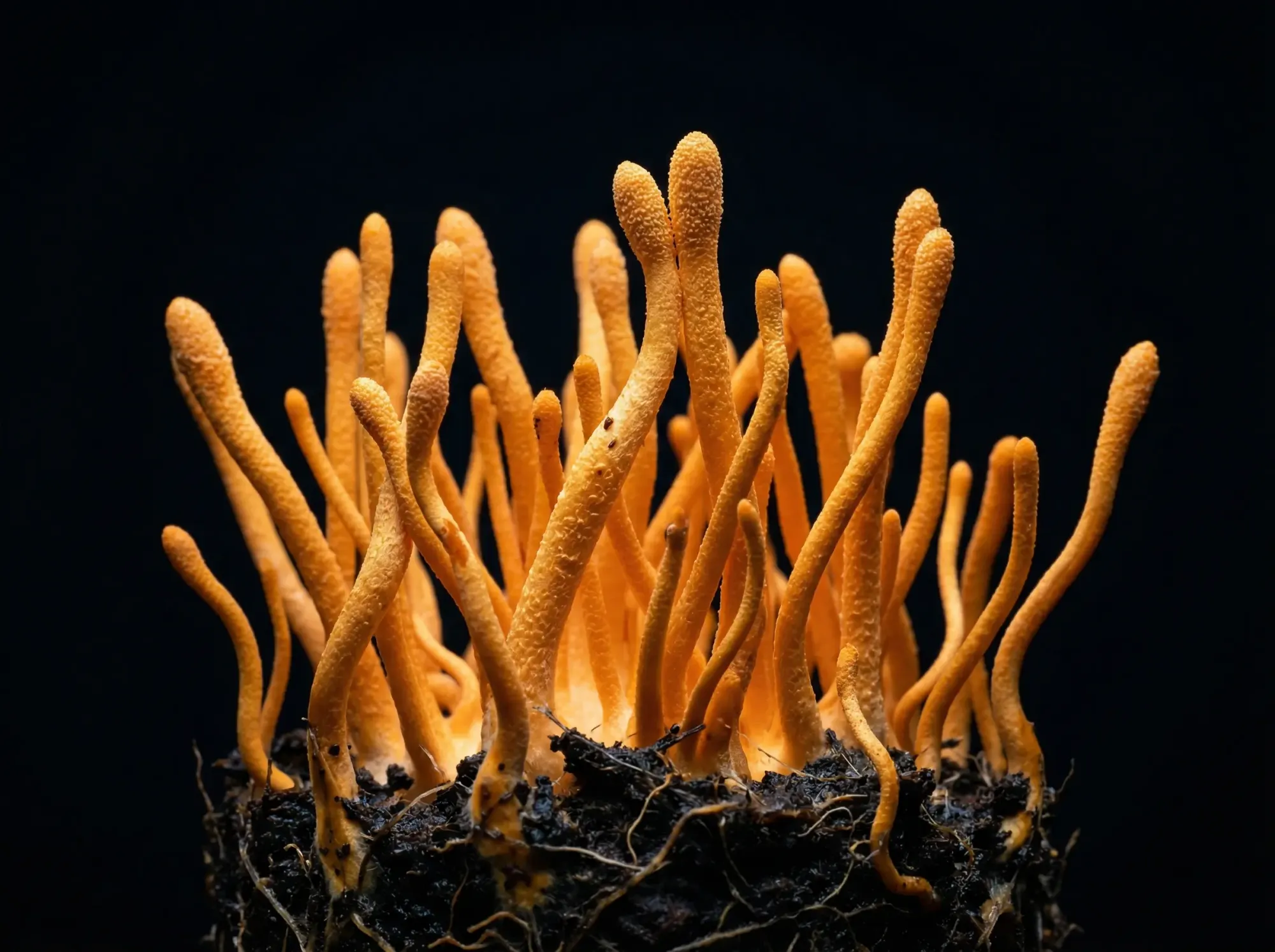
Cordyceps: Cordycepin is sensitive to moisture and heat. This is one reason we turn over fresh strains every 3–4 cycles — it is ideal to consume the product without prolonged storage.
Turkey Tail and Sparassis: PSK and beta-glucans are stable — but moisture is a problem here as well. A dry environment is required.
— FOR THE GASTRONOMY SERIES —
King Oyster, Shiitake Donko, Maitake — whole dried form. The same principles apply, with one additional note:
Before rehydrating, verify that the mushroom is intact, brittle, and dry. If softening, discoloration, or any sign of mold is present, do not use it.
Unopened package: 18–24 months. Opened: consume as rapidly as possible — within 3–4 months.
— TRAVEL —
Keep the original sealed package in your carry-on luggage. Do not place it in a hot vehicle trunk. Do not expose it to sunlight. A small glass jar with a gasket is a practical alternative — a 10–15 gram dose is sufficient for travel.
— SHELF LIFE —
Under correct storage conditions: 24 months from the production date. Refer to the batch number and expiration date on the package.
Personal recommendation for an opened package: consume within 6 months. The bioactive profile declines over time — it is most potent within the first 3 months.
Related reading: Production Process · Vitamin D and Mushrooms
MYCOVITA production philosophy and transparency principles: Why MYCOVITA?
Mycelial Library | Apothecary | Gastronomy | MYCOVITA
You May Also Be Interested In
→ Travel Protocol — How Do I Use It While Traveling?
→ Is It Safe to Trust Mushrooms Produced in Turkey?
Quality and Production — Related Resources
A structured cluster of content covering every stage of the functional mushroom production chain:
- What Is Substrate? — The foundation of grain- and wood-based substrates.
- Certified Mycelium — Spawn source is critical.
- Strain and Intraspecies Variation — The influence of the genetic line.
- Mycelium vs. Fruiting Body — Differences in compound profiles.
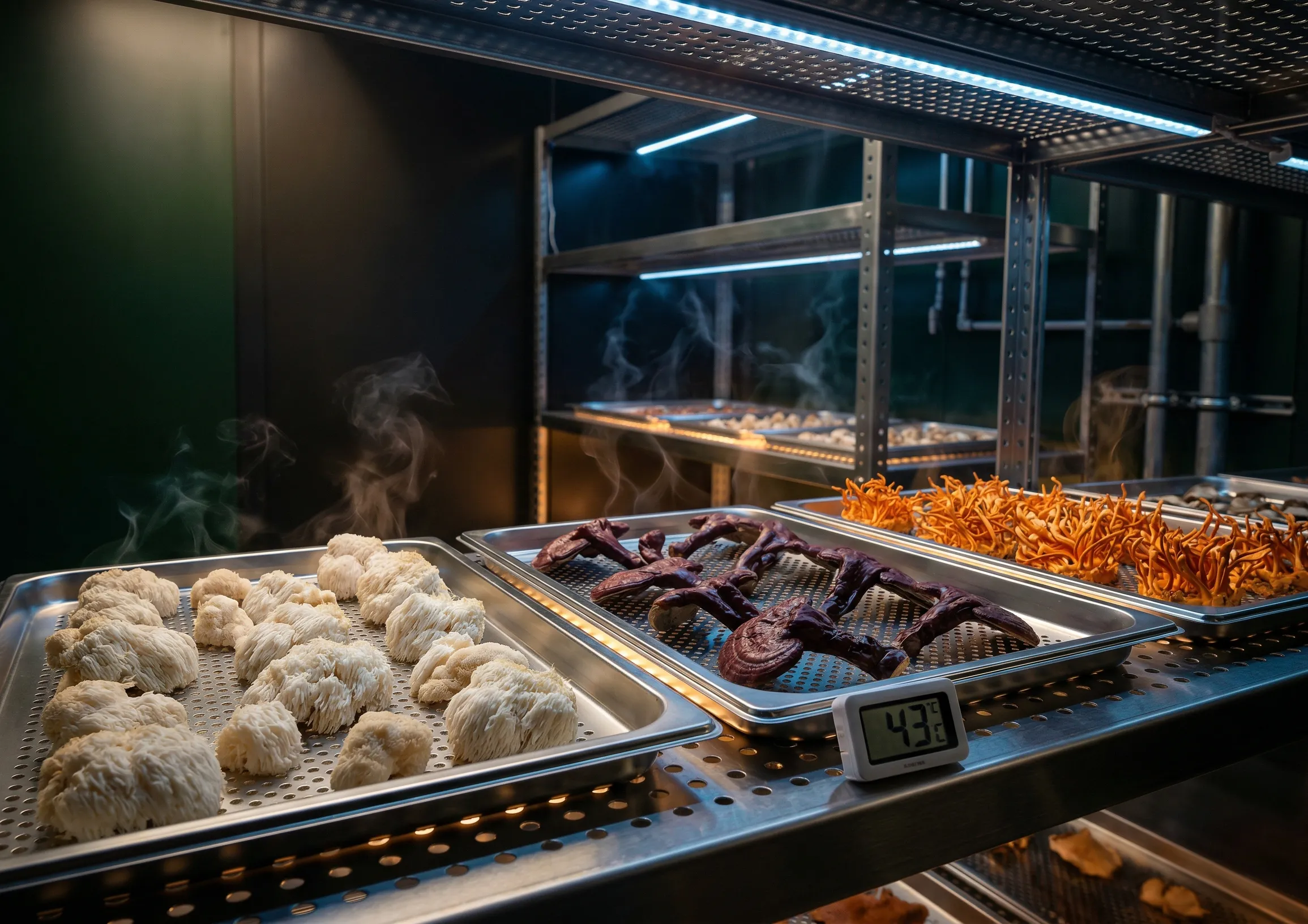
- Low-Temperature Drying — The science behind the 42–45°C threshold.
- Extraction Methods — Hot water, ethanol, and dual extraction.
- Beta-Glucan Measurement — Megazyme and other methodologies.
- Reading a COA — How to interpret a Certificate of Analysis.
- Contamination and Mycotoxins — Safety protocols.
- Black Sea Climate — The region’s natural advantages.
- Storage — Shelf life and quality preservation.
This content is for informational purposes only and does not constitute medical advice. Consult your physician before making any health decisions. Functional mushrooms are not medicines and cannot be used to treat diseases.
Version: 1.0 | Last updated: 20 Apr 2026 | Sources reviewed: 5+ | Method: Editorial Policy | References: Bibliography