Flammulin: Unraveling the Enoki Mushroom’s Antifungal Protein
Enoki mushroom (Flammulina velutipes) is an indispensable element of East Asian cuisines. Beyond its familiar appearance with slender stems and tiny caps, this species harbors an intriguing biomolecule for researchers: flammulin.
What Is Flammulin?
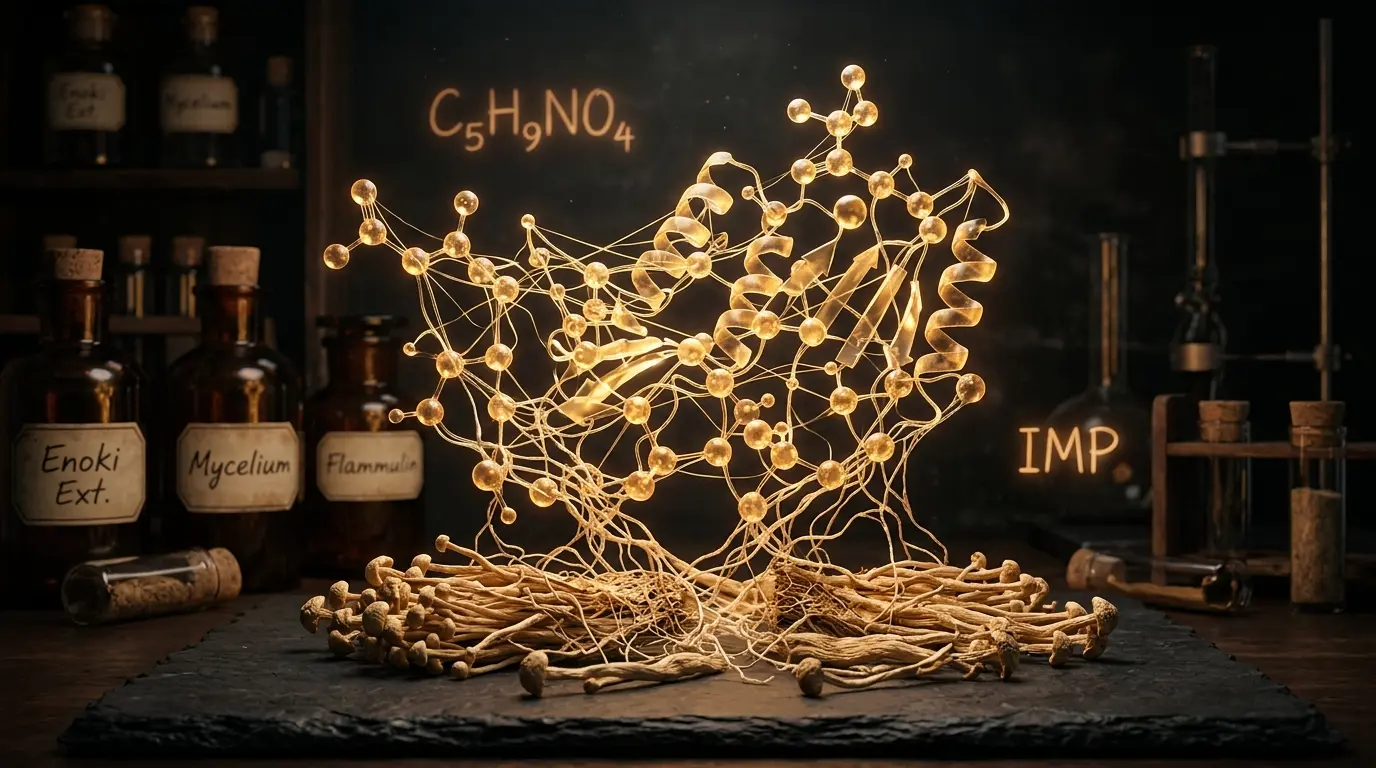
Flammulin is a protein isolated from Flammulina velutipes, belonging to the ribosome-inactivating protein (RIP) class. With a molecular weight of approximately 40 kDa, flammulin falls into the single-chain Type I RIP category (Wang and Ng, 2000; PMID: 10809700).
RIP proteins carry N-glycosidase activity that specifically depurinates ribosomal RNA. This activity, which blocks the protein synthesis machinery, constitutes the molecular basis of antiviral and antifungal properties.
Antifungal Activity
The antifungal activity of flammulin has been tested under in vitro conditions against various fungal pathogens. It has been shown to inhibit mycelial growth on plant pathogenic fungi such as Fusarium oxysporum and Botrytis cinerea.
The mechanism of action is explained partly through inhibition of protein synthesis and partly through direct interference with cell wall components. Antifungal IC₅₀ values vary significantly from species to species.
Other Bioactivities
Flammulin’s antiviral properties have also been investigated. HIV-1 reverse transcriptase inhibition and antiproliferative activity have been reported in vitro (Ng et al., 2003; PMID: 12826128).
However, systemic toxicity of RIP proteins poses a significant limitation; targeting strategies (such as the immunotoxin approach) are being explored for in vivo applications.
Other Components of Enoki Mushroom
Flammulin constitutes only one part of Flammulina velutipes’ bioactive profile. Eritadenine-like nucleoside derivatives, the fibulosin polysaccharide, and β-glucan fractions are other constituents that make this species compelling for multilayered research.
It is also noteworthy that the tall cultivated commercial form of Enoki (pale, slender stems grown under light deprivation) differs in its biochemical component profile from the wild outdoor form.
Related Reading
- Enoki: Flammulina velutipes Species Encyclopedia
- Lentin: Shiitake’s Little-Known Ribonuclease
- Pleurotin: Oyster Mushroom’s Antibiotic Component
This page has been prepared within the scope of the MYCOVITA Mycology Library. It is for scientific reference purposes; it does not constitute medical advice. Source: mycovita.bio · Content Policy v1.0