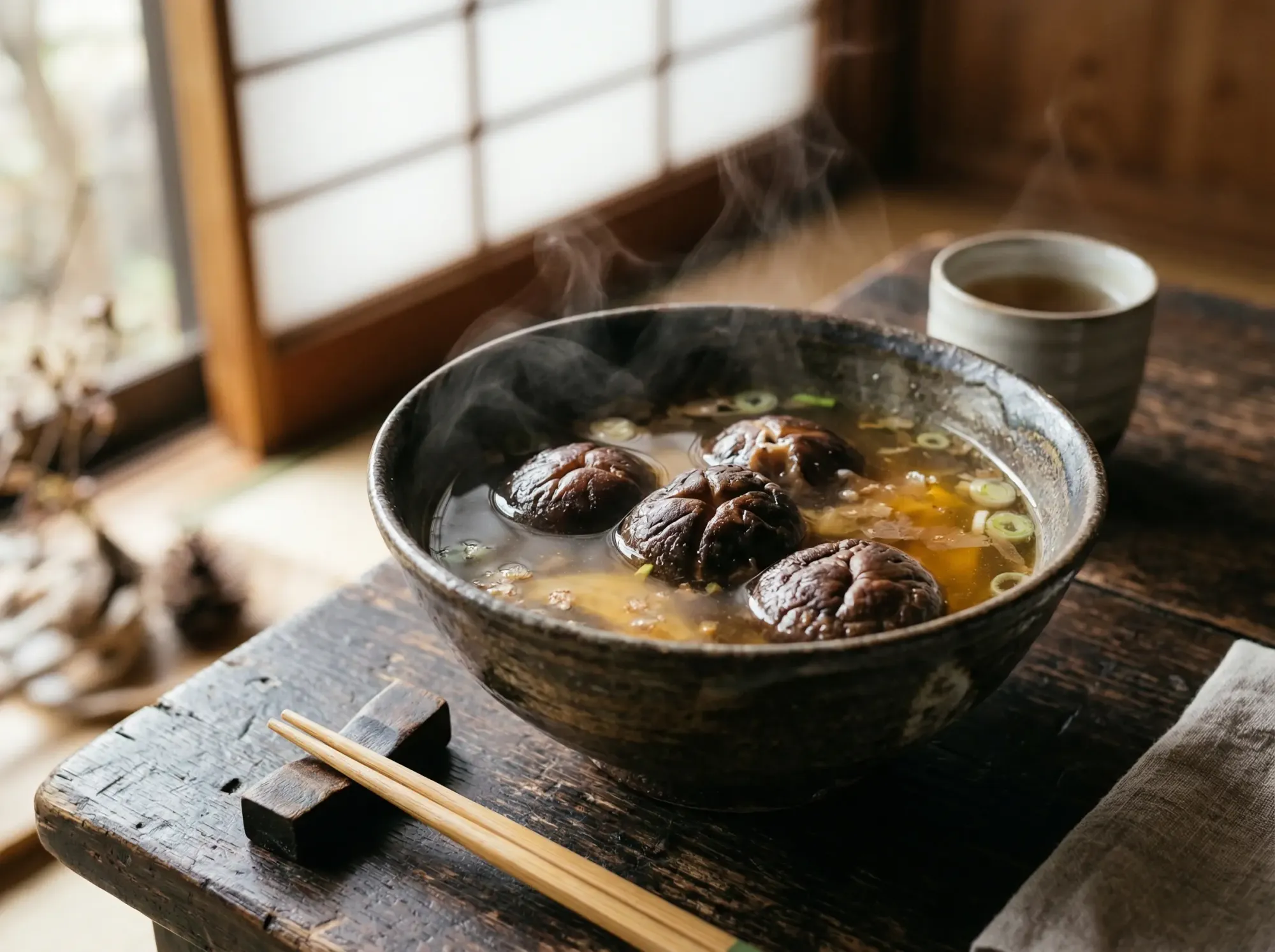
Vegan Protein Platter with King Oyster Mushrooms and the Scallop Searing Method
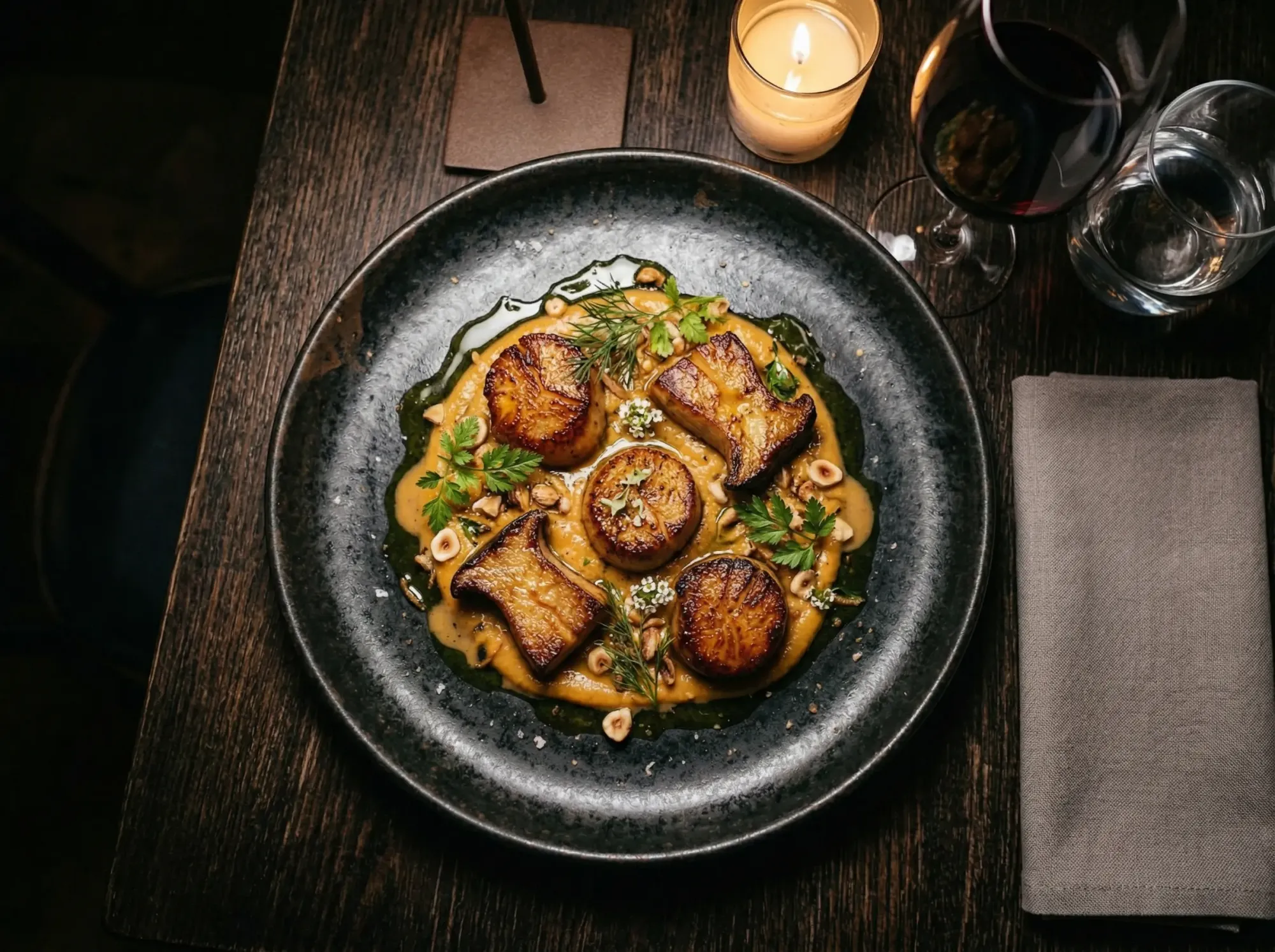
— THE HOOK —
There is no meat at the center of the plate. Yet something rests there — thick, golden, crisp on the exterior, moist within. The knife meets resistance on entry.
It is a mushroom.
But in Paris's three-star restaurants, it stands in for scallop. Tokyo's omakase chefs sear each piece individually before service. And you can execute this at home — with the correct technique.
— THE STORY —
Puglia. Southern Italy. For centuries, the regional cuisine has featured Cardoncello — the wild form of King Oyster, growing on the roots of field eryngo across the stony Mediterranean steppe.
When Puglian grandmothers tossed this mushroom into a pan with olive oil, they understood something fundamental: high heat. Patience. No touching. They did not know the Maillard reaction by its chemical name, but they knew its outcome better than anyone — golden color, nutty aroma, a crackling surface, moisture held within.
In 1993, Japan succeeded in cultivating the species under controlled conditions. A thick, uniform commercial form with extended shelf life emerged. Japanese chefs recognized immediately: this mushroom responds to cooking technique. It withstands high heat. It retains moisture. It delivers deep umami.
By the 2000s, New York and Paris fine dining kitchens had discovered it. Chefs noticed something remarkable: a King Oyster stem, cooked with proper technique, becomes nearly indistinguishable from a sea scallop. Since then, menus have read "Scallop — King Oyster." Not as a substitute. As the feature.
— TECHNIQUE — 5 STEPS —
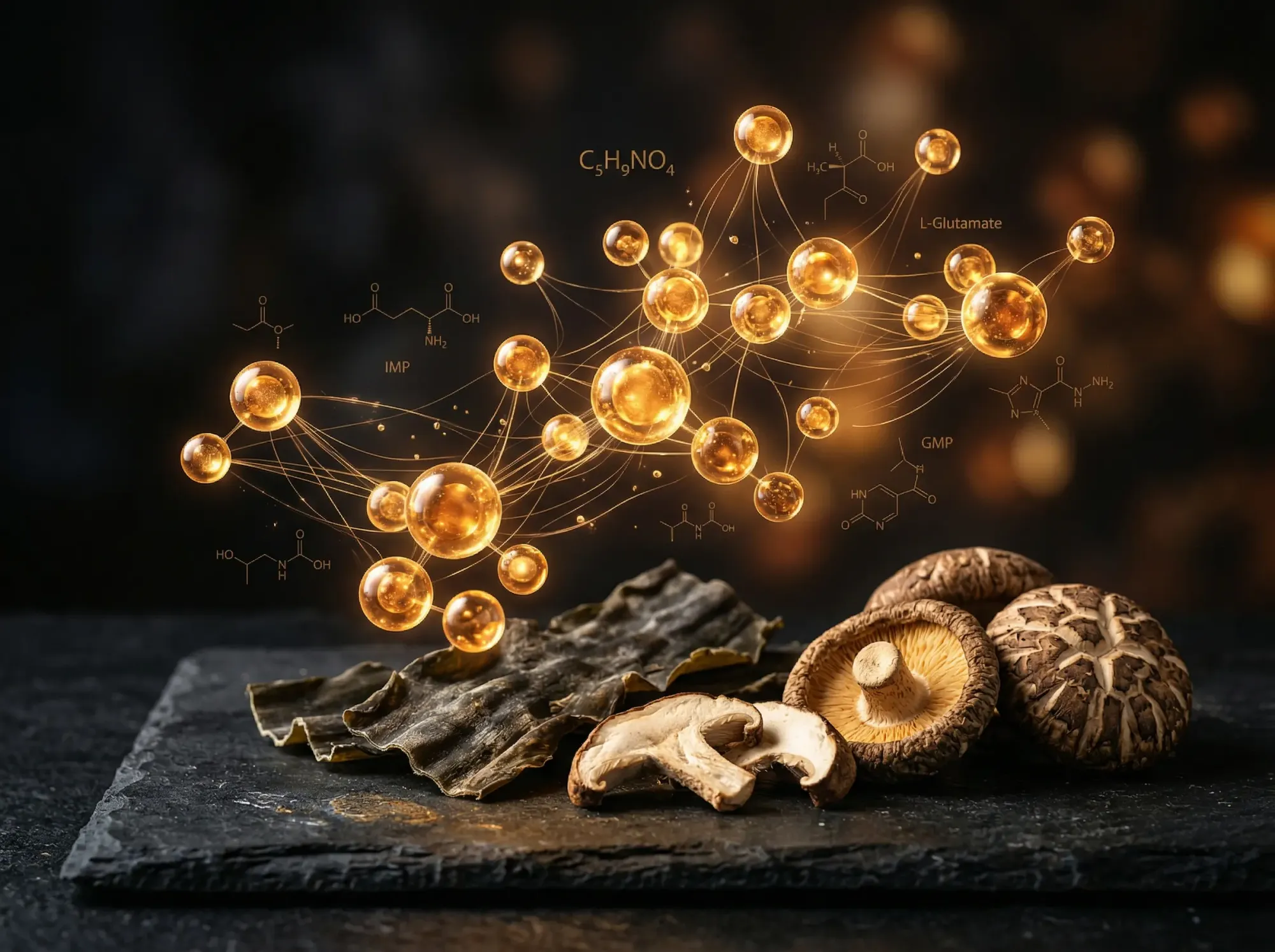
Step 1 — Rehydration Soak MYCOVITA Medallion slices in warm water at 50–60°C for 20–30 minutes. Do not use cold water — warm water opens the fiber structure, restoring the original texture. For deeper umami, replace the soaking water with Shiitake Donko dashi — this infuses GMP directly into the flesh.
Step 2 — Drying (The most critical step) A wet surface does not sear; it steams. The difference is that simple.
Pat the rehydrated slices completely dry with paper towels — sandwich them between two layers of paper towel and press gently with the palm of your hand. The surfaces must be bone-dry. Skipping this step undermines the entire technique.
Step 3 — Scoring (Optional but effective) Make shallow crosshatch cuts on one surface with the tip of a knife — superficial, not deep. This allows heat to reach the center more rapidly and creates the iconic scallop appearance.
Step 4 — Searing Bring a cast-iron or steel pan to maximum heat. Add a thin layer of high-smoke-point oil — grapeseed, avocado oil.
Arrange the slices in the pan with the scored surface facing down.
Do not touch. 3–4 minutes. If you shake the pan or stir, you are steaming, not searing. Wait until the underside turns golden brown.
Step 5 — Basting Flip. Add butter or olive oil, garlic, fresh thyme. Tilt the pan slightly — continuously spoon the foaming aromatic fat over the mushrooms. 2 minutes.
Finish: sea salt, freshly ground black pepper.
— PLATE ARCHITECTURE —
The King Oyster stem occupies the center of the plate — positioned like a scallop. Beneath it, a horizontal foundation:
Purée beds:
- Celeriac purée — light, with an earthy-straw note, a classic scallop pairing
- Pea mash — fresh, green, providing contrast
- Cauliflower purée + a touch of truffle oil — creamy, neutral, capable of carrying density
Sauce:
- Soaking water + butter emulsion — a dashi beurre blanc
- A simple squeeze of lemon — acid cuts through and balances the richness
Garnish:
- Fresh herbs — parsley, thyme, mitsuba
- Toasted hazelnuts or pine nuts — texture
- Fleur de sel — applied at the final moment
— WHY KING OYSTER —
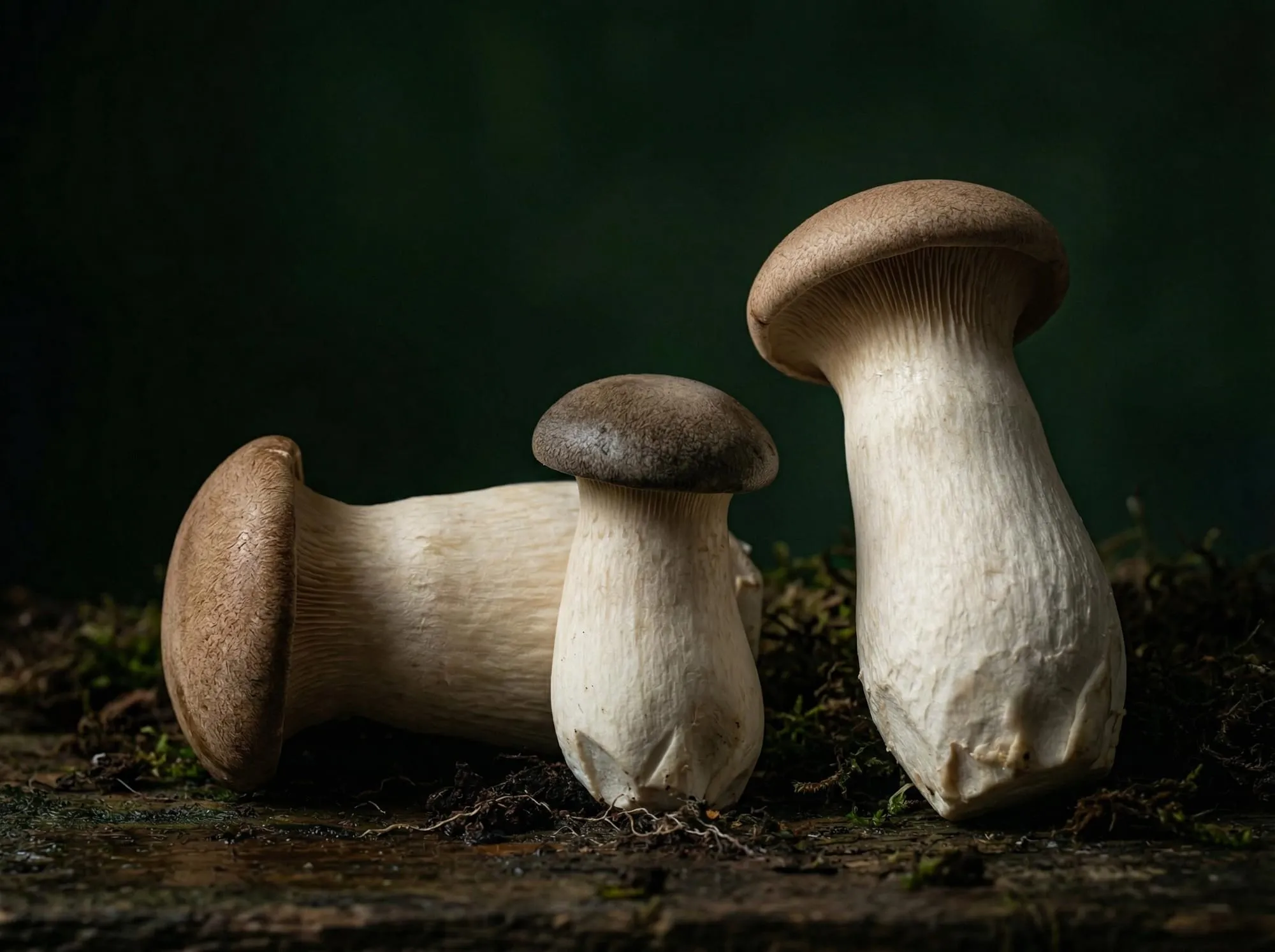
The texture is unique to this species. The thick, fleshy stem separates parallel to the fibers during cooking — it is the only mushroom that mimics the muscle structure of a scallop. Other Pleurotus species cannot achieve this texture.
The compositional profile arrives as a bonus: lovastatin (a natural statin), ergothioneine (one of the richest fungal sources), and beta-glucan at 15–25%. The plate carries both gastronomic and functional credentials.
— FREQUENTLY ASKED —
"Can I use fresh King Oyster?" You can — but the umami profile remains weaker compared to the dried form. The rehydration process concentrates GMP; fresh mushrooms do not undergo this process.
"Does pan choice matter?" It matters significantly. Cast iron or heavy-bottomed steel pan — a thin pan cannot hold heat; the moment the mushroom contacts the surface, the temperature drops and steaming begins. The heavier the pan, the better the result.
"How much oil?" Little. Excess oil foams and prevents searing. A thin layer — just enough to coat the pan surface.
You May Also Find Interesting
→ Can You Trust Mushrooms Produced in Turkey?
→ Functional Mushroom Production in Turkey
Related reading: King Oyster Encyclopedia · King Oyster in the Kitchen
MYCOVITA's production philosophy and transparency principles: Why MYCOVITA?
Gastronomy | Mycelium Library | MYCOVITA
This content is for informational purposes only and does not constitute medical advice. Consult your physician before making any health-related decisions. Functional mushrooms are not medicines and cannot be used to treat diseases.
Version: 1.0 | Last updated: 20 Apr 2026 | Sources reviewed: 5+ | Methodology: Editorial Policy | References: Bibliography