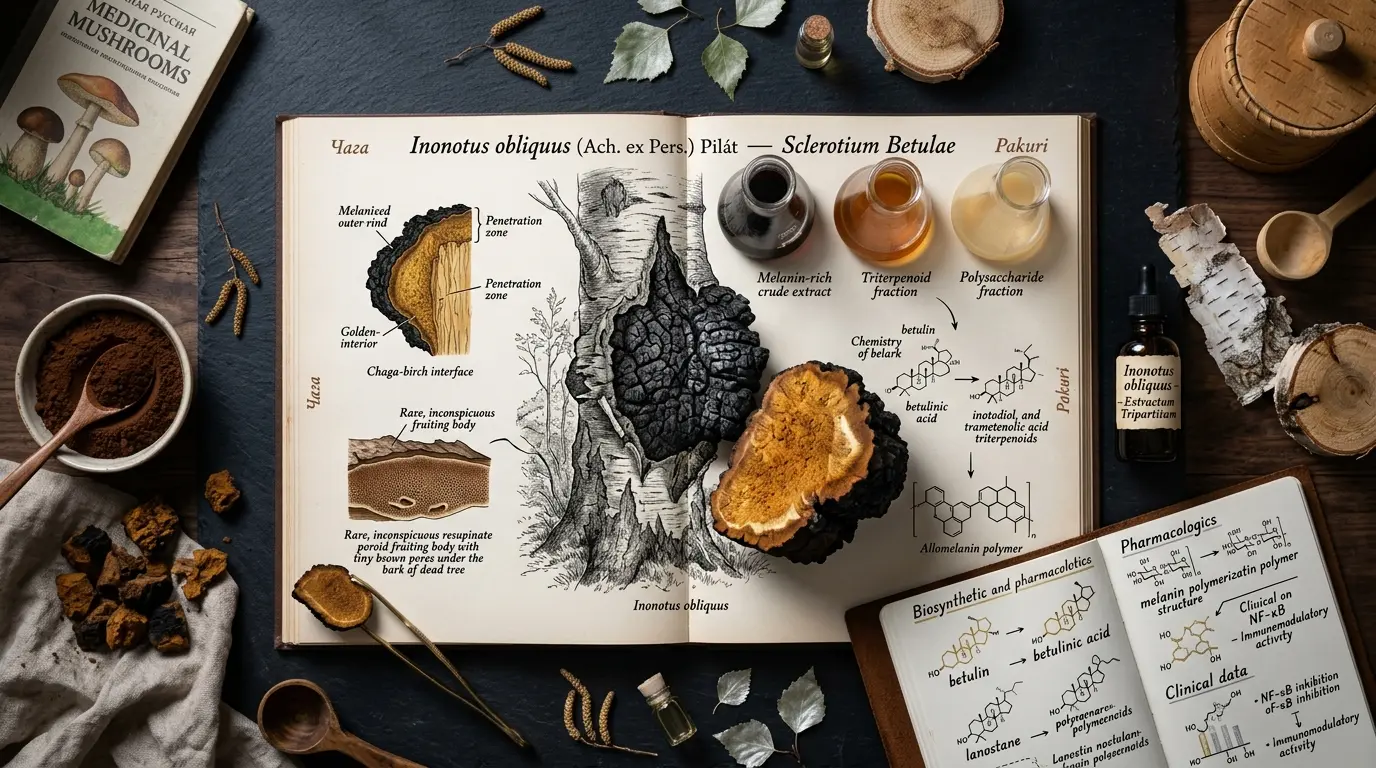
Inonotus obliquus (Chaga): The Definitive Species Compendium
Chaga (Inonotus obliquus) is among the most intensively studied fungi of the circumboreal region, distributed from Siberia to northern Europe. Its chemical identity is framed by three defining constituents—melanin, betulinic acid, and beta-glucans—which collectively shape a comprehensive portrait of
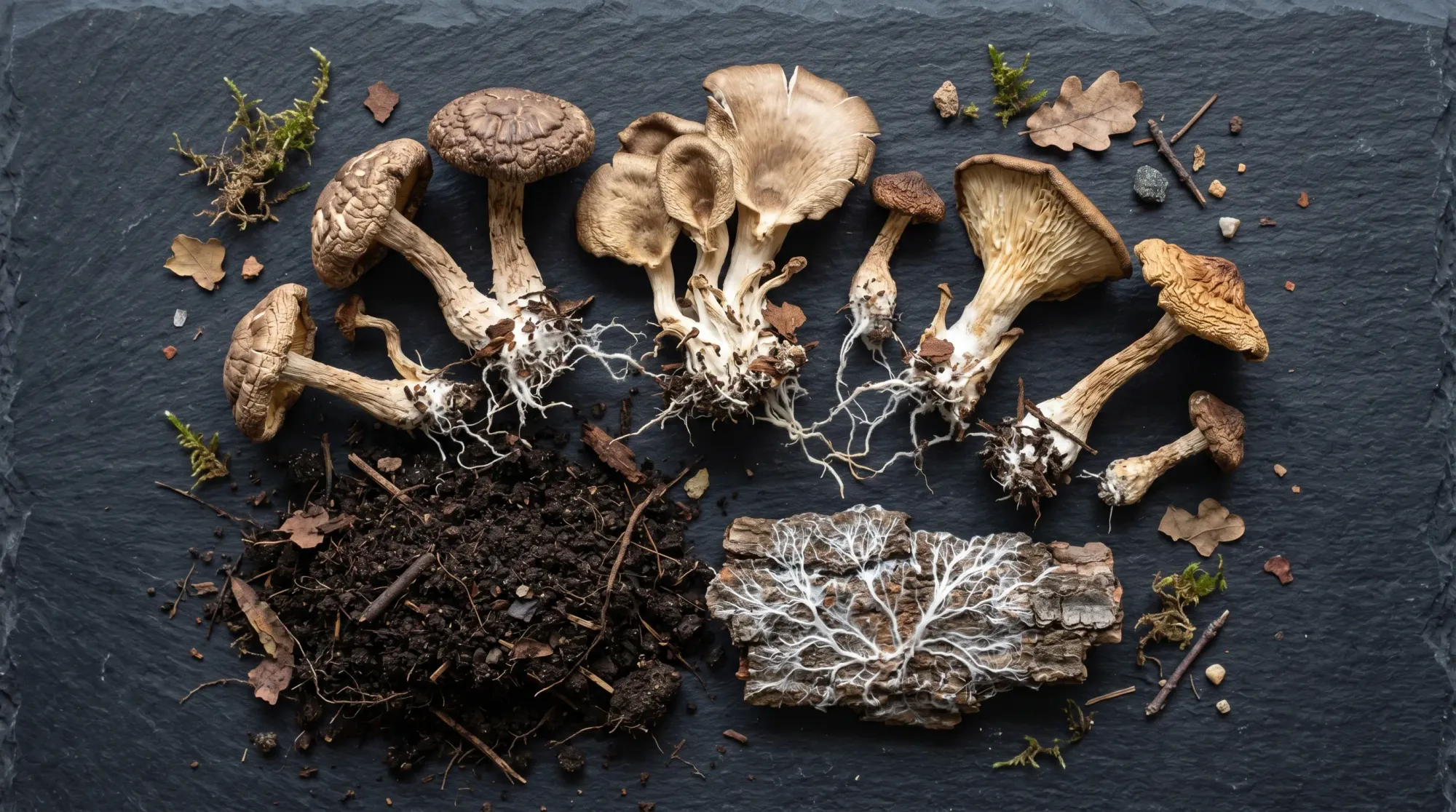
Mycelium-Infused 3D Bioprinting for Next-Generation Tissue Engineering
Mycelium-based bioinks incorporating chitin and β-glucan constitute an emerging research frontier in tissue engineering for 3D bioprinting.
Five Millennia of Fungal Heritage Converges with Modern Science
Archaeological evidence indicates that Ötzi, the glacial mummy from approximately 5,000 years ago, carried the fungus Piptoporus among his belongings.
The Comprehensive A–Z Glossary of Mycology: Over 130 Essential Terms
Over 130 fundamental terms from the mycological literature, translated into Turkish, have been compiled into a single reference source.
The Development of Functional Mycology: From Chihara’s Discoveries to Contemporary Science
Presented here is a chronological overview of the defining milestones in the history of functional mycology, tracing its evolution from the foundational work of Chihara to the contemporary landscape, as examined in this review — MYCOVITA.
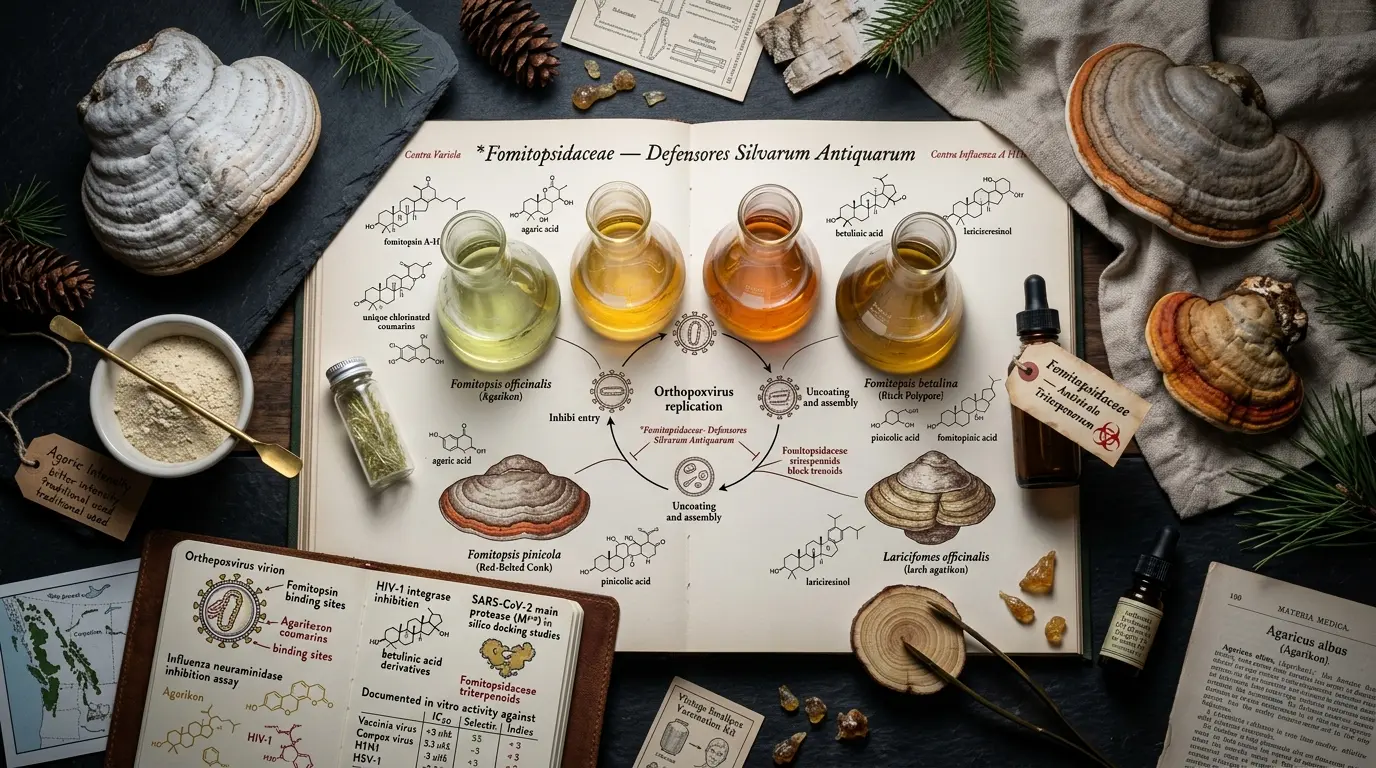
The Fomitopsidaceae Family: Agarikon’s Promise in Antiviral Research
Laricifomes officinalis, commonly known as Agarikon, is a rare inonotoid polypore historically valued in Old World traditional medicine and later brought to prominence in antiviral research through the work of Paul Stamets.
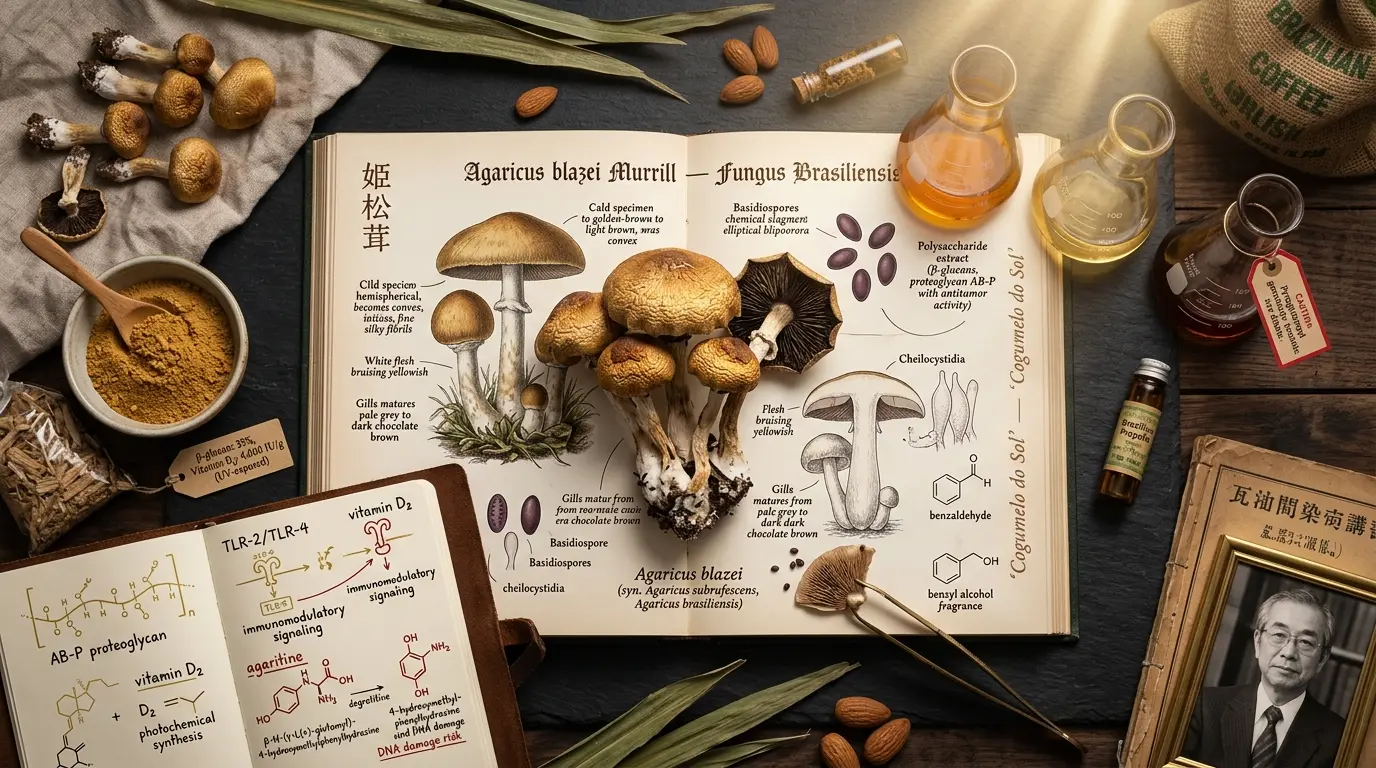
Agaricus blazei (Himematsutake): The Definitive Species Encyclopedia
Agaricus blazei Murill, commonly called Himematsutake, originated in Brazil and was later introduced to Japan, where its exceptionally high beta-glucan concentration soon made it a focal point of immunological research. The species is noted for a distinctive bioactive profile that has prompted a ser
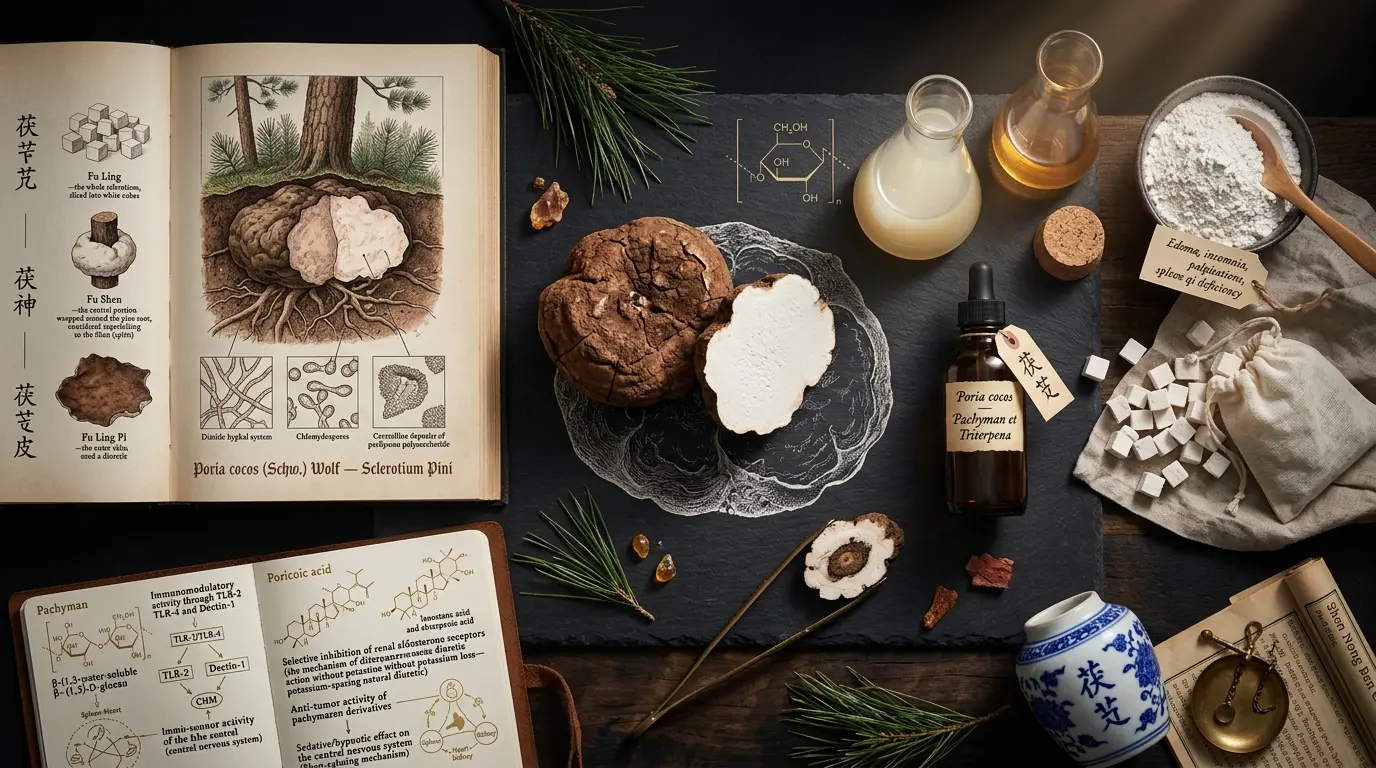
Poria cocos (Fuling): A Comprehensive Monograph
Poria cocos stands among the most frequently employed fungi in traditional Chinese medicine. This article provides an encyclopedic survey of its sclerotium—a dense mass formed from mycelial tissue—alongside the key β-glucan pachyman and the organism’s documented sedative properties.
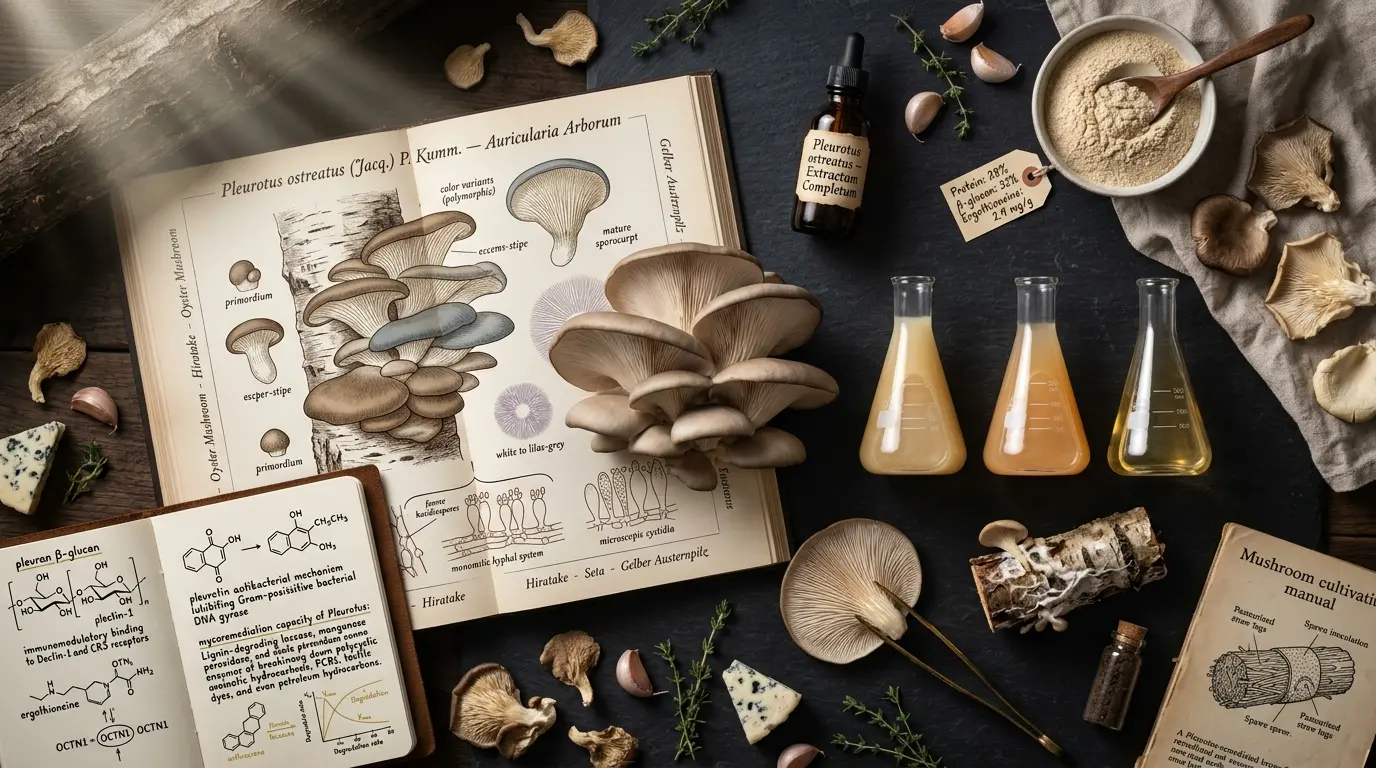
Pleurotus ostreatus (Oyster Mushroom): A Complete Species Encyclopedia
Pleurotus ostreatus, the oyster mushroom, stands among the most widely cultivated mushroom species worldwide. Its comprehensive profile features the beta-glucan pleuran, compounds structurally related to lovastatin, and a notably high nutritional value.