The Development of Functional Mycology: From Chihara’s Discoveries to Contemporary Science
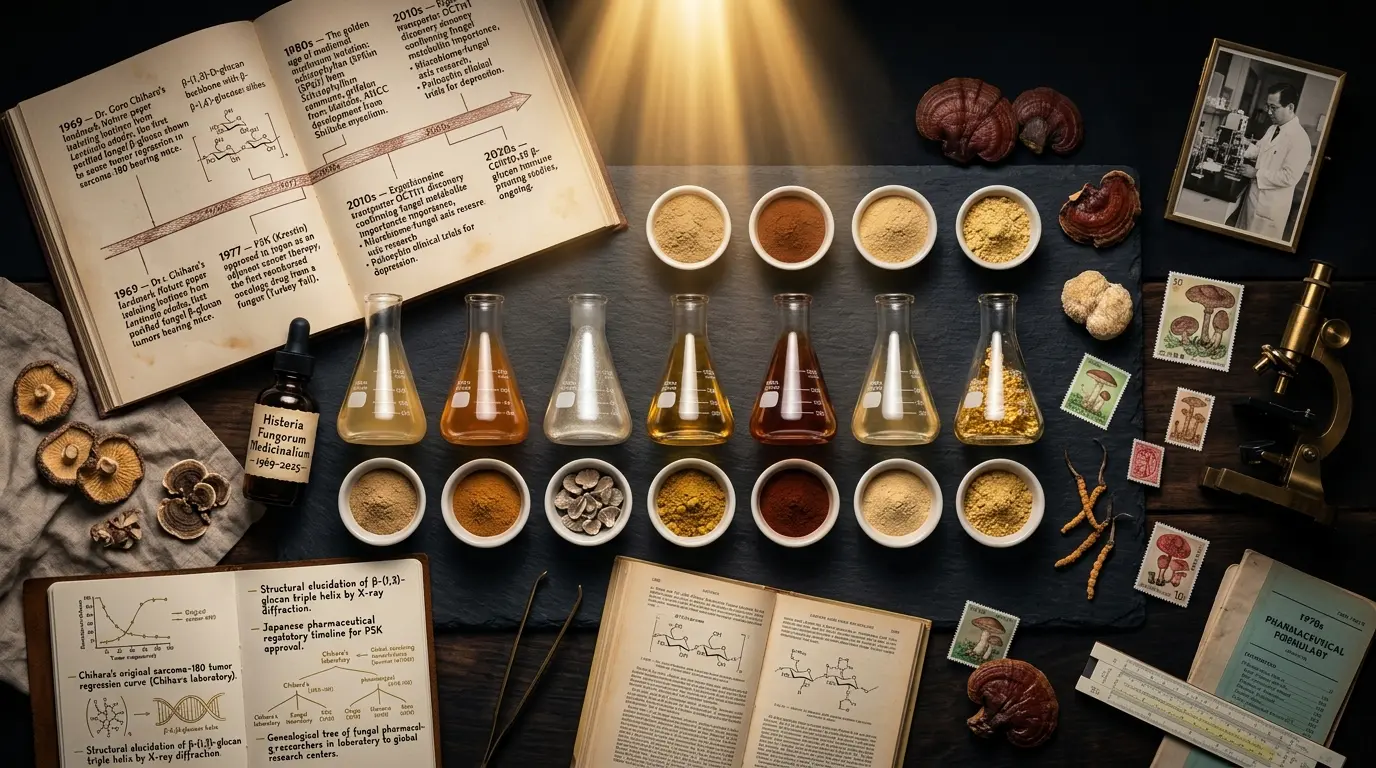
A scientific timeline of functional mushroom research from critical 20th-century discoveries to the present. This record is maintained as an academic reference.
— INTRODUCTION —
The concept of functional mushrooms took shape in the second half of the 20th century. Mushrooms consumed for centuries in East Asia began to be examined through a new lens once modern analytical chemistry and immunology tools became available. The following timeline enumerates the most defining milestones of this examination.
1953 — Discovery of Ergothioneine in Mushrooms
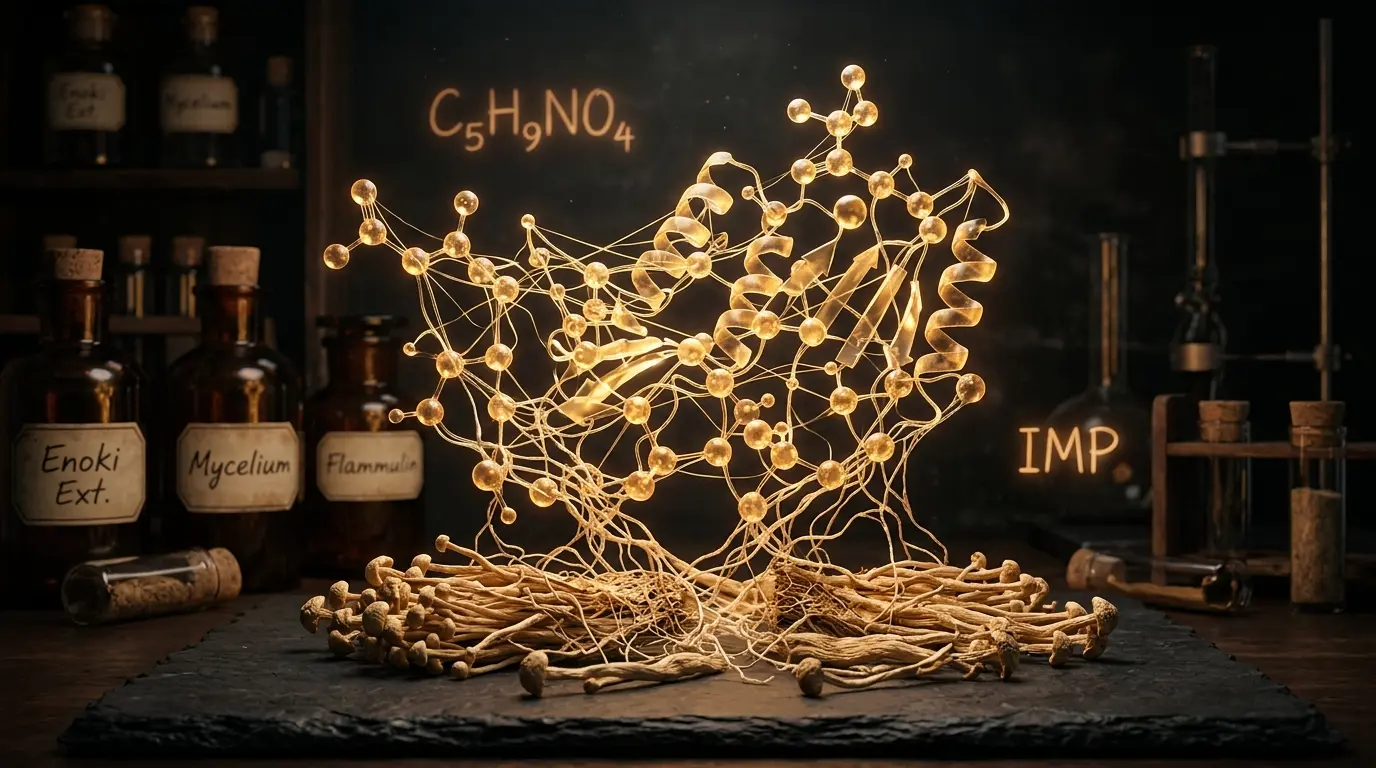
Genghof and Van Damme reported that the amino acid ergothioneine is present in significant quantities in mushrooms. Ergothioneine had been isolated from rye ergot in 1909, but it was during this period that mushrooms were recognized as its primary dietary source.
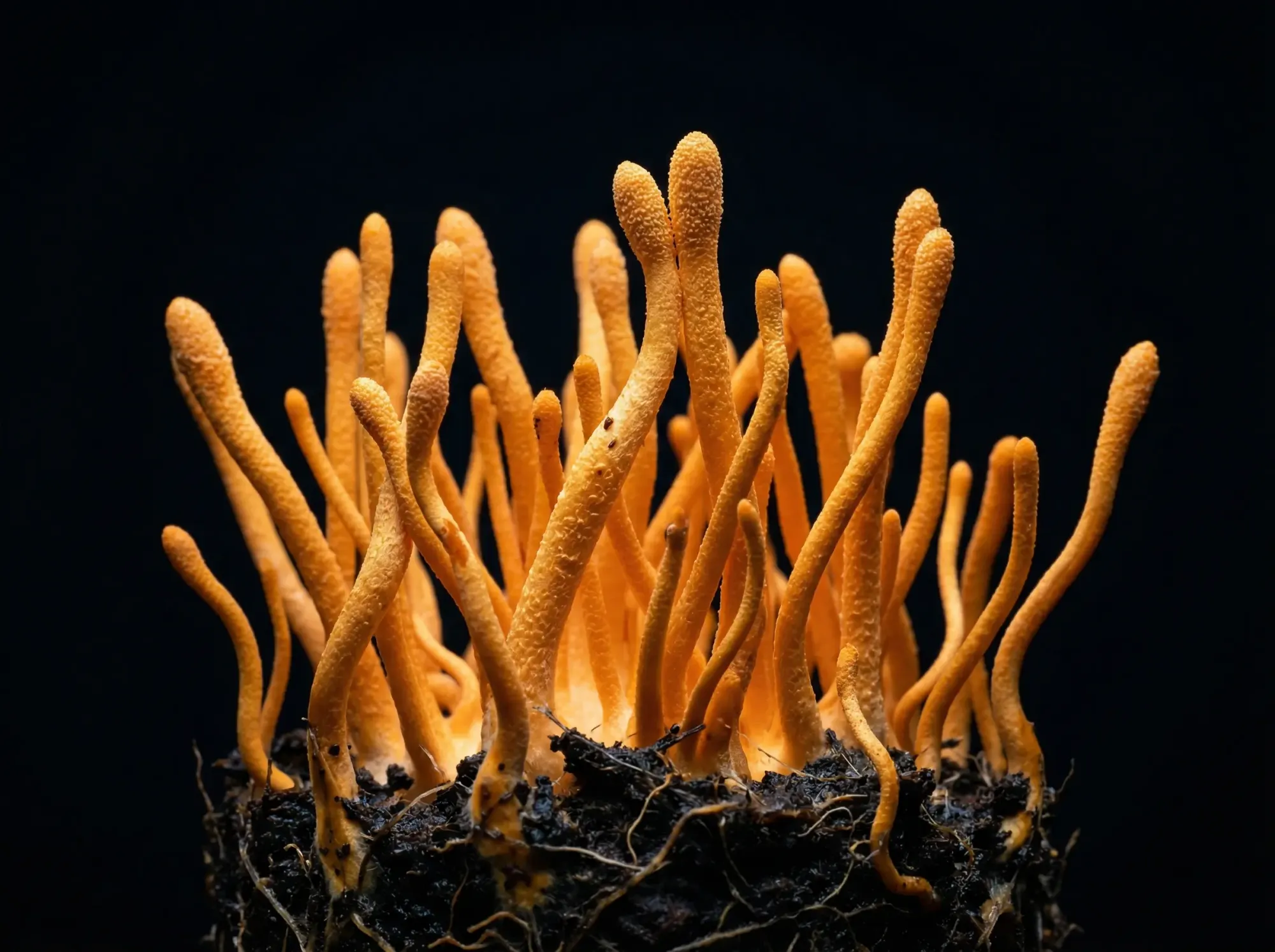
1950 — Isolation of Cordycepin
Cunningham and colleagues published in Nature the isolation of cordycepin (3′-deoxyadenosine) from Cordyceps militaris culture medium. Initial antimicrobial investigations began here. Modern studies of ATP metabolism originate from this isolate.
1969 — Isolation of Lentinan (Chihara)
Goro Chihara and his team at the National Cancer Center in Tokyo isolated lentinan, a β-1,3-glucan polysaccharide, from Lentinula edodes. The study was published in Cancer Research and is regarded as a milestone marking the modern era of functional mushroom research.
1977 — Approval of PSK (Krestin)
PSK (polysaccharide-K), developed by the Kureha Corporation, is a protein-bound β-glucan complex derived from Trametes versicolor. It was approved by the Japanese Ministry of Health as an adjuvant for gastric, colorectal, and lung cancers. This represents the first instance in history of a mushroom-derived compound receiving official approval from a health authority.
1982 — Elucidation of Ganoderic Acid Structure
Kubota and colleagues (Helvetica Chimica Acta) elucidated the lanostane-type triterpene structures of ganoderic acids A and B from Ganoderma lucidum. These compounds were identified as the molecular source of Reishi’s bitterness.
1985 — Approval of Injectable Lentinan
Japan officially licensed an intravenous formulation of lentinan for use as an adjuvant in advanced gastric cancer.
1991 — Discovery of Hericenones (Kawagishi)
Hirokazu Kawagishi and his team isolated hericenones C, D, and E from the fruiting body of Hericium erinaceus, reporting the findings in Tetrahedron Letters. These molecules were shown to stimulate nerve growth factor (NGF) synthesis in vitro. The literature on Lion’s Mane and neurotrophic activity began with this publication.
1994 — Discovery of Erinacines
The same Kawagishi team this time isolated erinacines A, B, and C from H. erinaceus mycelium. Unlike hericenones, erinacines exhibited a greater tendency to cross the blood-brain barrier. This distinction provided the molecular basis for the “fruiting body versus mycelium” debate.
1995 — Maitake D-Fraction
Hiroaki Nanba identified the D-fraction from Grifola frondosa as an immunomodulatory β-glucan fraction (Annals of the New York Academy of Sciences). In subsequent years, the same group conducted research on blood sugar regulation using the X-fraction.
2000 — Sparassis Beta-Glucan
Naohito Ohno and colleagues (Biological & Pharmaceutical Bulletin) published the isolation of high-purity 1,3-β-glucan from cultivated Sparassis crispa fruiting bodies. This species would later be recognized as the edible mushroom with the highest natural beta-glucan density.
2001 — Identification of the Dectin‑1 Receptor (Brown & Gordon)
Gordon D. Brown and Siamon Gordon identified Dectin‑1 in Nature as the specific β-glucan recognition receptor on human immune cells. This discovery established the foundation for explaining the immunomodulatory mechanism of fungal beta-glucans at the molecular level.
2002 — AHCC Hepatocellular Carcinoma Study
Matsui and colleagues (Journal of Hepatology) demonstrated improvements in quality of life and survival parameters with AHCC used as an adjuvant in hepatocellular carcinoma. This study became a landmark in the AHCC literature.
2009 — Lion’s Mane Cognitive Function Study (Mori)
Koichiro Mori and colleagues published in Phytotherapy Research a 16-week double-blind study involving elderly subjects with mild cognitive impairment. They reported improvements in HDS‑R scores in the Lion’s Mane group. This remains one of the most frequently cited clinical trials in the functional mushroom field.
2012 — Ergothioneine Antioxidant Mechanism
Barry Halliwell and Cheah (Biochimica et Biophysica Acta) elucidated ergothioneine’s unique antioxidant profile and tissue-specific accumulation. The SLC22A4 transporter‑mediated cellular uptake was clarified.
2019 — HPV Clearance Study (AHCC)
Smith and colleagues, in a randomized controlled trial conducted at the University of Texas MD Anderson Cancer Center (Journal of Alternative and Complementary Medicine), investigated the potential role of AHCC in the clearance of high‑risk HPV.
2018–2023 — Ergothioneine and Longevity
Observational studies increasingly demonstrated correlations between low plasma ergothioneine levels and neurodegenerative and cardiovascular diseases. Similar findings were reported in the European Prospective Investigation into Cancer and Nutrition (EPIC) cohort.
Academic Status in Turkey
In Turkey, edible mushroom mycology has conventionally concentrated on Agaricus bisporus and Pleurotus species. Domestic academic publication in the field of functional mushrooms has begun to increase over the past decade but remains limited when compared with the global literature. The scarcity of Turkish‑language secondary sources is one of the founding rationales behind mycovita.bio.
Primary sources: Bibliography · Editorial method: Editorial Policy
Related reading: The 5000‑Year History of Mushrooms · Clinical Trials Index
This content is for informational purposes only and does not constitute medical advice. Consult your physician before making any health decisions. Functional mushrooms are not drugs and should not be used for the treatment of diseases.
Version: 1.0 | Last updated: 20 Apr 2026 | Sources reviewed: 15+ | Method: Editorial Policy | References: Bibliography