Five Millennia of Fungal Heritage Converges with Modern Science
— A FROZEN CLUE —
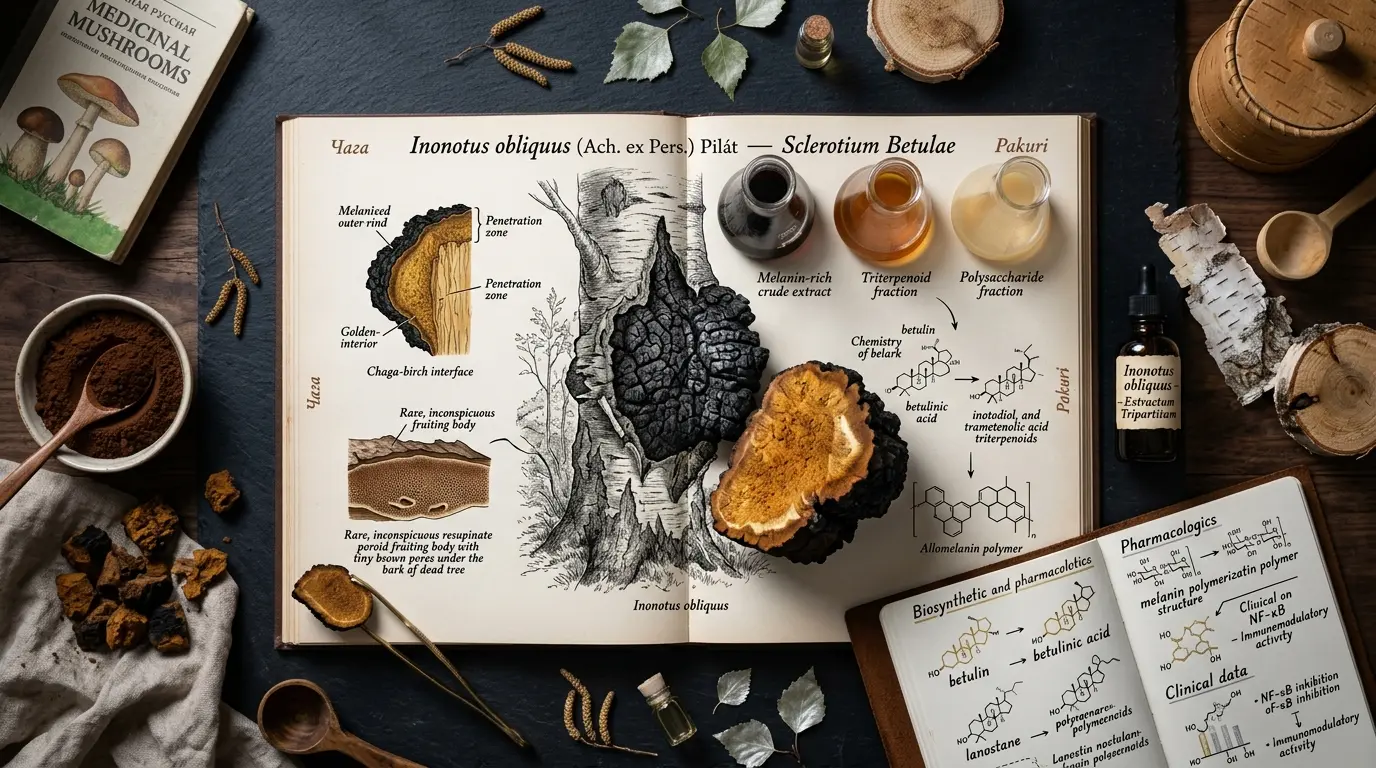
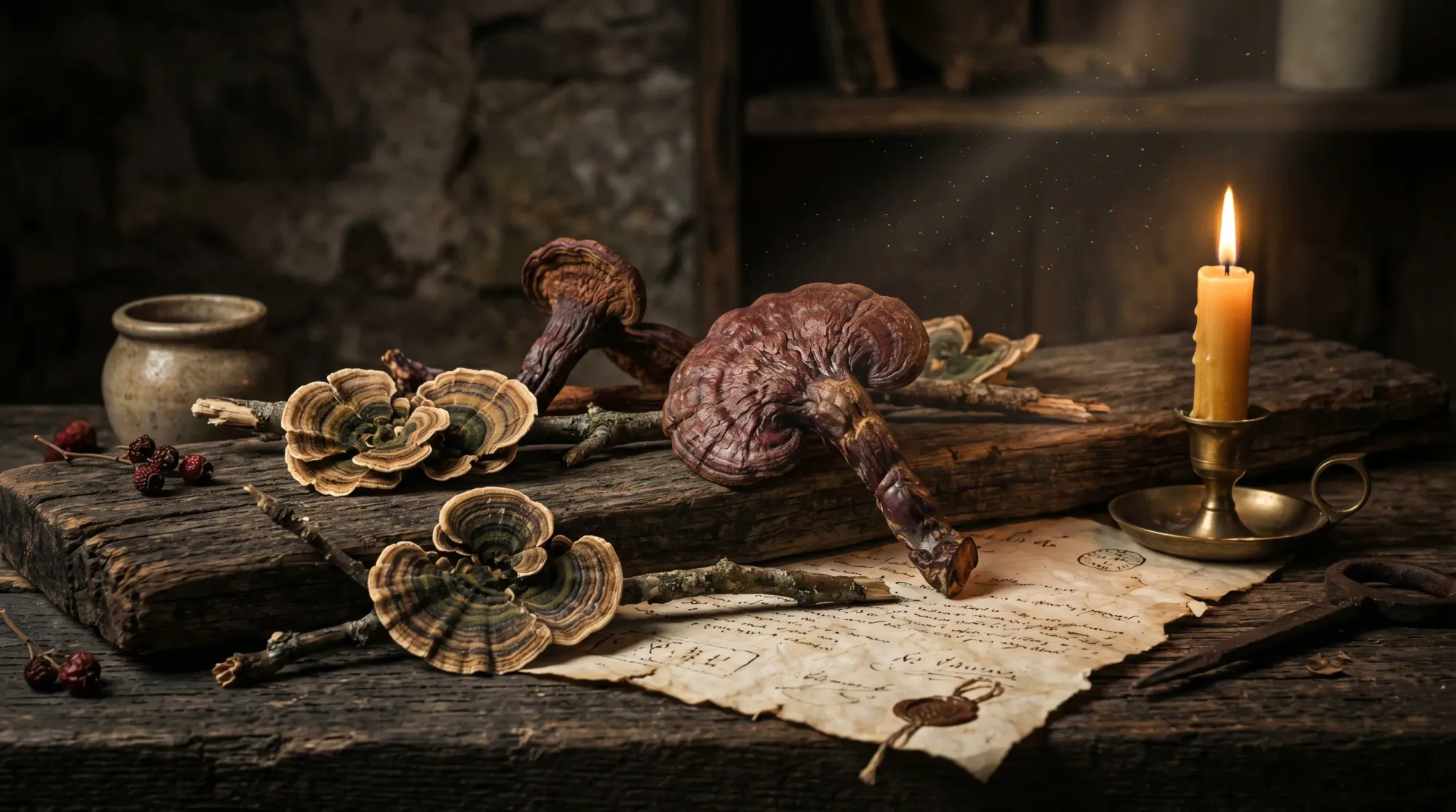
In 1991, a 5,300-year-old body emerged from glacial ice in the Ötztal Alps, straddling the Austria-Italy border. The mummy, named Ötzi, carried two distinct species of fungi among his belongings. One was tinder fungus — used for fire-starting. The other was birch polypore — believed to have been carried for its antiparasitic and antibacterial properties.
Five thousand three hundred years ago, a man crossing a high alpine pass brought mushrooms with him. As medicine. This was no accident.
— CHINA: WHERE THE WRITTEN RECORD BEGINS —
The earliest known textual record of medicinal mushrooms originates in China. The Shennong Ben Cao Jing — the Divine Farmer's Materia Medica — was compiled around 200 BCE, reflecting a far older oral tradition. This foundational text classified the Reishi mushroom (Lingzhi) as a "superior class" substance — not a treatment for disease, but an instrument of balance and longevity.
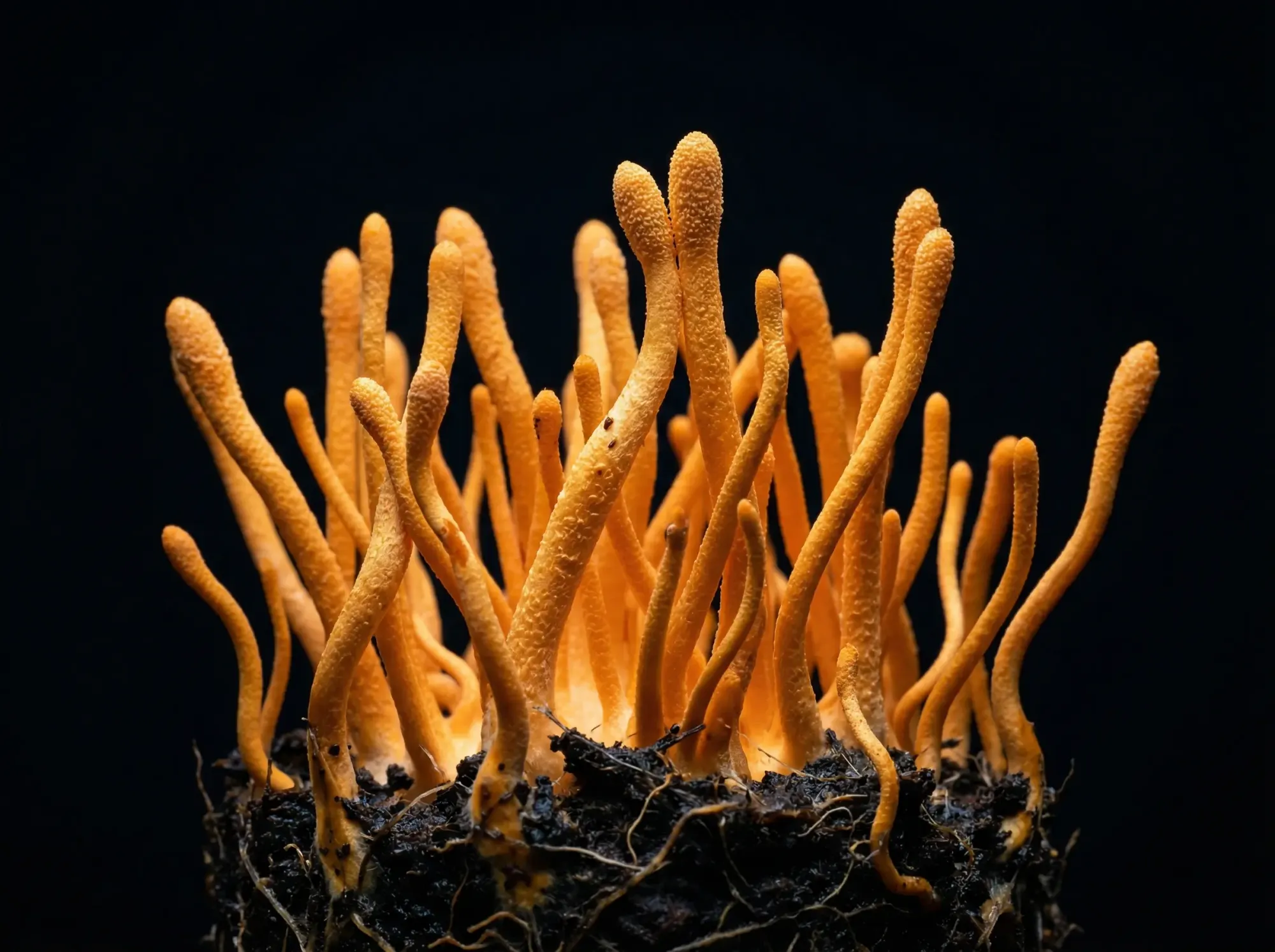
The story of Cordyceps is more dramatic. Across the Tibetan plateau, at elevations between 3,000 and 5,000 meters, the fungus lives as an insect parasite. Tibetans called it yartsa gunbu: "summer grass, winter worm." It was worth more than gold by weight — and still commands extraordinary prices today.
— JAPAN: CRAFT MEETS SCIENCE —
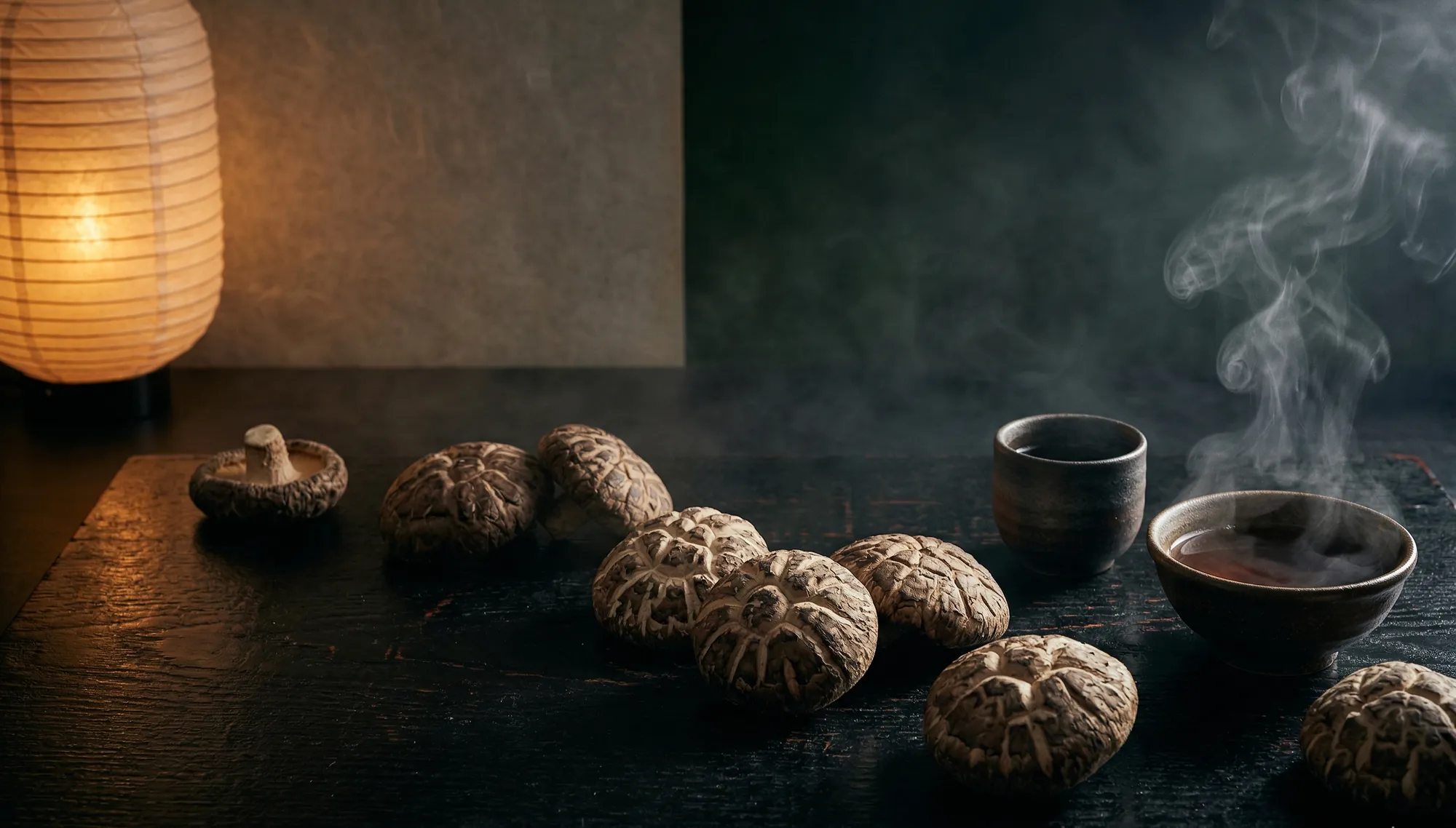
Japan was the first culture to approach mushroom cultivation as both a refined craft and a systematic discipline. Shiitake cultivation techniques originally crossed from Song Dynasty China, but Japanese growers elevated the practice to an entirely new level. The concept of Donko emerged from this tradition: a Shiitake harvested before the cap opens, grown slowly through the cold of winter. Under such conditions, umami compounds concentrate dramatically — a phenomenon that science would explain a millennium later through the synergy of GMP and glutamate.
In 1191, the Zen monk Eisai wrote about Yamabushitake — the mountain monk's mushroom, known today as Lion's Mane. Monks used it before meditation to sharpen mental clarity.
Details: Lion's Mane Encyclopedia · Shiitake Donko Encyclopedia
— MEDIEVAL EUROPE —
Europe's relationship with fungi followed a markedly different trajectory. Throughout the Medieval period, mushrooms were associated with witchcraft and poison. This deep-seated fear delayed Europe's serious engagement with fungi as food and medicine for centuries.
— MODERN SCIENCE: FROM THE 1960s TO THE PRESENT —
1969 — Discovery of Lentinan: Japanese researchers isolated Lentinan from Shiitake, a beta-glucan that would become one of the most studied immunomodulatory polysaccharides. →
1977 — PSK approved in Japan: PSK, isolated from Turkey Tail (Trametes versicolor), received approval for clinical research as an adjuvant cancer therapy. →
1991 — Hericenones discovered: Kawagishi and colleagues identified NGF-stimulating compounds from Lion's Mane, opening a new chapter in neuroregenerative research. →
1993 — Stuttgart world records: The Chinese Athletics Team shattered multiple world records at the World Championships. When questioned, the coach stated: "They drink Cordyceps tea." →
2001 — Dectin-1 receptor identified: Researchers characterized Dectin-1, the key innate immune receptor that recognizes beta-glucan, unlocking the mechanistic basis of fungal immunomodulation. →
— TODAY AND TOMORROW —
By the 2020s, the functional mushroom industry has grown into a multibillion-dollar global market. Rapid expansion has brought predictable challenges: products lacking quality standardization, exaggerated health claims, and regulatory ambiguity.
Five thousand three hundred years ago, Ötzi carried mushrooms across a mountain pass. Today, we cultivate those same species in controlled laboratory conditions. The tools have changed utterly — yet humanity's fundamental relationship with fungi has not.
That relationship was built on curiosity. It still is.
Related reading: What Are Functional Mushrooms? · What Is Beta-Glucan? · Reading Map
MYCOVITA's production philosophy: Why MYCOVITA?
— SCIENTIFIC REFERENCES —
Peintner, U. et al. (1998). Mycological Research, 102(10). · Wasser, S.P. (2002). Applied Microbiology and Biotechnology, 60(3). · Kawagishi, H. et al. (1991). Tetrahedron Letters, 32(35). · Brown, G.D. & Gordon, S. (2001). Nature, 413.
You May Also Like
→ Are Mushrooms Produced in Turkey Reliable?
→ Functional Mushroom Production in Turkey
→ The Functional Mushroom Market in Turkey
This content is for informational purposes only and does not constitute medical advice. Consult your physician before making any health-related decisions. Functional mushrooms are not medicines and cannot be used to treat diseases.
Version: 1.0 | Last updated: 20 Apr 2026 | Sources reviewed: 5+ | Methodology: Editorial Policy | References: Bibliography