SIRT1 and Longevity Genes: Insights from Epigenetic Studies in Fungi

From Yeast Cells to Longevity Biology
— HOOK —
One of the founding moments of modern longevity biology traces back to a gene family discovered in yeast cells during the late 1990s: the sirtuins. Mammals possess seven members; the most extensively studied, SIRT1, stands at the intersection of cellular aging, metabolic adaptation, and the inflammatory response.
This article examines the molecular foundations of SIRT1, its NAD+-dependent mechanism of action, and the documented relationship between functional mushroom constituents and sirtuin pathways in the scientific literature.
SIRT1: An NAD+-Dependent Deacetylase
SIRT1 is an enzyme; it removes acetyl groups from substrate proteins. It employs NAD+ as a cofactor for this process — one NAD+ molecule is consumed per reaction. This dependency couples SIRT1 activity directly to the energy status of the cell.
In young, rested cells, NAD+ is abundant and SIRT1 is active. With advancing age, NAD+ levels decline and SIRT1 activity diminishes. This forms the theoretical basis for longevity interventions of the "NAD+ investment" type (Imai & Guarente, 2014; PMID: 24786309).
Substrates: A Broad Spectrum of Influence
SIRT1 regulates the acetylation state of dozens of substrate proteins. p53, FOXO1/3, PGC-1α, and the NF-κB p65 subunit rank among the most prominent. Their effects include:
- FOXO3 deacetylation: Enhances antioxidant enzyme expression.
- PGC-1α deacetylation: Stimulates mitochondrial biogenesis.
- p65 deacetylation: Reduces NF-κB signaling, attenuating inflammation.
- p53 deacetylation: Modulates the cell survival-death balance.
This multi-target profile explains why SIRT1 is regarded as an enzyme possessing "multiple pleiotropic effects" (Haigis & Sinclair, 2010; PMID: 20078221).
Caloric Restriction and the Resveratrol Connection
The association between caloric restriction and longevity is explained, at least in part, through SIRT1 activation. Under low-energy conditions, the NAD+/NADH ratio rises, enabling SIRT1 to function more actively.
Resveratrol, a polyphenol found in grape skins, is historically recognized as a SIRT1 activator. Whether it acts as a direct versus an allosteric activator was debated for years; the prevailing view today holds that it operates through a dual mechanism involving AMPK and SIRT1 (Park et al., 2012; PMID: 22343460).
Mushroom Constituents and the SIRT1 Literature
Direct evidence in this domain remains limited; most studies are confined to in vitro models. Reishi triterpenes have been reported to exhibit a tendency to upregulate SIRT1 expression in fatty liver models; the effect is interpreted through cross-talk with AMPK (Chen et al., 2017; PMID: 28298174).
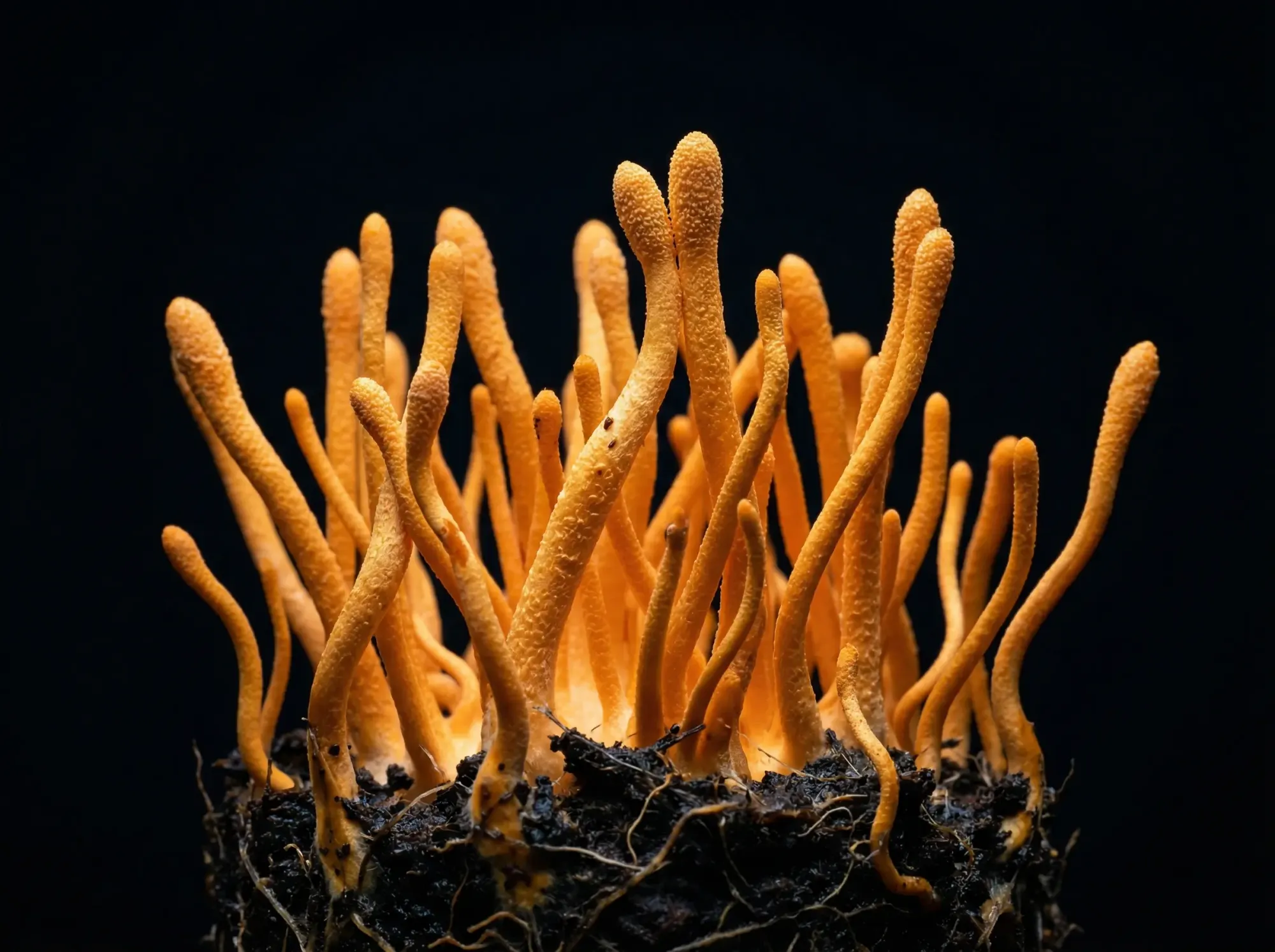
Cordyceps polysaccharides have been observed to support SIRT1 expression in aging animal models; this aligns consistently with the involvement of the AMPK-SIRT1 axis in longevity biology (Yan et al., 2014; PMID: 24508124).
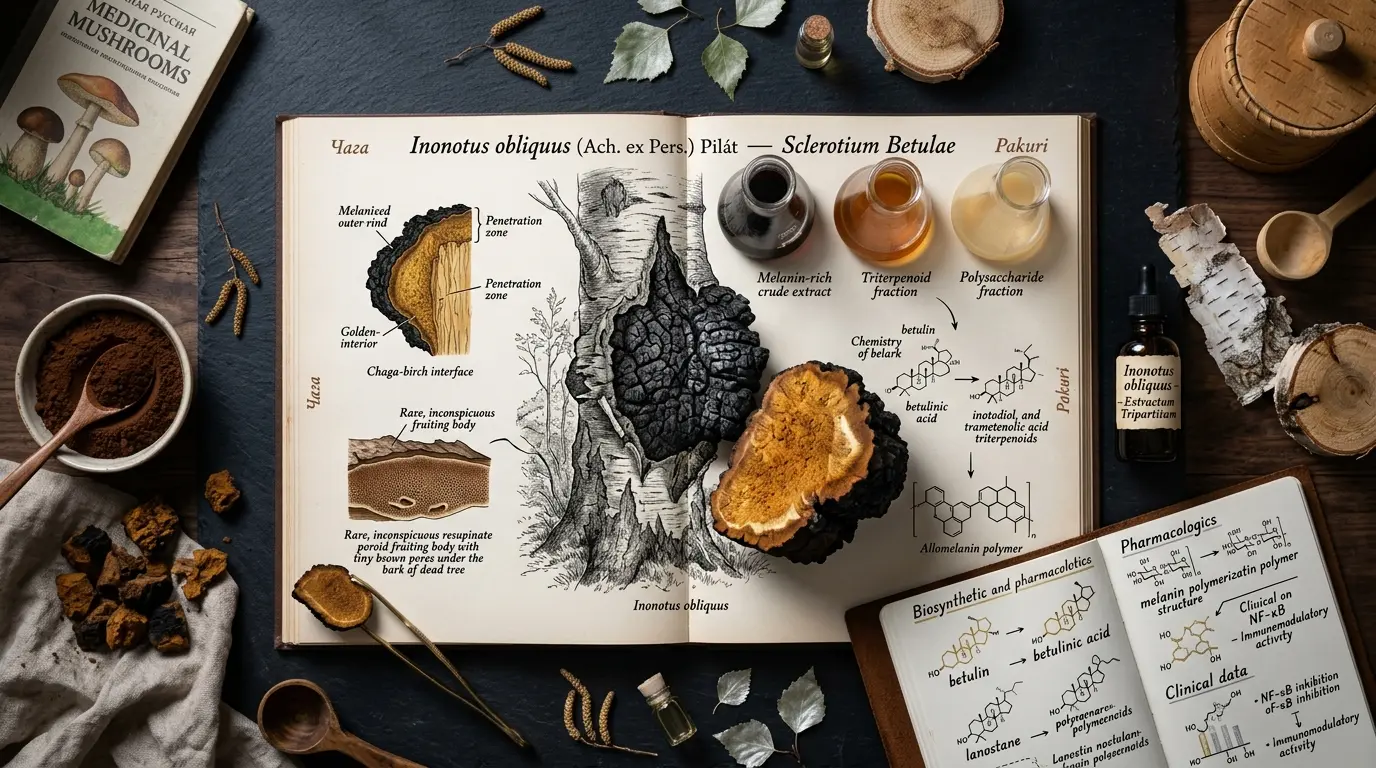
The phenolic compound profile of Chaga extract has demonstrated supportive effects on SIRT1 target genes in vitro; however, evidence for direct SIRT1 activation remains limited.
Limitations
SIRT1 research can yield inconsistent results due to methodological variability. Human clinical data for mushroom constituents are virtually nonexistent. This body of literature should currently be regarded as a mechanistic research domain.
Related Reading
- Mushrooms and Aging — Foundations of cellular aging.
- Vitality: Cordyceps — The energy metabolism context.
- Enzymatic Browning — The oxidative change axis.
This content is for informational purposes only and does not constitute medical advice. Consult your physician before making any health decisions. Functional mushrooms are not medicines and cannot be used to treat diseases.
Version: 1.0 | Last updated: 28 April 2026 | Sources reviewed: 12+ | Methodology: Editorial Policy | References: Bibliography