HMGB1 and Sterile Inflammation: Lessons from the Fungal Kingdom
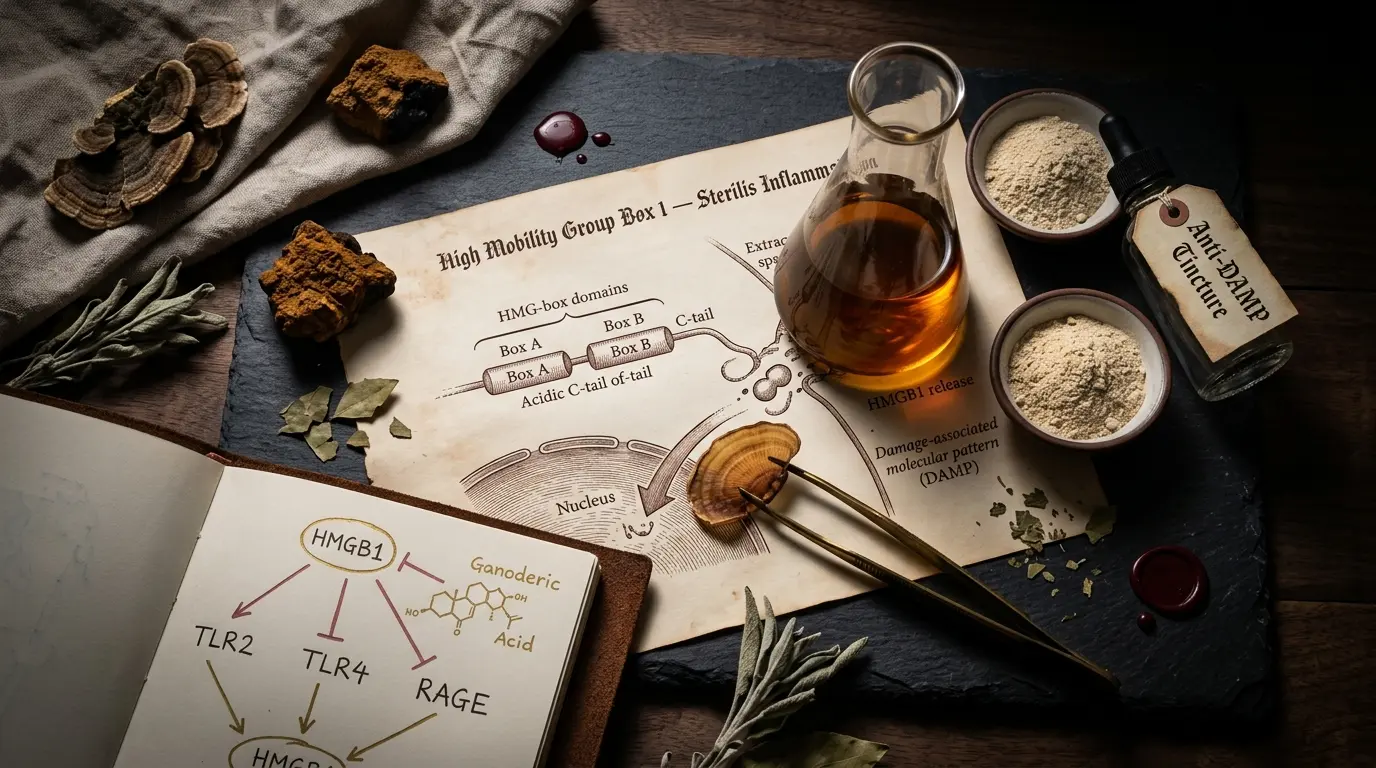
A Nuclear Resident That Signals Danger Outside
— A HOOK —
Certain molecules inhabit two entirely distinct worlds. Within the cell nucleus, HMGB1 functions as an integral component of DNA architecture — a silent, dutiful nuclear protein. When the cell sustains damage and disintegrates, however, HMGB1 is released into the extracellular space, where it assumes an entirely new identity: a messenger of danger.
This article examines the role of HMGB1 in the biology of sterile inflammation, its character as an alarmin, and the documented relationship between functional mushroom constituents and this molecular axis.
A Protein with Two Faces
HMGB1 (High Mobility Group Box 1) is an abundant nuclear protein present in virtually all cells. Inside the nucleus, it facilitates DNA bending and supports transcriptional processes. This intracellular role has been recognized for generations.
Its second function came to light after 1999: HMGB1 is released into the extracellular environment either passively during cellular necrosis or actively in response to specific stimuli. Once outside the cell, it operates as an alarmin — a damage-associated molecular pattern (DAMP) (Wang et al., 1999; PMID: 10398600).
Sterile Inflammation: Fire Without a Pathogen
Sterile inflammation denotes an inflammatory response initiated not by invading microorganisms but by tissue injury. Ischemia-reperfusion injury, trauma, burns, and certain chronic degenerative diseases all fall within this category.
HMGB1 stands as a central mediator of this response. Upon extracellular release, it engages TLR-2, TLR-4, and RAGE receptors. This binding activates NF-κB, triggering a pro-inflammatory cytokine cascade (Andersson & Tracey, 2011; PMID: 21219176).
Redox State Determines Function
The redox status of the released HMGB1 molecule is critical to its biological activity. The fully reduced form, in which all cysteine residues exist as thiols, acts as a chemoattractant. The disulfide form, characterized by a Cys23-Cys45 disulfide bond and a free thiol at Cys106, exhibits cytokine-inducing activity. The fully oxidized form, bearing sulfonic acid modifications, is considered functionally inert.
This redox switching explains how HMGB1 exerts distinct effects across different tissues; the same protein calibrates its activity according to the surrounding oxidative environment (Venereau et al., 2012; PMID: 22454474).
Links to Chronic Disease
Elevated circulating HMGB1 levels are documented in sepsis, rheumatoid arthritis, atherosclerosis, neurodegeneration, and chronic liver diseases. This positions HMGB1 not merely as a marker of acute injury but as an indicator of chronic low-grade inflammation (Yang et al., 2013; PMID: 23911281).
Mushroom Constituents and the HMGB1 Literature
Evidence in this domain remains at an early stage and derives predominantly from animal models.
Reishi triterpene fractions have been reported to attenuate HMGB1 release in LPS-stimulated macrophage models; the effect parallels NF-κB suppression (Wu et al., 2011; PMID: 21664281).
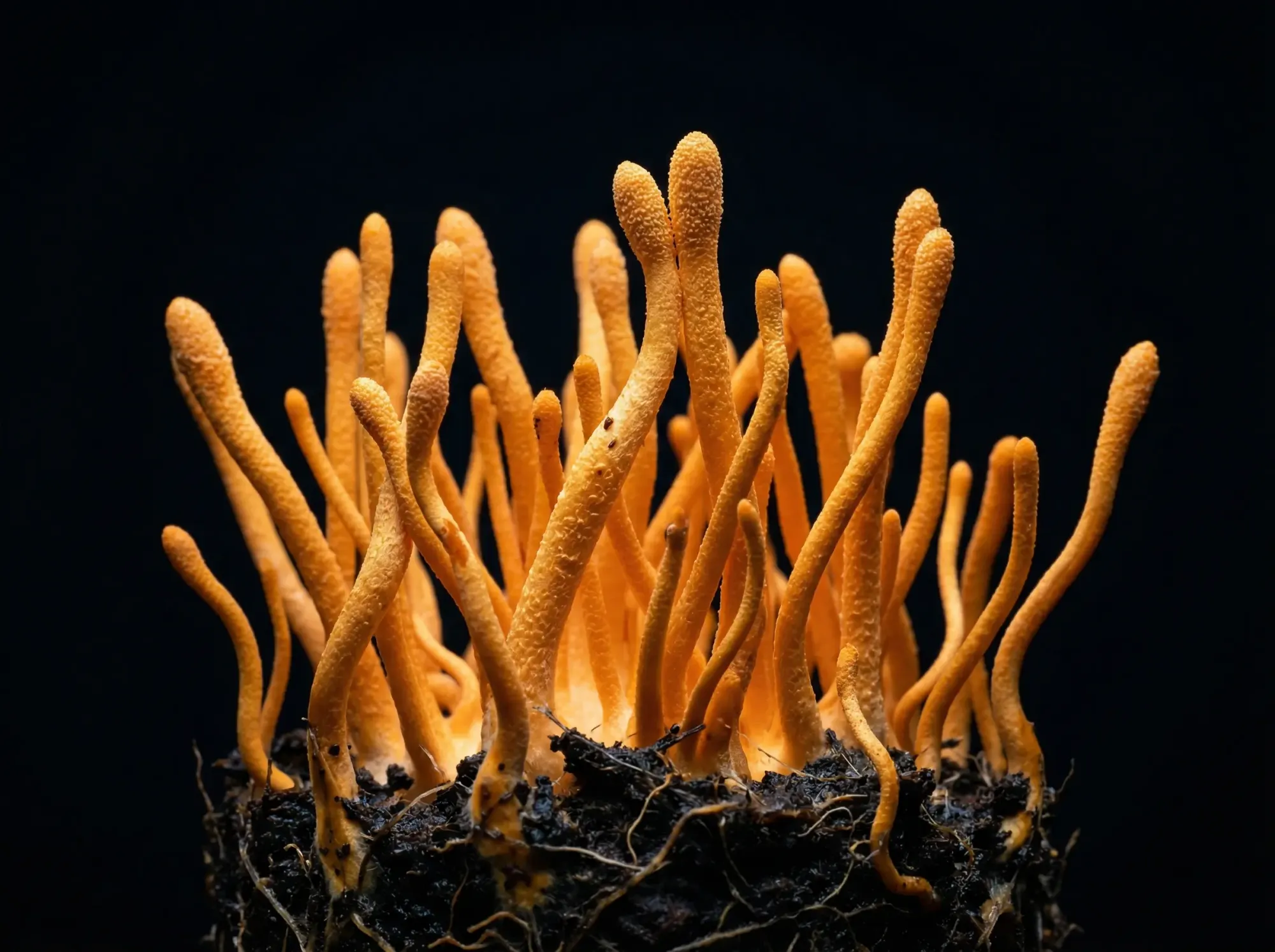
Cordyceps militaris, through its cordycepin content, has produced consistent results in reducing circulating HMGB1 levels in a sepsis animal model (Yang et al., 2015; PMID: 25617725).
Chaga polyphenol fractions have been shown to mitigate HMGB1-mediated inflammatory responses in ischemia-reperfusion models; the mechanism is interpreted partly through the suppression of RAGE signaling (Lee et al., 2013; PMID: 23535053).
Limitations
HMGB1 measurement lacks standardization; functional significance varies according to redox form. Human intervention data for mushroom constituents remain exceedingly scarce. Current inferences should be regarded as belonging to a mechanistic research space rather than a clinically validated body of evidence.
Related Reading
- How Does the Immune System Work? — Innate and adaptive immunity.
- Mushrooms and Autoimmunity — Navigating immune direction.
- What Is Beta-Glucan? — The immunomodulatory polysaccharide.
This content is for informational purposes only and does not constitute medical advice. Consult a physician before making any health-related decisions. Functional mushrooms are not pharmaceutical drugs and cannot be used to treat disease.
Version: 1.0 | Last updated: 28 April 2026 | Sources reviewed: 12+ | Methodology: Editorial Policy | References: Bibliography