Fungal Metabolites in mTOR-Mediated Autophagy: Harnessing Cellular Housekeeping
The Cell Sometimes Feeds, Sometimes Cleans Itself
— HOOK —
Within every cell, two large-scale programs operate in opposing directions. One is oriented toward growth, synthesis, and storage; the other dismantles old organelles, degrades defective proteins, and renews the cytosol. The central hub of the first program is mTOR. The clearance mechanism of the second is autophagy.
This article examines the mTOR signaling pathway, the molecular basis of autophagy, and the documented interactions of functional mushroom constituents with these axes in the scientific literature.
mTOR: Two Complexes, Two Missions
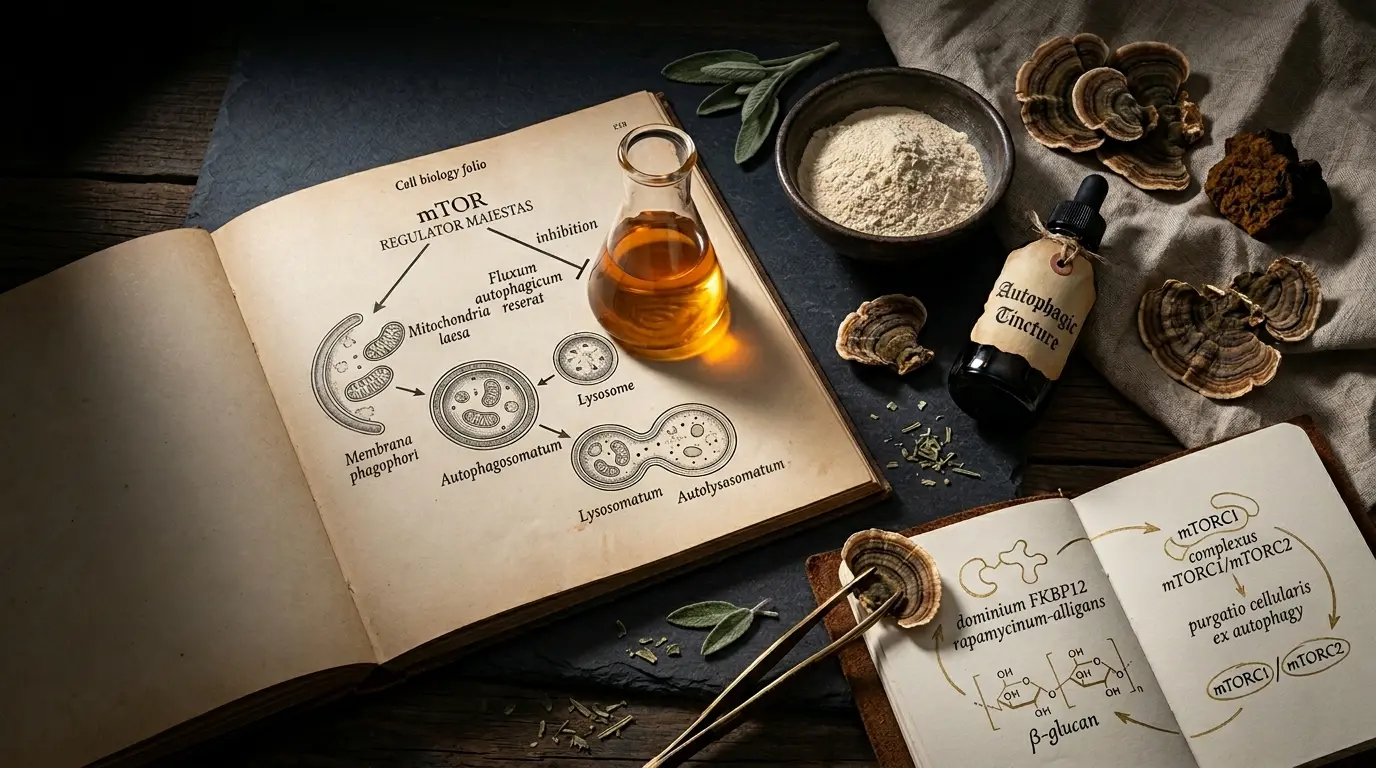
mTOR sits at the core of two distinct protein complexes. mTORC1 responds to growth signals; it stimulates protein synthesis, ribosome biogenesis, and lipid synthesis. mTORC2 governs cytoskeletal organization and cellular survival.
Under conditions of nutrient abundance — particularly insulin, IGF-1, and amino acids such as leucine — mTORC1 becomes active. Starvation, AMPK activation, or rapamycin suppresses this pathway. Active mTORC1 inhibits autophagy (Saxton & Sabatini, 2017; PMID: 28283069).
Autophagy: Cellular Recycling
Autophagy is the process by which defective organelles and protein aggregates in the cytoplasm are enclosed within double-membraned vesicles — autophagosomes — delivered to the lysosome, and degraded, with the breakdown products then recycled. Three principal types exist: macroautophagy (the most prevalent), microautophagy, and chaperone-mediated autophagy.
Autophagy is more than mere housekeeping; it enables a cell to survive under stress conditions — nutrient scarcity, hypoxia, oxidative stress. Deficient autophagy has been linked to neurodegenerative diseases and metabolic disorders (Mizushima & Komatsu, 2011; PMID: 22078875).
Calorie Restriction, AMPK, and Autophagy
The classic trigger in autophagy research is calorie restriction. In a low-energy state, AMPK becomes active; AMPK induces autophagy either directly or by suppressing mTOR.
This provides one of the principal molecular-level explanations for why calorie restriction correlates with extended lifespan. The AMPK–mTOR–autophagy axis lies at the heart of modern longevity research (López-Otín et al., 2013; PMID: 23746838).
Mushroom Components and the mTOR/Autophagy Literature
Reishi triterpenes have been reported to attenuate mTORC1 activity in in vitro models and to alter the conversion of the autophagy markers LC3-II and p62 (Liang et al., 2014; PMID: 24566094).
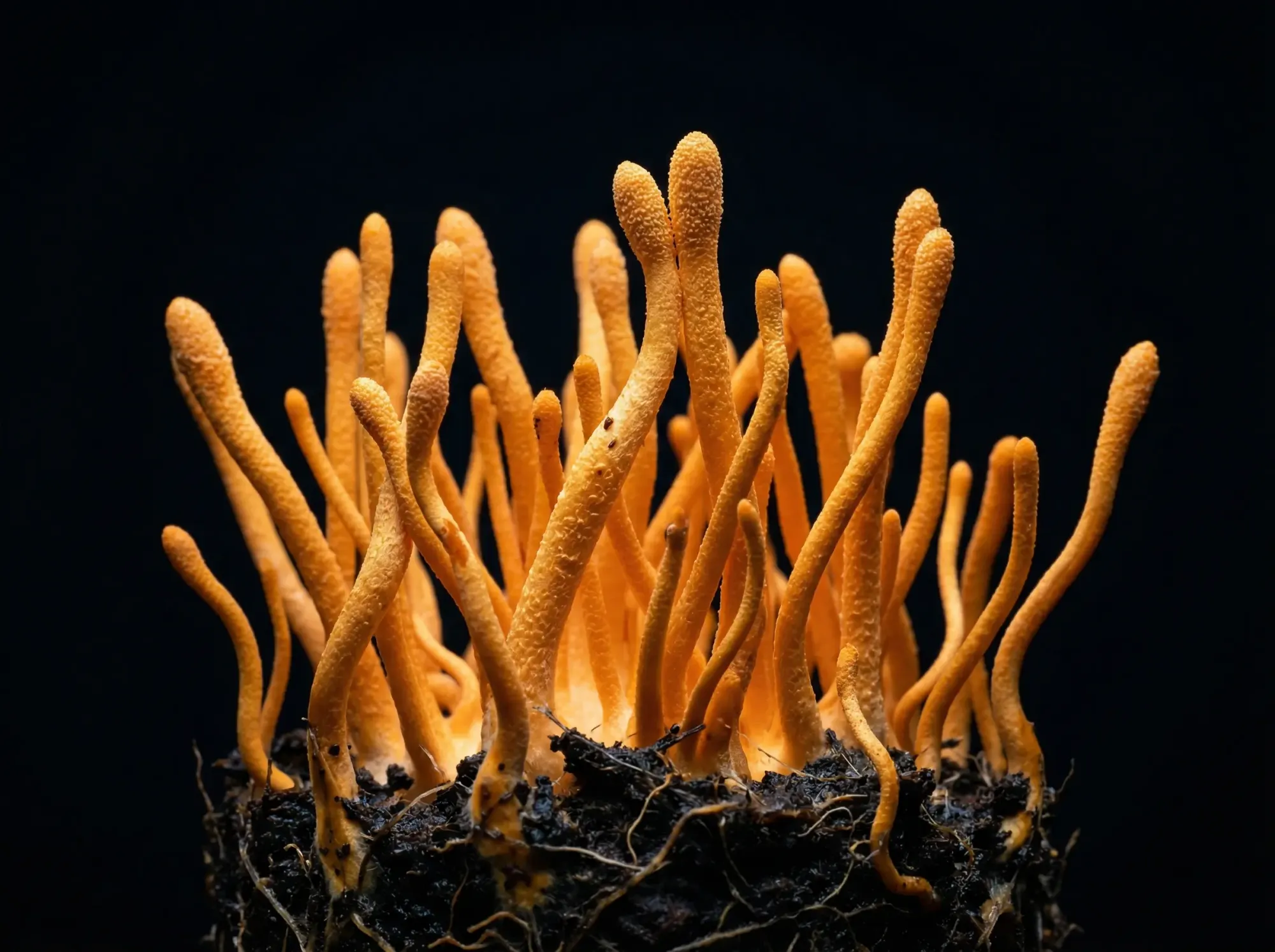
The cordycepin content of Cordyceps militaris has displayed a consistent profile of mTOR suppression and autophagy induction via AMPK activation (Wong et al., 2010; PMID: 20460362).
Chaga polyphenol fractions have shown a tendency to improve hepatic autophagy markers in animal models; the mechanism is interpreted partly through oxidative stress reduction and partly through AMPK activation (Lee et al., 2012; PMID: 22922323).
Limitations
Measuring autophagy in vivo is technically challenging; biological variability is high. Human clinical studies remain limited in number, and methodological standardization is lacking. At present, this body of literature represents a mechanistic research frontier — not a therapeutic approach.
Related Reading
- Mushrooms and Aging — Foundations of cellular aging.
- Vitality: Cordyceps — The energy metabolism connection.
- 30-Day Cordyceps Experience — Practical context.
This content is for informational purposes only and does not constitute medical advice. Consult your physician before making any health decisions. Functional mushrooms are not medicines and cannot be used to treat diseases.
Version: 1.0 | Last updated: 28 April 2026 | Sources reviewed: 12+ | Methodology: Editorial Policy | References: Bibliography