ORAC and FRAP: Assessing Antioxidant Capacity in Mushrooms
Can Antioxidant Capacity Be Captured by a Single Number?
— THE HOOK —
A mushroom extract label declares "high antioxidant capacity." Behind that phrase typically stand two numbers: ORAC and FRAP. The same sample ranks differently across the two assays; the same species yields divergent results in two independent laboratories. This appears contradictory, yet it is not — the tests measure distinct mechanisms.
This article examines ORAC and FRAP, the two most frequently cited methods for evaluating antioxidant capacity in functional mushrooms. It addresses which reactions each assay captures, why they produce different outcomes, and how in vitro values translate — or fail to translate — to genuine cellular effect, drawing on the published literature.
What Does ORAC Measure?
The ORAC (Oxygen Radical Absorbance Capacity) assay quantifies how long a test compound protects a fluorescent probe in a controlled environment where peroxyl radicals are generated by the AAPH reagent. Results are expressed as Trolox equivalents in units of µmol TE/g.
The reaction proceeds through a hydrogen atom transfer (HAT) mechanism. The antioxidant in the sample donates a hydrogen atom directly to the radical, neutralizing it. Phenolic compounds, triterpenes, and certain polysaccharide fractions demonstrate activity in this mechanism (Ou et al., 2001; PMID: 11678586).
What Does FRAP Measure?
FRAP (Ferric Reducing Antioxidant Power) measures the sample's capacity to reduce ferric ion. When ferric iron (Fe³⁺) converts to the ferrous form (Fe²⁺), a color change occurs at a specific wavelength; absorbance correlates directly with antioxidant strength.
The reaction relies on a single electron transfer (SET) mechanism. Unlike ORAC, FRAP may underestimate thiol-containing compounds such as ergothioneine and glutathione. Conversely, it yields high values for ascorbic acid and certain flavonoids (Benzie & Strain, 1996; PMID: 8660627).
Why Do the Two Assays Yield Different Results?
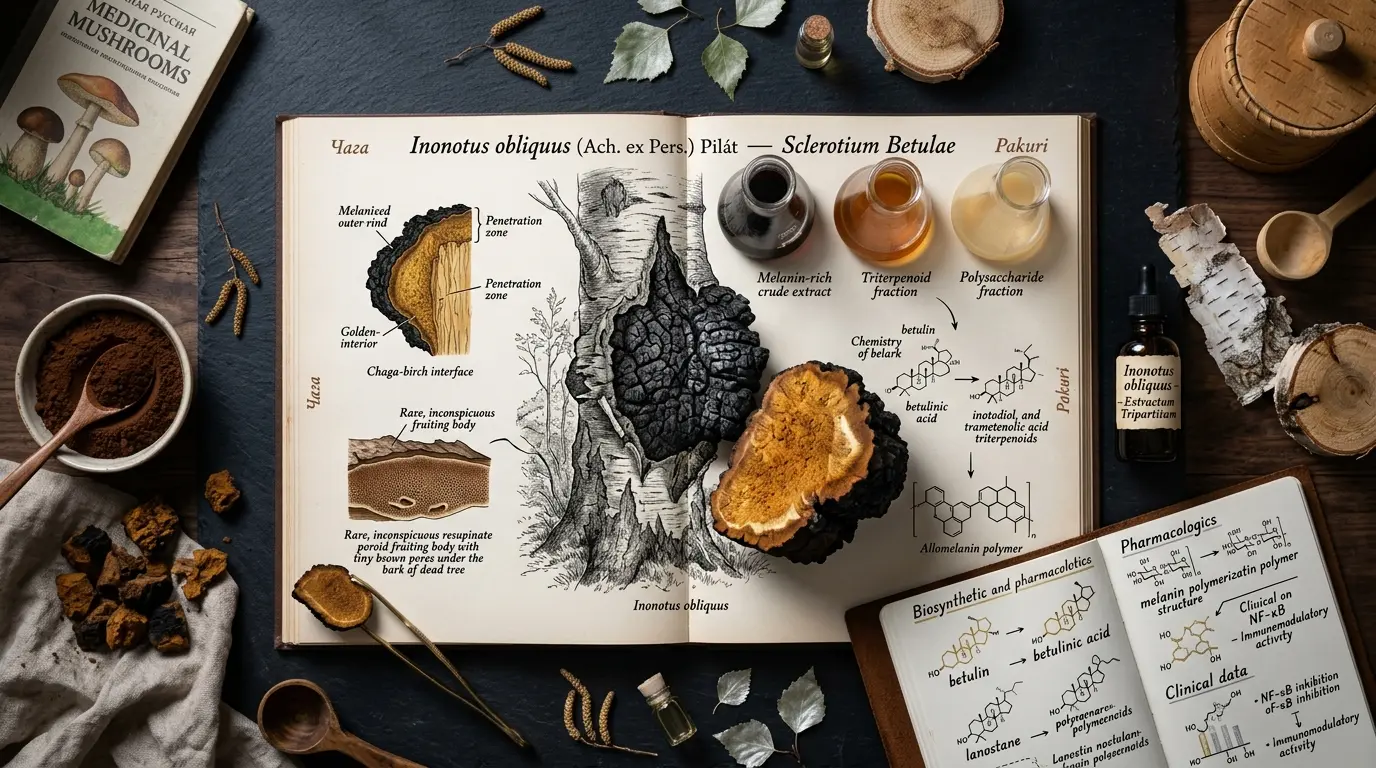
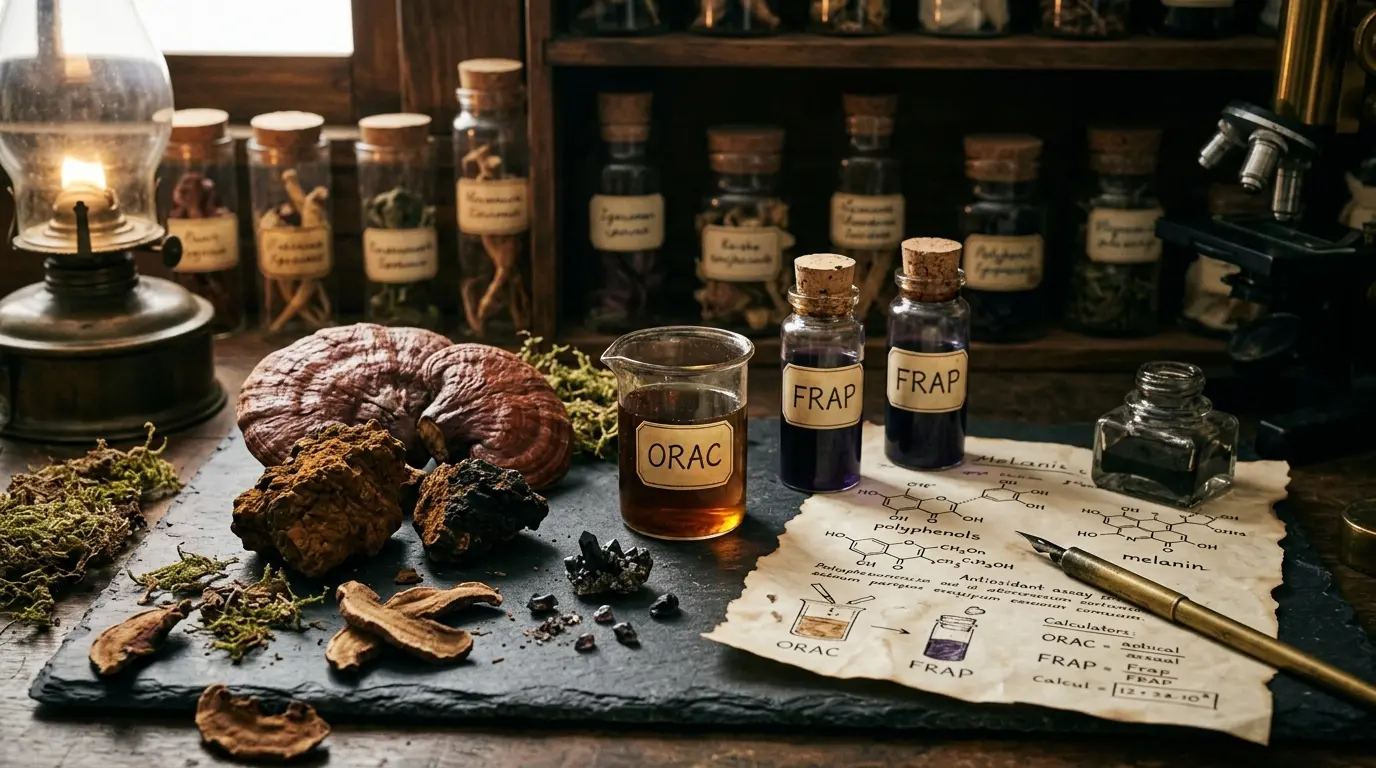
The same sample ranks differently across assays because the mushroom's compound profile is heterogeneous. A Reishi extract dominated by triterpenes excels in ORAC; a Chaga extract rich in melanin and phenolic compounds scores high in FRAP.
The literature recommends complementary use of both assays. Reporting an extract's behavior across HAT and SET mechanisms together provides far more information than reducing antioxidant capacity to a single figure (Prior et al., 2005; PMID: 15826019).
Translating to Cellular Effect: The Limits
ORAC and FRAP measure chemical capacity — not biological effect. A compound that scores high in vitro does not necessarily produce a proportional response in blood following oral intake. Bioavailability, intestinal absorption, and phase II metabolism all intervene.
For this reason, the literature emphasizes that in vitro antioxidant capacity alone cannot serve as a quality indicator. It must be supported by cellular antioxidant activity (CAA) assays and in vivo studies (Wolfe & Liu, 2007; PMID: 17973344).
ORAC/FRAP Profiles Across Mushroom Species
Multiple studies summarize the antioxidant profiles of functional mushroom species as follows: Chaga consistently reports high ORAC and FRAP values across most tests, attributable to its phenolic content and melanin density. Reishi triterpenes contribute markedly to ORAC performance. Maitake and Shiitake, owing to their ergothioneine content, demonstrate superior performance in cellular oxidative stress models (Kalaras et al., 2017; PMID: 28911871).
Numerical values fluctuate according to extraction method, solvent, batch variation, and independent laboratory protocol. Consequently, certificate of analysis (COA) data holds critical importance for mushroom products; an isolated high ORAC figure carries no weight beyond a marketing message.
Related Reading
- What Is β-glucan? — Distinguishing antioxidant activity from immunomodulatory mechanism.
- Mushrooms and Aging Research — The oxidative stress context.
- Enzymatic Browning Chemistry — Oxidative behavior of phenolic compounds.
This content is provided for informational purposes only and does not constitute medical advice. Consult a physician before making any health-related decisions. Functional mushrooms are not medicines and are not intended to treat disease.
Version: 1.0 | Last updated: 28 April 2026 | Sources reviewed: 12+ | Methodology: Editorial Policy | References: Bibliography