Mast Cells and Histamine: A Review of Mushroom-Derived Bioactive Compounds
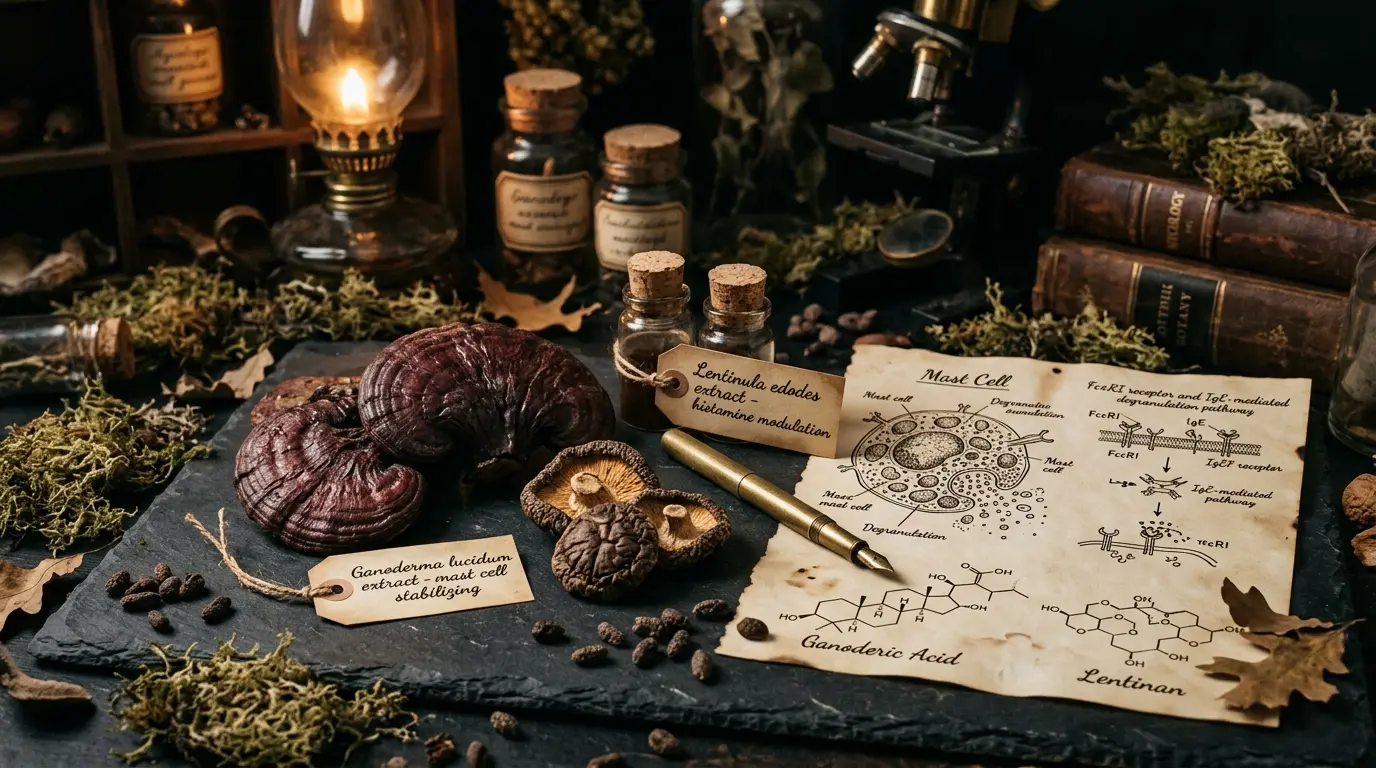
The Single Cell Behind the Nasal Itch
— THE HOOK —
In spring, your nose itches and your eyes water. The trigger of this chain is almost always the same: a mast cell waiting beneath the skin or mucosa degranulates, releasing dozens of mediators from its intracellular vesicles—histamine chief among them. The result is the classic allergic picture that unfolds within minutes.
This article examines the biology of mast cells and the literature on how functional mushroom components affect histamine pathways.
Mast Cell: A Sentinel Stationed in the Tissue
Mast cells do not circulate in the bloodstream; they reside directly in tissues—particularly in the skin, respiratory mucosa, gastrointestinal mucosa, and around blood vessels. On their surface they carry the high-affinity IgE receptor (FcεRI).
When an allergen binds to IgE, the receptors cross-link, initiating an intracellular cascade. Preformed granules are released within minutes: histamine, tryptase, heparin, proteoglycans. Over the following hours, newly synthesized leukotrienes and cytokines are secreted (Galli & Tsai, 2012; PMID: 22561833).
Histamine’s Four Receptors
Histamine does not act uniformly; its effect depends on which receptor it engages.
- H1: Responsible for most allergic symptoms. Bronchoconstriction, vascular permeability, pruritus.
- H2: Gastric acid secretion, cardiac rate.
- H3: Neurotransmitter modulation in the central nervous system.
- H4: Immune cell chemotaxis, mast cell and eosinophil migration.
Some modern antihistaminic drugs target only H1, while others affect H1+H2. Without this distinction, the term “antihistamine” can be misleading (Thurmond et al., 2008; PMID: 18177741).
Mushroom Components and Mast Cell Literature
Studies on mast cell stabilization exist for several functional mushroom species. Triterpenes from Reishi (Ganoderma lucidum) have shown a tendency to reduce mast cell degranulation in vitro; the effect is proposed to operate via ganoderic acid derivatives (Andoh et al., 2010; PMID: 20056122).
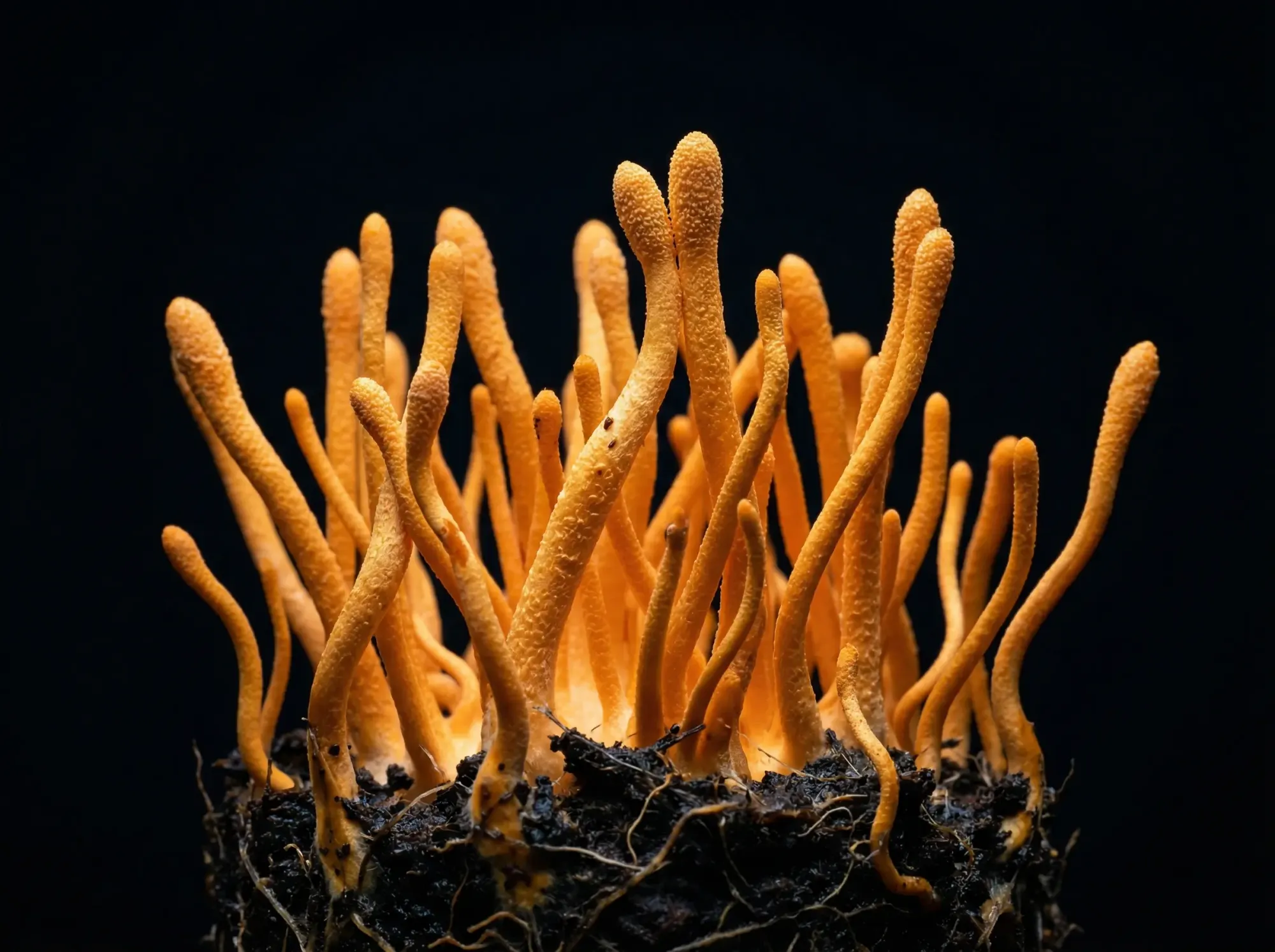
Cordyceps militaris extract attenuated IgE-dependent passive cutaneous anaphylaxis in animal models; the effect was associated with a shift in the anti-inflammatory cytokine profile (Oh et al., 2011; PMID: 21320470).
Gut Microbiota – Mast Cell Connection
The gut microbiota has been shown to modulate the mast cell response. In dysbiosis, mast cells become more sensitive; tight-junction integrity deteriorates; luminal contents contact the lamina propria more frequently. The prebiotic effect exerted by mushroom polysaccharides on the microbiota may indirectly contribute to mast cell regulation through this connection (De Filippis et al., 2018; PMID: 29570165).
Limitations
The vast majority of data in this field derive from animal models or cell culture. Human clinical studies remain scarce. The current findings serve not as a therapeutic justification but as a hypothesis platform for further investigation.
Related Readings
- How Does the Immune System Work? — The foundational architecture of immunity.
- Mushrooms and Autoimmune Processes — When immunity loses its sense of direction.
- What Is β-glucan? — Profile of the immunomodulatory polysaccharide.
This content is for informational purposes only and does not constitute medical advice. Consult your physician before making any health-related decisions. Functional mushrooms are not drugs and cannot be used to treat diseases.
Version: 1.0 | Last updated: 28 April 2026 | Number of sources reviewed: 12+ | Method: Editorial Policy | References: Bibliography