Mushroom Protein: Evaluating Its Nutritional Role in Vegan Diets
— FRAMING THE QUESTION —
Vegan nutrition continues to expand worldwide. One question persists above all others: "If I eliminate meat, where will my protein come from?"
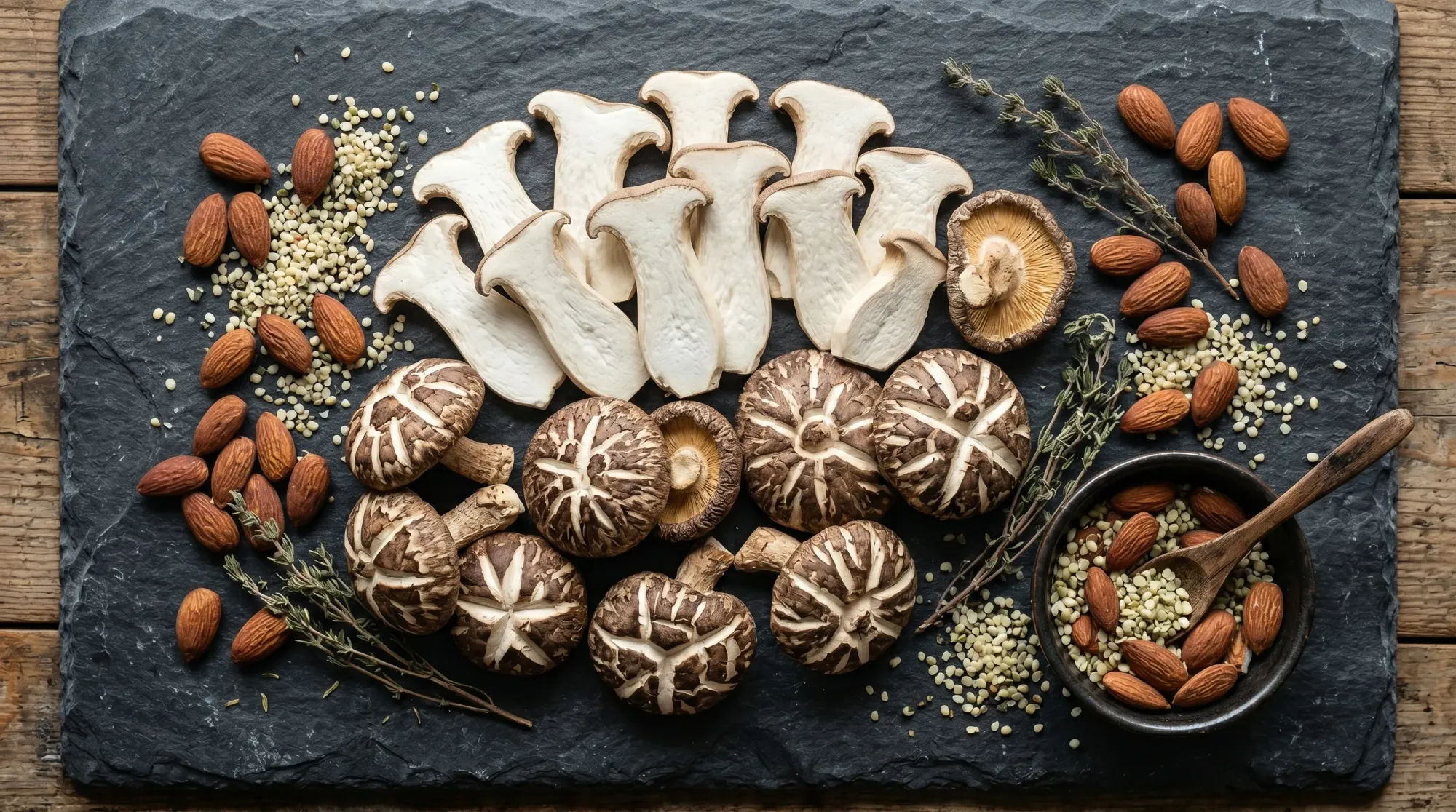
Mushrooms supply one of the least recognized answers to this question. Their meat-like texture, umami depth, and genuine protein content place them in a privileged position within the plant-based protein category — distinct from legumes, grains, and seeds.
— MUSHROOM PROTEIN PROFILE —
On a dry weight basis, the protein content of edible mushrooms ranges from 15% to 35%. This exceeds the protein density of most grains and approaches that of legumes, placing mushrooms firmly among the substantial plant protein sources.
King Oyster (Pleurotus eryngii): 20–25% protein by dry weight. This species delivers all essential amino acids. Its leucine concentration stands out as particularly relevant for muscle protein synthesis signaling.
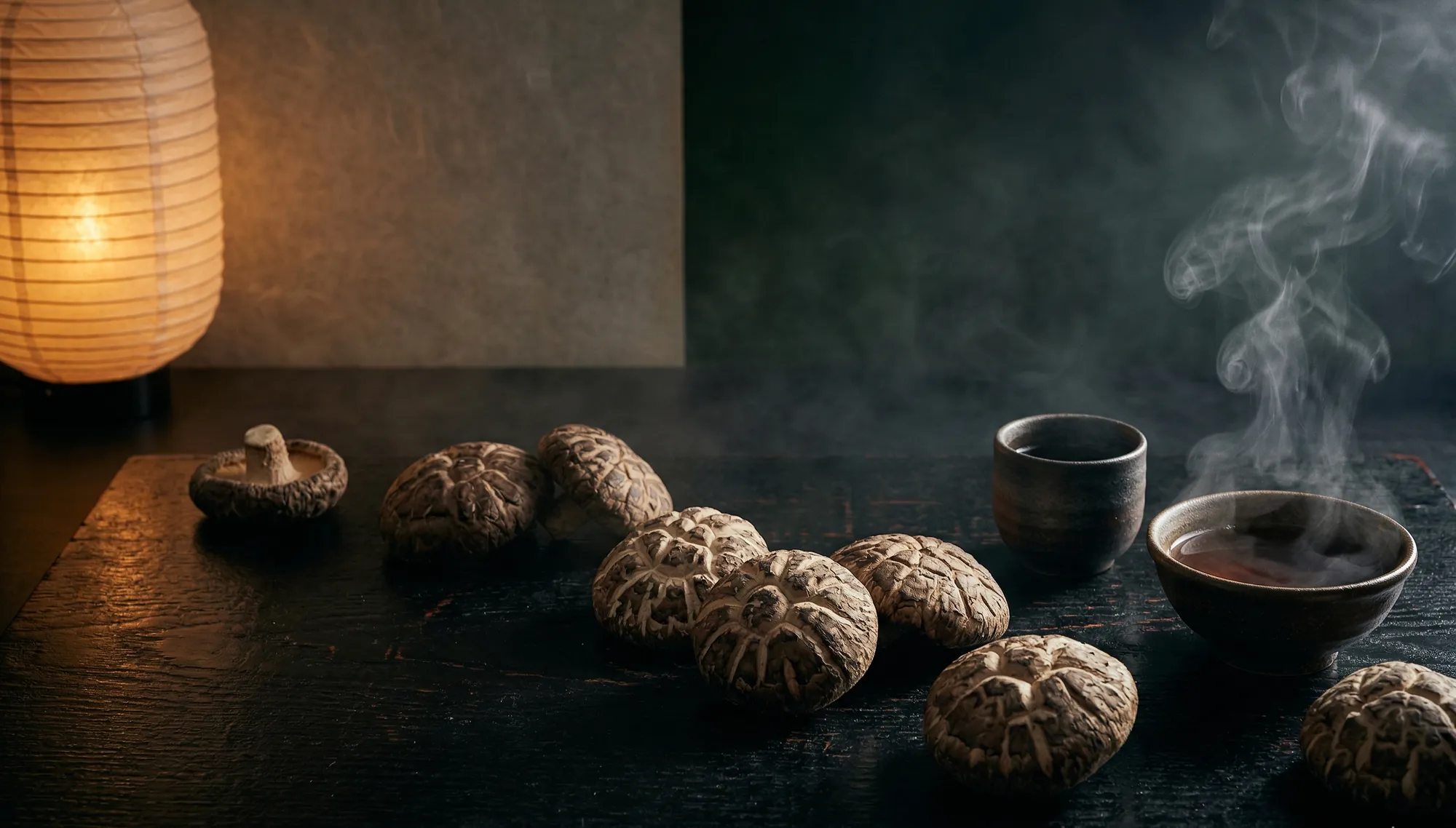
Shiitake (Lentinula edodes): 15–20% protein. Elevated glutamic acid levels make shiitake a dual-purpose ingredient — both a protein contributor and a natural flavor enhancer.
Maitake (Grifola frondosa): 15–22% protein. Exhibits a well-balanced amino acid distribution across the essential spectrum.
Lion's Mane (Hericium erinaceus): 20–30% protein by dry weight. Among the apothecary-class functional mushrooms, Lion's Mane ranks among the highest in crude protein concentration.
— AMINO ACID COMPOSITION —
Are mushrooms a "complete protein"? Technically, they contain all nine essential amino acids — but the proportional distribution differs markedly from animal-derived proteins.
Strengths: Glutamic acid (the molecular basis of umami), aspartic acid, leucine, and lysine appear at appreciable levels across most cultivated species.
Limiting amino acids: Methionine and cysteine concentrations run consistently low. This sulfur-amino-acid limitation represents a common characteristic shared across the broader plant protein landscape.
Practical implication: Mushrooms alone do not constitute a fully adequate stand-alone protein source for long-term monophagic reliance. However, when combined with legumes, whole grains, or seeds — foods that supply complementary methionine and cysteine — the resulting amino acid profile achieves completeness. This is protein complementarity in action, and mushrooms participate effectively within it.
— MUSHROOMS AS MEAT ALTERNATIVES —
Mushrooms function as meat alternatives for reasons that extend well beyond their protein content alone.
Texture: The King Oyster stem, when sliced into medallions and seared, mimics the chew and mouthfeel of sea scallops. Maitake fronds, when roasted or pulled, approximate the fibrous tearing quality of lamb or pulled meats. This "meat sensation" — distinct from protein chemistry — offers a genuine culinary advantage in plant-based cooking that isolated protein powders cannot replicate.
Umami: The synergistic combination of guanosine monophosphate (GMP), naturally abundant in mushrooms, and their endogenous glutamic acid delivers the savory depth characteristic of meat-based dishes. In preparations such as dashi, stir-fries, and slow braises, mushrooms reduce or eliminate the need for animal protein while preserving gustatory satisfaction.
Environmental footprint: Producing one kilogram of cultivated mushrooms consumes approximately 90% less water and generates roughly 95% fewer greenhouse gas emissions compared to producing one kilogram of beef. These figures position mushroom cultivation as an exceptionally resource-efficient protein pathway.
— PRACTICAL CALCULATION —
Ten grams of dried mushroom powder provides approximately 2–3 grams of protein. At typical therapeutic or supplemental dosing (2–4 grams of powdered extract daily), the protein contribution remains negligible and should not be factored into dietary protein accounting.
In culinary applications, however, the quantities shift meaningfully. Fifty to one hundred grams of rehydrated dried mushrooms — a realistic amount in a cooked dish — deliver 10–25 grams of protein. This equals the protein content of one large egg or a generous handful of almonds.
The Gastronomy series (King Oyster, Shiitake Donko, Maitake) outperforms the Apothecary series for practical protein contribution because culinary use involves substantially higher gram weights than extract-based supplementation.
— SCIENTIFIC REFERENCES —
Kalac, P. (2013). A review of chemical composition and nutritional value of wild-growing and cultivated mushrooms. Journal of the Science of Food and Agriculture, 93(2).
Reis, F.S. et al. (2012). Chemical composition and nutritional value of the most widely appreciated cultivated mushrooms. Food and Chemical Toxicology, 50(2).
Feeney, M.J. et al. (2014). Mushrooms—biologically distinct and nutritionally unique. Nutrition Today, 49(6).
You May Also Find Interesting
→ MEDALLION | King Oyster — Gastronomy Encyclopedia
→ Vegan Protein Plate — Scallop Technique
→ What Is Umami? — A Molecular Gastronomy Guide
→ What Is GMP? — Umami Synergy
Related Reading
- King Oyster Mushroom (Pleurotus eryngii) — Species Encyclopedia — King Oyster Mushroom (Pleurotus eryngii) Species Encyclopedia
- B Vitamin Content of Mushrooms and Natural Source Profile — B Vitamin Content of Mushrooms and Natural Source Profile
- Mushroom Dashi Recipe — Japanese Foundation Broth from Scratch — Mushroom Dashi Recipe — Japanese Foundation Broth from Scratch
This content is provided for informational purposes only and does not constitute medical advice. Consult a qualified healthcare professional before making any health-related decisions. Functional mushrooms are not pharmaceutical drugs and cannot be used for the treatment of diseases.
Version: 1.0 | Last updated: 20 Apr 2026 | Sources reviewed: 5+ | Methodology: Editorial Policy | References: Bibliography