A Comprehensive Guide to Crafting Four Functional Mushroom Smoothies
— CONTEXT —
Mushroom coffee exists. Mushroom tea exists. What about smoothies?
Fruit, greens, and mushroom powder — combined in a single preparation. Flavor, bioactive compounds, and convenience converge in one format. This is an especially suitable delivery method during warmer months for those who prefer to avoid hot beverages.
— WHY A SMOOTHIE? —
A smoothie serves as an ideal carrier vehicle for mushroom powders for several evidence-informed reasons:
✓ A lipid source (avocado, nut butter, MCT oil) enhances the absorption of lipophilic compounds such as triterpenoids and hericenone derivatives.
✓ Vitamin C from fruit may support the bioavailability of beta-glucans.
✓ Dietary fiber slows the digestive process — prolonging the absorption window for bioactive constituents.
✓ Flavor masking: the characteristic bitterness of Reishi and the subtle earthy notes of Lion's Mane are effectively neutralized by fruit aromatics.
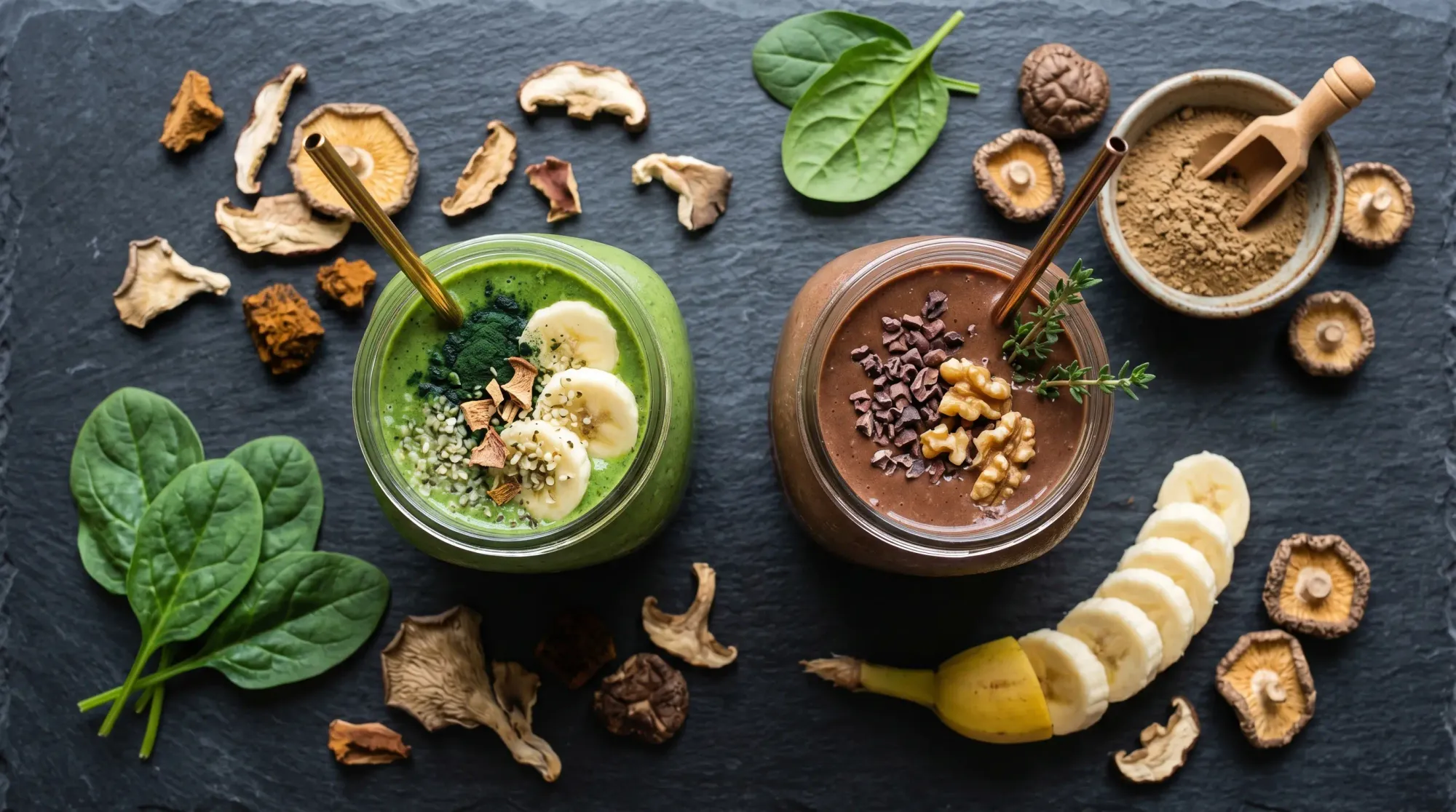
— RECIPE 1: MORNING FOCUS SMOOTHIE —
Lion's Mane + Cordyceps
1 banana (frozen)
1 handful spinach
1 tablespoon nut butter
200 ml almond milk
1 gram Lion's Mane powder
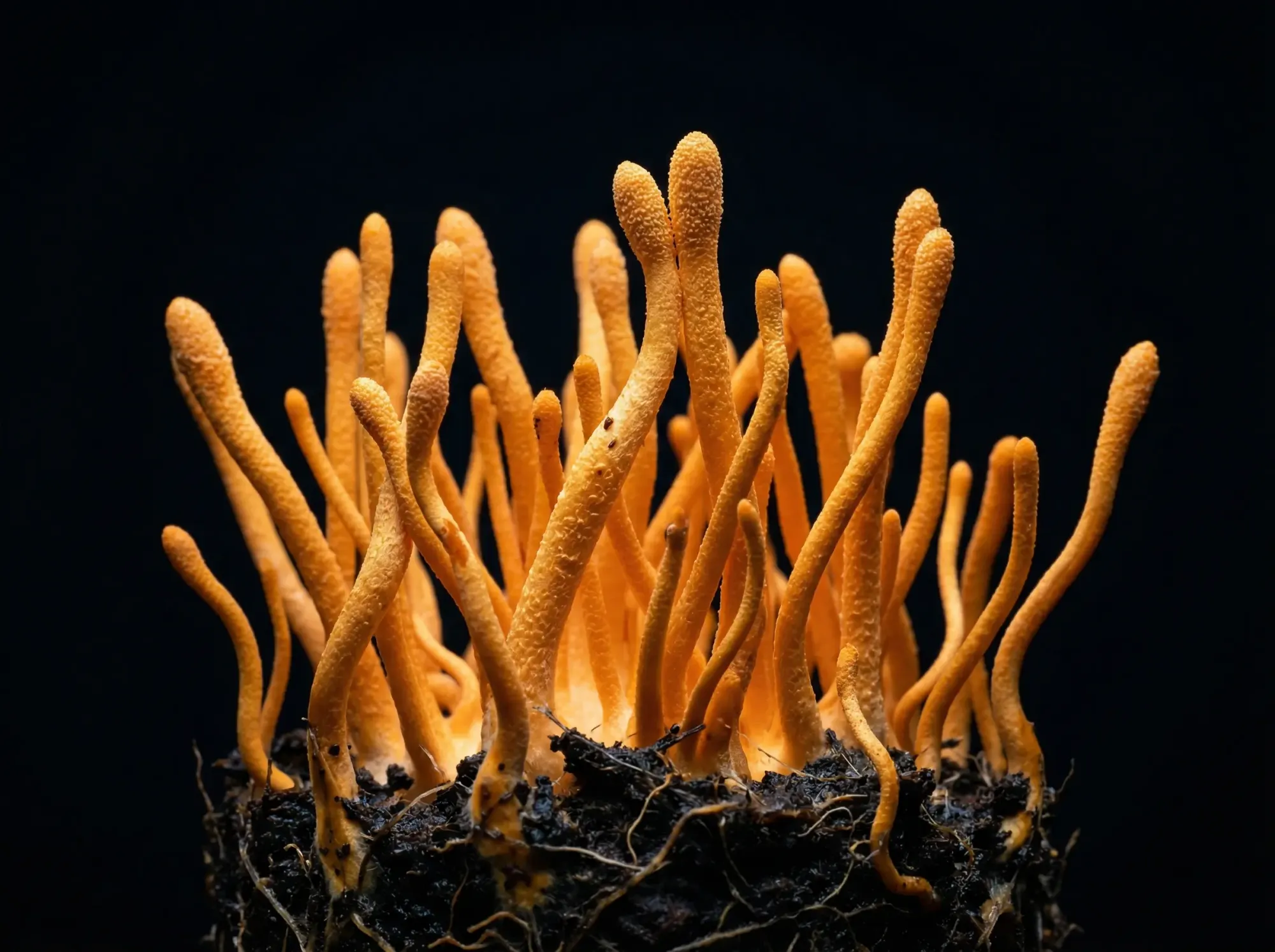
1 gram Cordyceps powder
Optional: 1 teaspoon honey
Blend all ingredients for 30 seconds. The lipid content in the nut butter facilitates hericenone absorption.
— RECIPE 2: EVENING UNWIND SMOOTHIE —
Reishi + Turkey Tail
½ avocado
1 banana
200 ml coconut milk
1 gram Reishi Antler powder
1 gram Turkey Tail powder
1 teaspoon cacao powder
1 teaspoon honey
The lipid fraction from avocado enhances triterpenoid absorption. Cacao and honey effectively mask Reishi's bitterness.
— RECIPE 3: ATHLETE RECOVERY —
Cordyceps + Protein
200 ml water or almond milk
1 scoop protein powder (whey or plant-based)
1 banana (frozen)
1 tablespoon rolled oats
1 gram Cordyceps powder
Optional: 1 teaspoon MCT oil
Consume within 30 minutes post-training. Protein supports muscle recovery; Cordyceps contributes to energy replenishment.
— RECIPE 4: IMMUNE SHIELD —
Turkey Tail + Sparassis
200 ml orange juice (freshly squeezed)
1 carrot (grated)
A thumb-sized piece of ginger
1 gram Turkey Tail powder
1 gram Sparassis powder
Vitamin C supports beta-glucan absorption. Ginger promotes digestive comfort. Particularly suitable during seasonal transitions.
— THE TEMPERATURE RULE —
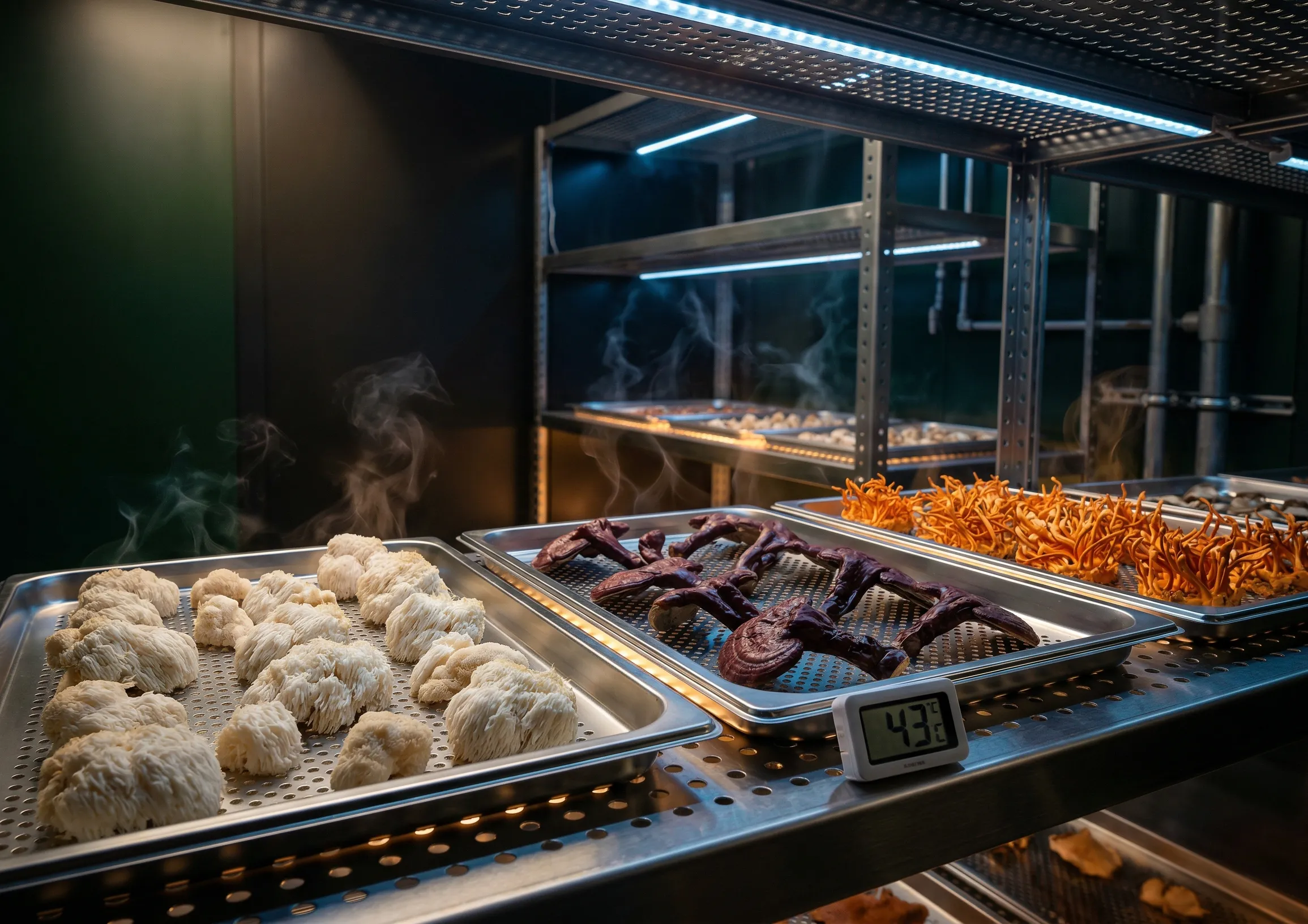
Smoothies are cold preparations. Mushroom powders dissolve more effectively in hot water. The solution is a two-step protocol:
1. First, dissolve the mushroom powder in 2–3 tablespoons of hot water (70°C), stirring until integrated.
2. Add this slurry to the blender along with the remaining ingredients.
This additional step partially opens the chitin cell wall and improves bioavailability.
— WHICH MUSHROOM FOR WHICH SMOOTHIE? —
Lion's Mane: Fruit-based morning smoothies. Its mild flavor profile is easily masked.
Cordyceps: Protein smoothies and athletic recovery beverages. Best used in the morning.
Reishi: Cacao/avocado-based evening smoothies. Bitterness requires deliberate masking.
Turkey Tail / Sparassis: Citrus-based immune support smoothies. Vitamins C synergy is well-documented.
Shiitake / King Oyster / Maitake: More appropriately incorporated into soups and cooked dishes rather than smoothies — these culinary-gastronomic species do not harmonize with sweet beverage profiles.
You May Also Find Interesting
→ What Is Chitin? — The Bioavailability Barrier
Related Reading
- What Mushroom Powder Does: Compounds and Usage Guide — What Mushroom Powder Does: Compounds and Usage Guide
- Immune Support Soup Recipe with Shiitake, Maitake, and Turkey Tail — Immune Support Soup Recipe with Shiitake, Maitake, and Turkey Tail
- The Current State of the Functional Mushroom Market in Turkey — The Current State of the Functional Mushroom Market in Turkey
This content is provided for informational purposes only and does not constitute medical advice. Consult a qualified healthcare professional before making any health-related decisions. Functional mushrooms are not pharmaceutical drugs and are not intended to treat, cure, or prevent any disease.
Version: 1.0 | Last updated: 20 Apr 2026 | Sources reviewed: 5+ | Methodology: Editorial Policy | References: Bibliography