Sparassis crispa: Culinary Applications and a Complete Cooking Guide
— HOOK —
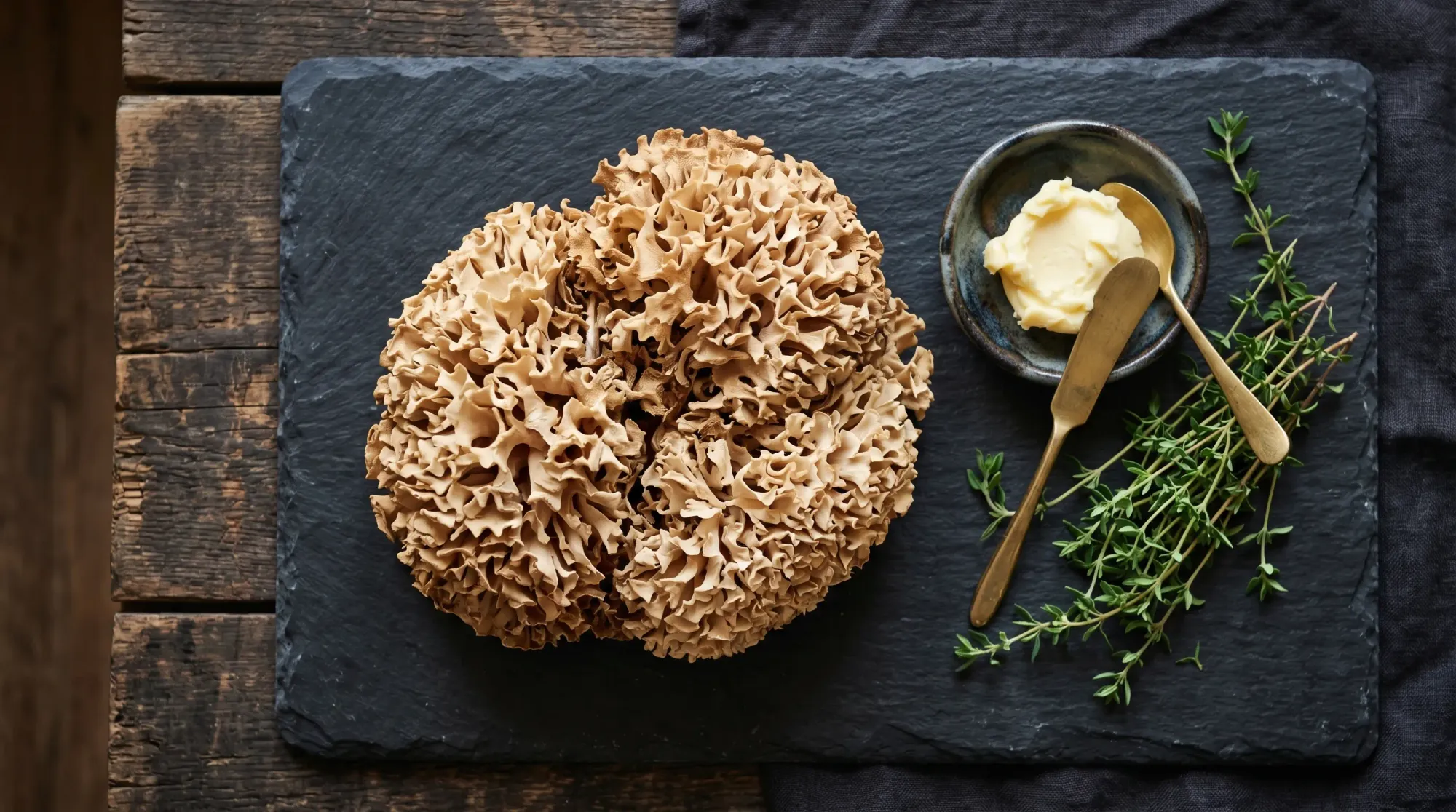
Sparassis crispa — cauliflower in appearance, coral in structure, and a champion of beta-glucan content. It is recognized as the immunity species within the Apothecary series.
Yet this mushroom also possesses a gastronomic identity. Known in Japan as "hanabiratake," Sparassis is a covert favorite among chefs. Its texture is singular, its flavor subtle, and its tolerance for cooking exceptionally high.
— FLAVOR PROFILE —
The taste of Sparassis crispa diverges from that of most functional mushrooms: it lacks bitterness, carries a faint earthy undertone, and leans mildly sweet and nutty. This renders it remarkably versatile in the kitchen.
Texture: Its layered, leaf-like architecture yields crisp edges and a tender center when cooked. This contrast is highly prized in fine dining.
Aroma: Delicate, clean, hovering between artichoke and walnut. Its lack of dominance allows effortless pairing with other ingredients.
— PREPARING DRIED SPARASSIS —
Reconstitution:
1. Soak in cold water for 20–30 minutes. The layered structure of Sparassis slows water penetration — exercise patience.
2. Reserve the soaking water — it contains beta-glucan and minerals. Use it as a soup base.
3. Gently squeeze the rehydrated Sparassis and proceed directly to cooking.
— COOKING TECHNIQUES —
1. Butter Sauté (The Simplest)
Melt butter over medium heat. Add the rehydrated Sparassis fronds. Cook without turning for 3–4 minutes, allowing the edges to brown. Salt, pepper. Finish with a squeeze of lemon. Done.
This technique presents the natural flavor of Sparassis in its purest form.
2. Tempura
The Japanese culinary technique best suited to Sparassis. Its layered structure harmonizes perfectly with tempura batter. Dip into ice-cold tempura batter and fry at 170°C for 2–3 minutes. Crisp exterior, tender interior.
3. Oven-Baked Gratin
Arrange rehydrated Sparassis in a baking dish. Pour over a mixture of cream, Parmesan, and garlic. Bake at 180°C for 15–20 minutes. The glutamate in Parmesan combined with Sparassis's natural flavor creates an umami layer.
4. Soup Base
Sparassis soaking water alone constitutes a light soup base. Add onion, carrot, and celery to craft a vegetarian consommé. The beta-glucan content is preserved.
— PAIRINGS —
Compatible: Butter, olive oil, garlic, lemon, Parmesan, white wine, thyme, rosemary
Avoid: Overly dominant spices (cumin, curry) that overwhelm the delicate aroma of Sparassis.
Protein pairings: Excellent as a side dish alongside chicken, fish, and scallops.
— IS BETA-GLUCAN PRESERVED? —
What happens to the 40–45% beta-glucan content of Sparassis during cooking?
Beta-glucans are heat-stable. Structural degradation at normal cooking temperatures (100–200°C) is minimal. During water-based cooking, a portion of beta-glucans leaches into the liquid — which is why utilizing the cooking water is essential.
Frying and baking preserve beta-glucan. Sparassis can serve in the kitchen for both flavor and immune support.
You May Also Like
→ IMMUNITY | Sparassis crispa — Species Encyclopedia
→ King Oyster in the Kitchen — Scallop Texture
→ Shiitake Donko in the Kitchen — Umami Guide
→ Maitake in the Kitchen — Cooking the Dancing Mushroom
→ Notes from a Restaurant Chef
Related Reading
- Sparassis Crispa and Its High Beta-Glucan Profile: An Encyclopedia — Sparassis Crispa and Its High Beta-Glucan Profile: An Encyclopedia
- Maitake Mushroom: Culinary Applications and Cooking Guide — Maitake Mushroom: Culinary Applications and Cooking Guide
- Immune-Support Soup Recipe with Shiitake, Maitake, and Turkey Tail — Immune-Support Soup Recipe with Shiitake, Maitake, and Turkey Tail
This content is provided for informational purposes only and does not constitute medical advice. Consult a physician before making any health-related decisions. Functional mushrooms are not pharmaceuticals and cannot be used to treat diseases.
Version: 1.0 | Last updated: 20 Apr 2026 | Sources reviewed: 5+ | Methodology: Editorial Policy | References: Bibliography