Inotodiol: A Bioactive Lanostane Triterpenoid from Chaga
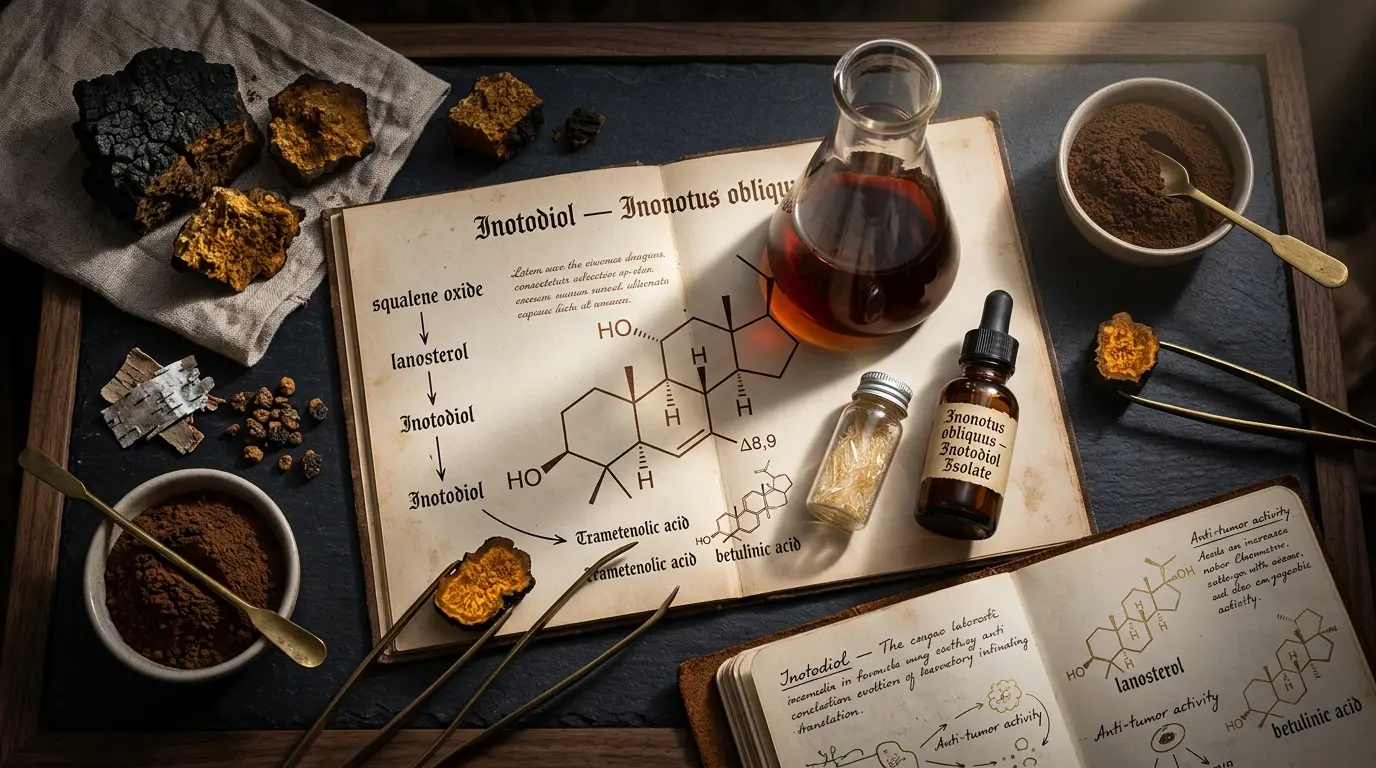
The Star Molecule in Chaga's Triterpene Line
— HOOK —
Although the Chaga (Inonotus obliquus) literature most frequently cites polyphenolic styrylpyrone derivatives, one molecule commands particular attention on the triterpene side: inotodiol. This lipophilic compound derives from the lanostane skeleton and occupies the center of the "active constituent of Chaga" debate in several research circles.
This entry addresses the structural chemistry, distribution, and position of inotodiol within the functional mushroom literature.
Chemical Structure: The Lanostane Skeleton
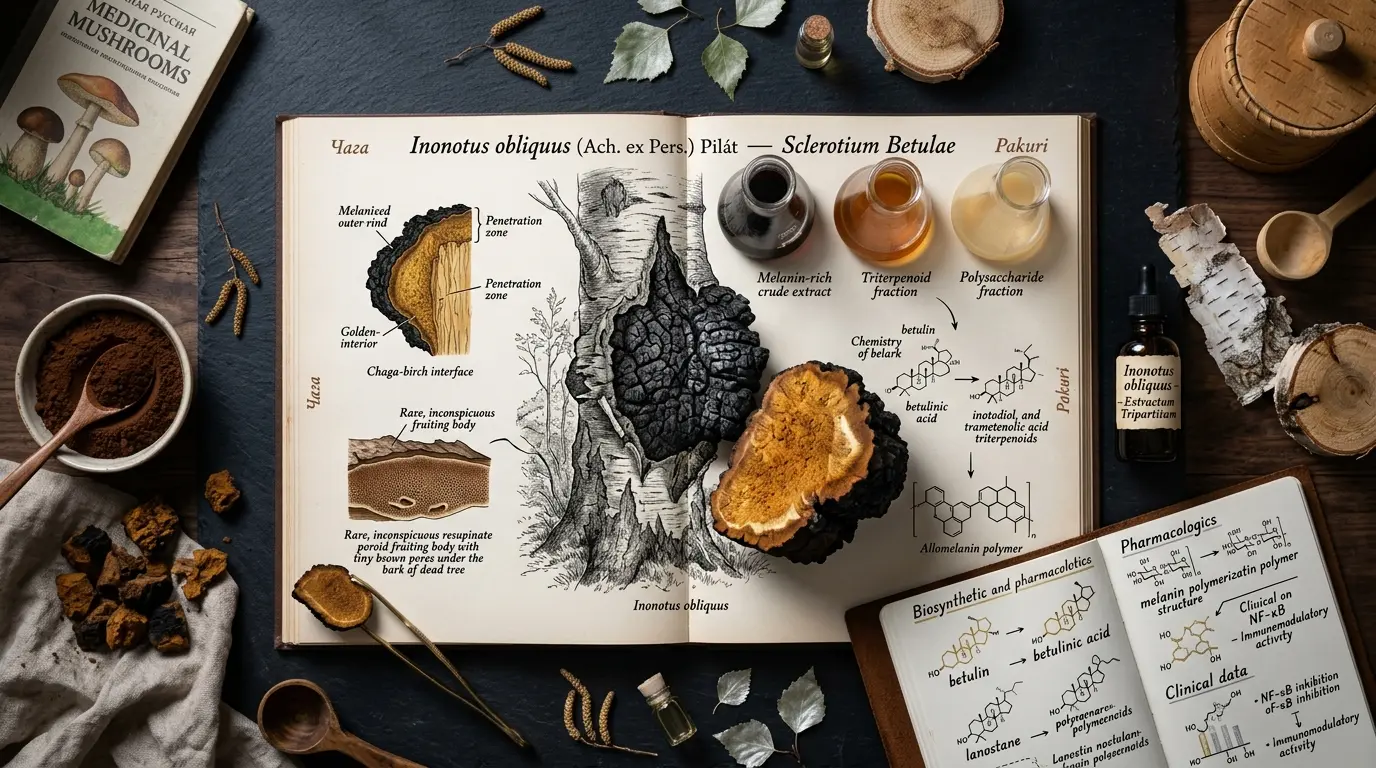
Inotodiol is a tetracyclic triterpene derived from the 30-carbon lanostane skeleton, bearing two hydroxyl groups and an isopropyl-vinyl side chain. It possesses pronounced lipophilic character; the compound is insoluble in water but dissolves readily in organic solvents such as ethanol, chloroform, and ethyl acetate.
Within the Chaga sclerotium, inotodiol constitutes a significant component of the triterpene fraction, occurring alongside betulinic acid, lanosterol, and trametenolic acid (Taji et al., 2008; PMID: 18551411).
The Extraction Challenge: Hot Water Is Not Enough
The lipophilic character of inotodiol means that the bulk of the fraction remains behind in traditional hot water extraction. Consequently, inotodiol content varies markedly across Chaga extract types:
- Hot water extract: Rich in polyphenols and polysaccharides, low in triterpenes.
- Alcoholic/ethanol extract: Demonstrates a substantially higher triterpene profile.
- Dual extraction (water + alcohol): Combines both fractions and represents a popular standard.
Dual extraction methodology acknowledges this structural heterogeneity and aims to deliver both fractions within a single product (Lemieszek et al., 2011; PMID: 21534945).
Activity Profile in the Literature
In vitro tumor cell culture models have yielded evidence of apoptosis induction by inotodiol. The mechanism is interpreted partly through reduction of mitochondrial membrane potential and partly through caspase activation (Nomura et al., 2008; PMID: 18187202).
Animal models have produced reports of anti-inflammatory and hepatoprotective tendencies; the effect is understood through modulation of NF-κB and MAPK signaling pathways (Park et al., 2007; PMID: 17561362).
A limited data set addresses anti-allergic effects; in vitro results indicate attenuation of mast cell degranulation (Nguyet et al., 2018; PMID: 30355310).
The Bioavailability Question
Inotodiol is lipophilic; oral absorption is theoretically facilitated when the compound is taken with a fat-based meal. However, pharmacokinetic data on systemic bioavailability, plasma half-life, and tissue distribution in humans are virtually nonexistent (Géry et al., 2018; PMID: 29415104).
Standardization and Labeling
A substantial portion of Chaga products on the market carry labeling based on "triterpene percentage"; however, this figure may refer to total triterpenes rather than inotodiol specifically. Products that explicitly declare their inotodiol content remain scarce. This reality complicates the practical evaluation of the Chaga literature.
Limitations
Well-designed human intervention studies for inotodiol do not exist. Current findings remain at the cell culture and animal model level. The inferences drawn present a field of mechanistic inquiry, not grounds for therapeutic claims.
Further Reading
- Chaga (Inonotus obliquus) — Species encyclopedia.
- Chaga: Betulinic Acid and Betulin — Additional triterpene profiles.
- What Is Dual Extraction? — The triterpene-polysaccharide distinction.
This content is provided for informational purposes and does not constitute medical advice. Consult a physician before making any health-related decisions. Functional mushrooms are not drugs and may not be used in the treatment of disease.
Version: 1.0 | Last updated: 28 April 2026 | Sources reviewed: 12+ | Methodology: Editorial Policy | References: Bibliography