Fomitopsin: The Triterpenoid Profile of Agarikon (Fomitopsis officinalis)
The Triterpene Secret of an Ancient Mushroom
— HOOK —
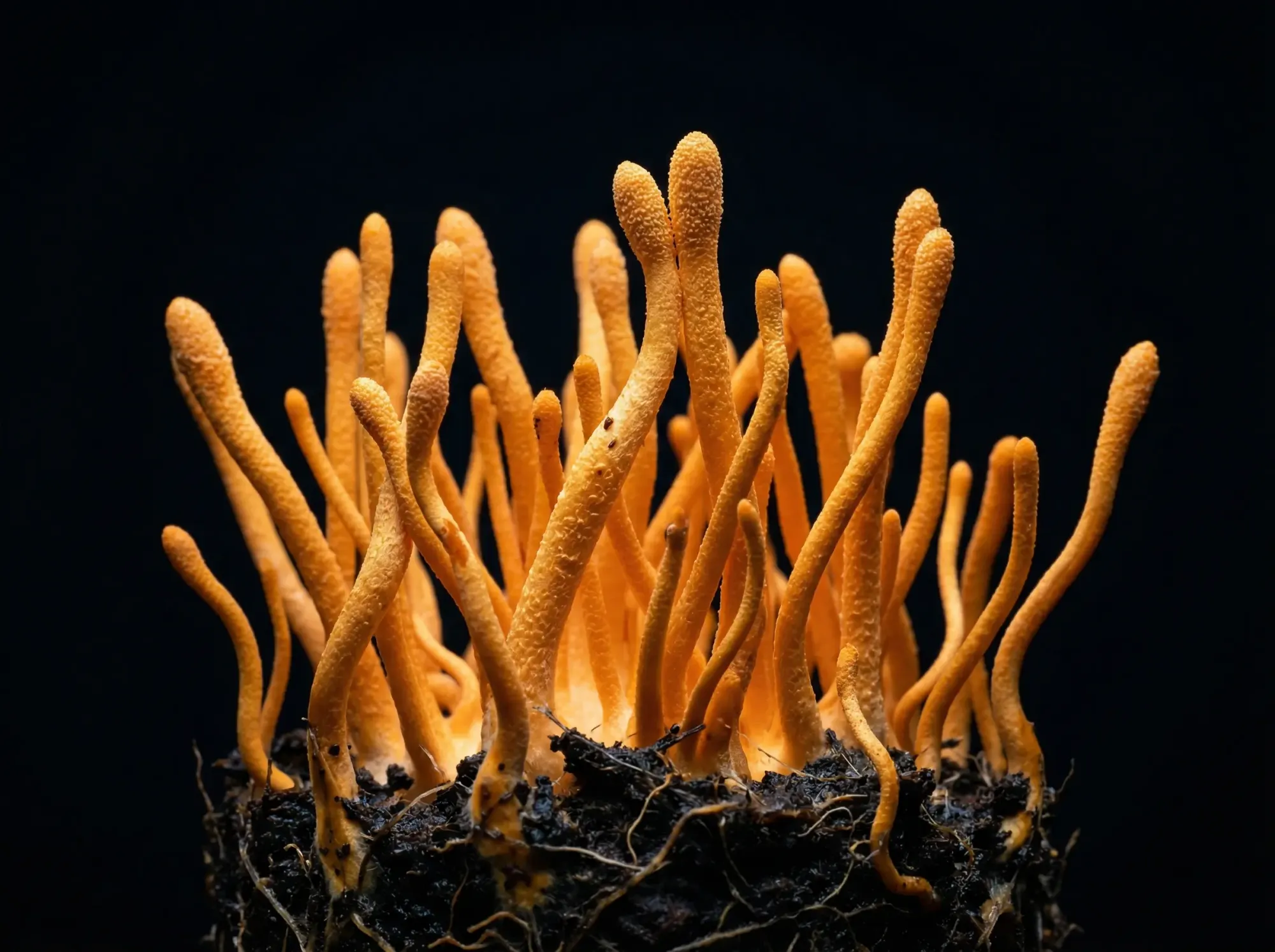
In ancient coniferous forests, especially the undisturbed spruce/Douglas fir forests of western North America and Europe, a cone‑shaped, waxy white polypore grows: Laricifomes officinalis, commonly called Agarikon. Ancient texts named it the “bread of life.” In modern phytochemistry it stands as a species that offers a carefully studied library of triterpenes.
This entry examines the chemical profile of agarikon, its fomitopsin derivatives, and its place in the functional mushroom literature.
Species Profile: A Host Specialist
Laricifomes officinalis develops on the trunks of old‑growth spruce (Picea), larch (Larix), and Douglas fir (Pseudotsuga). A mature fruiting body can survive for decades—a trait that separates it from annual polypore species.
Because the species is scarce in the wild, modern research has turned to mycelium cultures. Production on sterile substrate is possible, but forming a fruiting body takes years (Stamets, 2002).
Fomitopsin: Lanostane‑Derived Triterpenes
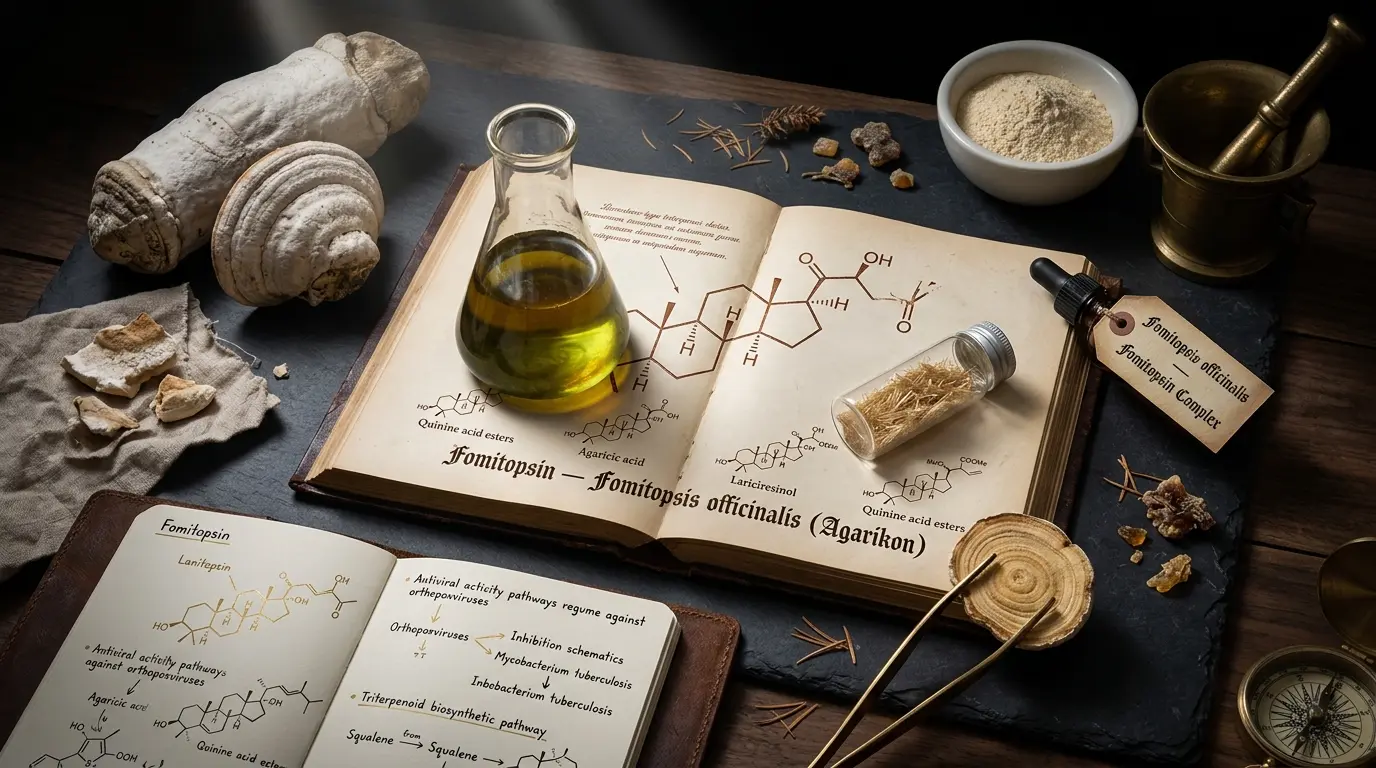
The foremost triterpene class of agarikon is the fomitopsin family, derived from the lanostane skeleton. Multiple derivatives—fomitopsin A, B, C, and D—have been identified within this family; structural variation appears in the position of hydroxyl and carbonyl groups.
The lanostane skeleton shares the same backbone as the ganoderic acid family, yet the distribution of side groups differs. This requires that the in vitro behaviour of fomitopsin derivatives be evaluated as a profile distinct from ganoderic acids (Hwang et al., 2013; PMID: 23583436).
Other Constituents: Agaricic Acid and Polyphenols
Agaricic acid, a tricarboxylic acid derivative isolated from agarikon a century earlier and named after the species, is another significant compound. Its historical use is known for reducing perspiration.
The species also contains melanin‑like pigments and alpha‑ and beta‑glucans; nevertheless, its prominence in antiviral research has primarily come from triterpenes and low‑molecular‑weight constituents (Stamets, 2002).
Activity Profile in the Literature
Agarikon extracts have demonstrated an antiviral tendency in several viral cell‑culture models; studied viruses include influenza and poxviruses (Stamets et al., 2008).
Triterpene fractions have been reported to show antibacterial activity in in vitro models. Activity against certain mycobacterial strains, including Mycobacterium tuberculosis, stands out among examples; however, these studies remain largely at the in vitro level (Hwang et al., 2013; PMID: 23583436).
Conservation Status
Laricifomes officinalis is a species dependent on mature old‑growth forest ecosystems and is regarded as under protection. Wild harvesting is prohibited or regulated in most European countries. The MYCOVITA value chain contains no wild‑collected mushrooms; the only route for this species is controlled cultivation and laboratory production.
Limitations
A substantial portion of studies on agarikon are extract‑based, in vitro designs. Human intervention studies are virtually nonexistent. Current findings offer a mechanistic area of inquiry, not a therapeutic rationale.
Related Readings
- Reishi Triterpenes — Lanostane skeleton comparison.
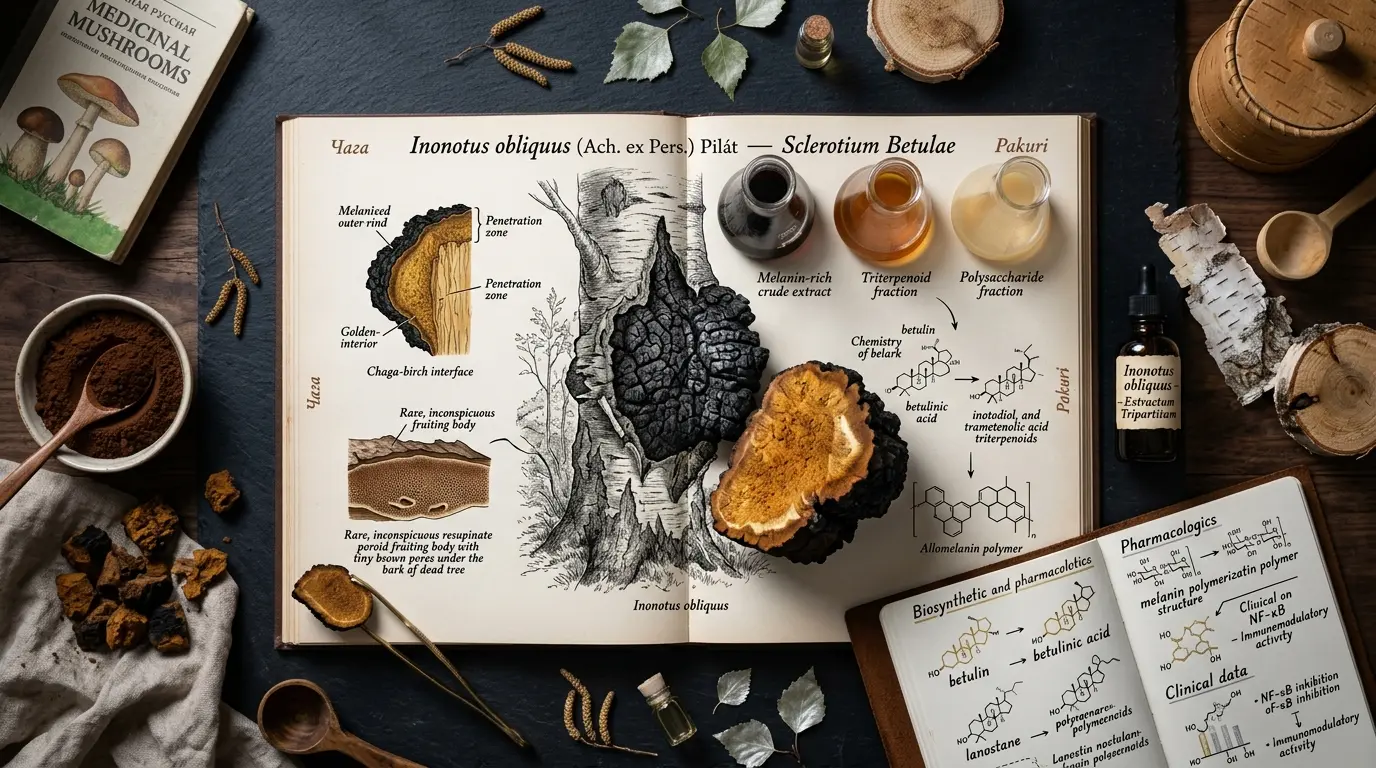
- Inotodiol — Chaga lanostane profile.
- Dual Extraction — Triterpene extraction method.
This content is for informational purposes only and does not constitute medical advice. Consult your physician before making any health decisions. Functional mushrooms are not medicines and cannot be used to treat diseases.
Version: 1.0 | Last updated: April 28, 2026 | Sources reviewed: 12+ | Method: Editorial Policy | References: Bibliography