Cordycepin: The Primary Bioactive Molecule of the Cordyceps Mushroom
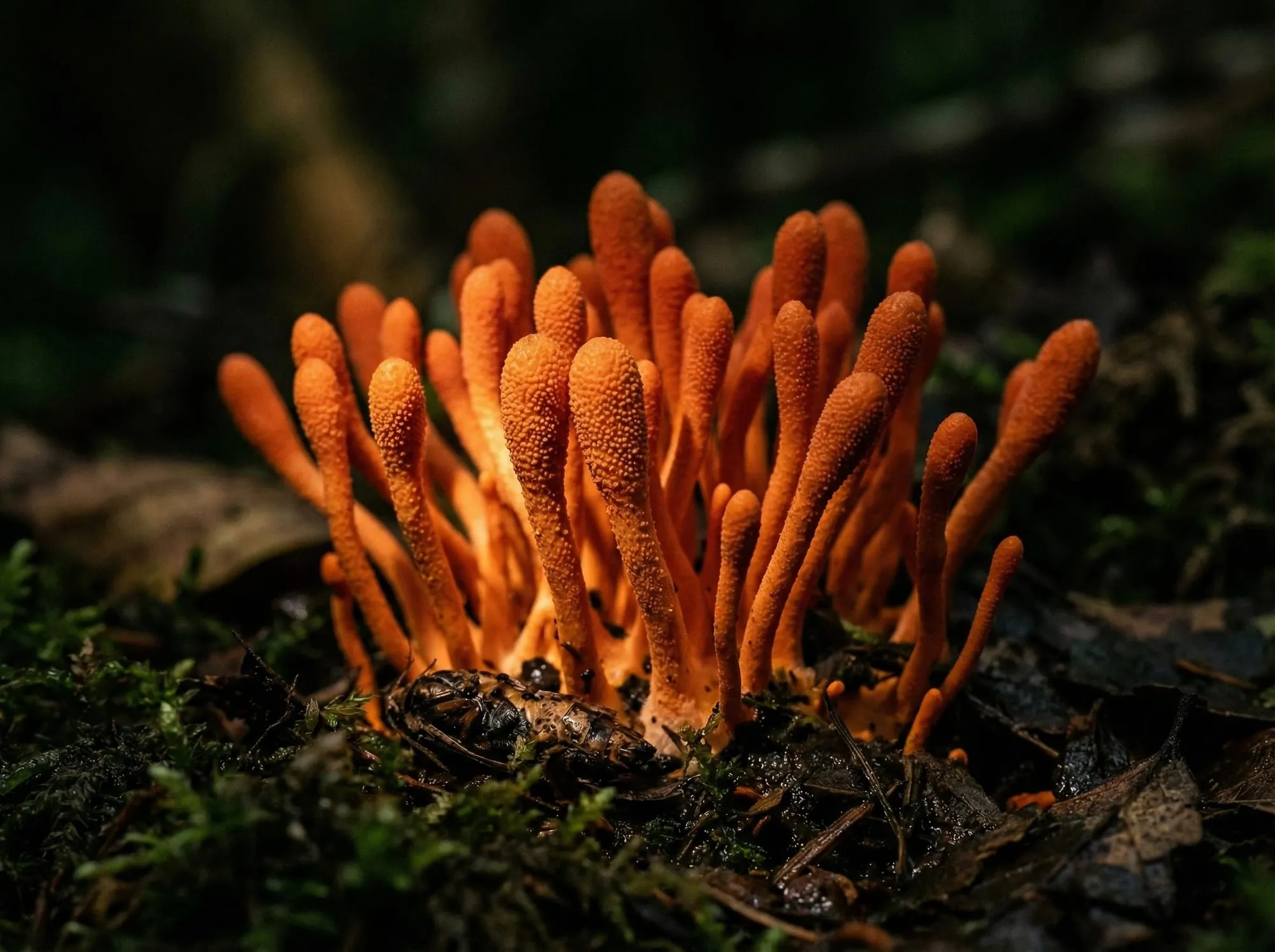
Mycelial Library No.15
— HOOK —
1993. The Chinese National Athletics Team broke a world record. Coach Wu Zhongzhen said something at the press conference: ‘They drink Cordyceps tea.’
The athletes underwent doping tests. They were clean. But the world heard the word ‘Cordyceps’ on a massive scale for the first time.
The active-ingredient research behind this event leads us to a molecule: Cordycepin.
Cordycepin: Structure and Uniqueness
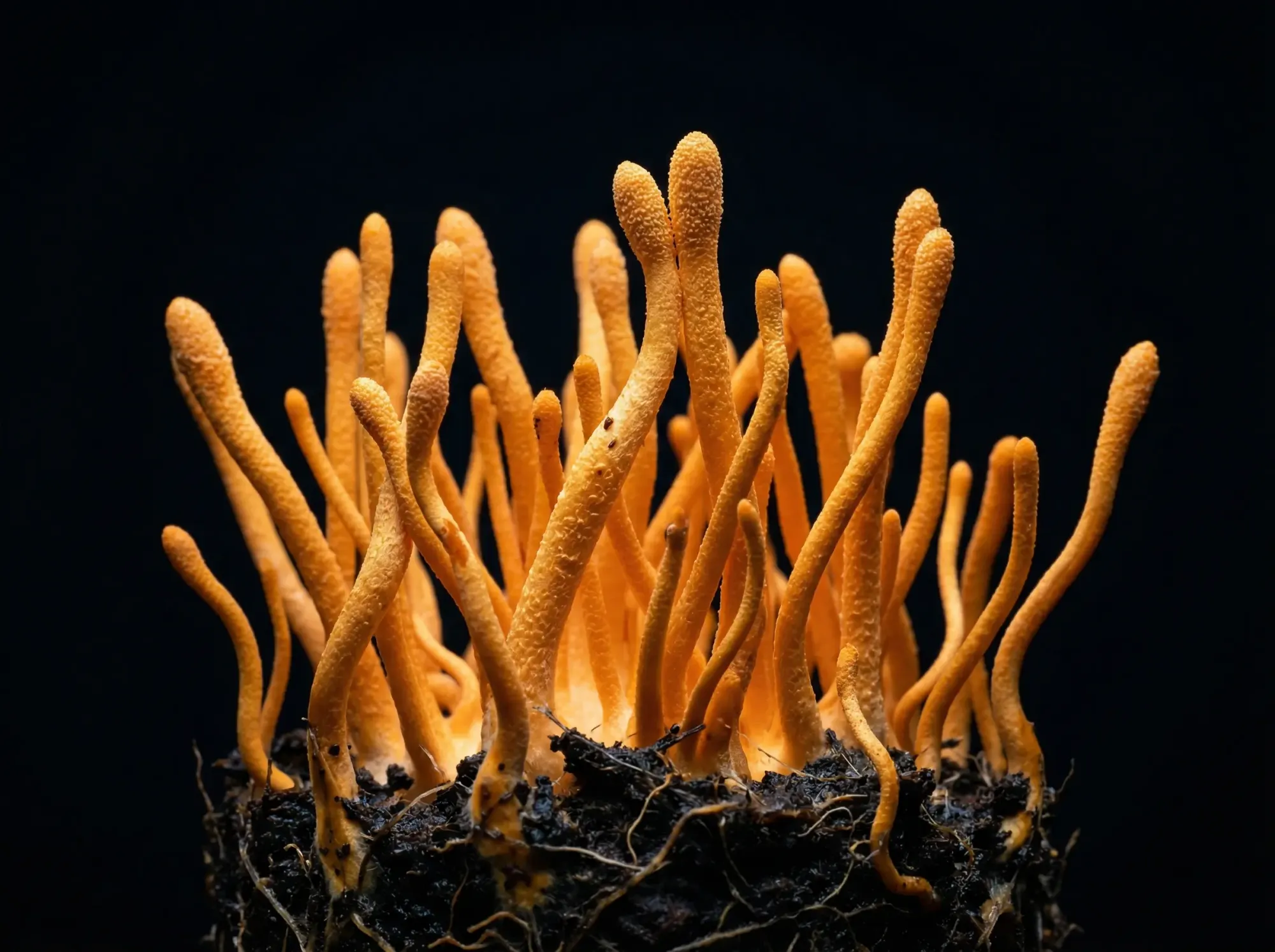
Cordycepin (3′-deoxyadenosine) is a modified analogue of adenosine. It was discovered in the 1950s and identified as the primary bioactive compound isolated from Cordyceps mushrooms — specific to this genus.
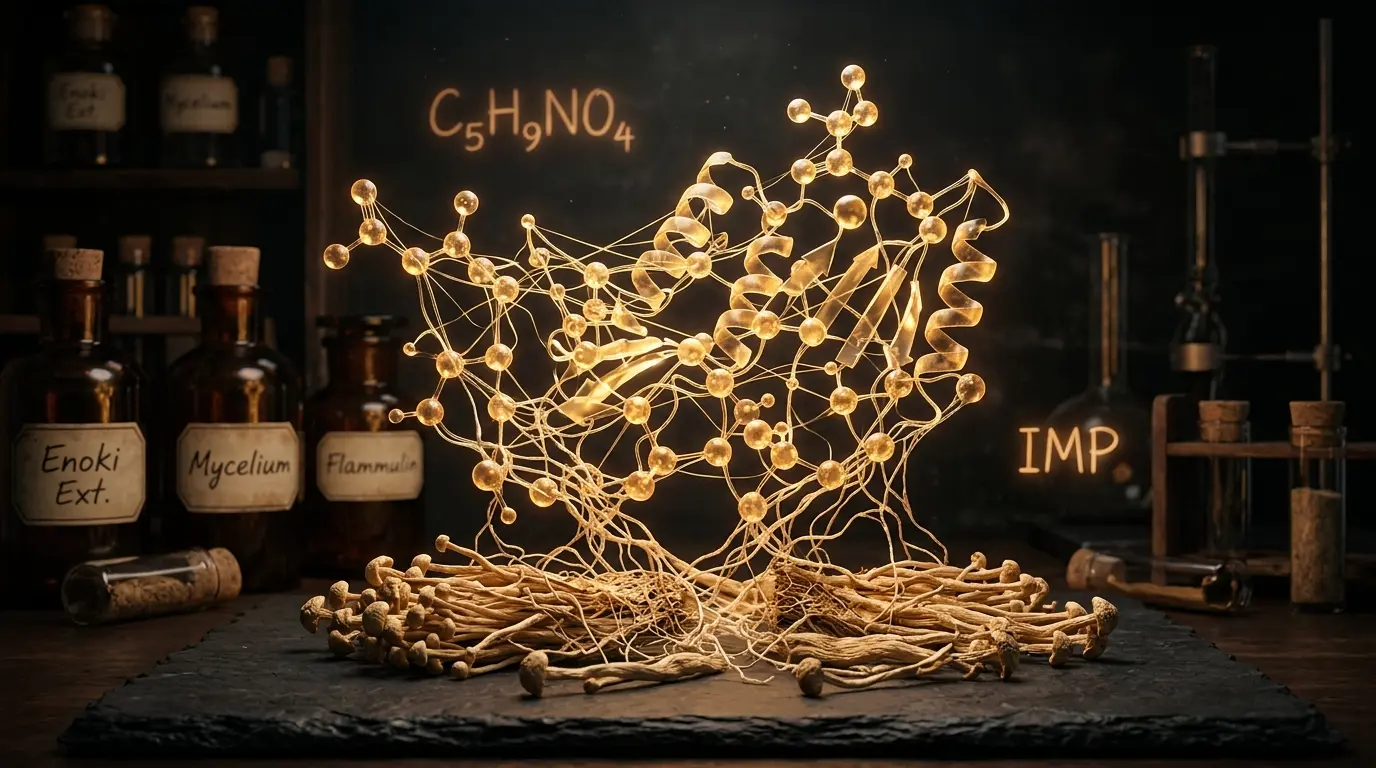
Adenosine is the building block of ATP, the cornerstone of cellular energy transfer. Cordycepin mimics this structure but carries a single difference at the 3′ position — a small change that defines its biological activity.
Important note: Wild Ophiocordyceps sinensis (Himalayan Cordyceps) and the cultivated mushroom Cordyceps militaris are distinct species. MYCOVITA produces Cordyceps militaris, the species on which the vast majority of research focuses. Cordycepin concentrations in this species are far higher than in the wild Himalayan variety.
ATP Synthesis and Energy Metabolism
Curiosity about athletes originates here.
Adenosine triphosphate (ATP) is the fundamental energy unit cells use. Every biological process — from muscle contraction to cognition — depends on ATP expenditure. Fatigue is, in essence, ATP consumption exceeding regenerative capacity.
The possible effects of cordycepin on ATP synthesis are under investigation. Animal models and a limited number of human studies in the literature address topics such as mitochondrial function, oxygen utilization efficiency (VO₂ max), and lactate accumulation.
These data do not say that Cordyceps makes you an Olympic athlete. But they explain why endurance athletes show persistent interest in this species.
Adenosine Receptors and Another Dimension
Adenosine receptors — A₁, A₂A, A₂B, A₃ — are widely distributed in the central nervous and immune systems. Caffeine works by blocking these receptors (the mechanism behind its stimulant effect).
Because of its structural similarity to adenosine, cordycepin is also being examined in receptor-interaction research. Hypotheses of anti‑inflammatory, antioxidant, and anti‑fatigue effects are evaluated in this context.
The difference from caffeine is this: caffeine blocks; cordycepin shows potential agonist (activating) effects. The mechanism differs, the direction differs.
MYCOVITA CANLILIK & Proper Use
Cordyceps militaris is the most frequently asked‑about species in the MYCOVITA Apothecary Series. Placing it in the morning routine or pre‑workout is the most common choice.
Brewing: 80–85 °C, 5–7 minutes, 1–1.5 grams. A natural complement to espresso or filter coffee — not synergistically stimulatory, but a complementary profile with caffeine.
Related readings: Cordyceps Encyclopedia · Does Cordyceps Work Like Caffeine? · Athlete‑Specific Protocol
MYCOVITA’s production philosophy and transparency principles: Why MYCOVITA?
Important: Cordyceps militaris is plant‑based, not animal‑derived. The name ‘insect mushroom’ originates from the wild Himalayan species’ parasitic growth on insects. Cultivated production occurs entirely on grain‑based substrate.
Mycelial Library No.15 | MYCOVITA
MYCOVITA products are food products. They do not claim to treat, prevent, or cure any disease. If you have a health concern, consult your physician.
— SCIENTIFIC REFERENCES —
Cunningham, K.G. et al. (1950). Cordycepin, a metabolic product isolated from cultures of Cordyceps militaris. Nature, 166(4231), 949.
Tuli, H.S. et al. (2013). Pharmacological and therapeutic potential of Cordyceps with special reference to Cordycepin. 3 Biotech, 4(1), 1-12.
Zhu, J.S. et al. (1998). The Scientific Rediscovery of an Ancient Chinese Herbal Medicine: Cordyceps sinensis. JACM, 4(3), 289-303.
Ashraf, S.A. et al. (2020). Cordycepin for Health and Wellbeing: A Potent Bioactive Metabolite. Molecules, 25(12), 2735.
You May Also Like
→ Mushroom Science Glossary — 130+ Terms from A to Z
→ Is Turkey‑Produced Mushroom Trustworthy?
→ Functional Mushroom Production in Turkey
This content is for informational purposes only and does not constitute medical advice. Consult your physician before making any health decisions. Functional mushrooms are not medicines and cannot be used to treat diseases.
Version: 1.0 | Last updated: 20 Apr 2026 | Sources reviewed: 8+ | Method: Editorial Policy | References: Bibliography