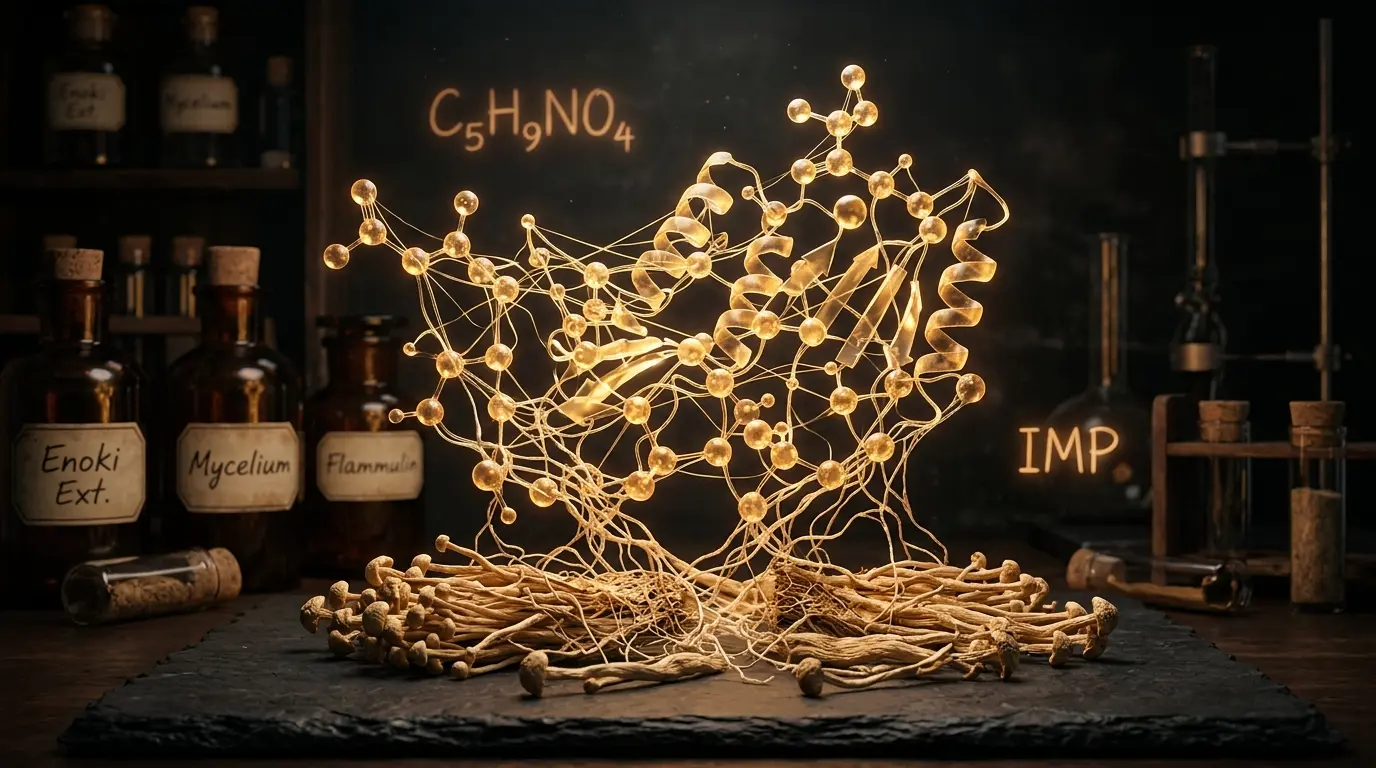
Nerve Growth Factor (NGF) and the Emerging Role of Mushrooms in Neural Health
Related reading: Lion's Mane Encyclopedia · Brain-Gut Axis
MYCOVITA's production philosophy and transparency principles: Why MYCOVITA?
Mycelium Library No.14
— HOOK —
Why do brain cells die? Why do existing connections break down in Alzheimer's patients? Why does working memory slow with age?
At the center of these questions lies a single protein: NGF. And one of the rare substances capable of influencing the production of this protein is a compound derived from a mushroom.
NGF: Nerve Growth Factor
NGF — Nerve Growth Factor — was discovered in the 1950s by Rita Levi-Montalcini. The discovery earned her the 1986 Nobel Prize. The Nobel Committee's citation read: "for the discovery of factors of fundamental importance for the regulation of cell growth."
NGF is a neurotrophin essential for the survival, growth, and maturation of neurons — nerve cells. Stated plainly: without NGF, neurons die.
Cholinergic neurons in particular — cells that produce acetylcholine — are dependent on NGF. These cells play a critical role in memory and learning processes. In Alzheimer's patients, cholinergic neuron loss is an early and pronounced finding.
Hericenon and Erinacin: Two Secrets of Lion's Mane
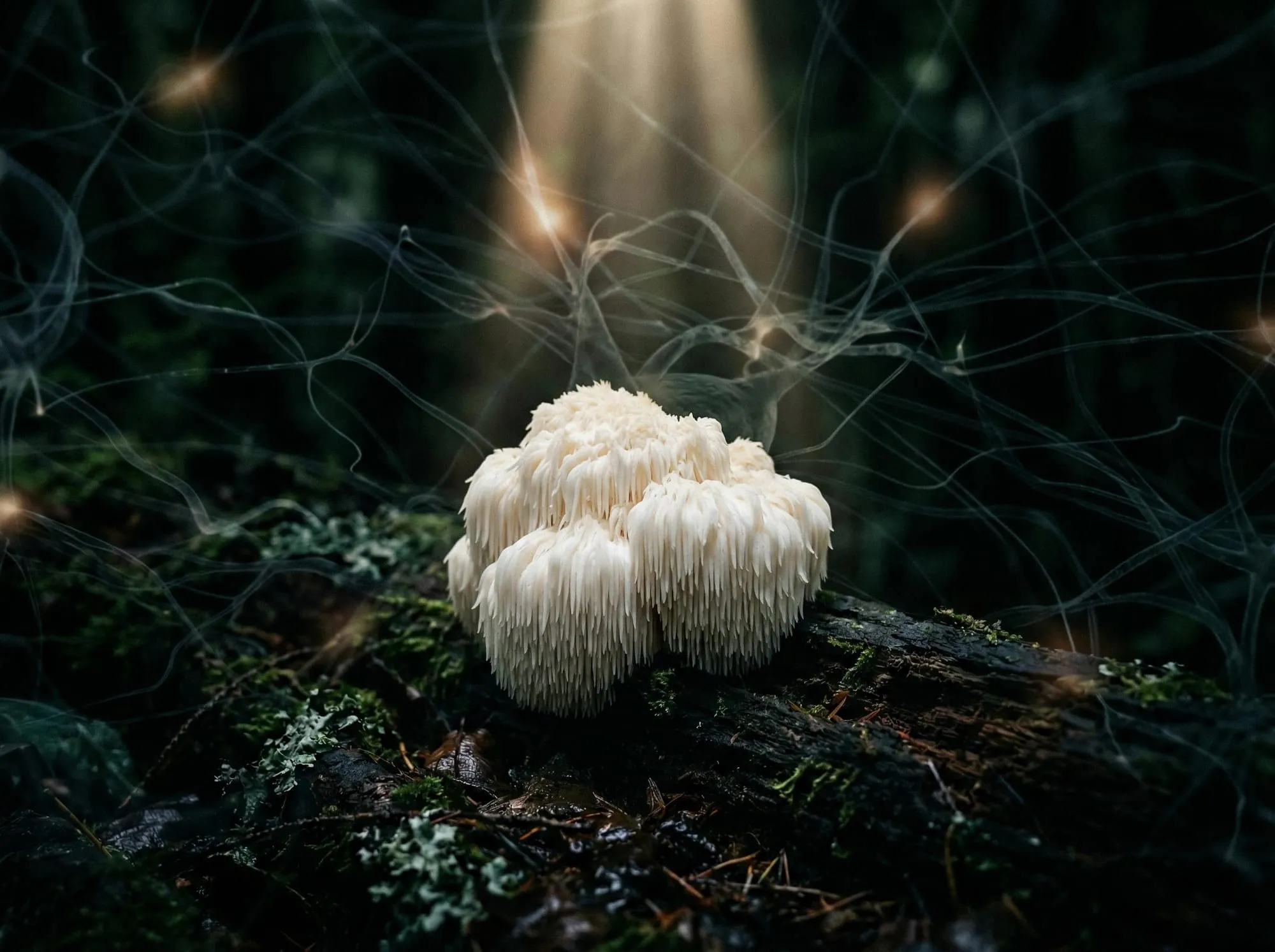
Hericium erinaceus — Lion's Mane — occupies a unique position in mushroom biology: it stands as the only mushroom species containing compounds studied for neurotrophic effects in research settings.
Two compound groups named Hericenon and Erinacin can cross the blood-brain barrier — an extraordinarily significant property. Many bioactive molecules cannot traverse this barrier.
In laboratory and animal studies, these compounds have been investigated for their capacity to enhance NGF synthesis. Human studies remain limited in number, although certain clinical trials, particularly those conducted on mild cognitive impairment, appear in the literature.
The 2009 study by Mori et al., published in Phytotherapy Research, constitutes an important piece of this literature. Participants consumed Hericium erinaceus powder over 16 weeks, and changes in cognitive function scores were observed.
These data are insufficient for MYCOVITA to make health claims. But for the curious, the inquisitive individual, they offer a starting point.
BDNF: The Second Neurotrophin
Brain-Derived Neurotrophic Factor (BDNF) is another member of the NGF family. It is critical for neural circuits associated with learning, memory, and emotional regulation.
Exercise, sleep quality, and certain dietary components have been linked to BDNF levels. One branch of mushroom research continues to examine this connection.
Stress and sleep deprivation lower BDNF. Chronic inflammation lowers it. High sugar consumption lowers it.
This context matters: no supplement works in isolation. One must think at the systems level.
What Does This Mean in Practice?
Lion's Mane is the mushroom species most frequently added to the daily routine of individuals seeking mental clarity, aiming to preserve cognitive capacity through aging, or investing in nervous system health.
MYCOVITA ZİHİN | Lion's Mane is a pure fruiting body powder. The portion that carries hericenon and erinacin compounds is the fruiting body — not the mycelium.
Brew at 70–75°C for 5–7 minutes. Add to morning coffee or tea. Consistency is critical — do not expect an acute effect; a 4–8 week period of consistent use is the framework established by research.
Mycelium Library No.14 | MYCOVITA
MYCOVITA products are food products. They carry no claim to treat, prevent, or cure any disease. If you have a health condition, consult your physician.
Related Posts
— SCIENTIFIC REFERENCES —
Levi-Montalcini, R. (1987). The nerve growth factor 35 years later. Science, 237(4819), 1154-1162.
Kawagishi, H. et al. (1991). Erinacines A, B and C, strong stimulators of nerve growth factor synthesis. Tetrahedron Letters, 32(35), 4561-4564.
Kawagishi, H. et al. (1994). Hericenones C, D and E, stimulators of nerve growth factor synthesis, from the mushroom Hericium erinaceum. Tetrahedron Letters, 35(10), 1569-1572.
Mori, K. et al. (2009). Improving effects of the mushroom Yamabushitake on mild cognitive impairment. Phytotherapy Research, 23(3), 367-372.
You Might Be Interested In
→ Mushroom Science Glossary — A to Z, 130+ Terms
→ Can Mushrooms Produced in Turkey Be Trusted?
→ Functional Mushroom Production in Turkey
NGF Axis — Related Resources
A structured content cluster on the Lion's Mane neurotrophic pathway:
- Lion's Mane Species Encyclopedia — The complete profile of the species.
- Hericenon — NGF synthesis stimulators found in the fruiting body.
- Erinacin — The blood-brain barrier-crossing form found in mycelium.
- NGF — The biological role of nerve growth factor.
- Brain-Gut Axis — Enteric nervous system interaction.
- 30-Day Profile — A timeline of the neurotrophic process.
- Nootropic Stack — Combination assessment with other compounds.
This content is for informational purposes only and does not constitute medical advice. Consult your physician before making any health decisions. Functional mushrooms are not pharmaceuticals and cannot be used to treat diseases.
Version: 1.0 | Last updated: 20 Apr 2026 | Sources reviewed: 10+ | Method: Editorial Policy | References: Bibliography