Why Certified Mycelium Is Essential for Successful Mushroom Cultivation
You May Also Be Interested In
→ Can Mushrooms Produced in Turkey Be Trusted?
→ Functional Mushroom Production in Turkey
→ The Functional Mushroom Market in Turkey
Related readings: Mycelium vs. Fruiting Body · What Is Substrate?
MYCOVITA’s production philosophy and transparency principles: Why MYCOVITA?
Spawn Library — No.22
We receive this question often.
"Do you not use a domestic spawn source? Why are you dependent on imports?"
It is a reasonable question. It is also an emotional one. Because locality matters — as a brand rooted in Ordu, nourished by the Black Sea, we understand this better than anyone.
But the answer to this question must be given with science, not sentiment.
What Is Spawn and Why Is It So Critical?
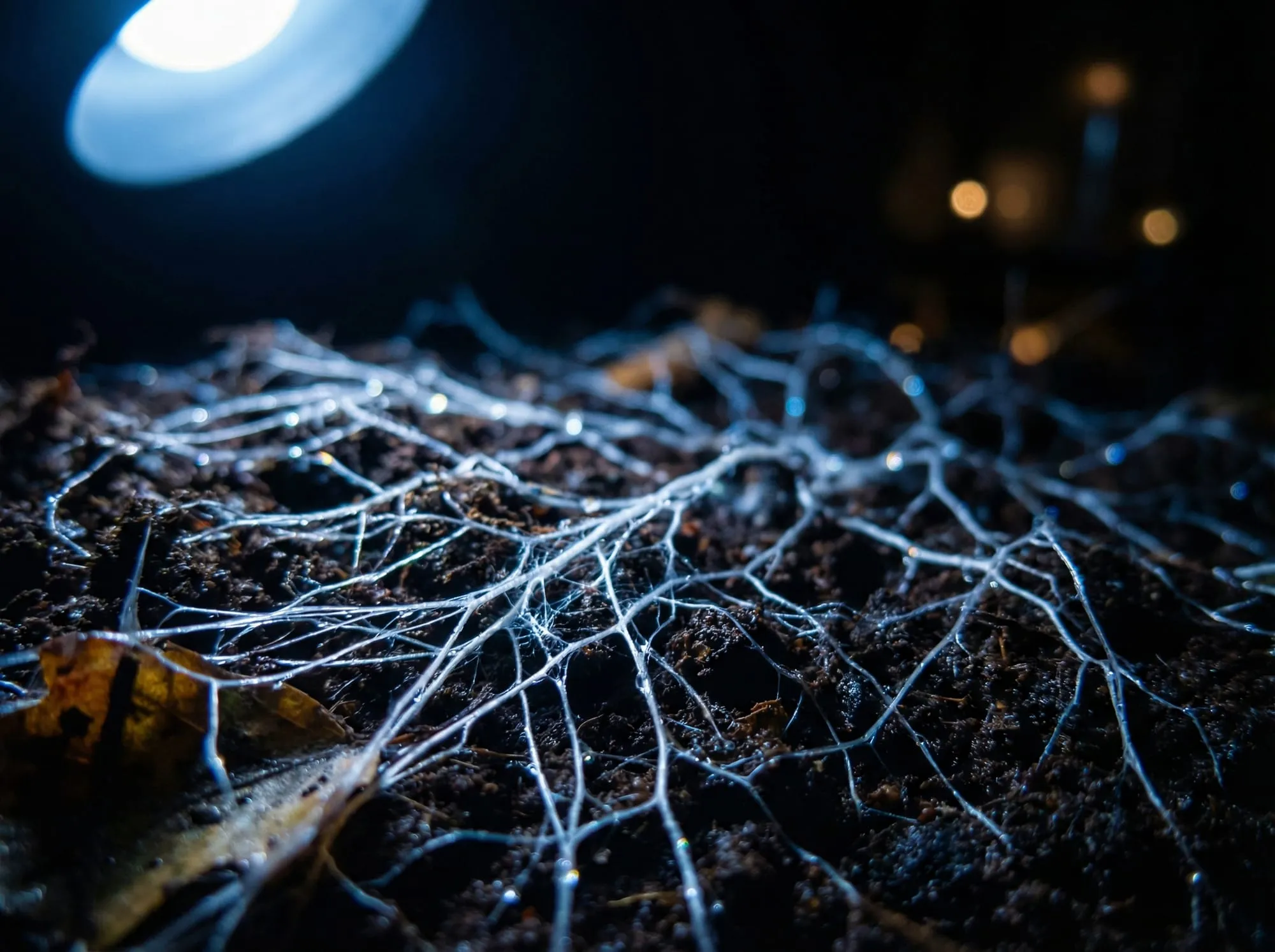
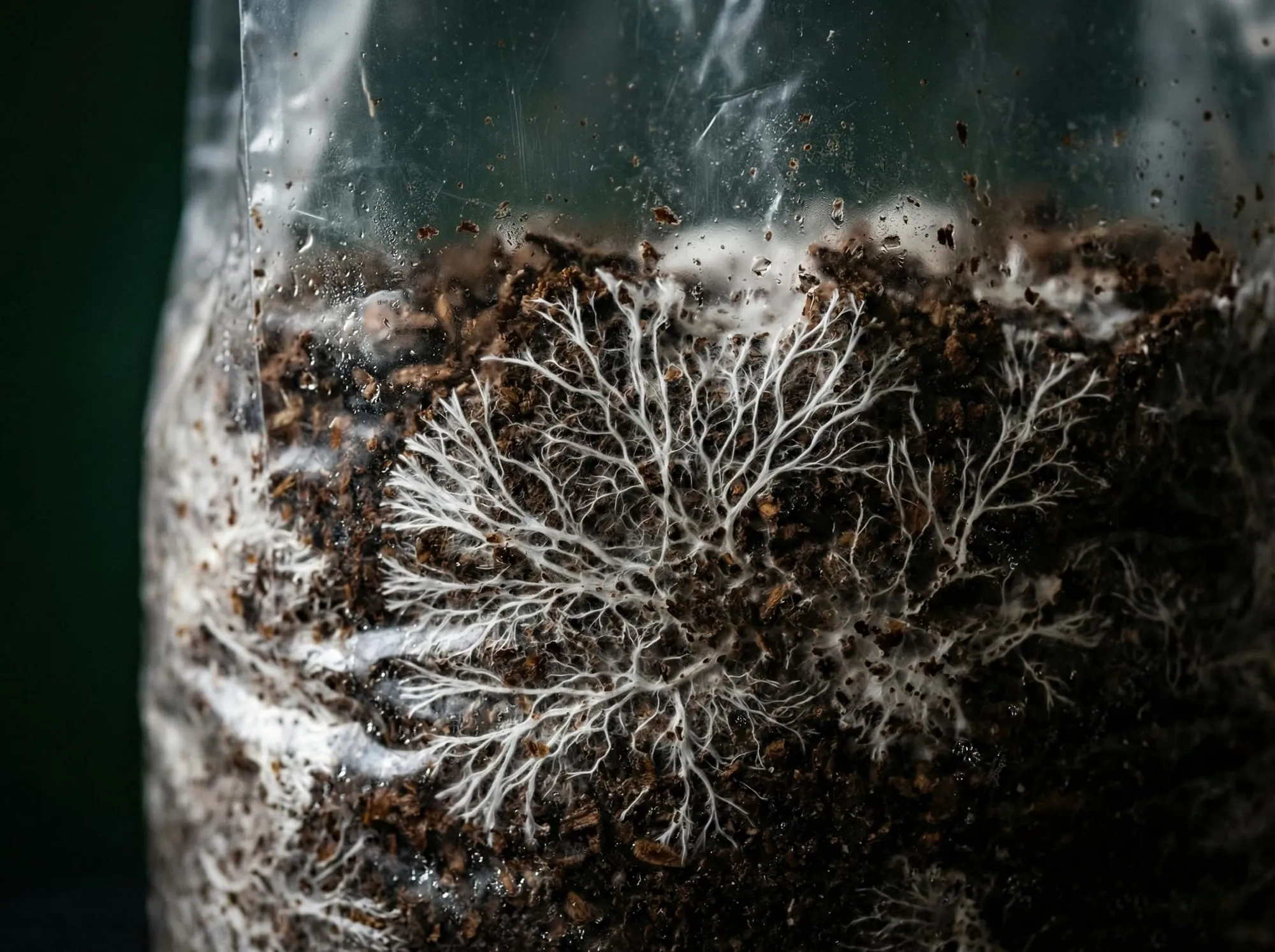
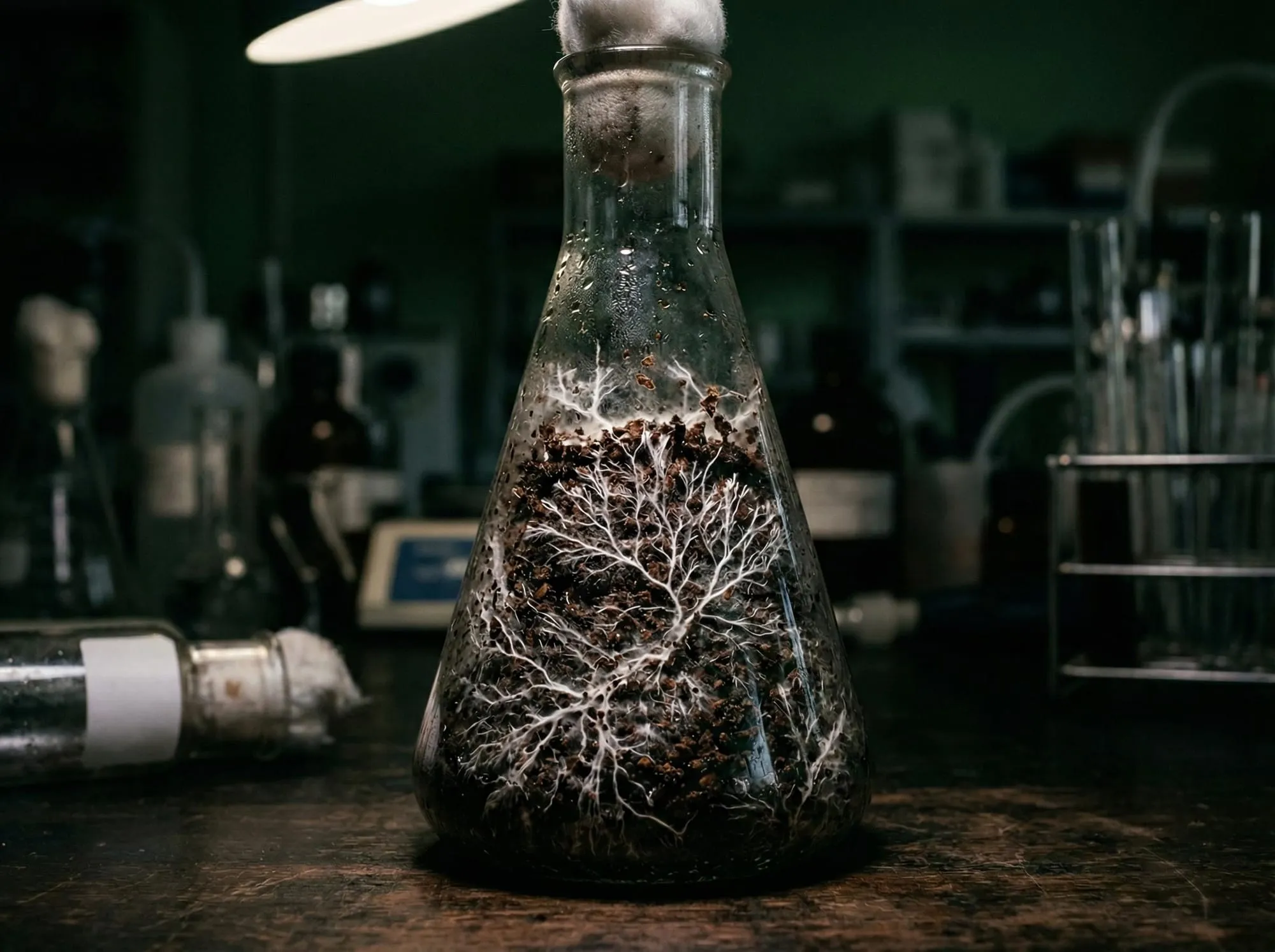
Spawn — mycelium — is the concept closest to a seed in the mushroom world. Yet it is not passive like a seed. It is a living, active cellular network that carries genetic information. How much Beta-Glucan a mushroom will produce, how its Triterpenoid profile will take shape, whether every batch will be consistent with the previous one — all of this depends on the spawn line used at the outset.
Without healthy spawn derived from the correct genetic line, you can produce neither a quality fruiting body nor a consistent bioactive profile. The difference between Batch 1 and Batch 20 begins here.
Spawn Sources in Turkey: An Honest Assessment
Domestic spawn obtained through tissue culture exists in Turkey. Some small-scale producers have built their own collections. We respect these initiatives — beginnings always take such small steps.
However, these lines have two fundamental problems, and MYCOVITA learned about them through direct experience.
The first is genetic stability. A line that appears fine in the first production cycle can dramatically degenerate by the third cycle. This is not merely a loss of yield — it is a loss of compound profile. You can no longer know what the mushroom you are producing contains. Even if you commission a COA, it will not match the previous one.
The second is contamination risk. The vast majority of domestic sources are not produced in ISO-accredited sterile environments. A single bacterium or mold hiding in a container can threaten an entire batch produced from that line. By the time you detect it, your loss of time and cost is substantial.
When these two problems combine, the result is inconsistent quality and an unreliable bioactive profile. MYCOVITA has chosen not to take that risk.
What Does Certified Production Mean?
All of MYCOVITA’s species are sourced from certified production facilities based in the Netherlands. These facilities rank among Europe’s most trusted fungal culture libraries. The Netherlands represents a world standard not only for tulips and cheese — but also for its biotechnology and mycology infrastructure.
Every line is genetically identified, characterized, and has passed contamination control. A look at the client profile reveals Japanese research institutes, Korean universities, and Europe’s major cultivated mushroom producers. This list is no coincidence — source reliability is critical for reproducibility in scientific studies.
Consistency: The Same Profile in Every Batch
This choice yields two practical outcomes.
The first is consistency. The Reishi in Batch 3 and the Reishi in Batch 15 come from the same genetic line. The bioactive profile does not change. Our COAs demonstrate this numerically. The product you receive today carries the same standard as the one you receive a month later.
The second is traceability. We can trace the spawn line of any of our products backward. This traceability is the bedrock of the trust chain. When an issue arises, we can reach the source — and this transparency holds value for both us and you.
The Real Answer to ‘Why Not Domestic?’
There is not yet a facility in Turkey that offers a certified, characterized, genetically documented mushroom spawn line. This is not a criticism — it is a statement of fact. We closely follow developments in this field.
Perhaps someday this infrastructure will be built in Turkey as well. When that happens, working with a domestic source will be our first choice.
But for now, the choice is clear: locality is an important value. But not at the expense of quality. Reliable spawn means reliable production. Reliable production means reliable analysis. Reliable analysis means a reliable brand.
We choose certified sources to keep this chain unbroken.
Quality and Production — Related Resources
A structured content cluster covering every stage of the functional mushroom production chain:
- What Is Substrate? — The grain and wood-based substrate foundation.
- Certified Spawn — Why the spawn source is critical.
- Strain and Intraspecific Variation — The impact of the genetic line.
- Mycelium vs. Fruiting Body — Differences in compound profiles.
- Low-Heat Drying — The science of the 42–45°C threshold.
- Extraction Methods — Hot water, ethanol, dual extraction.
- Beta-Glucan Measurement — The Megazyme method and others.
- Reading a COA — A guide to certificate of analysis documentation.
- Contamination and Mycotoxins — Safety protocols.
- The Black Sea Climate — The geographical advantage.
- Storage — Shelf life and quality preservation.
This content is for informational purposes only and does not constitute medical advice. Consult your physician before making any health decisions. Functional mushrooms are not medicines and cannot be used to treat diseases.
Version: 1.0 | Last updated: 20 Apr 2026 | Sources reviewed: 5+ | Method:Editorial Policy | References:Bibliography