Lentinan: The Key Immunoactive Beta-Glucan in Shiitake Mushrooms
Mycelium Library — No.24
1969. Japan. A laboratory bench.
Researcher Goro Chihara and his team isolated a beta-glucan fraction from the fruit body of Lentinus edodes — Shiitake. This fraction became the first mushroom polysaccharide in the literature to demonstrate the capacity to inhibit tumor growth in animal models.
They named it: Lentinan.
This discovery is regarded as one of the founding moments of modern medical mycology. Today in Japan, Lentinan is in clinical use as an injectable pharmaceutical preparation. This status — approval of a mushroom compound as a medicine — is exceedingly rare. Only a handful of mushroom compounds worldwide have achieved it. Lentinan is the oldest and the most extensively studied among them.
What is Lentinan? Its Chemical Identity
Lentinan is a high-molecular-weight polysaccharide composed of a beta-(1→3)-D-glucan main chain with beta-(1→6) side branches. Its molecular weight is approximately 500,000 Da — a size critical for interaction with immune system receptors.
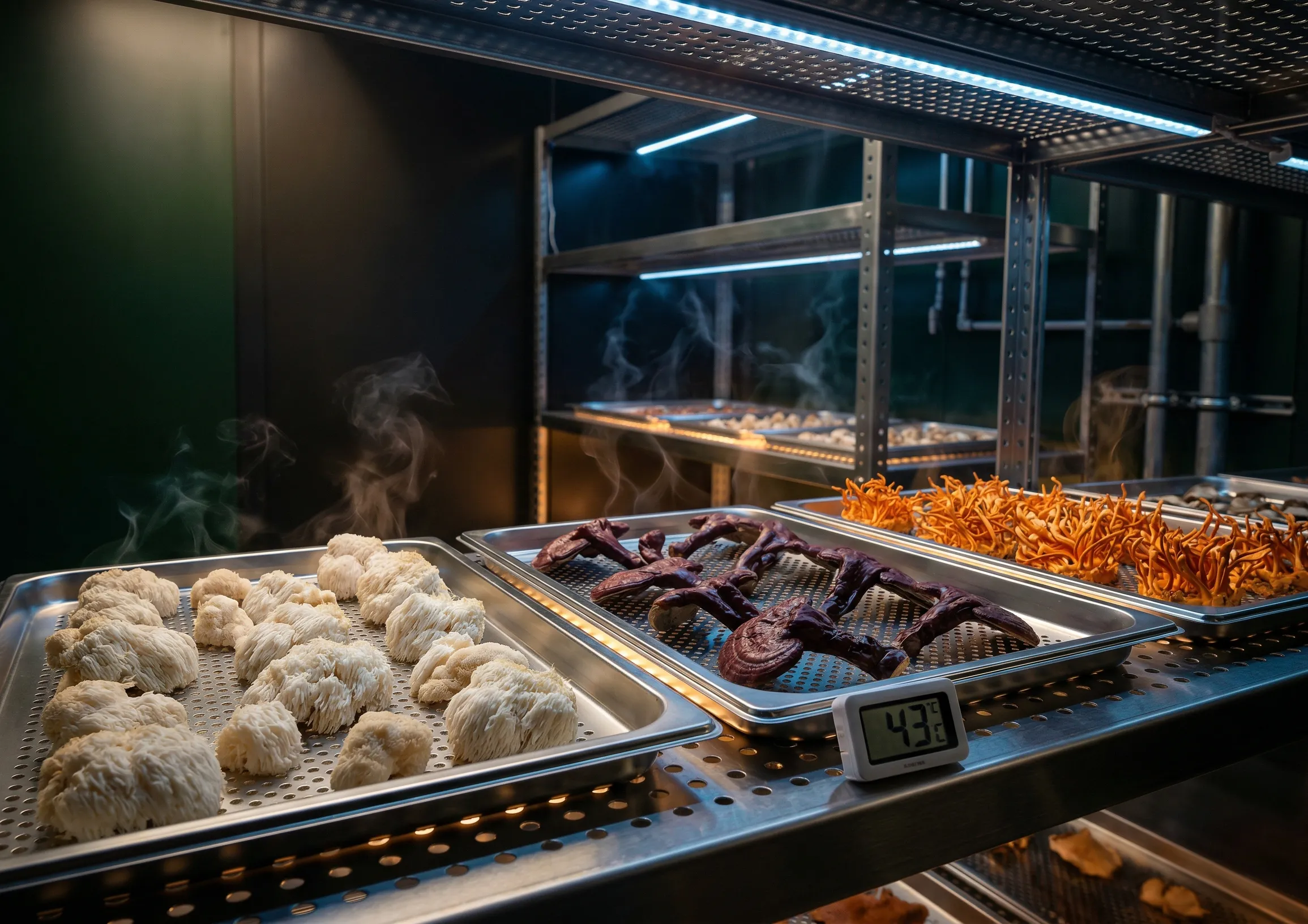
Not all beta-glucan fractions are alike. What distinguishes Lentinan from other beta-glucans is its triple-helical conformation. This helical structure determines its binding capacity to Dectin-1 and other pattern recognition receptors (PRRs). If the structure is disrupted, biological activity is lost — which is why drying and processing temperatures directly affect the Lentinan profile. This is one of the reasons behind MYCOVITA’s choice of low-temperature drying at 42–45°C.
Donko Grade: The Highest Lentinan Concentration
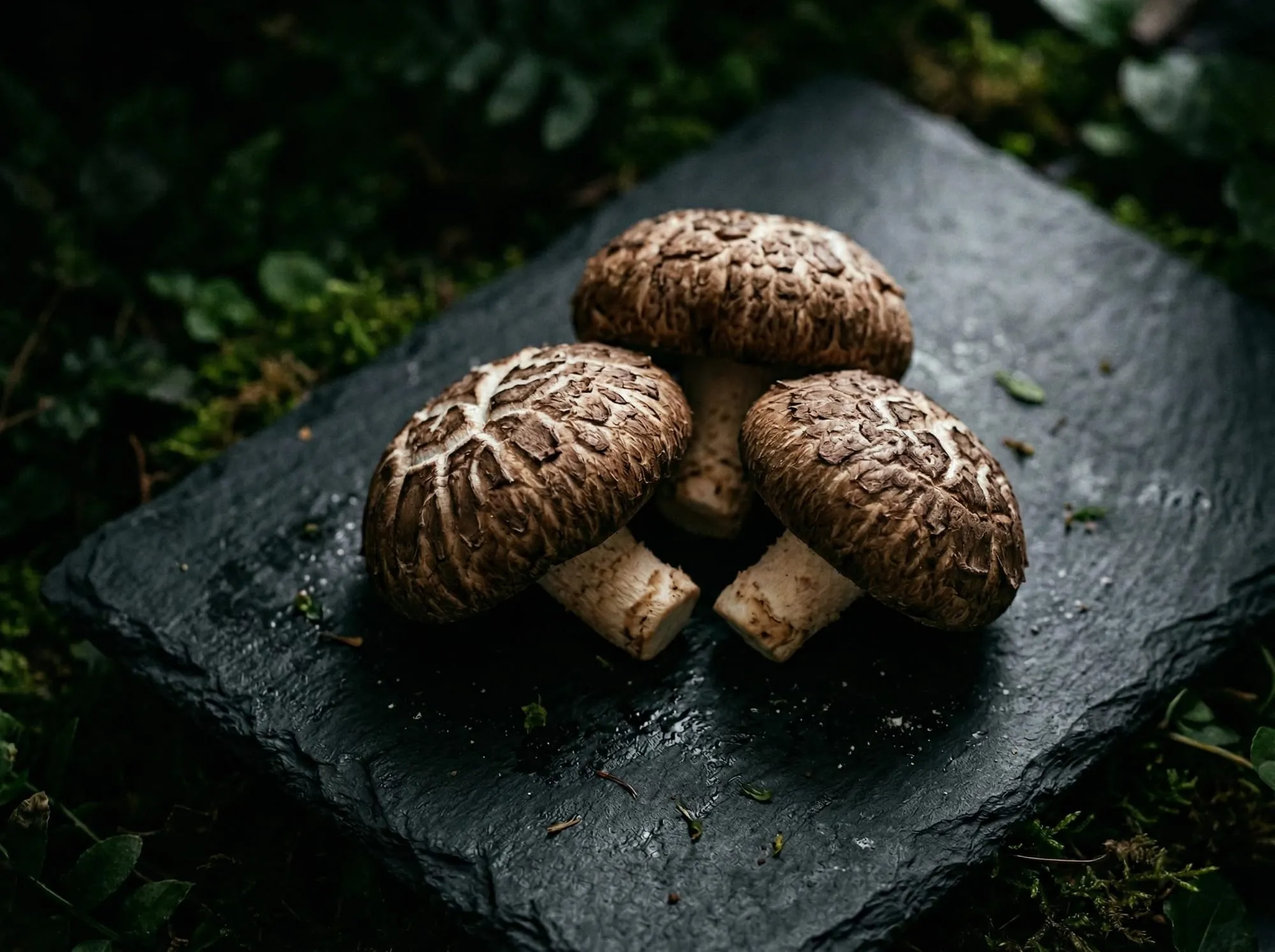
Within Shiitake, the form with the highest Lentinan concentration is Donko — early-harvest specimens whose caps have not yet opened.
The biochemical rationale is clear. As the cap opens, the mushroom redirects energy and metabolites toward spore formation and dispersal. Polysaccharide accumulation peaks in the pre-sporulation stage. MYCOVITA’s careful attention to harvest timing for Donko grade Shiitake is directly tied to the Lentinan profile.
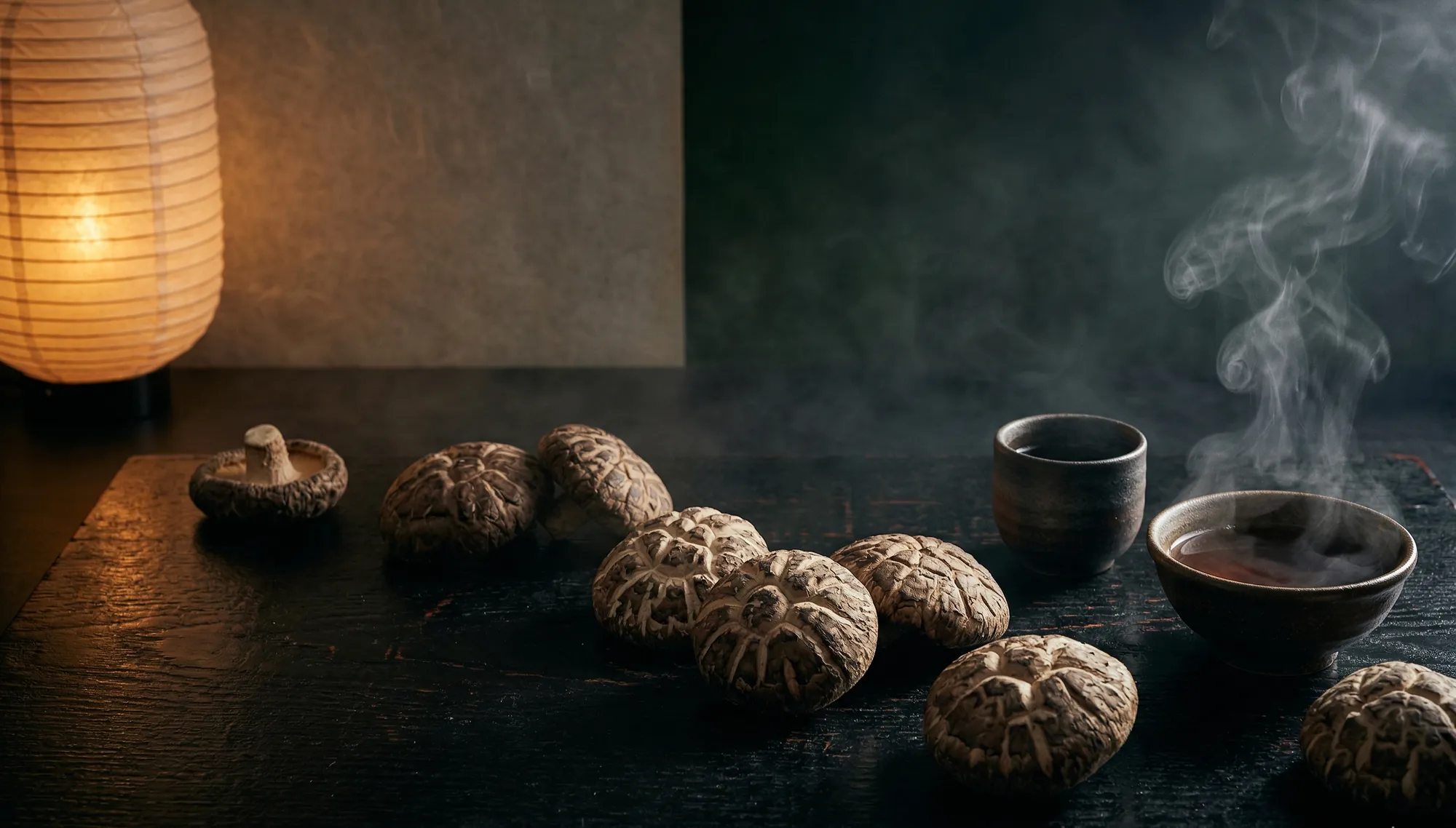
Donko can also be identified visually: cap margins curved inward, surface covered with a white furin dust. This dust is a natural surface phenomenon — it forms in specimens harvested before maturity in a dry, controlled environment. On the market, Donko is rare and highly valued.
Clinical Use: Japan and Korea
Lentinan was approved in Japan in 1985 as an adjuvant agent in gastric cancer treatment. This approval rests on clinical trial data.
Multi-center, randomized controlled studies conducted in Japan reported that Lentinan combined with standard chemotherapy improved survival parameters in certain cancer types compared to chemotherapy alone. The 1985 study by Taguchi et al. remains one of the foundational papers in this literature.
Important note: The Lentinan used clinically is in the form of an intravenous injection — not mushroom powder. Orally ingested Lentinan has far lower bioavailability; it is partially degraded during digestion. This distinction is critical and is one of the primary reasons MYCOVITA refrains from making health claims. We report the research data — but we do not present the product as a pharmaceutical.
Immunomodulatory Mechanism: Two Channels
Lentinan exerts its effect on the immune system through two channels.
The first channel is innate immunity. Lentinan activates macrophages and NK cells. This activation occurs via the Dectin-1 receptor. Activated macrophages secrete cytokines such as IL-1, IL-6, and TNF-α. These cytokines coordinate the immune response.
The second channel is adaptive immunity. Lentinan enhances T cell proliferation and supports B cell activation. Underlying this is the indirect stimulation of T and B cells by the cytokine cascade described above.
A critical nuance: Lentinan does not “boost” the immune system — it modulates it. It can dampen an overactive immune response or elevate a suppressed one — exerting a regulatory effect in both directions. This is why it is classified as an immunomodulator, not an immunostimulant. The distinction matters both scientifically and practically.
MYCOVITA KÜLT | Shiitake Donko and Lentinan
MYCOVITA’s Shiitake Donko is produced from whole fruit bodies, harvested with Donko grade timing, and processed with low-temperature drying at 42–45°C.
These three parameters — fruit body, Donko harvest, low temperature — mutually reinforce the preservation of the Lentinan profile. Any deviation from these choices would meaningfully reduce Lentinan content.
The Shiitake Donko offered in the Gastronomy Series is valuable both for culinary use and for its Lentinan profile. Reconstitution with hot water — that is, soaking — activates Lentinan extraction. And an important note: Do not discard the soaking water. This water, called modoshi-jiru, is the essence of the Japanese dashi tradition. Lentinan and GMP migrate into this water — pouring it out means discarding half the umami.
Note: The clinical approval discussed in this section is specific to Japan. Lentinan is not approved as a pharmaceutical in Turkey and many other countries. Products containing Lentinan are classified as dietary supplements in Turkey.
You May Also Like
→ Mycology Glossary — 130+ Terms from A to Z
→ Is Mushroom Produced in Turkey Trustworthy?
→ Functional Mushroom Production in Turkey
Related readings: Shiitake Donko Encyclopedia · Shiitake Donko in the Kitchen · Lentinan, PSK and Beta-Glucan Comparison
MYCOVITA’s production philosophy and transparency principles: Why MYCOVITA?
— SCIENTIFIC REFERENCES —
Chihara, G. et al. (1969). Inhibition of mouse sarcoma 180 by polysaccharides from Lentinus edodes. Nature, 222(5194), 687-688.
Chihara, G. et al. (1970). Fractionation and purification of the polysaccharides with marked antitumor activity, especially lentinan. Cancer Research, 30(11), 2776-2781.
Zhang, M. et al. (2007). Antitumor polysaccharides from mushrooms: a review on their isolation process. Trends in Food Science & Technology, 18(1), 4-19.
Bisen, P.S. et al. (2010). Lentinus edodes: A Macrofungus with Pharmacological Activities. Current Medicinal Chemistry, 17(22), 2419-2430.
Beta-Glucan and Immunomodulation — Related Resources
Content cluster on mushroom beta-glucan and immune system interaction:
- What is Beta-Glucan? — Molecular structure and linkage types.
- How the Immune System Works — The Dectin-1 receptor and innate immunity.
- Beta-Glucan Measurement Methods — Megazyme and other laboratory methods.
- Lentinan — The approved beta-glucan from Shiitake.
- PSK — The polysaccharide–protein complex from Turkey Tail.
- D-Fraction — The active beta-glucan fraction of Maitake.
- Lentinan vs PSK vs Beta-Glucan — A comparison.
- Sparassis crispa — The highest natural beta-glucan density.
- Chitin — The cell wall component that entraps beta-glucan.
- Extraction Methods — Beta-glucan bioavailability.
This content is for informational purposes only and does not constitute medical advice. Consult your physician before making any health decisions. Functional mushrooms are not pharmaceuticals and cannot be used to treat diseases.
Version: 1.0 | Last update: 20 Apr 2026 | Reviewed sources: 10+ | Method: Editorial Policy | References: Bibliography