The Critical Role of Substrate Selection in Mushroom Cultivation
You May Also Be Interested In
→ Can You Trust Mushrooms Produced in Turkey?
→ Functional Mushroom Production in Turkey
→ The Functional Mushroom Market in Turkey
Related readings: What Is Substrate? · The Production Process
MYCOVITA's production philosophy and transparency principles: Why MYCOVITA?
Mycelium Library — No.29
Two mushroom powders. Same species, same claims. One costs 150 TL, the other 800 TL.
Where is the difference?
This question reaches us in many forms. And the majority of the answer is often concealed in a single place: substrate. To grasp why, one must first understand what substrate is and its relationship to fungal growth.
What Is Substrate?
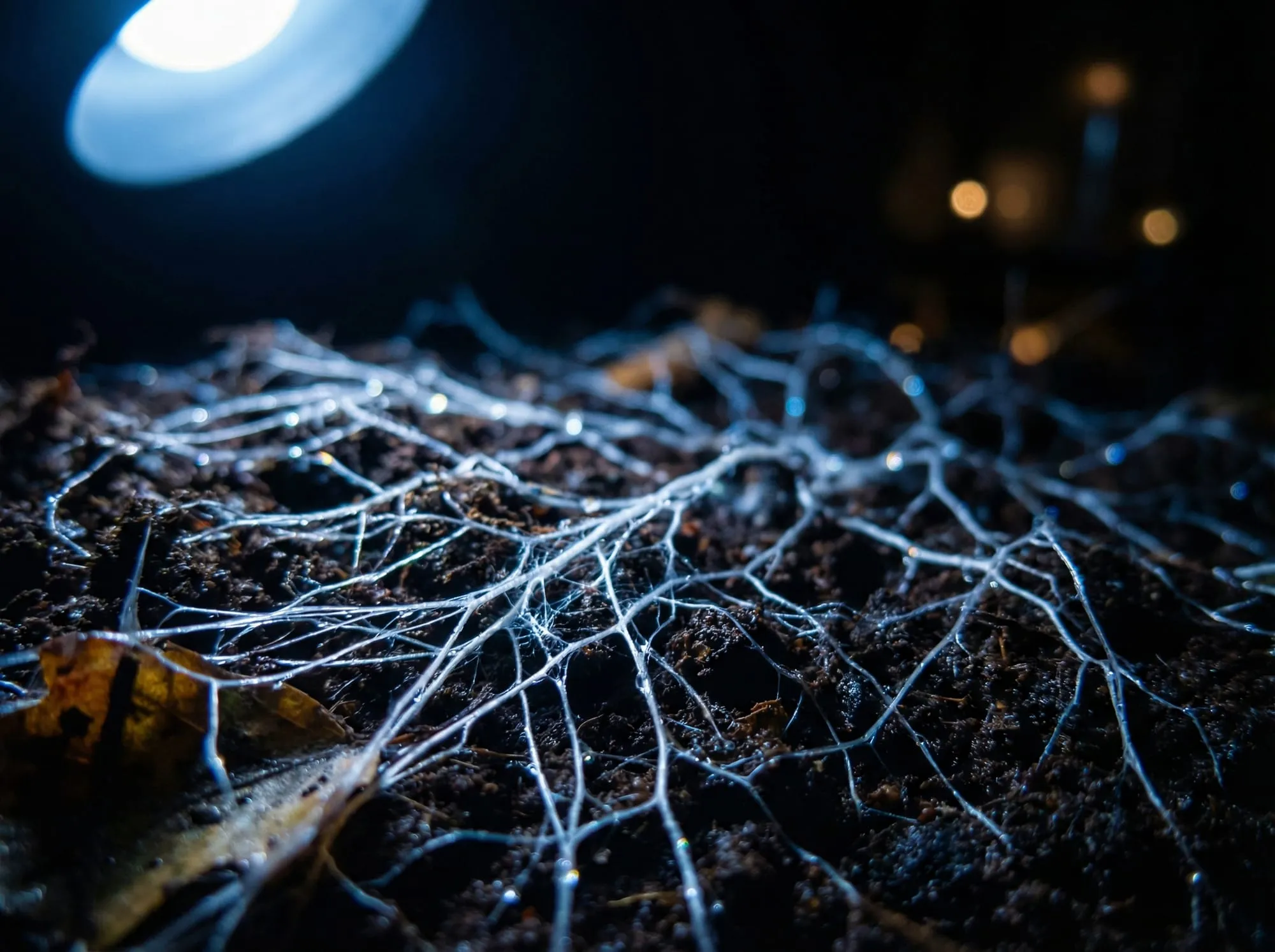
Substrate is the growth medium upon which a mushroom develops. What soil is to a plant, substrate is to a fungus: the nutrient source, the growth foundation, the chemical environment.
But substrate plays a far more active role than soil. The fungal mycelium dismantles the substrate with enzymes. It digests cellulose and lignin, metabolizes nitrogen and carbon sources. This metabolism yields bioactive compounds — Beta-Glucan, Triterpenes, Cordycepin.
If the substrate changes, the metabolism changes. If the metabolism changes, the compound profile changes. This is a direct causal chain — and one the market largely ignores.
Substrate Types and Their Effects
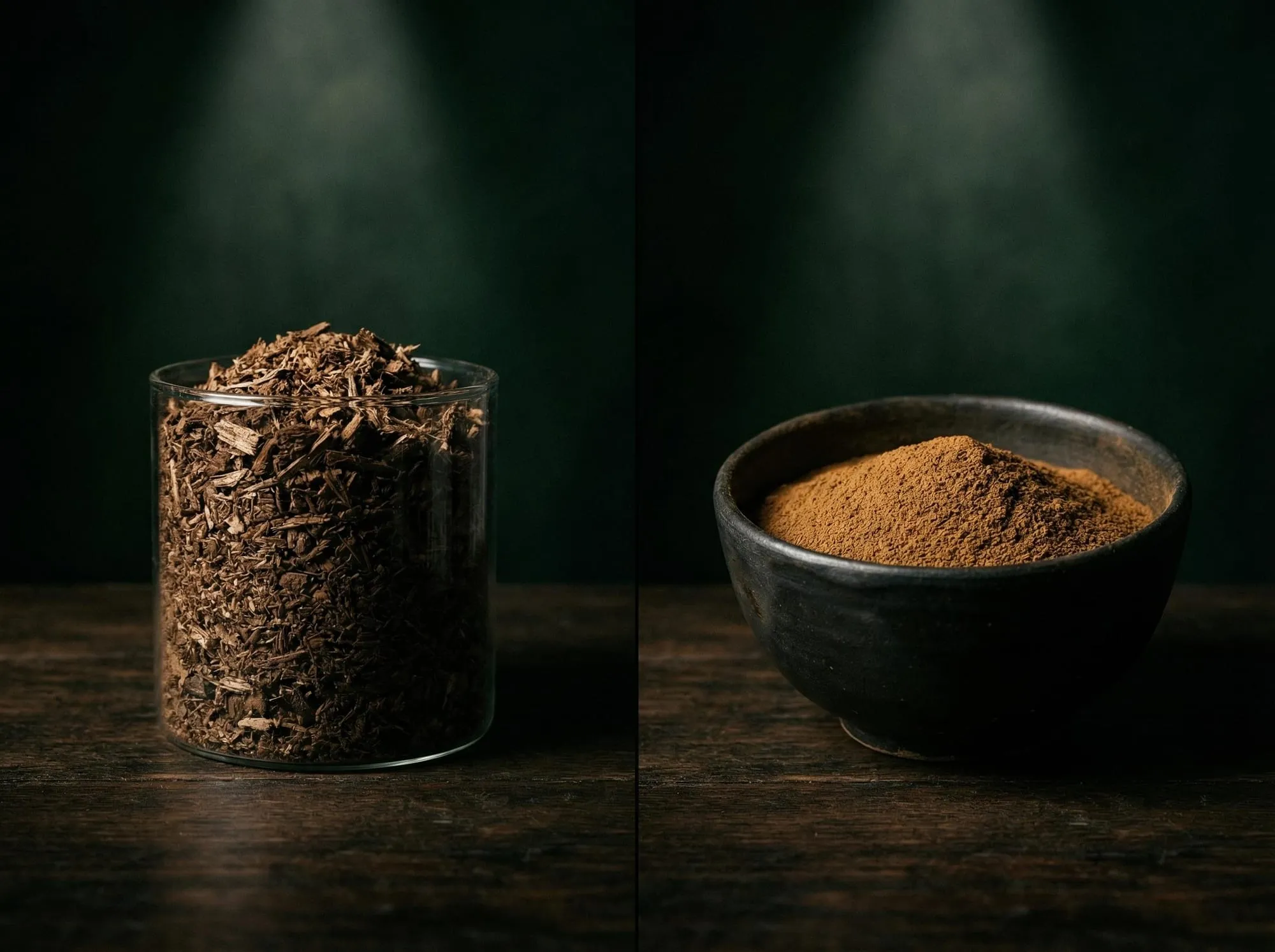
Oak sawdust: The purest substrate, reflecting the natural habitat. Reishi, Shiitake, and Lion's Mane grow on this substrate in the wild. The lignin-to-cellulose ratio aligns with each species' biochemical adaptations. The Beta-Glucan and Triterpenoid profile develops most consistently on this substrate base.
Grain-based substrate (rice, wheat, corn): Employed for Cordyceps and certain specialized species. It enables rapid colonization and increases yield. However, the high starch content of grains introduces a critical problem: if the mycelium does not fully consume the grain, the product is milled together with grain residue. At that point, the "mushroom powder" is no longer mushroom powder.
Composite formulations: The approach MYCOVITA favors. Blends such as oak sawdust + bran + rice hulls ensure that different components address different metabolic needs. Each species has its own formulation — there is no single universal substrate for production.
The Most Common Deception in the Market: Mycelium Powder Including Substrate
The greatest quality problem in the functional mushroom market hides right here.
When you encounter terms such as "biomass," "full spectrum," or "myceliated grain," exercise caution. These terms generally describe the following: mycelium grown on grain, milled together with the grain substrate.
The resulting product is not mushroom powder; it is a mushroom-grain mixture. Beta-Glucan content may range from 1% to 5%, but the label will not disclose this. Starch content may fall between 30% and 60%. The bulk of what you pay for is grain.
A simple at-home test for these products is the iodine test: place a spoonful of powder and add a few drops of iodine (obtainable from any pharmacy). If it turns dark purple-black, starch is present — the product contains substrate residue. Genuine fruiting body powder produces no such color or only a very faint change.
Fruiting Body: Why Is It Different?
The fruiting body — the visible mushroom portion — represents the culmination of both bioactive compound accumulation and evolutionary adaptation. The fungus produces the fruiting body to disperse its spores. To this end, it channels every biochemical resource into this structure.
Beta-Glucan, Triterpenoids, Ergothioneine, Lentinan — all of these concentrate in the fruiting body. The mycelium also contains these compounds, but at far lower concentrations. And when mycelium is milled together with grain substrate, this already low concentration is diluted further still.
MYCOVITA uses solely the fruiting body. This choice is numerically verified through the analysis of every batch.
How Substrate Quality Affects the Compound Profile
Studies comparing two samples of the same species grown on different substrates present clear findings: when substrate approximating the natural habitat is used, the Beta-Glucan and Triterpenoid profile is both higher and more consistent.
MYCOVITA's substrate formulations are grounded in this research. Each species' own habitat is studied, and a substrate composition reflecting that habitat is developed. Oak-dominant for Lion's Mane. Rice-based for Cordyceps. Oak-beech composite for Shiitake. This detail may appear minor — but it becomes directly visible in analytical results.
How to Ask the Substrate Question
When evaluating any mushroom powder product, pose the following questions:
Has it been made from fruiting body or mycelium? Does the label state "fruit body" or "full fruiting body" anywhere? What is the substrate — grain or sawdust? Has the Alpha-Glucan value been analyzed? In the Certificate of Analysis (COA), has the difference between Beta-Glucan and total polysaccharides been separated out?
A product that provides clear and documented answers to all of these questions is a quality product. Those wishing to request these answers from MYCOVITA may write to [email protected] — the COA for each batch is shared upon request.
Is the difference between 150 TL and 800 TL somewhat clearer now?
Quality and Production — Related Resources
A structured content cluster covering every stage of the functional mushroom production chain:
- What Is Substrate? — The fundamentals of grain- and wood-based substrates.
- Certified Mycelium — Why spawn source is critical.
- Strain and Intraspecies Variation — The impact of the genetic line.
- Mycelium vs. Fruiting Body — The compound profile difference.
- Low-Heat Drying — The science of the 42–45°C threshold.
- Extraction Methods — Hot water, ethanol, dual extraction.
- Beta-Glucan Measurement — The Megazyme method and other approaches.
- How to Read a COA — Interpreting an analysis certificate.
- Contamination and Mycotoxins — Safety protocols.
- The Black Sea Climate — The geographic advantage.
- Storage — Shelf life and quality preservation.
This content is for informational purposes only and does not constitute medical advice. Consult your physician before making any health-related decisions. Functional mushrooms are not pharmaceutical drugs and cannot be used for the treatment of diseases.
Version: 1.0 | Last updated: 20 Apr 2026 | Sources reviewed: 5+ | Method:Editorial Policy | References:Bibliography