The Definitive Guide to Sparassis crispa and Its Exceptional Beta-Glucan Spectrum
— THE HOOK —
When it comes to beta-glucan, the fungal kingdom has one undisputed champion.
Lion's Mane: 10–20%. Reishi: 10–15%. Turkey Tail: 15–25%. Shiitake: 25–30%.
Sparassis crispa: 40–45%.
It stands in a category of its own. Yet most people have never even heard its name.
— THE STORY —
Japan. The Edo period (1603–1868). In Kyoto's temple kitchens — the shojin ryori tradition of Buddhist vegetarian cuisine — meat was forbidden, but depth of flavour was essential. Within this culinary tradition, one mushroom earned special status: Hanabiratake — the "firework mushroom."
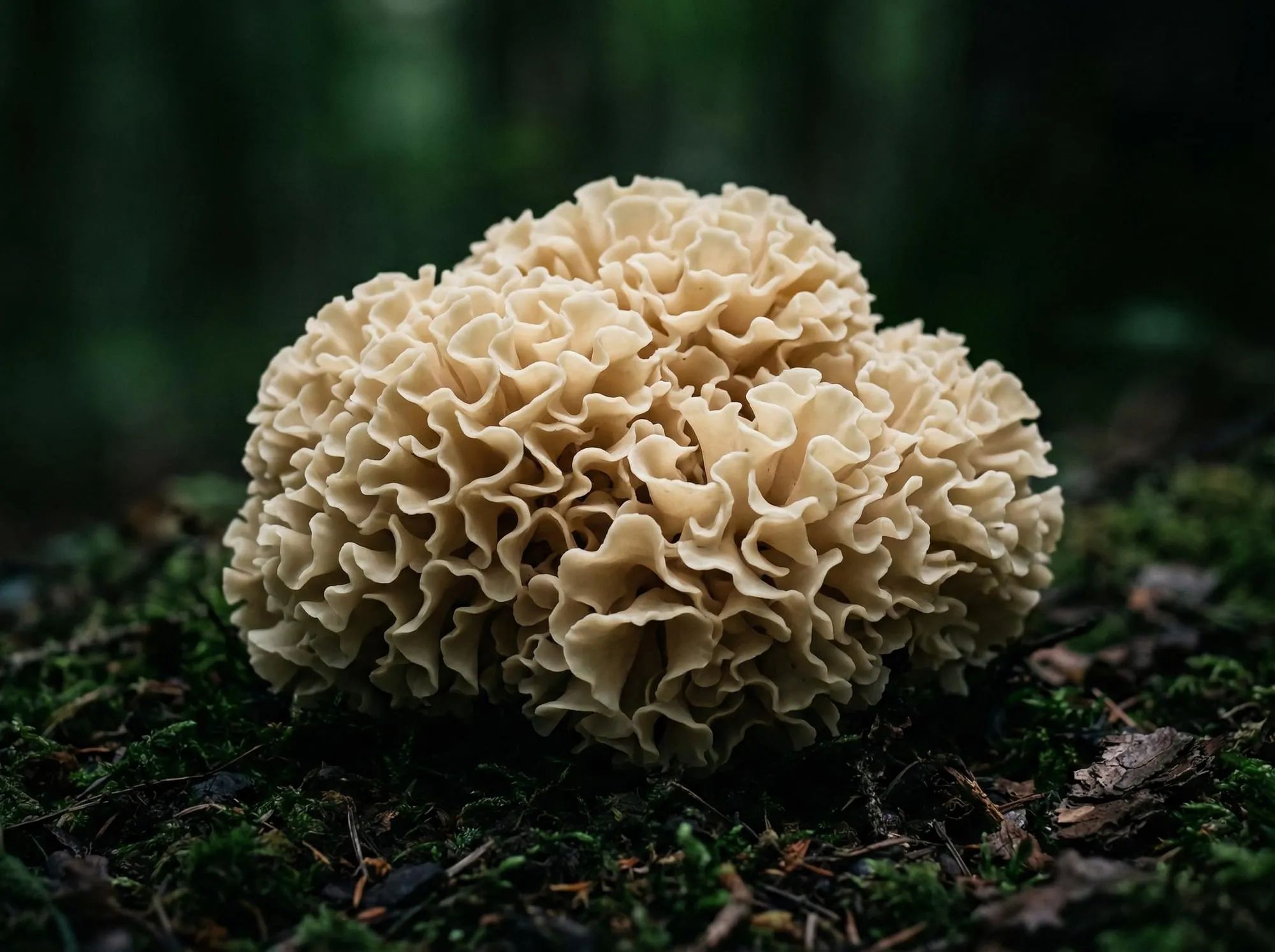
Cream-yellow fronds that burst from the soil like blossoms justify the name entirely. In Kyoto's old apothecary shops — yakkyoku — it occupied the highest shelf, the least accessible spot. Only those who asked knew where it was kept.
Traditional Japanese medicine documented it as a food that "strengthens the body's resistance and dispels fatigue." Edo-period medical texts contain references to its regular consumption in the weeks leading into winter.
Europe tells a different story. Village communities in the pine forests of Central Europe knew this mushroom as Bärentatze — Bear's Paw — and used it as a fortifying tonic. But unlike in Japan, this knowledge was never systematically transmitted. Industrialisation erased it. In this sense, Sparassis is the forgotten mushroom of Europe.
Science turned its attention toward it from Japan. In the 1990s, Professor Naohito Ohno and his team at the Tokyo University of Pharmacy and Life Sciences began systematically examining the biochemical profile of Sparassis.
In 2000, the critical finding: over 40% beta-glucan on a dry-weight basis. At the time, this exceeded every known mushroom species. The research community paused.
— DESCRIPTION AND MORPHOLOGY —
Sparassis crispa (Wulfen) Fr. — a member of the family Sparassidaceae and one of the most morphologically unconventional species in the fungal kingdom.
The genus name Sparassis derives from the Latin sparassein (to tear apart), a reference to the branched, divided frond structure. Crispa means "curly, wavy" — a direct description of the fruiting body's undulating form.
Hundreds of thin, wavy, flattened fronds emerge from a single central root-like base. The fruiting body reaches 30–50 cm in diameter and 1–5 kg in weight. Colour ranges from cream-white to pale yellow — shifting to brown with age. This colour transition signals that the optimal harvest window has passed.
Natural habitat: coniferous forests of Northern Europe, North America, and Japan. It grows as a semi-parasite on the roots of pine, fir, and cedar. Natural specimens have been documented in Turkey's Black Sea region — particularly in the forests of Bolu and Kastamonu.
It is exceptionally rare in the wild. Its reappearance at the same location year after year depends entirely on the survival of the underlying root system.
— BIOACTIVE COMPOUNDS —
Beta-1,3/1,6-D-Glucan — 40–45% The defining compound of Sparassis. This concentration represents the highest documented value for this parameter across the fungal kingdom.
Structural uniqueness matters. Sparassis beta-glucan differs from the beta-glucans of other species in its side-chain architecture. This structural distinction affects how it interacts with immune receptors — beta-glucans from different sources, even at identical concentrations, are not fully interchangeable.
Reference: Ohno, N. et al. (2000). Effect of β-Glucan on Nitric Oxide Synthesis by Peritoneal Macrophage stimulated with Sparassis crispa Extract. Biological & Pharmaceutical Bulletin, 23(7), 866-872.
Ergothioneine A rare amino acid the human body cannot synthesise, obtainable exclusively through diet. It is under investigation for its role in protecting against cellular oxidative damage. Sparassis ranks among the richest ergothioneine sources in the fungal world.
Reference: Beelman, R.B. et al. (2020). Is ergothioneine a 'longevity vitamin'? Journal of Nutritional Science, 9, e52.
— CURRENT RESEARCH —
Immunomodulation: In mouse models, Sparassis beta-glucan has been shown to enhance NK cell activity and macrophage activation.
Reference: Yamamoto, K. et al. (2009). Antitumor effect of the beta-glucan paramylon from Euglena gracilis. Cancer Science.
Chemotherapy Support: Research in Japan has investigated the potential of Sparassis beta-glucan to mitigate chemotherapy side effects.
Reference: Harada, T. et al. (2002). Stimulation of Immune Responses by β-Glucan from Sparassis crispa. Biological & Pharmaceutical Bulletin.
Hair Loss: In chemically induced hair loss models, the effects of Sparassis beta-glucan on hair follicle activation have been studied — this area attracts particular interest in Japan.
Reference: Kwon, A.H. et al. (2012). Effects of β-Glucan from Sparassis crispa on hair loss. Journal of Dermatology.
— MYCOVITA —
The most challenging species in the MYCOVITA portfolio. High contamination sensitivity — spawn rate of 25%, requiring meticulous sterilisation and humidity control.
Room 3, 15–16°C, 90–95% humidity, mixed substrate with an oak sawdust base. Colonisation takes 45–60 days — longer than other species. Small-batch production.
Harvest: Fronds are collected before full opening, while the colour remains cream-white. Once yellowing begins, the bioactive profile declines.
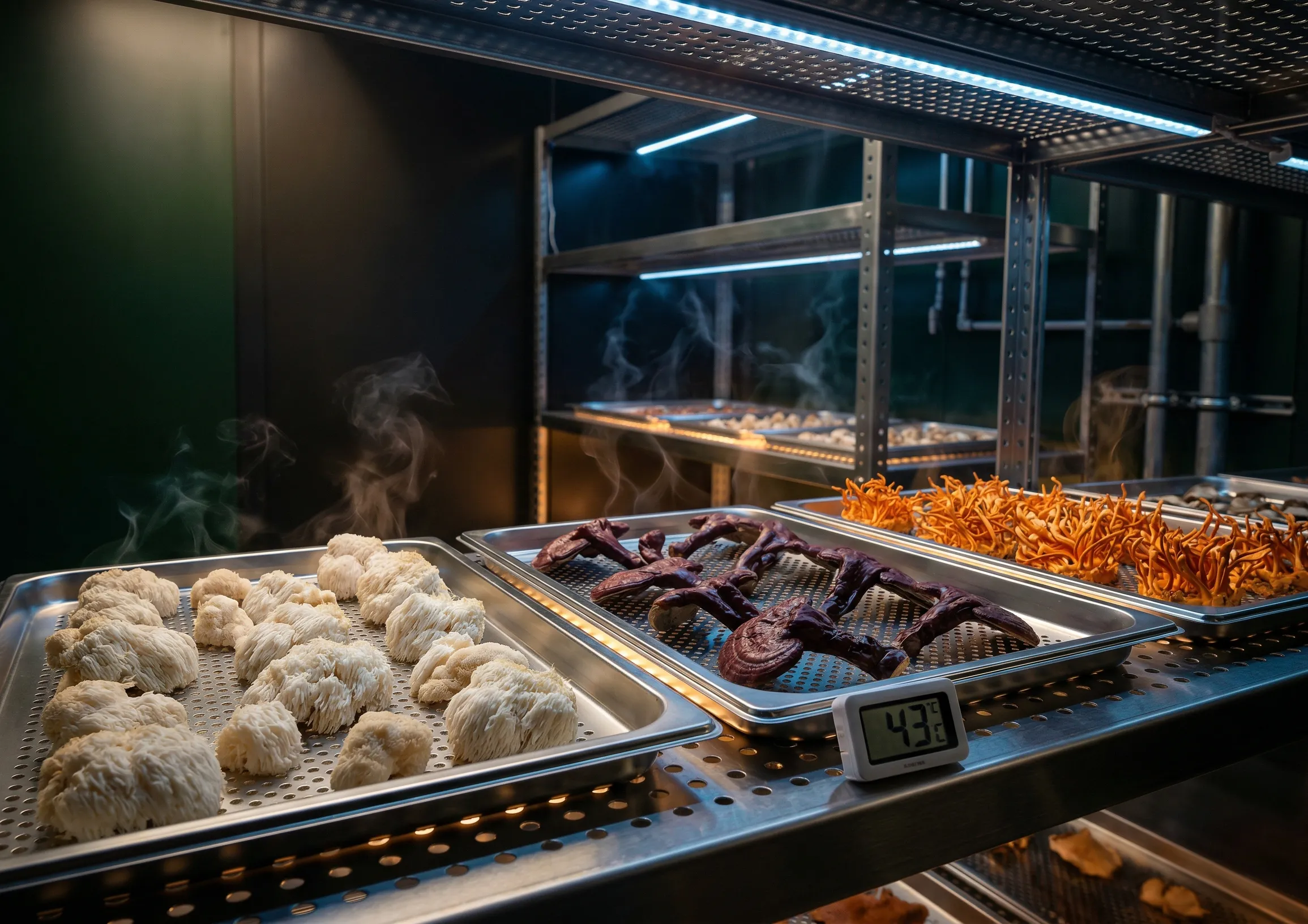
Drying: 42°C — the lowest temperature in the portfolio, to preserve beta-glucan structural integrity.
100% fruiting body. Every batch accompanied by a Certificate of Analysis.
— HOW TO USE —
A strategy of using less to achieve potent results. Due to the high beta-glucan concentration, 0.5–1 g is sufficient — half the 1–2 g dose typical of other species.
Classic Infusion 0.5–1 g / 200 ml · 75–80°C · 5–8 minutes Taste: Lightly sweet, clean, neutral. Compatible with any beverage.
Immune Duo Sparassis 0.5 g + Turkey Tail 1 g · 80–85°C · 10–12 minutes Sparassis provides acute beta-glucan; Turkey Tail delivers long-term PSK. The two operate through distinct mechanisms — a complementary effect.
Timing: Midday or early evening. Daily during seasonal transitions. Consistent use throughout winter.
Related reading: What Is Beta-Glucan? · How the Immune System Works · Seasonal Mushroom Calendar
On MYCOVITA's production philosophy, technical infrastructure, and transparency principles: Why MYCOVITA?
Sparassis crispa is classified as a food under the Turkish Food Codex. The scientific research cited on this page has been compiled from the academic literature and serves an informational purpose.
MYCOVITA's Sparassis crispa products are food products. They make no claim to treat, prevent, or cure any disease.
Individuals taking immunosuppressive medication and those undergoing treatment for autoimmune conditions should consult their physician.
— SCIENTIFIC REFERENCES —
Ohno, N. et al. (2000). Biological & Pharmaceutical Bulletin, 23(7), 866-872. Harada, T. et al. (2002). Biological & Pharmaceutical Bulletin, 25(2), 231-234. Kwon, A.H. et al. (2012). Effects of β-Glucan from Sparassis crispa on hair loss. Journal of Dermatology. Beelman, R.B. et al. (2020). Is ergothioneine a 'longevity vitamin'? Journal of Nutritional Science, 9, e52.
Apothecary Series — No.03 | Library Encyclopedia | MYCOVITA
You Might Also Like
→ Travel Protocol — How Do I Use It While Travelling?
Beta-Glucan and Immunomodulation — Related Resources
A content cluster on mushroom beta-glucan and immune system interaction:
- What Is Beta-Glucan? — Molecular structure and bond types.
- How the Immune System Works — The Dectin-1 receptor and innate immunity.
- Beta-Glucan Measurement Methods — Megazyme and other laboratory techniques.
- Lentinan — Shiitake's approved beta-glucan.
- PSK — Turkey Tail's polysaccharide-protein complex.
- D-Fraction — Maitake's active beta-glucan fraction.
- Lentinan vs PSK vs Beta-Glucan — A comparison.
- Sparassis crispa — The highest natural beta-glucan density.
- Chitin — The cell wall that entraps beta-glucan.
- Extraction Methods — Beta-glucan bioavailability.
This content is for informational purposes only and does not constitute medical advice. Consult your physician before making any health-related decisions. Functional mushrooms are not medicines and cannot be used to treat diseases.
Version: 1.0 | Last updated: 20 Apr 2026 | Sources reviewed: 8+ | Method: Editorial Policy | References: Bibliography