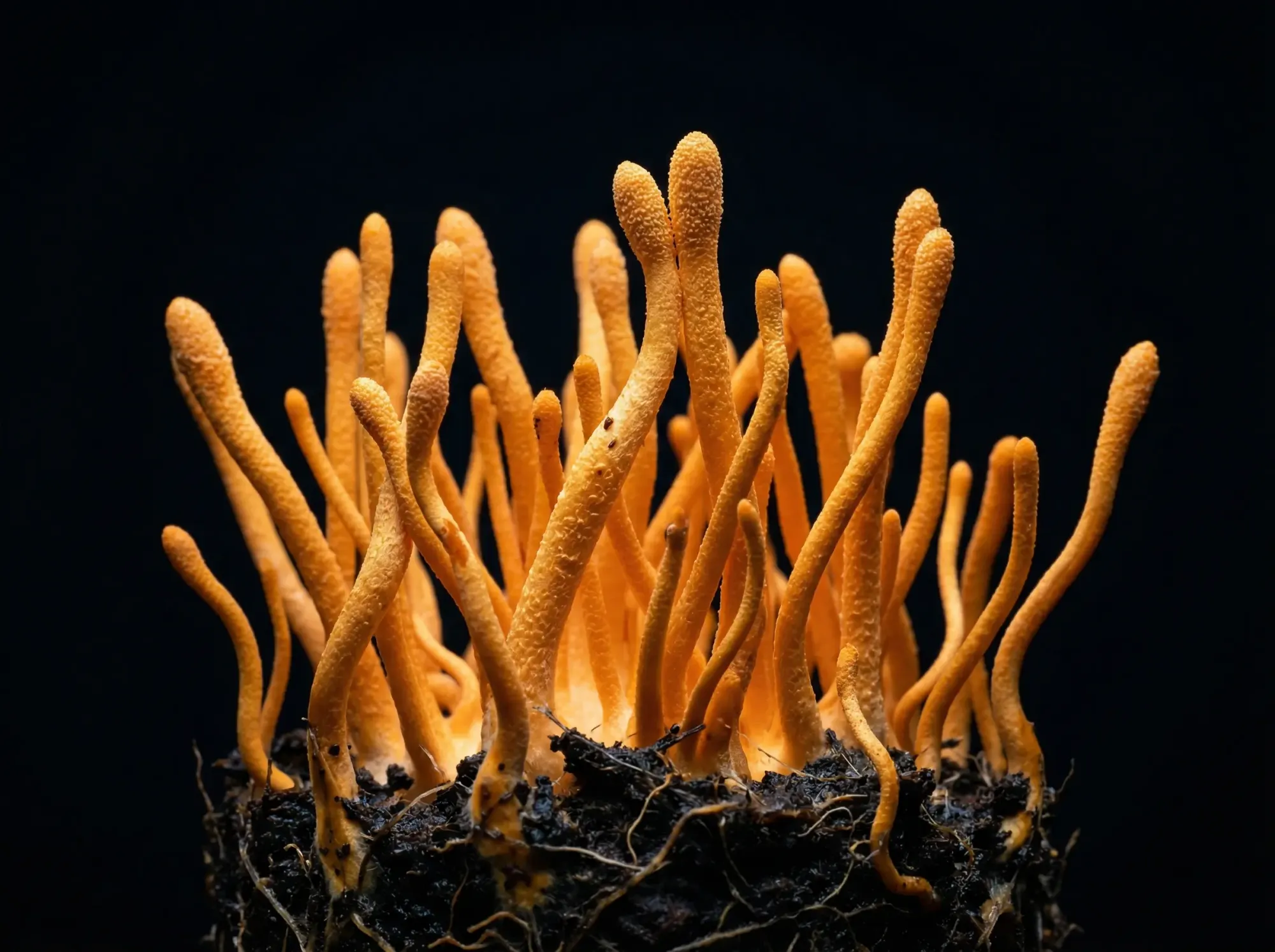
Vagus Nerve Signaling and Fungal Bioactives: Mapping the Gut-Brain Axis Literature

The Body's Longest Nerve
— HOOK —
The longest cranial nerve in the human body is the vagus. Its name derives from the Latin word for "wandering," and it truly does: emerging from the brainstem, it extends into the neck, thorax, and abdomen, reaching almost every organ in those cavities. A single nerve branches to nine distinct organs.
The vagus serves as the principal conduit of the parasympathetic branch of the autonomic nervous system. But it is not a one-way nerve. Approximately 80% of its fibres carry information from the bottom up: from the gut, heart, lungs, and liver to the brain. This is the anatomical foundation of the concept known as the "gut–brain axis." In this entry we examine vagus biology and the literature on where mushroom-derived components sit along this axis.
Anatomy: One Nerve, Many Targets
The vagus nerve (cranial nerve X) originates in the medulla oblongata of the brainstem. It descends through the neck and reaches the thoracic and abdominal cavities. Its target organs include:
- Larynx and pharynx (swallowing, voice).
- Heart (heart rate regulation).
- Lungs (bronchial muscles).
- Stomach (acid secretion, motility).
- Liver.
- Small intestine (motility, secretion).
- Pancreas.
- Proximal colon.
Roughly 80% of vagal fibres are afferent; that is, they carry information from the organs to the brain. Only about 20% are efferent, transmitting commands from the brain to the organs. This ratio positions the vagus as the "sensory channel" of organ activity.
The Gut–Brain Axis
Communication between the gut and the brain proceeds via three channels:
- Neural channel (vagal afferents): Enteroendocrine cells in the gut wall and the enteric nervous system relay chemical and mechanical conditions in the intestine to the brain through vagal afferents.
- Endocrine channel: Hormones released from the gut (for example, GLP-1, PYY, ghrelin) enter the bloodstream and influence distant target cells.
- Immune channel: Gut-associated lymphoid tissue (GALT) affects systemic immunity and, directly or indirectly, the brain's inflammatory profile.
These three channels are not independent of one another. The gut microbiome influences all of them: enterocyte metabolism, hormone secretion, and immune balance.
Microbiome–Vagus Interactions
The gut microbiome modulates vagal afferent signalling through three principal mechanisms:
- Short-chain fatty acids (SCFAs): Microbial fermentation products (acetate, propionate, butyrate). They modulate vagal responses via GPR43 and GPR41 receptors in the gut wall.
- Tryptophan metabolism: The microbiota produce indole derivatives and serotonin precursors. These metabolites influence vagal signalling through enteroendocrine and immune cells.
- Lipopolysaccharides and microbial pattern molecules: Stimulation of gut immune cells by microbial surface molecules indirectly affects vagal activity through the cytokine profile.
Mushroom Components and the Vagus Literature
Mushroom components are investigated not as molecules that act directly on the vagus but as indirect actors mediated by the microbiome. Research themes include:
- Mushroom β-glucans and the microbiome: Soluble mushroom β-glucans undergo fermentation in the large intestine and contribute to SCFA production. This is the basis for classifying mushroom β-glucans in the prebiotic category.
- Heteropolysaccharides: Polysaccharides from species such as Tremella and Cordyceps may similarly serve as substrates for microbial fermentation.
- Chitin and chitin derivatives: The chitin component of the mushroom cell wall constitutes a complex substrate for the gut microbiome; its fermentation profile can vary from species to species.
Mushroom components are not studied as molecules that exert a direct effect on vagal afferent function; the connection is always indirect. Human clinical studies are limited and exhibit methodological heterogeneity.
Vagal Tone and Heart Rate Variability
The most common clinical parameter for measuring vagal activity is heart rate variability (HRV). High HRV is interpreted as an indicator of healthier vagal tone. HRV measurements have become one of the key metrics in modern health tracking for assessing respiration, sleep, and stress.
Direct clinical data linking HRV to mushroom components are scarce; HRV is used more frequently to evaluate interventions such as breathing exercises, physical activity, and stress management. Mushroom components remain an indirect research subject within this framework.
Related Reading
- GPR43 and SCFAs — The receptor context of microbial fermentation products.
- AhR and Gut Immunity — The intestinal pathway of tryptophan derivatives.
- What Is Beta-Glucan? — Structural classification of mushroom β-glucans.
This content is for informational purposes only and does not constitute medical advice. Consult your physician before making any health decisions. Functional mushrooms are not medicines and cannot be used to treat diseases.
Version: 1.0 | Last updated: 27 April 2026 | Sources reviewed: 16+ | Method: Editorial Policy | References: Bibliography