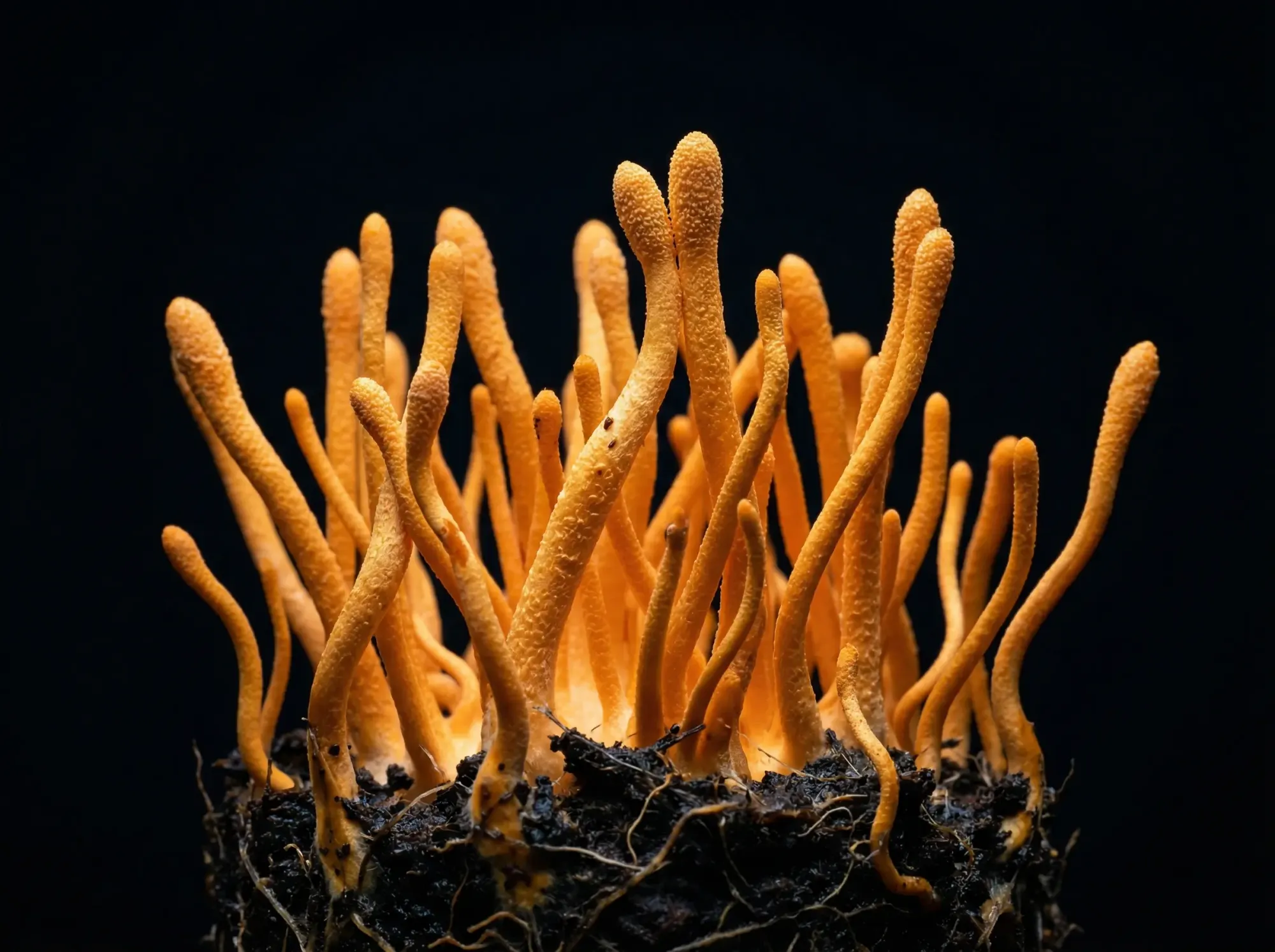
The Cordyceps-Andropause Connection: A Review of Testosterone Literature

A Fifty-Seven-Year-Old Engineer
— HOOK —
He has not missed his morning run in three years. This year something shifted: same pace, same route, yet upon finishing he no longer feels "the way he used to." Recovery is sluggish, motivation wavers, and questions about libido circle in his mind. He visits his family physician; total testosterone sits just above the lower limit. The physician calls it "an age-appropriate spectrum." He returns home. A headline catches his attention online: Cordyceps and testosterone.
This article reveals the truth ratio beneath that headline. It neither rejects nor exaggerates — it simply frames what the literature says and where it remains silent.
Andropause: Defining a Spectrum
The term andropause has gained traction as an analogue of female menopause, yet it lacks a single endocrine definition in the academic literature. More precise terminology includes late-onset hypogonadism (LOH) or age-related testosterone deficiency. In men, testosterone levels decline by approximately 1% per year beginning around age 30; this decline is nonlinear and individual variation is substantial.
Fatigue, diminished libido, loss of muscle mass, mood alterations, and cognitive slowing are reported symptoms within this spectrum. Their specificity is low — meaning similar complaints also appear in thyroid dysfunction, depression, sleep apnea, or straightforward chronic fatigue syndromes. Endocrine evaluation is therefore a priority.
Cordyceps: The Academic Framework
The genus Cordyceps (particularly Cordyceps sinensis and Cordyceps militaris) has been used for centuries in Traditional Chinese Medicine as a food and tonic. Characteristic molecules of interest in the modern literature include cordycepin (3'-deoxyadenosine), adenosine, polysaccharides, and ergosterol derivatives.
Testosterone-Focused Studies
In animal models, Cordyceps extract has been described to affect Leydig cell function, steroidogenic enzyme activity (StAR, CYP11A1), and serum testosterone levels. The majority of these studies were conducted in rat and mouse models; direct evidence of a clinical testosterone effect in humans is limited, and findings are inconsistent.
Energy Metabolism and Mitochondria
The effects of cordycepin on ATP production, AMPK signaling, and mitochondrial respiration have been extensively investigated in in vitro cell studies. This body of literature says something distinct from the claim that "Cordyceps banishes fatigue": specific molecules have been documented to influence cellular energy pathways. This does not automatically translate to organism-level performance enhancement.
Libido and the Vascular Context
Select studies have demonstrated that Cordyceps extract influences nitric oxide (NO) pathways. NO is a mediator linked to vascular tone and erectile function. Once again, these findings exist at the mechanistic level; their translation into clinical outcomes requires rigorous randomized trials, and the current evidence base is small.
Physician First
For male individuals presenting with complaints of fatigue, reduced libido, or low energy, the endocrine picture should be evaluated first: total and free testosterone, SHBG, LH, FSH, prolactin, TSH, ferritin, and B12 form part of the standard panel. If a hypogonadal condition requiring treatment is present, functional food ingredients are not an alternative to medical therapy.
Individuals taking anticoagulant, antihypertensive, or immunosuppressant medications should consult their physician before beginning Cordyceps extract.
Related Reading
- Sarcopenia: Protein and Mushroom Synergy Over 60 — the muscle mass dimension.
- Menopause and Functional Mushrooms — the parallel transition in women.
- The Perimenopause Framework — hormonal transition literature.
This content is for informational purposes and does not constitute medical advice. Consult your physician before making any health decisions. Functional mushrooms are not pharmaceuticals and cannot be used to treat diseases.
Version: 1.0 | Last updated: 24 April 2026 | Sources reviewed: 12+ | Method: Editorial Policy | References: Bibliography