Safety of Psilocybin Mushroom Use During the Postpartum Period: A Review of the Literature
The Question at Week Seven
— KANCA —
Seven weeks postpartum. Sleep is fragmented; the body continues to recover; the breastfeeding routine has not yet stabilized. A grandmother in the kitchen, while preparing a meal, produces a packet of functional mushroom powder: “This is very nutritious—you should use some too.” The new mother hesitates. She is breastfeeding. Is this safe?
This article does not provide that answer. That answer comes from her physician. What we will do here is clarify where the scientific literature on functional mushrooms stands during the postpartum and lactation periods, which species are most frequently discussed, and which questions should be taken to a healthcare provider.
Legal note: MYCOVITA products are food products. Decisions regarding use during pregnancy and breastfeeding are made together with a physician.
Postpartum Physiology
The first 6–12 weeks after birth are locally called the puerperium; however, the physiological return is considerably longer. Estrogen and progesterone drop sharply, while prolactin is maintained at high levels by breastfeeding. The thyroid axis can fluctuate—the incidence of postpartum thyroiditis is noteworthy. Iron and vitamin B12 stores are reduced by both delivery and lactation. Sleep fragmentation disrupts the cortisol rhythm.
In this context, dietary decisions affect not only the mother but also the infant via breast milk. Consequently, “natural” does not automatically mean “safe.”
General Framework for the Breastfeeding Period
Academic sources contain limited large‑scale clinical studies on the safety of functional mushroom concentrates (powders, extracts) during lactation. This limitation implies two things:
- No documented harm has been established.
- Broad safety evidence is also lacking.
These two statements are not contradictory; they are two faces of the evidence gap. The “avoid or minimize” advice commonly given by physicians arises from this gap—it is the precautionary principle of science.
Points Discussed in the Literature
Immune Modulation
β‑glucans and other mushroom polysaccharides are known to affect immune cell responses in vitro. During the postpartum period, the maternal immune system enters a rebound activation phase; therefore, how concentrated extract forms will interact requires medical evaluation.
Blood‑Thinning Interactions
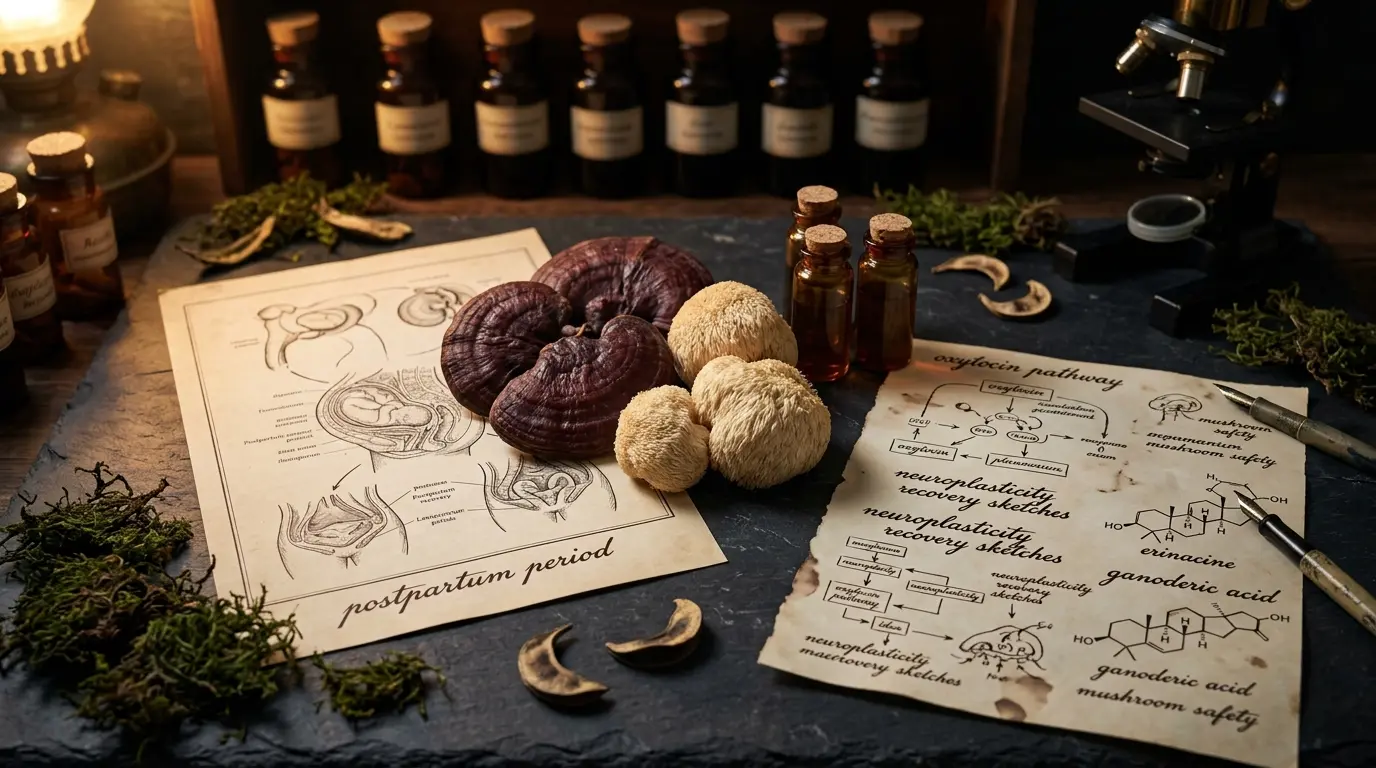
Reishi triterpenes have demonstrated effects on platelet aggregation both in vitro and in animal studies. The first weeks of postpartum lochial bleeding demand caution with respect to hemorrhage risk. In mothers using warfarin, heparin, or similar medications, mushroom extracts should not be started without physician consultation.
Transfer into Breast Milk
Mushroom polysaccharides are large molecules; this size restricts absorption and transfer into milk. Nevertheless, for smaller triterpenes and secondary metabolites, the literature on milk transfer is not yet sufficiently detailed. This gap is directly linked to the form of the mushroom—fresh, dried, or extract.
Traditional Dietary Use
Species such as shiitake, enoki, and oyster mushrooms have been consumed as food for centuries in many parts of the world. Eating mushrooms in meals is not equivalent to taking extract capsules; the dose, bioactive density, and matrix are entirely different.
Topics to Discuss with Your Physician
If you are considering a functional mushroom concentrate during the postpartum or lactation period, academic sources commonly recommend reviewing the following topics with your physician: bleeding risk (cesarean wound healing, lochia); current medications (anticoagulants, antithyroid drugs, antidepressants, immunosuppressants); thyroid status; autoimmune history; allergy history; and the infant’s condition.
This article is not a decision; it is a discussion checklist.
Related Reading
- Perimenopause and Mushroom Components — another transition period.
- Estrogen Receptors and Mushroom Components — hormonal molecular context.
- Menopause and Functional Mushrooms — hormonal transition literature.
This content is for informational purposes only and does not constitute medical advice. Consult your physician before making any health decisions. Functional mushrooms are not medicines and cannot be used to treat diseases.
Version: 1.0 | Last update: 24 April 2026 | Sources reviewed: 12+ | Method: Editorial Policy | References: Bibliography