Sarcopenia in Older Adults: Unlocking the Synergistic Power of Protein and Mushroom Bioactives
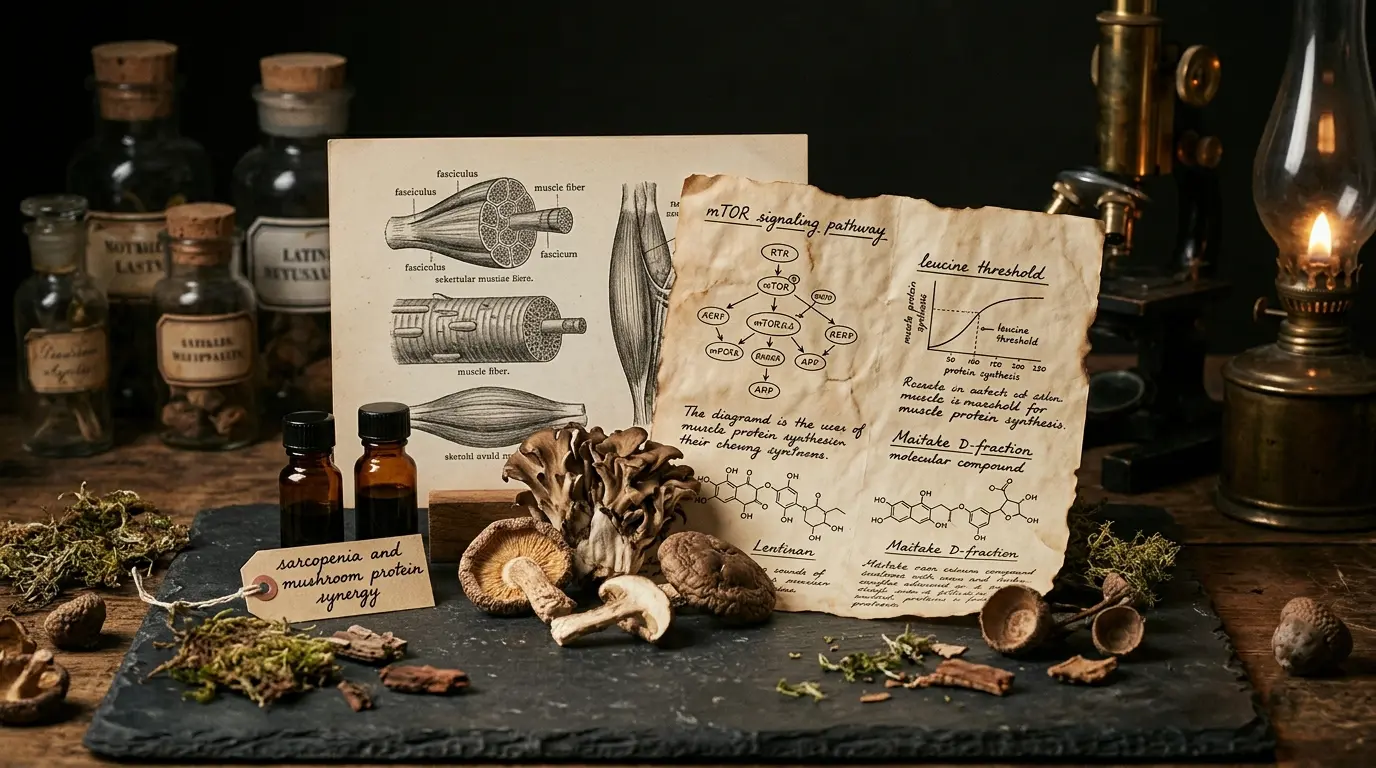
The Man Who Could Not Carry His Bags From the Market
— VIGNETTE —
Seventy-two years old. He spent a lifetime tending gardens, keeping his body strong. Last month, for the first time, he had to stop halfway home from the market while carrying two full bags. His family physician examined him and said, "Your muscle mass has declined; you are heading toward sarcopenia." The prescription contained no medication; instead, it offered protein, resistance exercise, and nutritional guidance. He asked, "What can I eat?"
This article frames the answer: what sarcopenia is, how mushroom protein is positioned within the academic literature, and what the word "synergy" does — and does not — mean in this context.
Sarcopenia: Definition and Mechanism
Sarcopenia is the age-associated loss of skeletal muscle mass and function. The EWGSOP2 (European Working Group on Sarcopenia in Older People) criteria evaluate muscle strength, muscle quantity, and physical performance together. In populations over 60 years of age, prevalence is reported in the 10–20% range; beyond age 80, the figure rises substantially.
The pathophysiology is understood to involve several concurrent processes: anabolic resistance (the blunted response of aged muscle to protein synthesis), mitochondrial dysfunction, low-grade systemic inflammation (inflammaging), physical inactivity, and inadequate protein intake. The therapeutic approach is typically two-pronged: resistance exercise and adequate protein intake.
Protein Requirements in Older Adults
For young adults, the RDA for protein is set at 0.8 g/kg per day. Within the sarcopenia literature, the prevailing view holds that this figure is insufficient for individuals over 60. The PROT-AGE and ESPEN consensus guidelines recommend 1.0–1.2 g/kg/day, rising to 1.2–1.5 g/kg/day during periods of acute illness or exercise training. High-quality protein, leucine content, and a distributed meal pattern (25–30 g of quality protein per meal) are concepts actively discussed in the literature.
Mushroom Protein: Nutritional Profile
On a dry-weight basis, mushroom protein content varies by species; Pleurotus ostreatus and Lentinula edodes may contain 20–30% protein per unit of dry matter. In terms of amino acid profile, mushroom protein is reasonable in lysine and threonine, yet more limited in sulfur-containing amino acids (methionine, cysteine). This profile positions it not as a standalone complete protein source but rather as a complementary component within a mixed diet.
Digestibility
The mushroom cell wall consists of chitin and β-glucan; thermal processing (blanching, drying plus cooking) enhances cell wall permeability and thereby improves protein digestibility. Raw consumption is not recommended, for reasons of both safety and bioavailability.
Other Mushroom Constituents in the Context of Sarcopenia
Ergothioneine
Ergothioneine is a sulfur-containing antioxidant amino acid derivative found in high concentrations in mushrooms. Its role in mitochondrial protection and oxidative stress modulation is a subject of active investigation in the literature. This framework conceptually aligns with the inflammaging hypothesis; however, direct evidence linking ergothioneine to clinical sarcopenia outcomes remains limited.
Vitamin D (D2)
Ergosterol in UV-B-exposed mushrooms converts to vitamin D2. Vitamin D insufficiency is prevalent in older populations and has been associated with sarcopenia. The bioavailability of D2 differs from that of D3; this distinction warrants careful consideration.
β-Glucan and the Microbiome
Mushroom β-glucans undergo fermentation in the large intestine and contribute to the production of short-chain fatty acids (SCFAs). A healthy gut microbiome is discussed in the literature as one of the factors influencing anabolic resistance and systemic inflammation in older adults.
A Cautionary Note on the Word "Synergy"
Consuming mushroom protein alongside other protein sources is nutritionally rational in light of complementary amino acid profiles. However, in the academic sense, "synergy" denotes an effect produced by two components that exceeds the sum of their individual effects — a strong claim. For sarcopenia specifically, validated clinical synergy data for mushroom protein combined with other proteins do not exist. In the context of this article, the term "synergy" points toward conceptual nutritional complementarity, not a clinically demonstrated supra-additive effect.
Related Reading
- Andropause and Cordyceps — a parallel topic in aging physiology.
- Menopause and Functional Mushrooms — the female aging framework.
- The Perimenopause Framework — transitional periods.
This content is for informational purposes only and does not constitute medical advice. Consult your physician before making any health-related decisions. Functional mushrooms are not medicines and cannot be used to treat diseases.
Version: 1.0 | Last updated: 24 April 2026 | Sources reviewed: 12+ | Method: Editorial Policy | References: Bibliography