Encyclopedia of the Black Antler Morphology in Reishi (Ganoderma lucidum)
Variation in antler morphology is governed by triterpenoid concentration, carbon dioxide–mediated growth regulation, and the interplay between dormancy and physiological stress as outlined in the organism’s research profile.
Triterpenes and the Molecular Foundations of Reishi's Bitterness
The characteristic bitterness of Reishi mushroom is a direct indication of its ganoderic acid concentration, which is widely regarded as a key marker of quality.
The Science of Mushroom Extraction: Hot Water, Ethanol, and Dual-Extraction Methods
Mantar Ekstraksiyon Yöntemleri: Sıcak Su, Etanol ve Çift Ekstraksiyon: fonksiyonel mantar literatürü, biyokimyasal çerçeve ve MYCOVITA bilim kütüphanesinden.
The Hypothalamic-Pituitary-Adrenal Axis and Fungal Adaptogens: A Review of the Evidence
The hypothalamic–pituitary–adrenal (HPA) axis serves as the principal neuroendocrine effector of the stress response. Its signalling cascade proceeds through three hierarchically organised nodes—the paraventricular nucleus of the hypothalamus, the anterior pituitary, and the adrenal cortex—each secr
Astrocytes and Fungal Compounds: A Review of the Glial Support Literature
Astrocytes constitute the most numerous cell type in the human brain. They are integral to glial support functions and the maintenance of the blood–brain barrier. In vitro studies have further characterized their responses to fungal components, expanding the literature on astrocyte–pathogen interact
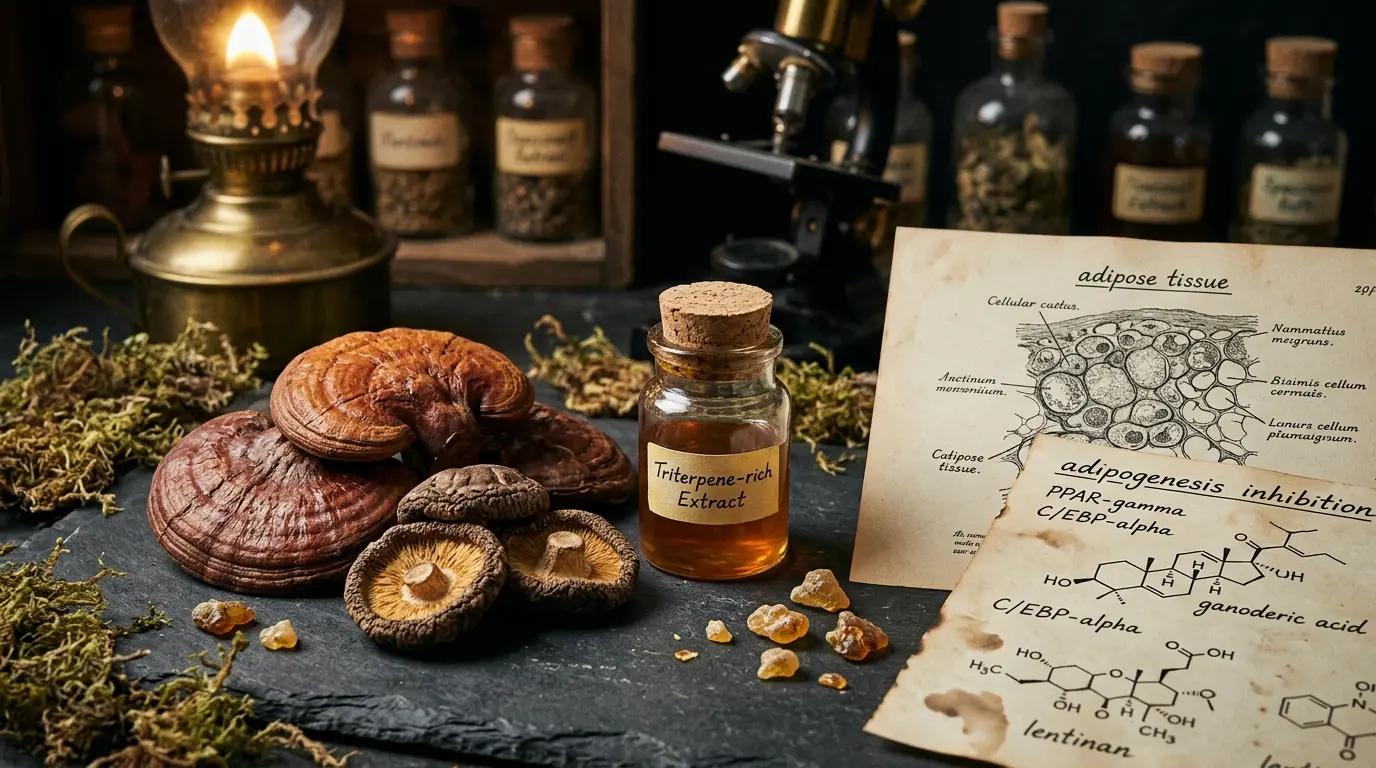
Adipose Tissue and Mushroom-Derived Compounds: A Review of the Adipogenesis Literature
Adipose tissue functions as a dynamic endocrine organ rather than a passive lipid reservoir. This article outlines the in vitro literature on white, brown, and beige adipocyte subtypes and their interactions with bioactive fungal constituents.
Reishi and Cordyceps: A Comparative Analysis of Adaptogenic Properties
Reishi and Cordyceps represent two distinct chemical identities: the triterpenoid-rich profile of Ganoderma lucidum contrasts with the nucleoside-dominated chemistry of Cordyceps species, yielding divergent frameworks of traditional use and sharply differing in vitro research landscapes.
Maitake versus Reishi: A Comparative Analysis of Beta-Glucan and Triterpene Profiles
The polysaccharide and triterpene profiles of Maitake (Grifola frondosa) and Reishi (Ganoderma lucidum) exhibit distinct chemotaxonomic signatures that underpin their divergent applications. Maitake’s hallmark β-glucan proteoglycan, the D-fraction, contrasts with Reishi’s array of ganoderic acids, a
NLRP3 Inflammasome Activation by Fungal Components: A Sterile Inflammation Framework
The NLRP3 inflammasome is an intracellular multiprotein complex central to innate immunity, assembled upon danger sensing to activate caspase-1 and drive the maturation of IL‑1β and IL‑18. Its canonical activation proceeds through a tightly regulated two‑step process: a priming signal (often via NF‑
Termitomycesphin: A Glycolipid Unique to Termitomyces Fungi
Glycolipids isolated from the symbiotic fungus *Termitomyces*, which inhabits termite mounds, have been characterized with respect to their molecular structures, lipidomic profiles, and in vitro biological activities, as documented in the scientific literature.