Termitomycesphin: A Glycolipid Unique to Termitomyces Fungi

A Mushroom Cultivated in Termite Nests
— HOOK —
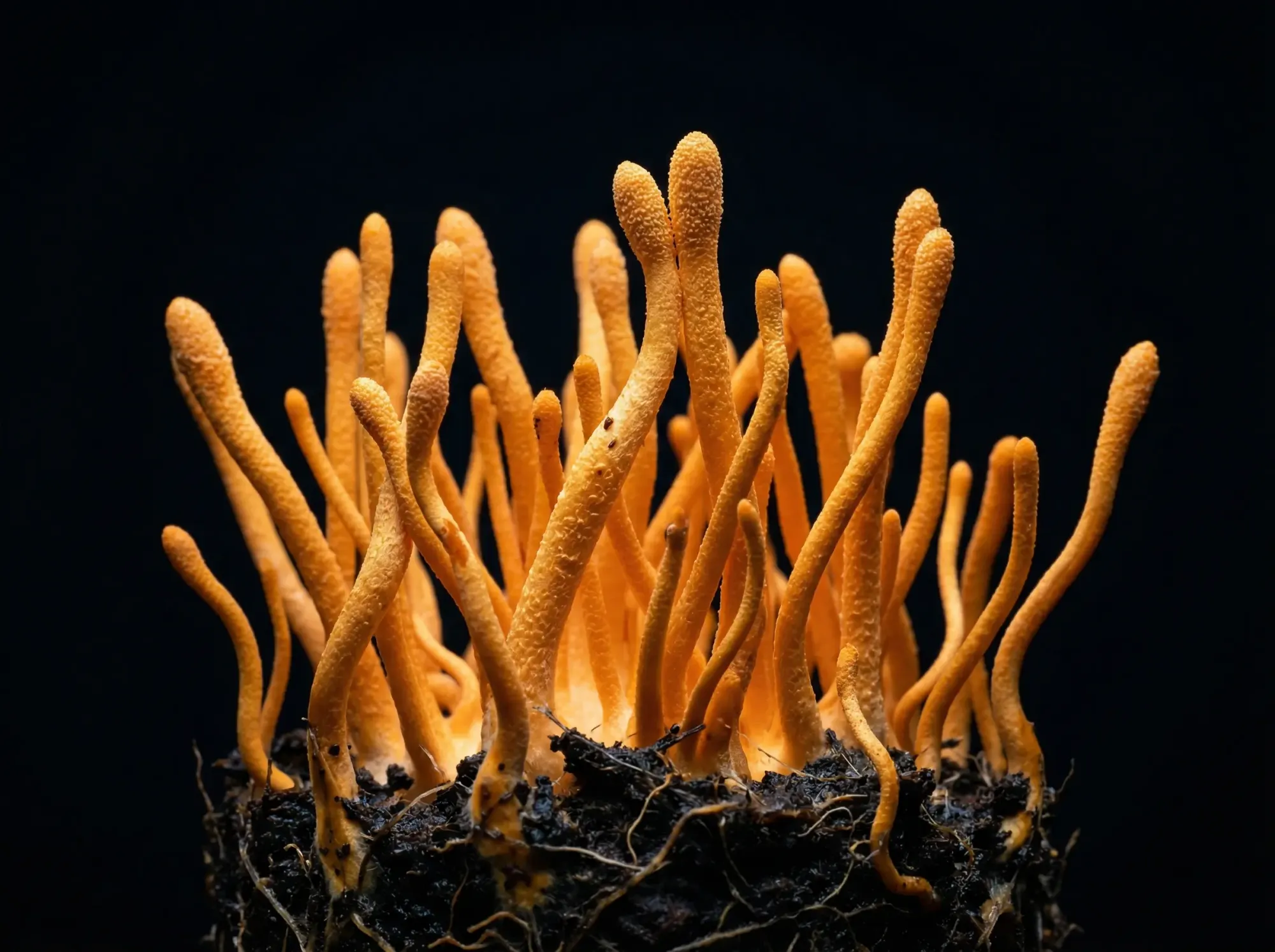
One of nature's most peculiar symbioses unfolds across the tropical regions of Africa and Asia. Termites cultivate a specialized fungal garden inside their mounds. This mushroom grows exclusively within these nests: Termitomyces albuminosus. The termites supply the substrate—chewed plant matter—and the fungus provides digestible biomass in return. This cycle, which neither party could sustain alone, has operated uninterrupted for millions of years.
The laboratory interest in this mushroom extends beyond its ecological singularity. Termitomyces possesses an unusual lipid composition for a fungus. The termitomycesphin series of glycolipids isolated from it carries a structural architecture rarely encountered in fungal lipid chemistry. This entry examines what termitomycesphins are and why they receive infrequent yet attentive monitoring in the scientific literature.
Definition: To Which Class Does Termitomycesphin Belong?
Termitomycesphin is a series of ceramide-backbone glycolipids. Each molecular member consists of three components:
- Ceramide: A sphingoid base (long-chain amino alcohol) plus a fatty acid attached via an amide bond.
- Sugar head: Typically glucose or mannose units (mono-, di-, or tri-glycosylated).
- Fatty acid chain: Saturated or hydroxylated, generally ranging from C16 to C26 in length.
The series includes characterized members termitomycesphin A, B, C, D, and subsequently identified variants; these differ in their sugar head configuration and fatty acid chain length. All share a common architecture: an amphiphilic structure (partially soluble in both lipid and aqueous environments) compatible with cell membrane integration.
Isolation and Purification
Termitomycesphins are obtained through organic solvent extraction (classically chloroform–methanol) of dried fruiting bodies. The lipid fraction undergoes sub-fractionation via silica gel chromatography; the glycolipid sub-fraction is further purified using preparative TLC and HPLC. Structural elucidation employs combined NMR and MS methods.
The yield of termitomycesphin per mushroom is low, which renders cost-effective scaled production challenging. Synthetic analogs have been developed within research contexts for this reason.
Neurotrophic Context
A noteworthy branch of the termitomycesphin literature centers on in vitro neurotrophic observations. In certain cell lines—such as PC12, a rat chromaffin tumor line—reports describe neurite outgrowth induced by specific termitomycesphin derivatives.
These observations remain at the benchtop level and carry no in vivo or clinical validity. However, they are noteworthy from a structure–activity relationship perspective: the sugar head structure and fatty acid chain length markedly modulate the observed effect in the cell line. This suggests termitomycesphins interact with a specific cellular target, though that target has yet to be definitively mapped.
A parallel may be drawn to the NGF-associated in vitro literature observed with hericenone and erinacine derivatives from Lion's Mane; however, this parallel is thematic rather than structural. The two molecular groups belong to distinct chemical classes.
Within the Context of Fungal Glycolipids
Glycolipids constitute a comparatively understudied category within the fungal kingdom. While polysaccharides and triterpenes occupy the foreground, glycolipids are generally regarded as membrane components and rarely examined within active pharmacological contexts. Termitomycesphin thus represents a chemical exception: an unusual lipid profile from a mushroom with an unusual ecology.
Other fungal glycolipids—such as Hericium ceramides and Grifola cerebrosides—may share a similar backbone, yet the sugar head and fatty acid profile differ across species. This diversity underscores why fungal lipidomics remains an open field of investigation.
Termitomycesphin in the Product Context
Termitomycesphin rarely appears as a standardized ingredient in commercial mushroom supplement formulations. The reason is straightforward: cultivating Termitomyces albuminosus under controlled conditions is exceedingly difficult (yields in culture without termite symbiosis remain very low), and batch-level verification of glycolipid content demands specialized analytical infrastructure.
This means that claims of "containing termitomycesphin" in the dietary supplement market are technically difficult to substantiate. In the context of a transparent and verifiable product, this molecular name most often references an academic literature citation rather than structural chemistry.
Related Reading
- What Is Erinacine — The mycelium-derived diterpenes of Lion's Mane and their in vitro neurotrophic literature.
- What Is Hericenone — Aromatic compounds from the Lion's Mane fruiting body.
- What Is NGF — The biology of nerve growth factor and its context within the mushroom literature.
This content is for informational purposes only and does not constitute medical advice. Consult your physician before making any health-related decisions. Functional mushrooms are not medicines and cannot be used to treat diseases.
Version: 1.0 | Last updated: 27 April 2026 | Sources reviewed: 9+ | Methodology: Editorial Policy | References: Bibliography