Functional Mushrooms: A Scientific Definition and Scope
Functional mushrooms are defined within modern mycology as organisms occupying the intersection of nutrition and bioactive supplementation.
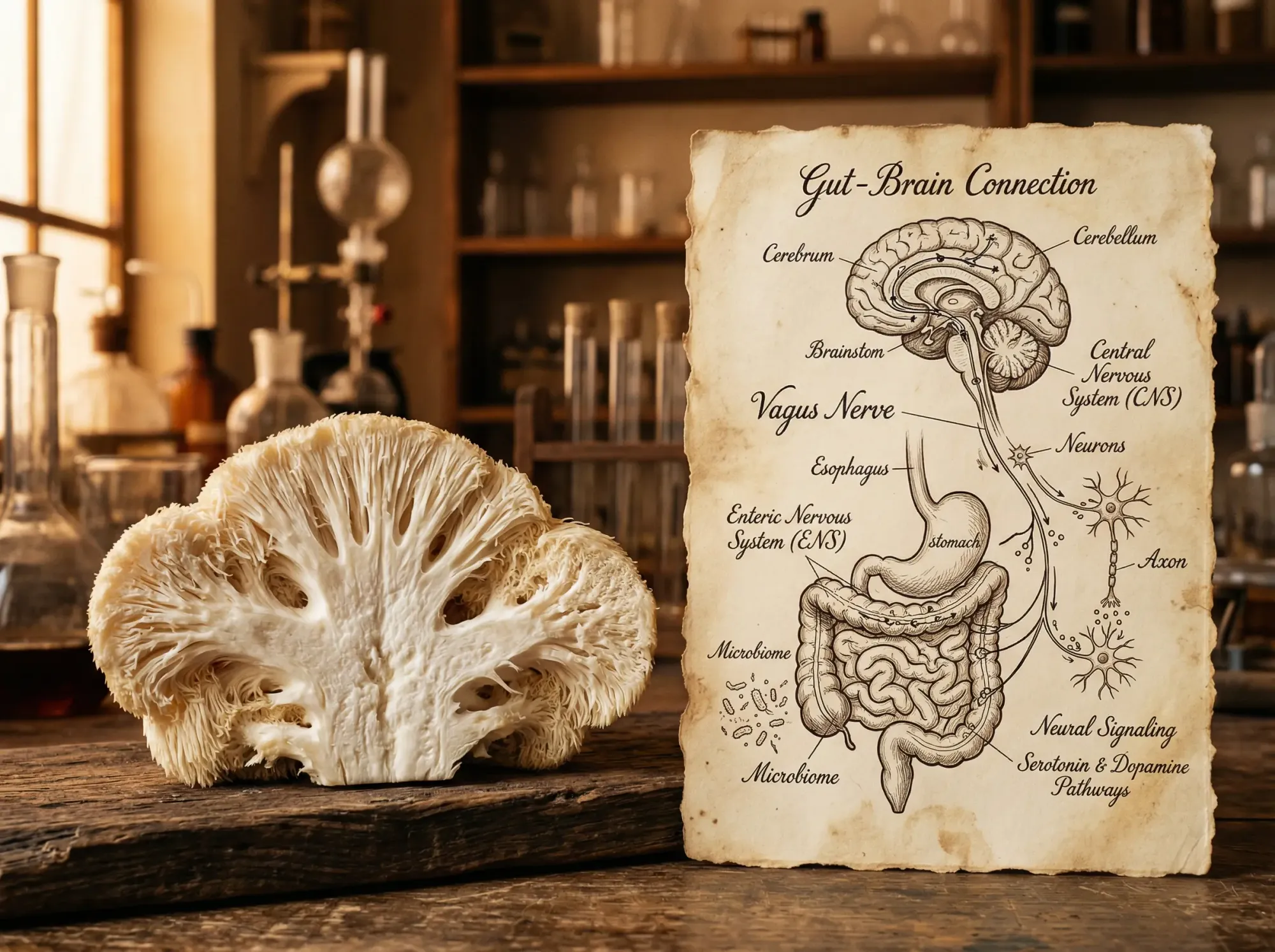
Investigating the Influence of Lion’s Mane Mushroom on the Brain–Gut Axis
Embedded within the lining of the gastrointestinal tract, the enteric nervous system contains the second-largest assembly of neurons in the body, exceeded only by the brain.
Understanding MYCOVITA's Cost Structure and Quality Premium
The production cost of mushroom powder derived from the fruiting body is substantially higher than that of mycelium-based powder.
A Comprehensive Guide to Mushroom Powder: Composition, Benefits, and Applications
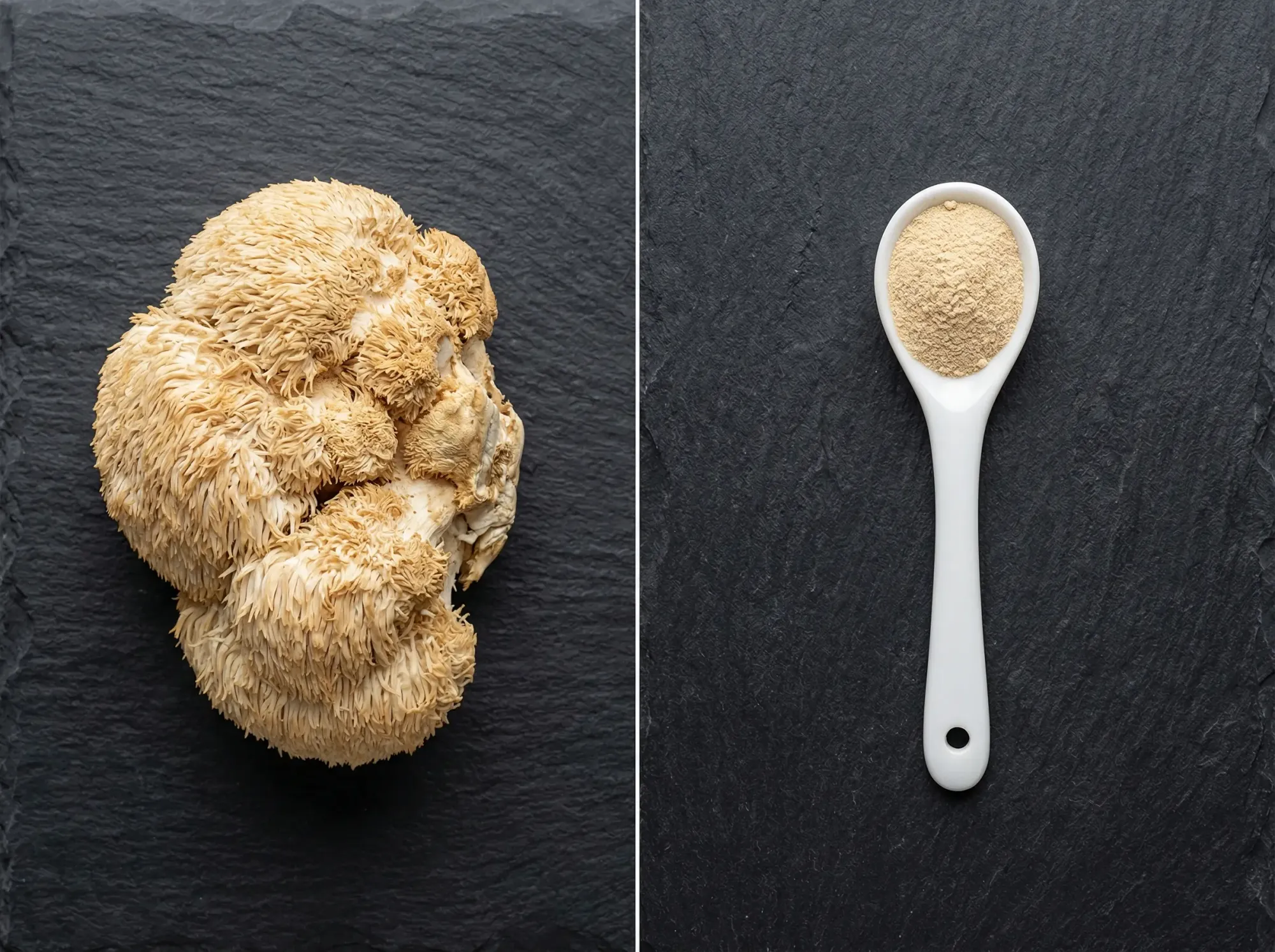
Powders derived from the fruiting body and the mycelium of a mushroom differ substantially in their bioactive compound profiles.
Hericenones and the Nerve Growth Factor Connection in Lion’s Mane Mushroom
Hericenone is a neurotrophic compound first identified in the 1990s by Japanese chemist Hirokazu Kawagishi.
Erinacines: Key Bioactive Compounds and Their Functions in Lion’s Mane Mycelium
Erinacine ranks among the scarce fungal metabolites confirmed to traverse the blood–brain barrier.
A Definitive Protocol for Timing Mushroom Powder Intake During Intermittent Fasting
Pure mushroom powder possesses a caloric density sufficiently low to remain within the permissible thresholds established by most intermittent fasting protocols.
The Definitive Guide to Mushroom-Based Nootropic Stacks for Cognitive Enhancement
Bioactive compounds isolated from three distinct fungal species act upon separate mechanistic pathways in studies investigating cognitive performance.
Mushroom Coffee vs. Mushroom Tea: A Definitive Comparative Guide
The bioavailability of mushroom-derived polysaccharides is highly dependent on both the temperature applied during processing and the carrier medium used.
The Hypothalamic-Pituitary-Adrenal Axis and Fungal Adaptogens: A Review of the Evidence
The hypothalamic–pituitary–adrenal (HPA) axis serves as the principal neuroendocrine effector of the stress response. Its signalling cascade proceeds through three hierarchically organised nodes—the paraventricular nucleus of the hypothalamus, the anterior pituitary, and the adrenal cortex—each secr