Mushroom Coffee vs. Mushroom Tea: A Definitive Comparative Guide
— THE FUNDAMENTAL QUESTION —
Morning arrives. You hold a packet of medicinal mushroom powder. Two options lie before you: coffee or tea.
Which vehicle yields superior results? In which medium does the flavor recede? Which preparation better preserves bioactive compounds?
The question is more technical than it appears. The answer is not simply "both work."
— TEMPERATURE — THE DECISIVE VARIABLE —
Espresso exits the portafilter at approximately 93°C. Filter coffee brews within 90–96°C. Turkish coffee reaches 95–100°C. Green tea steeps at 70–80°C. Black tea demands 90–95°C. Matcha whisking is optimal at 75–80°C.
Why do these figures matter? Because each medicinal mushroom species possesses a distinct thermal tolerance profile for its bioactive constituents.
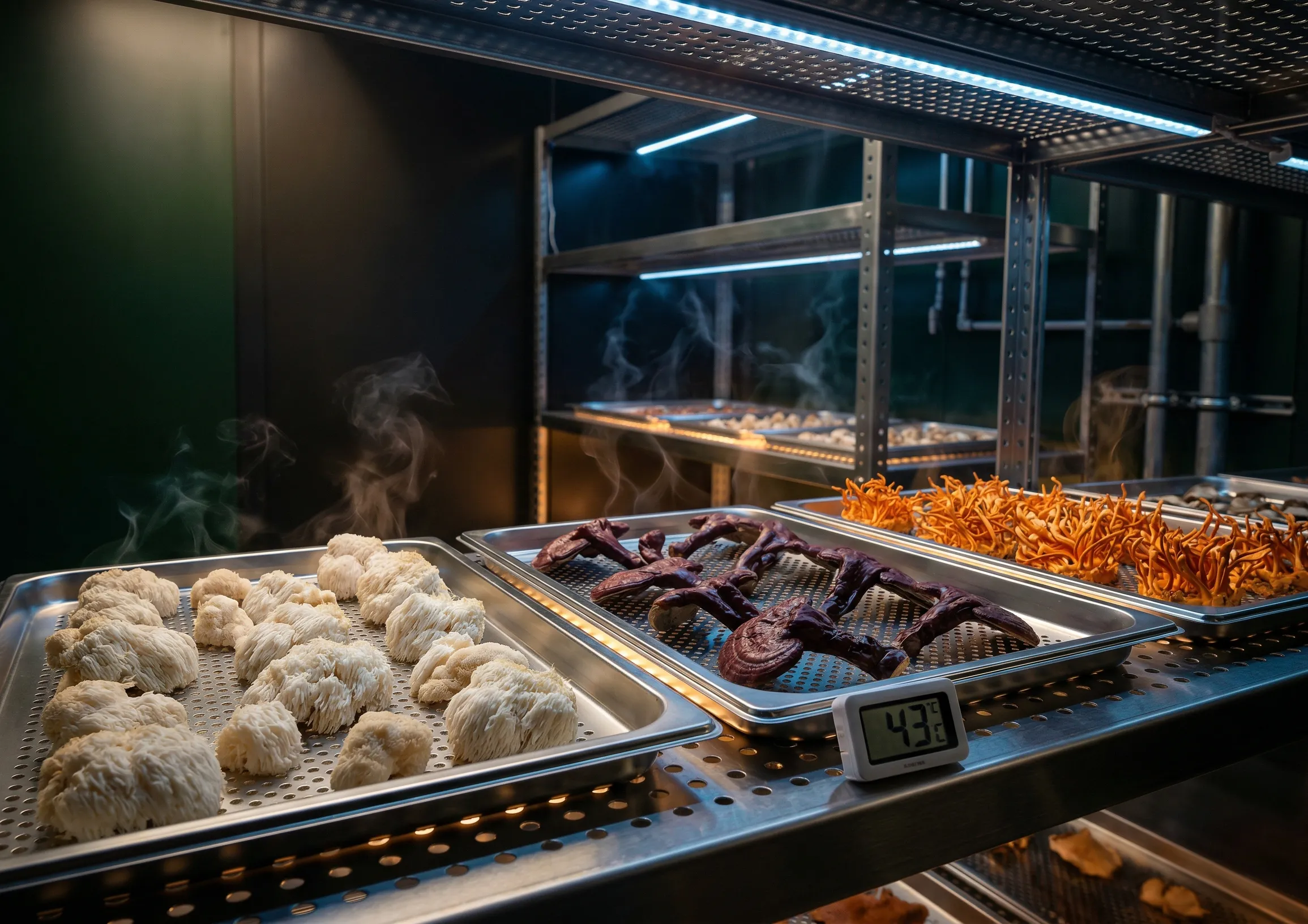
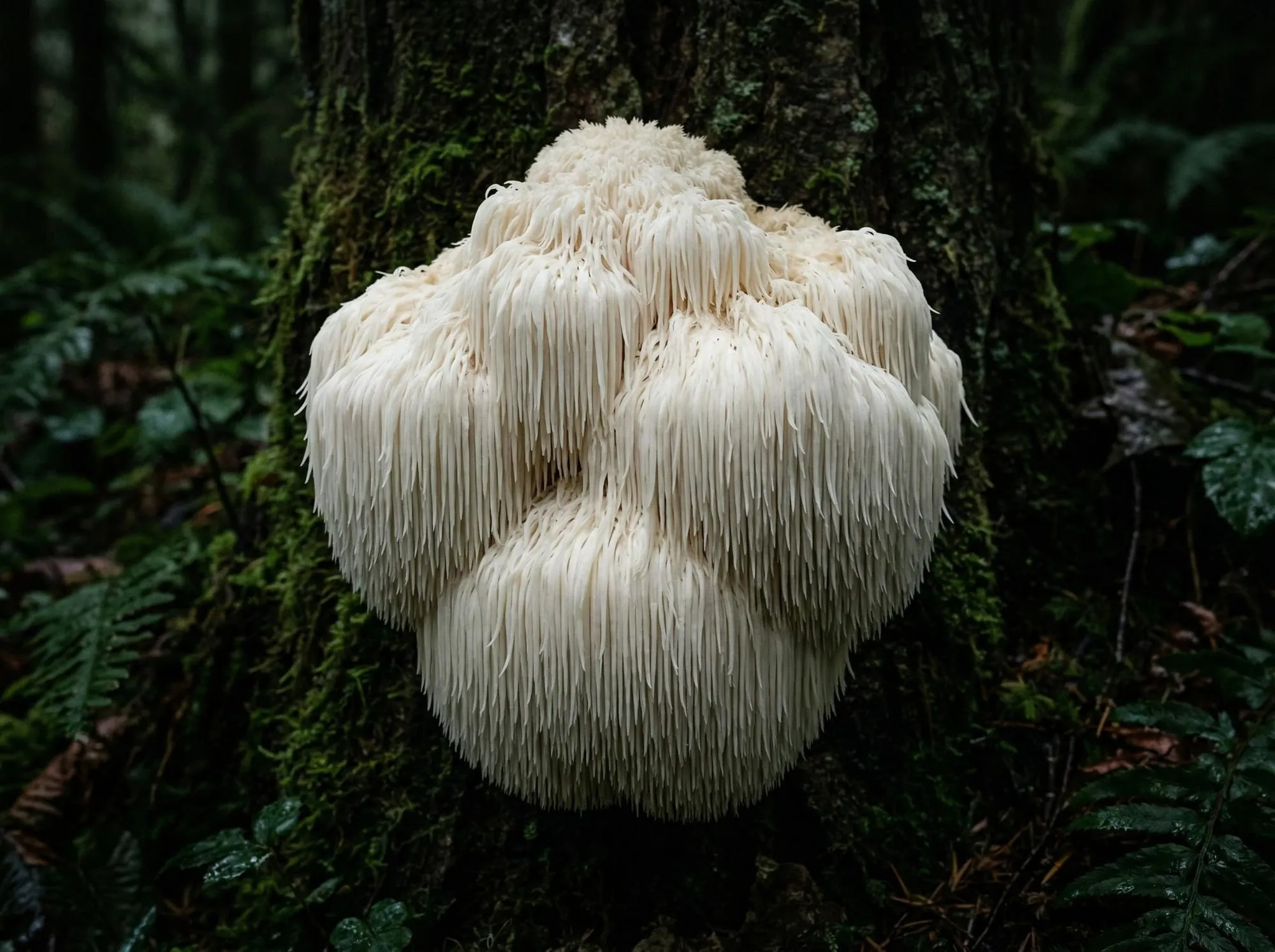
[Lion's Mane] — Hericenone compounds begin degrading above 75°C. Adding Lion's Mane powder directly to boiling coffee weakens its bioactive profile. The solution: allow coffee to cool to 70–75°C before incorporating the powder. Alternatively, green tea and matcha provide an ideal temperature range natively — no cooling required.
[Reishi Antler] — Ganoderic acids demonstrate thermal stability. The ideal extraction temperature range is 85–90°C. Black tea and coffee serve as compatible vehicles. A critical caveat: ganoderic acids are fat-soluble compounds. Without the addition of coconut milk, their bioavailability remains substantially compromised.
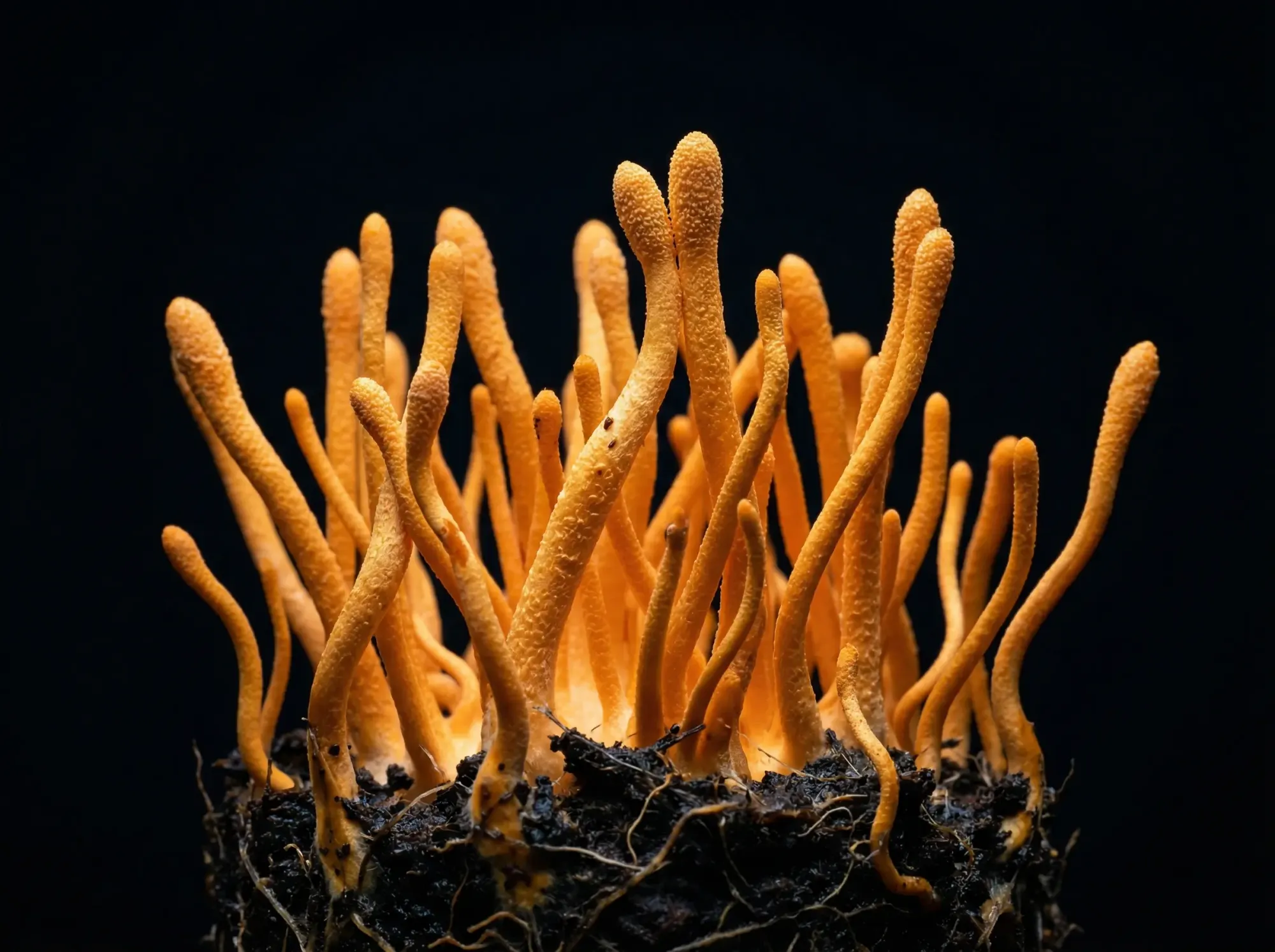
[Cordyceps] — Cordycepin exhibits moderate heat tolerance, remaining stable up to approximately 80°C. Espresso compatibility exists, though filter coffee provides a more reliably safe thermal profile.
[Turkey Tail] and [Sparassis] — Beta-glucan-dominant species. These polysaccharides withstand high temperatures without degradation. Coffee or tea makes no functional difference — both media perform equally well.
— THE COFFEE PATHWAY —
Advantages:
Caffeine–mushroom synergy represents the primary appeal. The neurotrophic profile of Lion's Mane combines with caffeine's cognitive stimulation through distinct mechanisms working in parallel. Cordyceps supports mitochondrial energy production while caffeine stimulates the central nervous system — two independent pathways converging on alertness.
Flavor compatibility is remarkably favorable. The mildly nutty character of Lion's Mane blends seamlessly with filter coffee. Cordyceps remains nearly neutral, virtually undetectable. The profound bitterness of Reishi disappears within espresso's intensity.
Disadvantages:
Temperature risk is the principal concern — especially for Lion's Mane. Turkish coffee, brewed at approximately 100°C, is categorically unsuitable. Espresso exit temperature sits at the threshold of risk. Filter coffee requires a five-minute cooling period before powder incorporation.
The caffeine dependency cycle remains relevant. Mushroom coffee does not eliminate caffeine. The perception of "mushroom coffee equals healthy coffee" is misleading — caffeine intake persists.
Optimal pairings:
- Lion's Mane + filter coffee (cooled to 70–75°C)
- Cordyceps + espresso
- Reishi + evening decaf (with coconut milk)
Detailed guide: How to Add Mushroom Powder to Coffee
— THE TEA PATHWAY —
Advantages:
Temperature control is inherently easier. Green tea and matcha are prepared naturally at 70–80°C — the optimal safe zone for Lion's Mane. Antioxidant synergy emerges as a secondary benefit: tea catechins and mushroom beta-glucans operate through complementary antioxidant mechanisms.
Caffeine-free protocols become possible. Herbal teas — chamomile, linden, rooibos — combined with mushroom powder offer a completely caffeine-free administration method. This proves ideal for evening use when stimulant avoidance is desired.
The ritual factor carries practical significance. The tea steeping process inherently provides the necessary waiting period for complete powder dissolution. Rather than the hurried "add, stir, drink" sequence of coffee, tea offers a deliberate seven- to ten-minute conscious brewing window.
Disadvantages:
Flavor harmony can prove challenging. Reishi's deep, persistent bitterness overwhelms the delicate profile of green tea. The solution: incorporate coconut milk or honey as balancing agents.
Tannin interactions warrant attention. The tannins present in black tea may reduce the absorption of certain bioactive compounds. Green tea or white tea present safer alternatives with lower tannin content.
Optimal pairings:
- Lion's Mane + matcha (morning ritual)
- Reishi + chamomile tea + coconut milk (evening ritual)
- Cordyceps + green tea (late-morning energy)
- Turkey Tail + black tea (immune support protocol)
Detailed guide: How to Make Mushroom Tea
— COMPARATIVE OVERVIEW —
Criterion | Coffee | Tea
Temperature control | Difficult (90°C+) | Easy (70–80°C)
Lion's Mane compatibility | Cooling required | Excellent
Reishi compatibility | Good (bitterness masked) | Moderate (bitterness prominent)
Cordyceps compatibility | Very good | Good
Caffeine synergy | Strong | Mild (green tea) / None (herbal tea)
Evening use | Decaf required | Ideal with herbal teas
Fat solubility support | Excellent via Bulletproof method | Add coconut milk
— VERDICT —
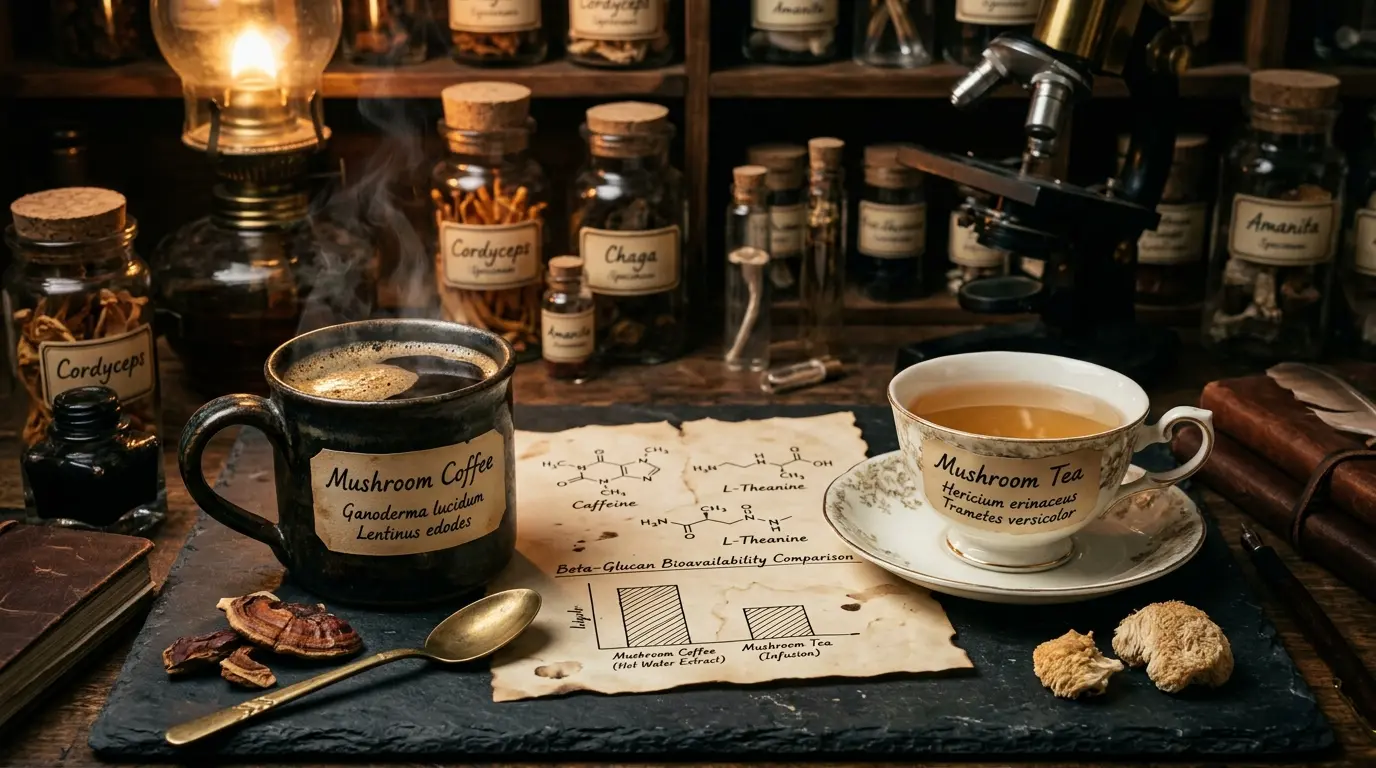
The correct question is not "coffee or tea." The proper inquiry is: which mushroom, at which time of day, delivered through which carrier medium.
Morning + focus: Lion's Mane + matcha or cooled filter coffee
Morning + energy: Cordyceps + espresso
Evening + restoration: Reishi + chamomile tea + coconut milk
All-day + immune support: Turkey Tail + black tea
Employ both methods in rotation. The body absorbs distinct compound profiles at different temperatures. Fixation on a single preparation method prevents access to the full bioactive spectrum these fungi offer.
Related reading: How to Add Mushroom Powder to Coffee · How to Make Mushroom Tea · Brewing Guide · Morning Protocol
You May Also Find Interesting
→ Mushroom Smoothie Recipes — 4 Functional Formulations
→ Evening Protocol — Reishi + Turkey Tail
→ Mushrooms and Intermittent Fasting — Does It Break the Fast?
This content is for informational purposes only and does not constitute medical advice. Consult your physician before making any health-related decisions. Functional mushrooms are not pharmaceutical drugs and cannot be used to treat diseases.
Version: 1.0 | Last updated: 20 Apr 2026 | Sources reviewed: 5+ | Methodology: Editorial Policy | References: Bibliography