A Comprehensive Guide to Mushroom Powder: Composition, Benefits, and Applications
— THE HOOK —
You type "mushroom powder" into Google. What surfaces: something to add to coffee. Something to toss into smoothies. But what is this substance? What does it actually do? Does it do anything at all — or is it merely a placebo in attractive packaging?
These questions are reasonable. The market does not answer them — it sells products. We will answer them.
— WHAT IS MUSHROOM POWDER —
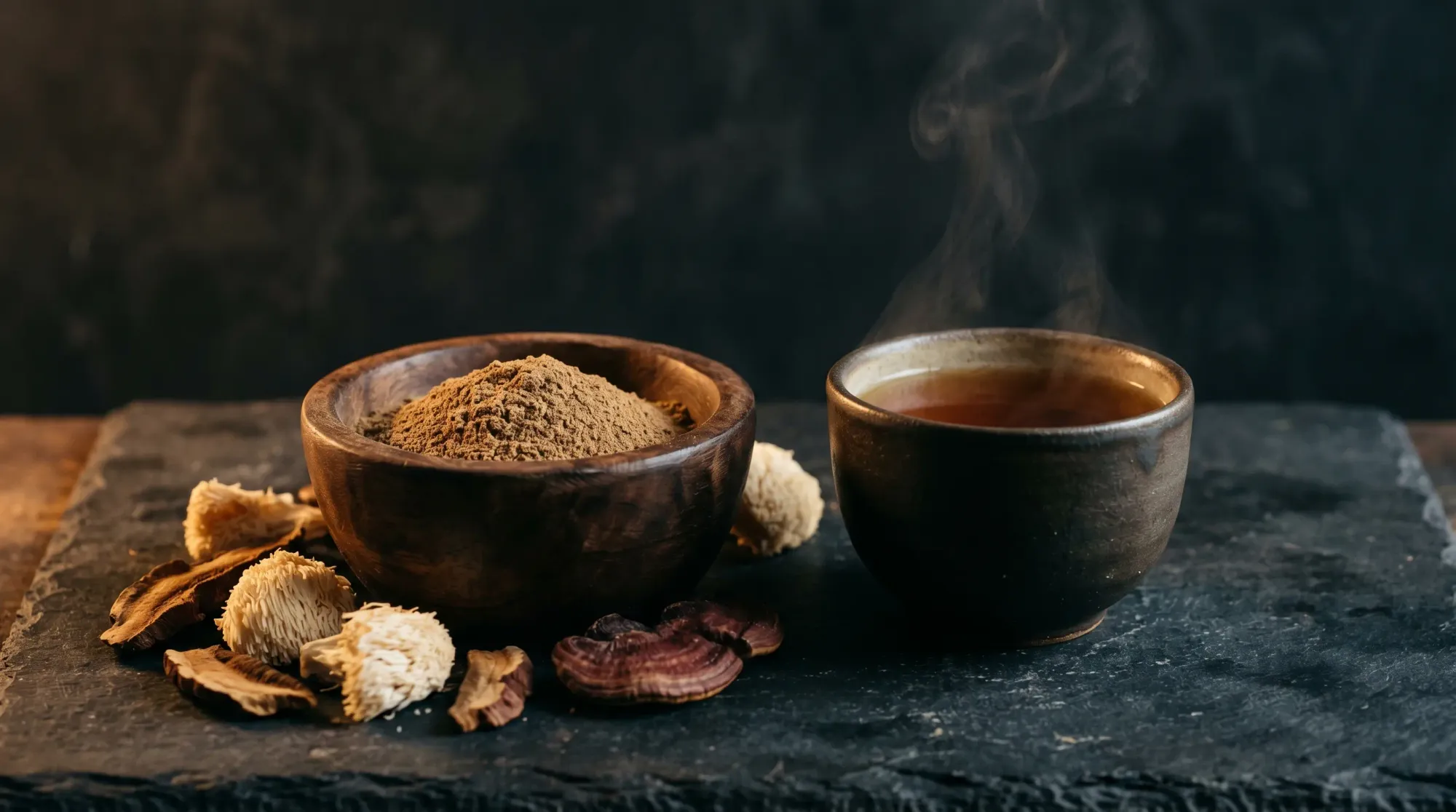
Mushroom powder is the powdered form obtained by drying and grinding mushrooms. The definition is that straightforward. But simplicity deceives. Which species, which part of the fungus, the drying temperature, and the grinding method — each of these directly affects the concentration of bioactive compounds in the final product.
Two fundamental categories exist:
Functional mushroom powders — made from species researched for specific bioactive compounds (Beta-Glucan, NGF, Cordycepin, Triterpenes, etc.). Lion's Mane, Reishi, Cordyceps, Sparassis, and Turkey Tail fall into this category. These are not typically used to flavor food; they integrate into a daily routine: added to tea, coffee, or smoothies.
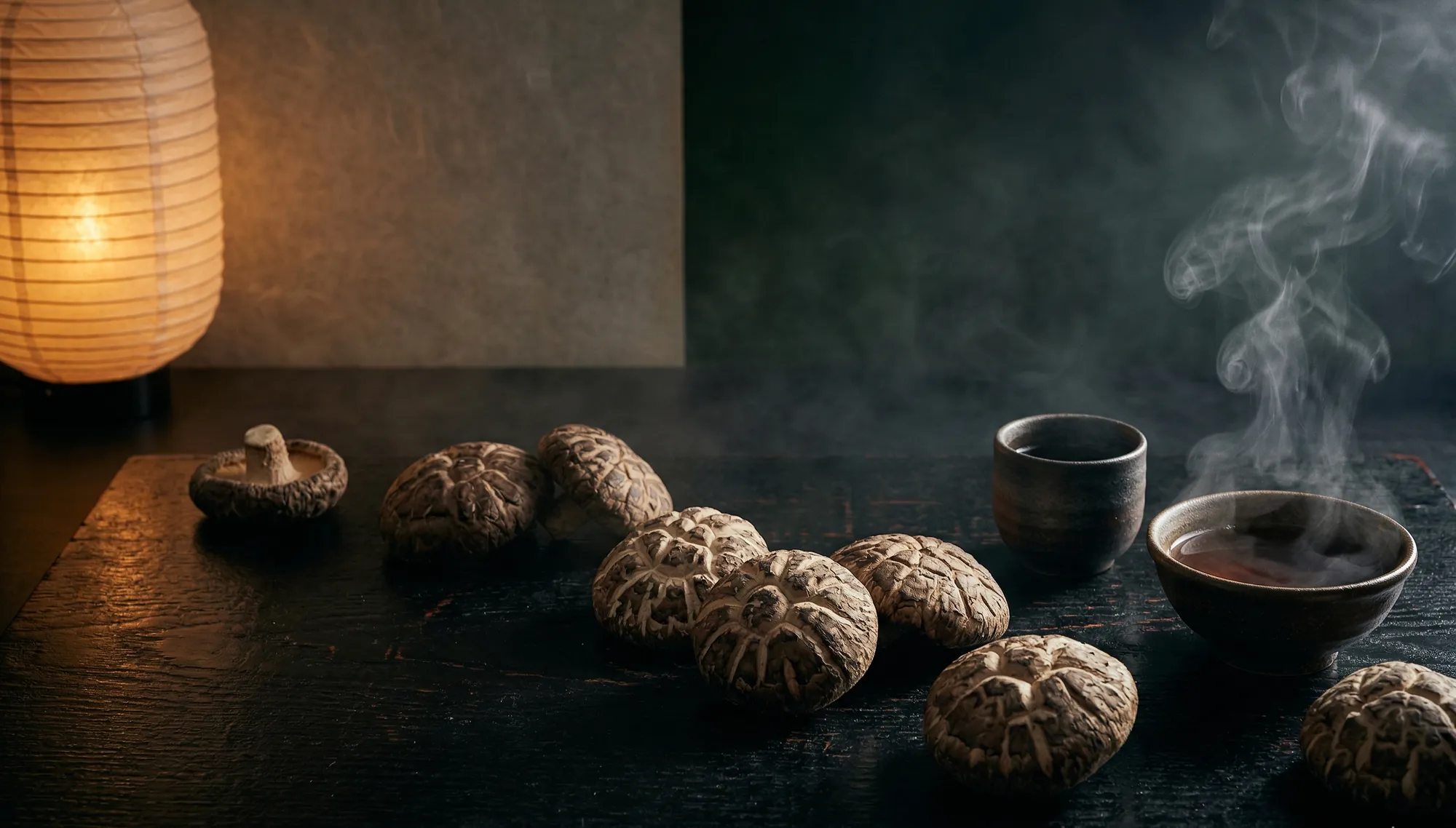
Gourmet mushroom powders — made from species favored for culinary use. Shiitake Donko, King Oyster, and Maitake belong to this group. They serve as sauce bases, soup foundations, or seasoning blends.
The same mushroom may be sold in different forms: whole fruiting body powder, extract, capsule, or mycelium-on-grain powder. Each form possesses a distinct bioavailability profile.
— WHAT IT DOES —
A more productive starting point asks "what does it contain" rather than "what does it do." A claim is easy; a compound is verifiable.
Beta-Glucan — a polysaccharide recognized by the Dectin-1 receptor on immune cells. The most extensively researched compound in mushroom powder. Sparassis crispa holds the highest concentration at 40–45%.
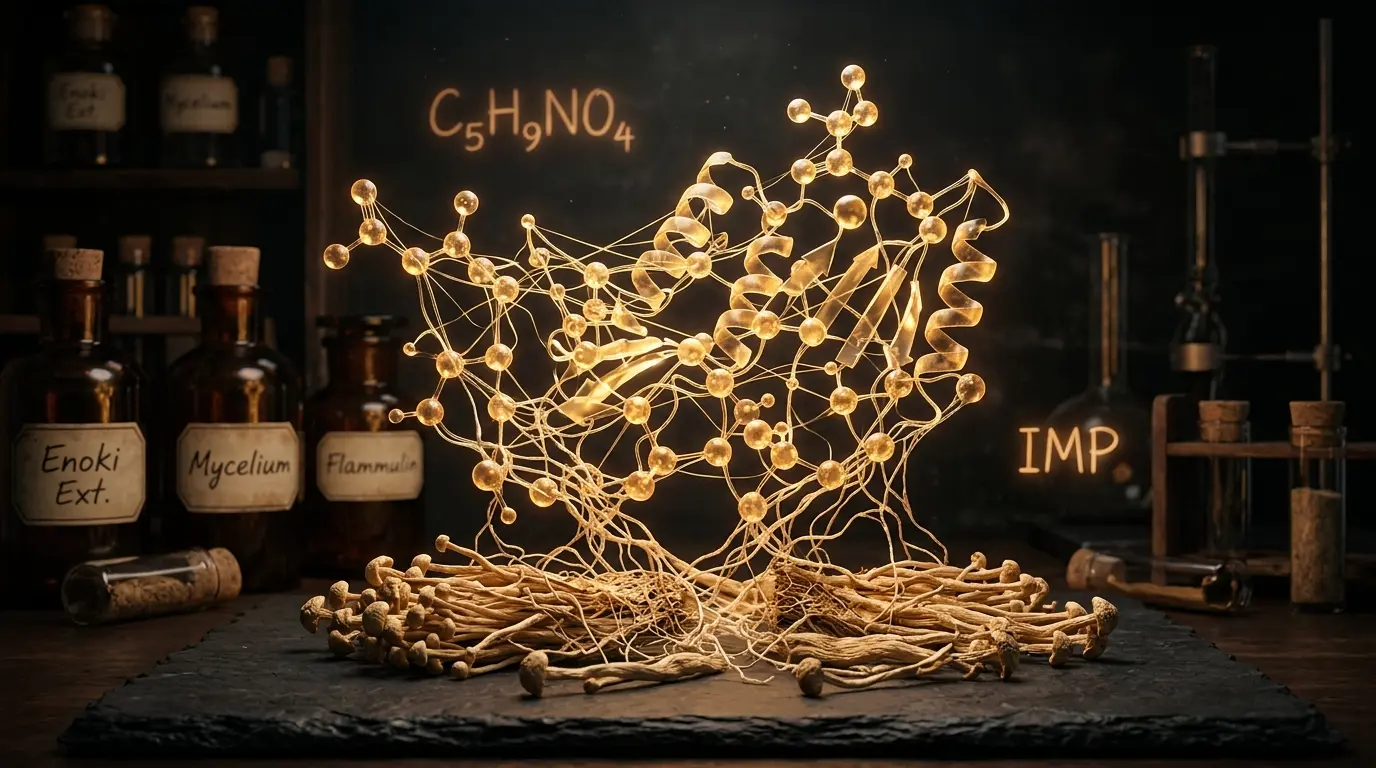
Hericenones and Erinacines — compounds unique to Lion's Mane. They have been demonstrated to stimulate Nerve Growth Factor (NGF) synthesis. These are among the rare food-derived molecules capable of crossing the blood-brain barrier.
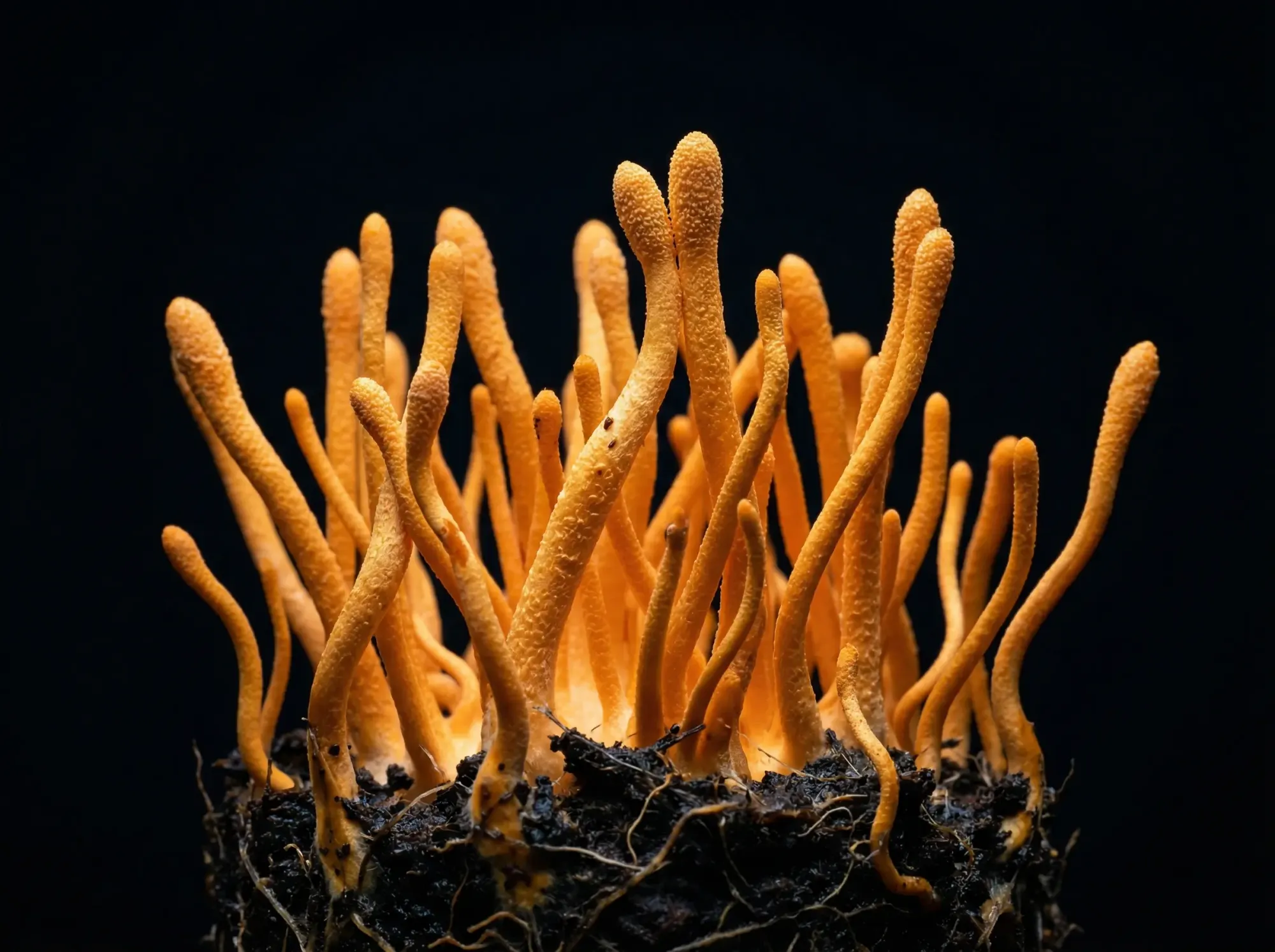
Cordycepin — the active compound of Cordyceps militaris. Its adenosine-analog structure places it at the center of research on ATP synthesis and energy metabolism.
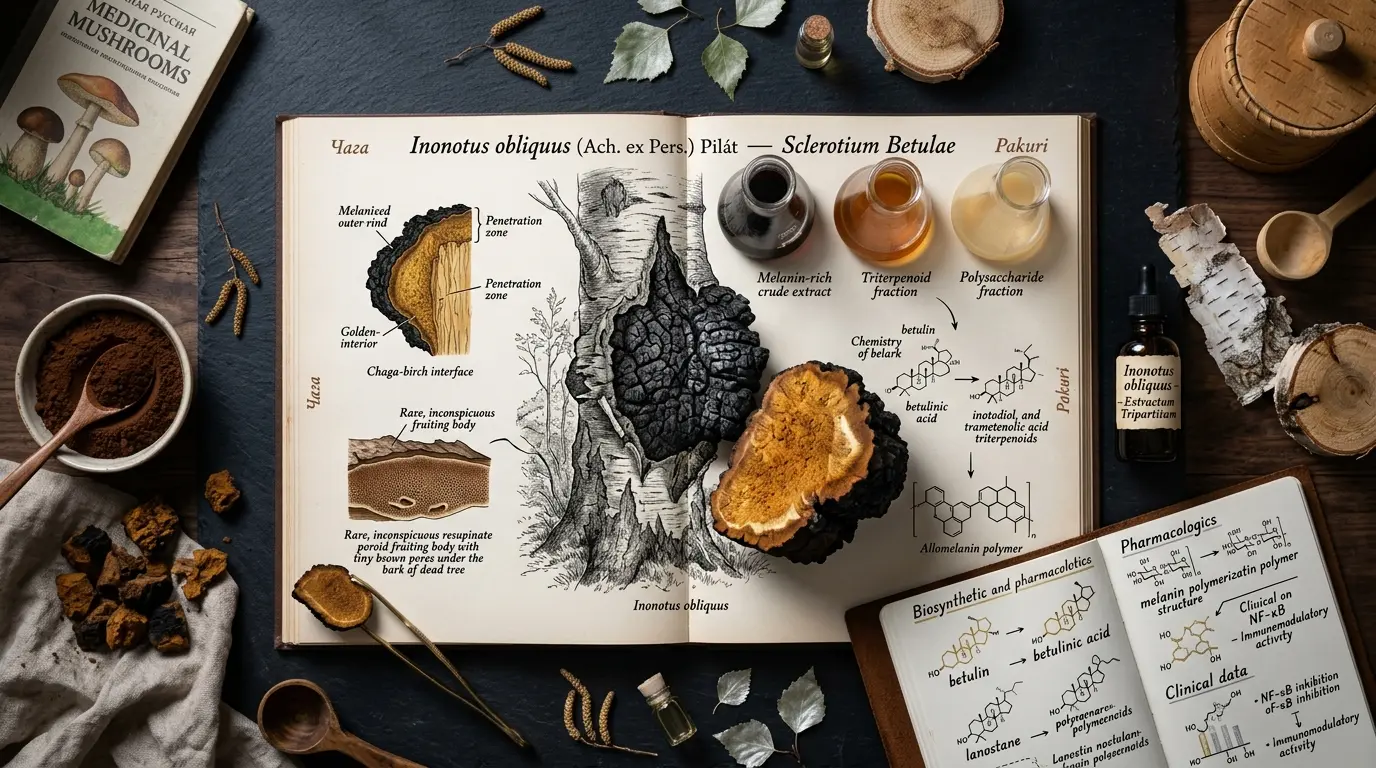
Triterpenes — over 150 ganoderic acid compounds responsible for Reishi's bitterness. These are fat-soluble molecules; concentration peaks in the Antler form.
Ergothioneine — an antioxidant amino acid the human body cannot synthesize, obtainable exclusively from mushrooms. King Oyster and Shiitake are rich sources.
Each of these compounds is under investigation in the academic literature. However — and this is critical — "under investigation" does not equate to "proven." Functional mushroom science is a developing field; drawing definitive medical conclusions remains premature.
— FRUITING BODY OR MYCELIUM —
The vast majority of mushroom powders on the market are not derived from fruiting bodies. Most result from mycelium grown on grain and milled together with the substrate. The consequence: the label reads "mushroom powder," yet a significant portion of the contents is grain starch.
This distinction manifests directly in Beta-Glucan concentration: 15–45% in fruiting bodies versus 1–5% in substrate-inclusive mycelium.
Detailed comparison: Mycelium vs Fruiting Body
— HOW TO USE —
Mushroom powder is not administered like a pharmaceutical. It constitutes a ritual — integrated into the daily routine, operating cumulatively.
General usage: 1–2 grams daily, combined with a warm liquid (coffee, tea, milk). Species-specific recommendations:
Morning: Lion's Mane (70–75°C in filter coffee) + Cordyceps (with espresso). Evening: Reishi (88°C, with coconut milk, one hour before sleep).
Detailed timing: Morning or Evening? · Coffee integration: How to Make Mushroom Coffee
— REALISTIC EXPECTATIONS —
You will not feel anything from the first cup. Nor, in most cases, by the second week. The mechanism of action for functional mushrooms is cumulative — NGF synthesis, immune modulation, adaptogenic effects all require time.
After 4–8 weeks of consistent use, the difference becomes apparent in retrospect. Deeper sleep, calmer mornings, reduced fatigue — these are the changes most frequently reported by our customers.
But do not expect a miracle. We have never made such a claim, and we never will.
— WHERE TO BEGIN —
1. What Are Functional Mushrooms? — Conceptual foundation
2. Which Mushroom Is Right for Me? — Personal selection guide
3. 5 Questions Before Purchasing — Quality assessment
4. Reading Map — All reading pathways
Related readings: What Are Functional Mushrooms? · What Is Beta-Glucan? · How to Choose Mushroom Powder
MYCOVITA's production philosophy and transparency principles: Why MYCOVITA?
You May Find Interesting
→ Can Mushrooms Produced in Turkey Be Trusted?
→ Functional Mushroom Production in Turkey
→ The Functional Mushroom Market in Turkey
Quality and Production — Related Resources
A structured content cluster covering every stage of the functional mushroom production chain:
- What Is Substrate? — Grain and wood-based substrate fundamentals.
- Certified Mycelium — Spawn source is critical.
- Strain and Intraspecies Variation — The impact of genetic lineage.
- Mycelium vs Fruiting Body — Compound profile differences.
- Low-Heat Drying — The science of the 42–45°C threshold.
- Extraction Methods — Hot water, ethanol, dual extraction.
- Beta-Glucan Measurement — Megazyme and other analytical methods.
- Reading a COA — How to interpret a Certificate of Analysis.
- Contamination and Mycotoxins — Safety protocols.
- The Black Sea Climate — Geographic advantage.
- Storage — Shelf life and quality preservation.
This content is for informational purposes only and does not constitute medical advice. Consult your physician before making any health-related decisions. Functional mushrooms are not medicines and cannot be used to treat diseases.
Version: 1.0 | Last updated: 20 Apr 2026 | Sources reviewed: 5+ | Method: Editorial Policy | References: Bibliography