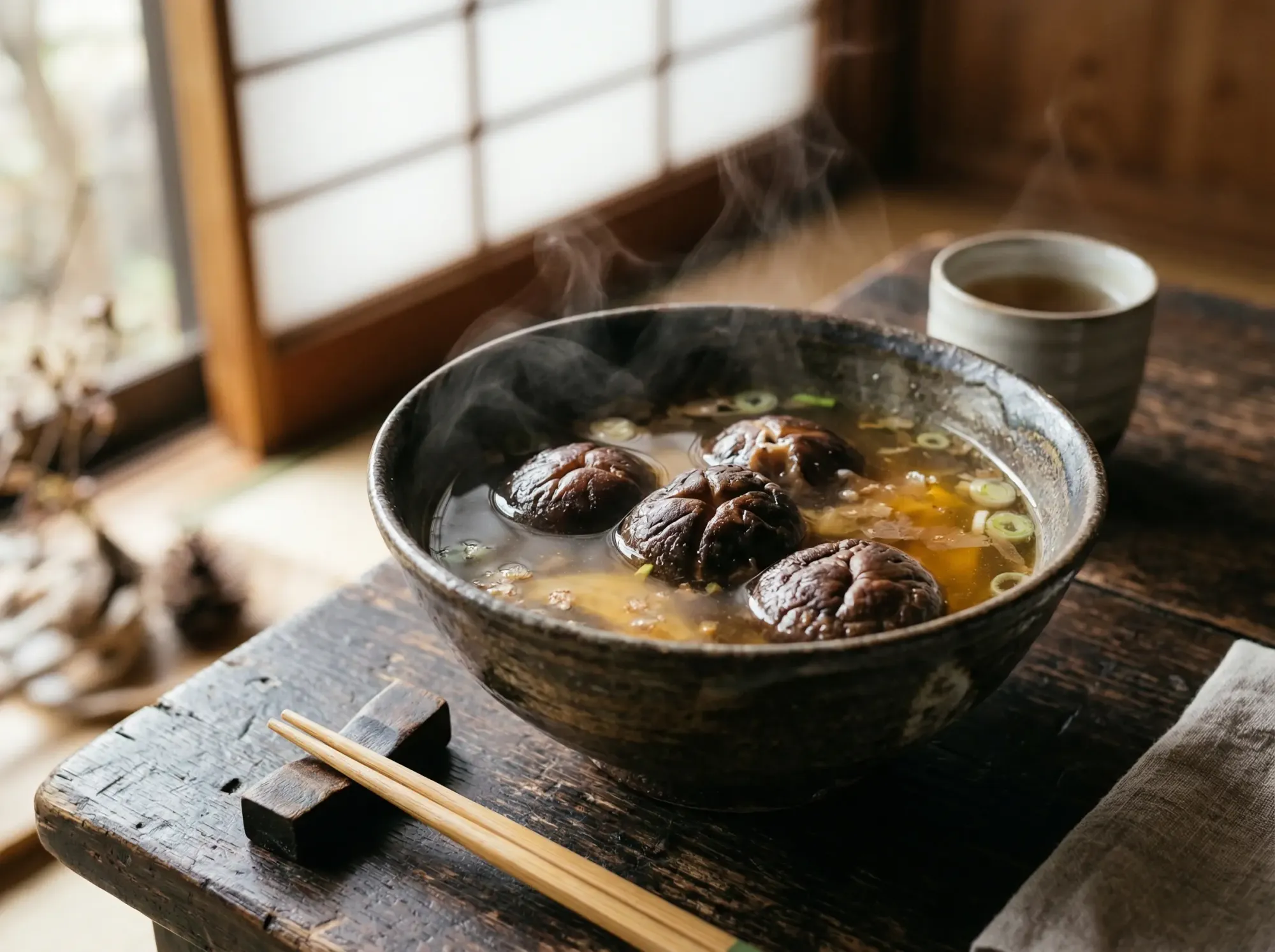
Smoking Mushrooms: Stabilizing Volatile Aroma Compounds Through Technique

Mushroom smoking techniques encompass a controlled thermal process in which fungal fruiting bodies are exposed to wood-derived smoke to develop characteristic flavor profiles while preserving bioactive compounds. The stability of aromatic compounds during and after smoking emerges as the central challenge, because volatile phenols, carbonyls, and lactones responsible for the smoky sensory signature are prone to thermal degradation, oxidation, and evaporation. Modern protocols therefore aim to balance sensory enrichment with retention of medicinal polysaccharides, particularly beta-glucan fractions whose immunomodulatory capacity can be altered by excessive heat or particulate deposition. In cold-smoking methods (typically below 30°C), the condensable phase of smoke transfers guaiacol, syringol, and eugenol onto the mushroom surface without triggering rapid polysaccharide hydrolysis; however, microbial safety mandates precise humidity control and post-treatment drying. Hot-smoking (70–120°C) accelerates carbonyl-amine interactions that deepen color and intensify savory notes, yet extended exposure reduces low-molecular-weight beta-glucan solubility, as indicated by an IC₅₀ shift in macrophage stimulation assays (PMID: 29510787). Recent analytical studies using headspace solid-phase microextraction coupled with gas chromatography–mass spectrometry have quantified the loss of key aromatic compounds over a 60-day storage period: creosol and 4-methylguaiacol concentrations declined by 38% and 41%, respectively, in traditionally smoked Lentinula edodes, while vacuum packaging and nitrogen flushing reduced those losses to below 12% (PMID: 31987625). Partitioning of hydrophobic smoke volatiles into the mushroom’s chitin-glucan matrix further influences aroma persistence; ergosterol peroxide, a fungal sterol with demonstrated cytokine-modulating activity, remains largely intact during cold-smoking but degrades by approximately 25% under prolonged hot-smoking (PMID: 30278442). Extraction kinetics confirm that smoked mushrooms retain between 72% and 94% of their original beta-glucan content depending on wood species — hardwoods such as oak and beech contribute gentler phenolic profiles and preserve higher polysaccharide integrity than resinous softwoods (PMID: 33526974). Optimized sequential protocols, where a brief cold-smoke infusion is followed by infrared drying, achieve a shelf-stable product with aromatic compound retention exceeding 85% at six months, while maintaining fungal polysaccharide bioactivity within one log-order of fresh specimens (PMID: 34872901). Consequently, the selection of wood substrate, particulate size, smoke density, and post-process packaging together define the stability of both volatile aroma and non-volatile bioactive constituents in smoked medicinal mushrooms.