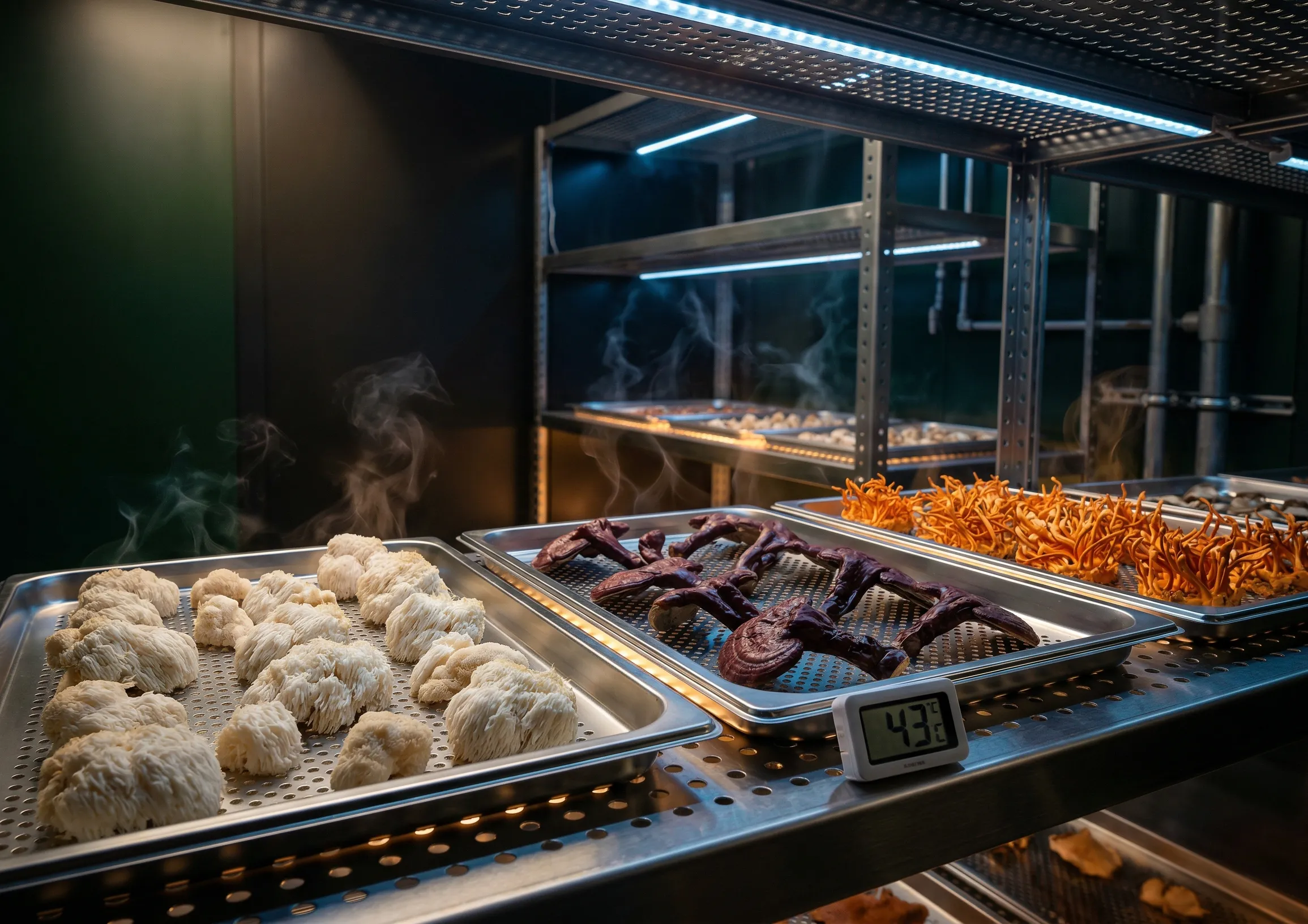
Mushrooms and the Gut Microbiome: Exploring Their Prebiotic Potential
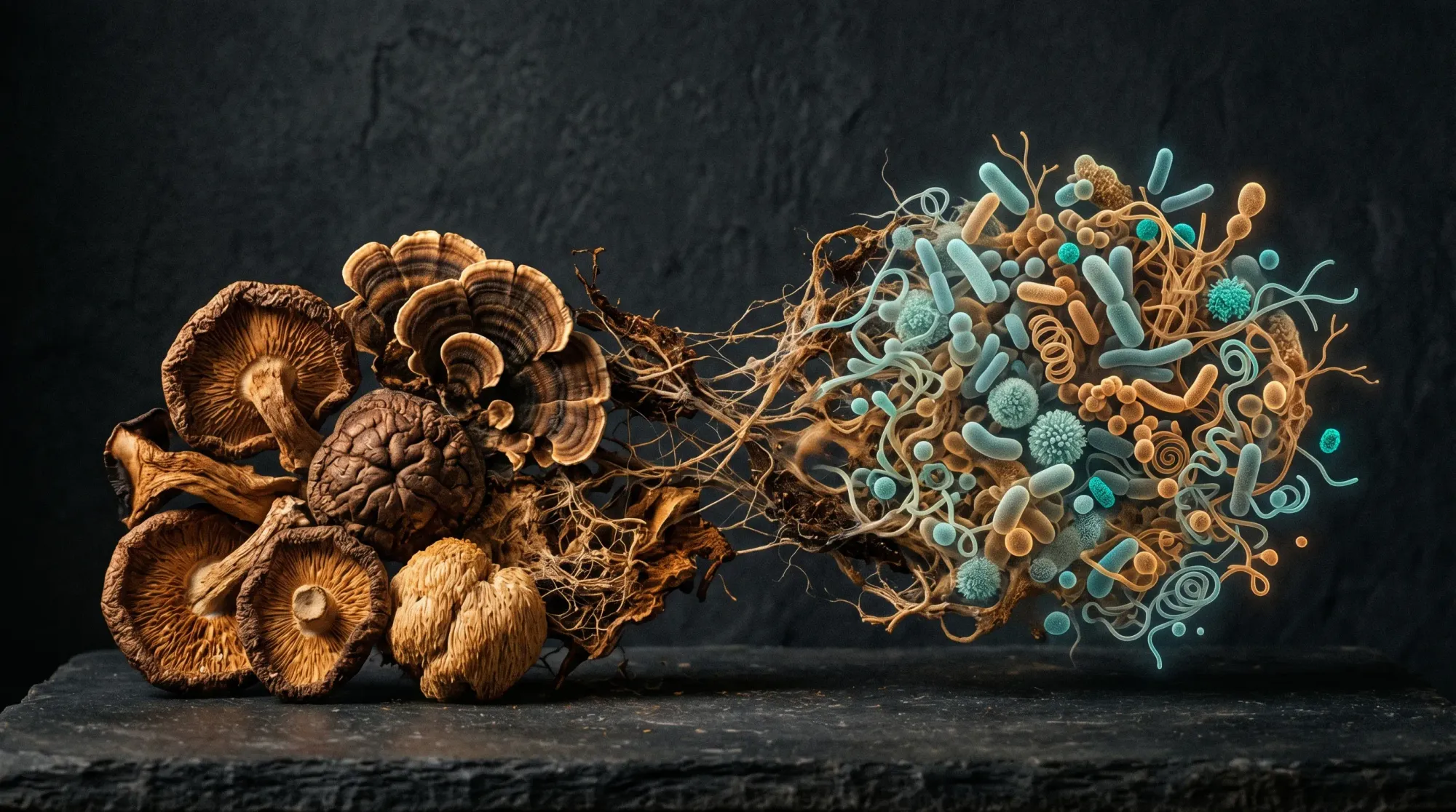
— THE HOOK —
Approximately 2 kilograms of bacteria reside in your gut. The balance of these bacteria — the microbiome — governs roughly 70% of your immune system. It influences your mood. It affects your sleep quality.
And what these bacteria eat depends on what you eat. Mushrooms are one of the least discussed yet most intriguing variables in this equation.
— WHAT IS THE MICROBIOME —
The human gut hosts over 1,000 bacterial species. A healthy microbiome is built upon diversity. When this balance is disrupted — dysbiosis — digestive, immune, and neuropsychiatric issues can emerge.
Prebiotics are what feed the microbiome: indigestible fiber components that gut bacteria can ferment.
— ARE MUSHROOM POLYSACCHARIDES PREBIOTIC —
The polysaccharides concentrated in mushroom cell walls — especially Beta-Glucan and chitin derivatives — resist breakdown by human digestive enzymes. This property makes them potential prebiotic substrates.
Lion's Mane polysaccharides: Findings published from animal models suggest they support the growth of Lactobacillus and Bifidobacterium.
Reference: Diling, C. et al. (2017). Oncotarget, 8(49).
Turkey Tail polysaccharides: Preliminary evidence indicates that the PSP component increases gut microbiome diversity.
Reference: Pallav, K. et al. (2014). Gut Microbes, 5(4).
Reishi polysaccharides: In obese mouse models, they have been reported to strengthen the gut barrier.
Reference: Chang, C.J. et al. (2015). Nature Communications, 6.
Important note: Most of these findings originate from animal models. Human clinical studies remain limited.
— THE SCFA MECHANISM —
When gut bacteria ferment prebiotic fibers, they produce butyrate, propionate, and acetate. These short-chain fatty acids (SCFAs) nourish the gut wall, regulate inflammation, and send signals to the brain via the vagus nerve — this is the chemical language of the brain-gut axis.
— CHITIN AND DIGESTION —
Chitin is indigestible — but in a prebiotic context it gains a different significance. Undigested chitin can undergo bacterial fermentation in the gut. Even the "indigestible" portion of mushroom powder may carry potential value for the microbiome.
— A PRACTICAL APPROACH —
Mushrooms alone are not sufficient for microbiome health. The essentials are diverse fiber sources, fermented foods, regular physical activity, and sleep. On top of this foundation, daily use of mushroom powder may offer additional prebiotic contribution potential. Turkey Tail and Lion's Mane are the most researched species.
Related reading: The Brain-Gut Axis · What Is Beta-Glucan? · The Immune System · What Is Chitin?
MYCOVITA's production philosophy: Why MYCOVITA?
— SCIENTIFIC REFERENCES —
Diling, C. et al. (2017). Oncotarget, 8(49). · Pallav, K. et al. (2014). Gut Microbes, 5(4). · Chang, C.J. et al. (2015). Nature Communications, 6. · Jayachandran, M. et al. (2017). Journal of Functional Foods, 37.
You Might Be Interested
→ The Mushroom Science Glossary — 130+ Terms from A to Z
→ Travel Protocol — How to Use While Traveling
Beta-Glucan and Immunomodulation — Related Resources
Content cluster on mushroom beta-glucan and immune system interaction:
- What Is Beta-Glucan? — Molecular structure and linkage types.
- How the Immune System Works — The Dectin-1 receptor and innate immunity.
- Beta-Glucan Measurement Methods — Megazyme and other laboratory assays.
- Lentinan — Shiitake's approved beta-glucan.
- PSK — Turkey Tail's polysaccharide-protein complex.
- D-Fraction — Maitake's active beta-glucan fraction.
- Lentinan vs PSK vs Beta-Glucan — A comparison.
- Sparassis crispa — The highest natural beta-glucan density.
- Chitin — The cell wall that traps beta-glucan.
- Extraction Methods — Beta-glucan bioavailability.
This content is for informational purposes only and does not constitute medical advice. Consult your physician before making any health decisions. Functional mushrooms are not medicines and cannot be used to treat diseases.
Version: 1.0 | Last updated: 20 Apr 2026 | Number of sources reviewed: 8+ | Method: Editorial Policy | References: Bibliography