Mushrooms and Liver Protection: Exploring the Mechanisms Behind Hepatoprotective Effects
The Liver: The Body's Chemical Filter
— HOOK —
The liver is one of the body's largest metabolic organs. It shoulders responsibility for glucose and lipid homeostasis, xenobiotic metabolism, plasma protein production, and bile synthesis. The modern dietary landscape and widespread pharmaceutical use have ushered in an era of heightened hepatic burden. This explains the density of liver-themed investigations within the functional mushroom literature.
Biphasic Detoxification
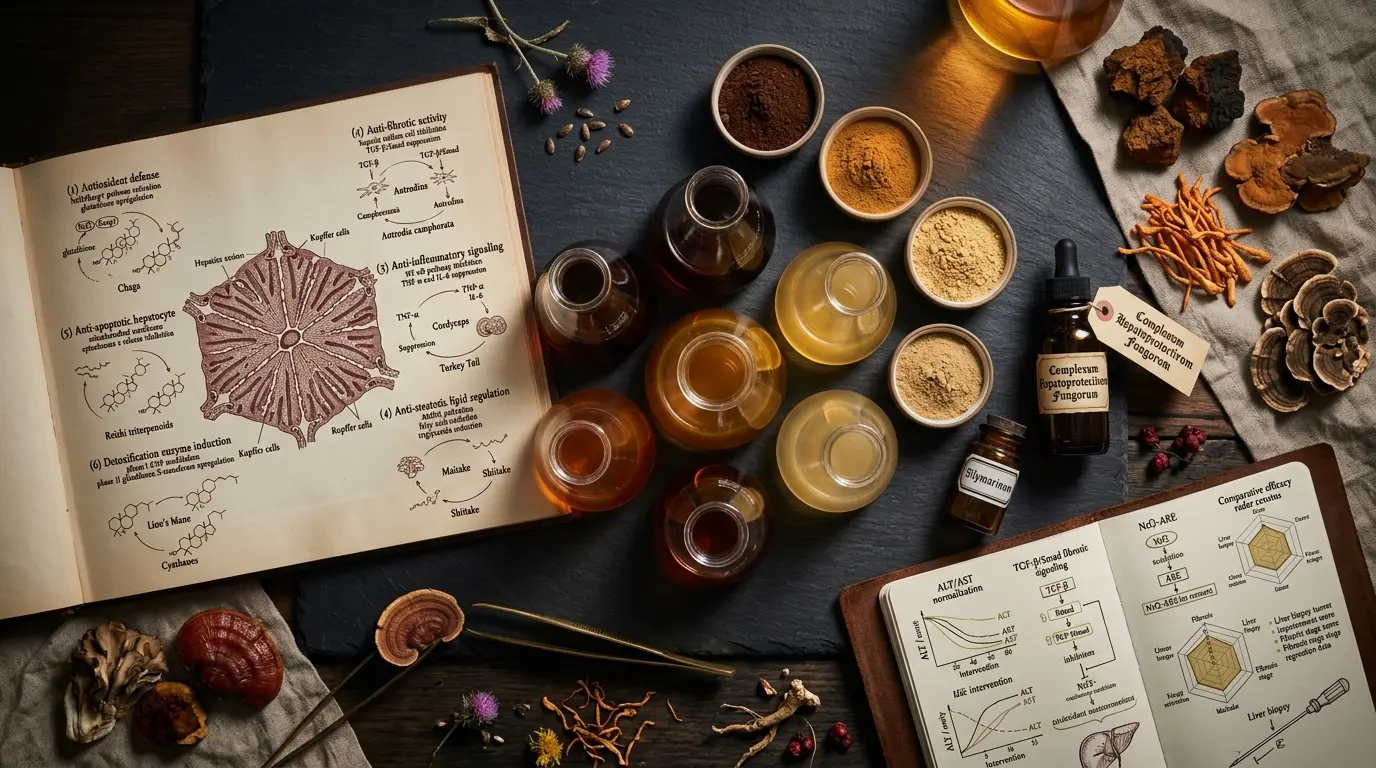
Hepatic detoxification proceeds through two phases. Phase I — oxidation, reduction, and hydrolysis reactions catalyzed by cytochrome P450 enzymes — transforms xenobiotics into reactive intermediate metabolites. Phase II — conjugation reactions including glucuronidation, sulfation, and glutathione conjugation — converts these reactive intermediates into water-soluble conjugates destined for excretion.
An imbalance between the two phases — particularly when Phase I outpaces Phase II — can precipitate the accumulation of reactive intermediates; this constitutes one of the proposed mechanisms of hepatocyte injury (Iyanagi, 2007; PMID: 17460852).
Oxidative Stress and Glutathione
The liver ranks among the tissues with the highest glutathione concentrations. Glutathione participates directly in Phase II conjugation and sits at the center of the hepatic antioxidant defense network. Glutathione depletion represents one of the classical mechanisms underlying drug-induced liver injury (DILI).
Activation of the Nrf2 pathway bolsters hepatocyte defense by upregulating the expression of glutamate-cysteine ligase (GCL), the rate-limiting enzyme in glutathione synthesis (Sumi & Ignarro, 2003; PMID: 12835412).
Mushroom Constituents and the Hepatic Literature
Reishi triterpene fractions have produced consistent results in hepatocyte cultures and animal models, demonstrating a capacity to lower transaminase levels. The mechanism is interpreted partly through Nrf2 activation and partly through NF-κB suppression (Sun et al., 2012; PMID: 22944601).
Antrodia cinnamomea extracts have exhibited a pronounced protective trend in models of alcohol- and chemically-induced liver injury (Hsiao et al., 2003; PMID: 12880574).
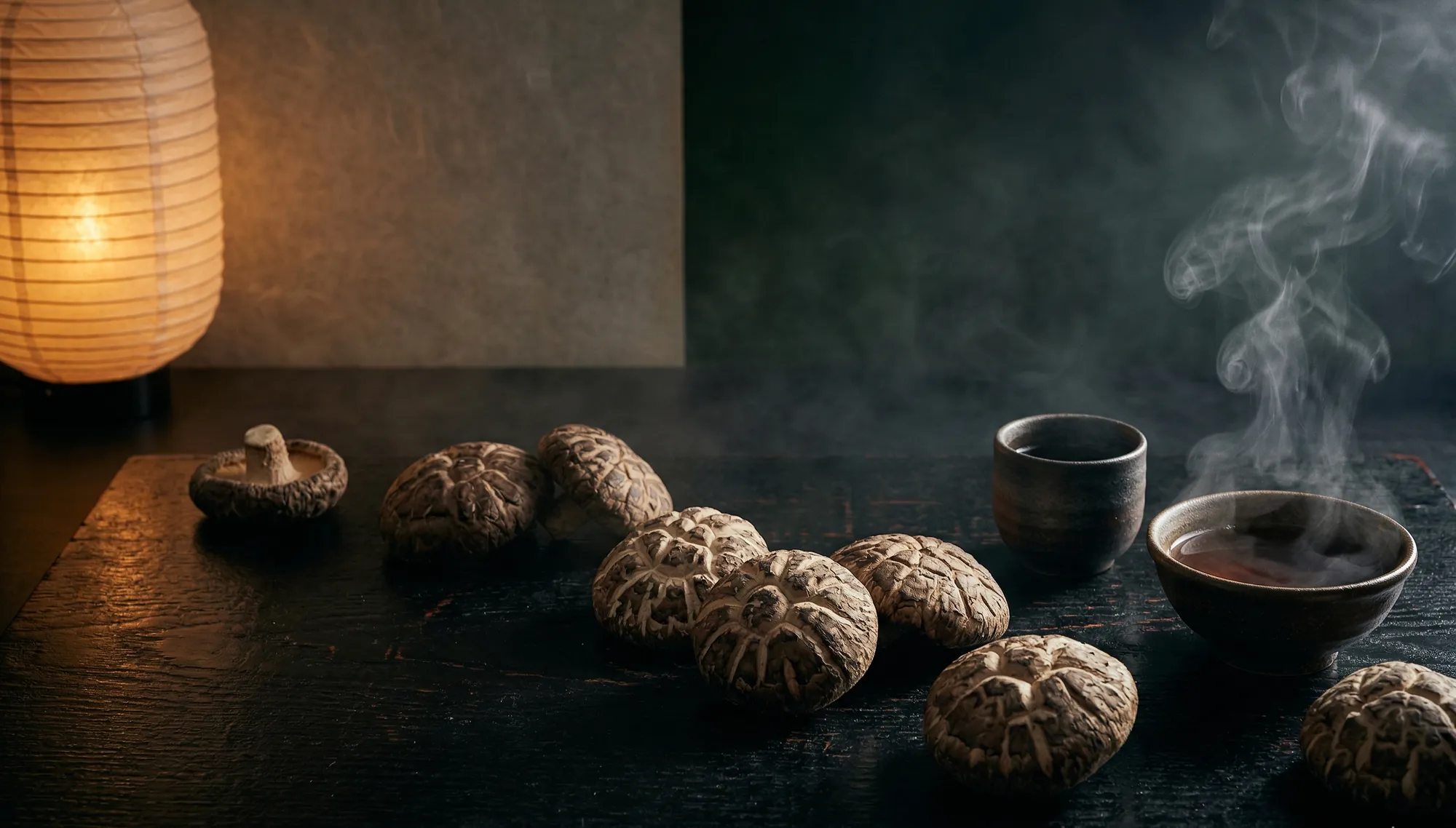
Shiitake's eritadenine content positions this mushroom within the hepatic literature along the lipid metabolism axis, as a constituent capable of influencing hepatic triglyceride accumulation.
Drug Interactions: The Cytochrome P450 Consideration
Certain mushroom constituents can modulate the activity of cytochrome P450 enzymes — notably CYP3A4 — in vitro. This represents a potential interaction domain relevant to the metabolism of numerous prescription pharmaceuticals. Individuals on regular medication must evaluate mushroom supplementation with a physician before initiation (Wang et al., 2007; PMID: 17404347).
Limitations
Well-designed, large-scale clinical trials examining the effects of mushroom constituents on liver diseases remain limited. The available findings constitute a research domain that supports hepatic protective trends; they do not furnish a therapeutic rationale. Supplement decisions for individuals diagnosed with liver disease must be made in consultation with a physician.
Related Reading
- Lipogenesis Regulation — Hepatic lipid metabolism.
- Nrf2 Antioxidant Pathway — Glutathione defense.
- Antrodin — Antrodia profile.
This content is for informational purposes only and does not constitute medical advice. Consult your physician before making any health decisions. Functional mushrooms are not pharmaceuticals and cannot be used to treat diseases.
Version: 1.0 | Last updated: April 28, 2026 | Sources reviewed: 12+ | Methodology: Editorial Policy | References: Bibliography