Mushroom-Derived Compounds and Renal Health: Safety Considerations and Renal Clearance Dynamics

The Kidney: The Body's Filter and Mushroom Clearance
— HOOK —
The kidney filters approximately 180 liters of blood per day, producing a few liters of urine. The glomerular filtration rate (GFR) serves as the principal metric of kidney function. The relationship between mushroom constituents and the kidney is bidirectional: certain compounds demonstrate nephroprotective tendencies, while others — particularly those from wild toxic species — induce severe nephrotoxicity.
A Brief Overview of Kidney Physiology
Glomerular filtration, tubular reabsorption, and tubular secretion constitute the three fundamental functions of the kidney. GFR depends upon age, hydration status, and the structural integrity of renal tissue. In a healthy adult, GFR ranges approximately 90–120 mL/min/1.73 m².
Creatinine clearance and cystatin C are the most widely used indirect clinical indicators of GFR. A gradual decline in GFR is the classic hallmark of chronic kidney disease (CKD) (Levey et al., 2009; PMID: 19414839).
Toxic Species: Orellanin and Amatoxin
Wild Cortinarius species contain orellanin, a potent nephrotoxin. Symptoms may manifest weeks after ingestion; this delayed toxicity profile complicates poisoning diagnosis.
Amanita phalloides and its relatives contain amatoxin; although the liver is the primary target, the kidney is also affected. For this reason, the MYCOVITA value chain excludes wild mushrooms entirely. Consuming unidentified mushrooms at the consumer level carries nephrotoxic risk (Diaz, 2018; PMID: 29655710).
Cordyceps and Its Traditional Renal Tonic Position
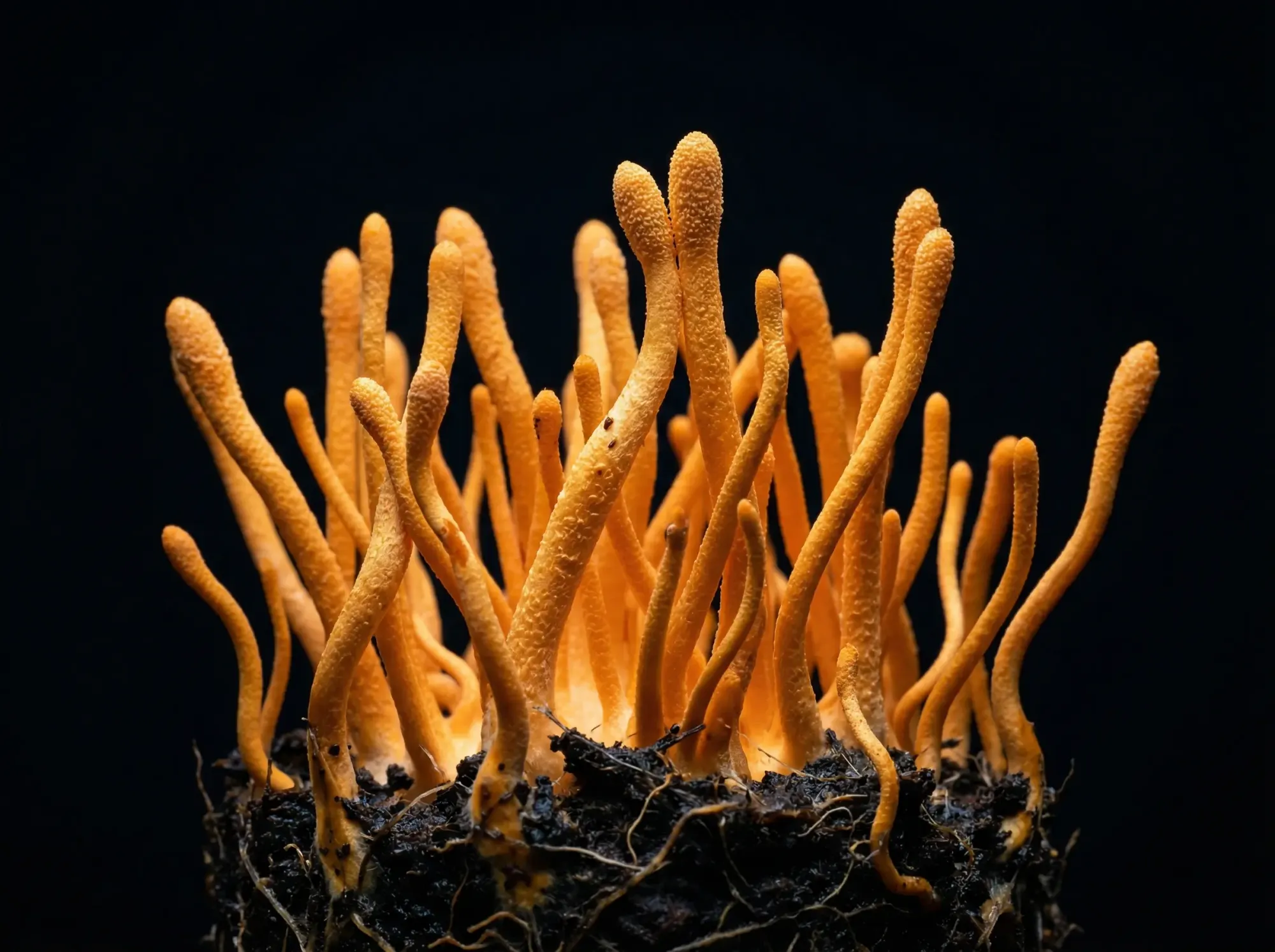
Cordyceps sinensis and Cordyceps militaris occupy a place in traditional Chinese medicine as renal tonics. Modern research has reported favorable tendencies for Cordyceps extracts in animal models of diabetic nephropathy and renal ischemia-reperfusion injury (Zhong et al., 2017; PMID: 28526405).
The mechanism is interpreted partly through oxidative stress reduction and partly through suppression of TGF-β1-mediated fibrotic signaling. Human clinical data remain limited; the available results present a mechanistic research domain rather than a therapeutic rationale.
Heavy Metals and Kidney Caution
Mushrooms exhibit a tendency to accumulate heavy metals — cadmium, mercury, and lead — from their substrate. High-dose, long-term heavy metal exposure is a recognized cause of renal tubular damage.
For this reason, heavy metal Certificates of Analysis (COA) are critical when consuming mushroom supplements. Wild-harvested products, particularly those originating near industrial zones, carry elevated nephrotoxic risk. Controlled-cultivation products offer the advantage of a standardized substrate (Falandysz, 2008; PMID: 18671161).
Drug Interaction Context
When initiating mushroom polysaccharide supplementation in CKD patients, vigilance is required regarding plasma californium — especially potassium — and electrolyte balance. Certain mushrooms carry appreciable potassium content; in patients with advanced CKD who are on potassium restriction, physician consultation is essential.
Limitations
Well-designed human intervention studies examining mushroom constituents' effects on kidney function are scarce. The current body of evidence supports mechanistic tendencies in a nephroprotective direction while not warranting any clinical application recommendation. Patients with CKD or those who have undergone transplantation must make supplementation decisions exclusively under physician guidance.
Related Reading
- Vitality: Cordyceps — A species profile.
- Mushroom Toxins — Nephrotoxic species.
- Heavy Metals and Mushrooms — Quality alert context.
This content is for informational purposes only and does not constitute medical advice. Consult your physician before making any health decision. Functional mushrooms are not drugs and cannot be used to treat diseases.
Version: 1.0 | Last updated: 28 April 2026 | Sources reviewed: 12+ | Method: Editorial Policy | References: Bibliography