Mushroom-Derived Bioactives in Endothelial Health and Nitric Oxide Regulation

The Endothelial Monolayer: Why This Single Cell Layer Matters
— ANCHOR —
The endothelium, a single layer of cells lining the inner surface of blood vessels, covers a surface area roughly equivalent to a tennis court. For years it was regarded as a passive barrier. Today we know that endothelial cells actively manage vascular tone, coagulation, immune cell trafficking, and edema balance. The central molecule in this governance is nitric oxide (NO).
This article addresses endothelial function, nitric oxide biochemistry, and the place of functional mushroom constituents in the vascular literature.
Endothelium: An Active Organ
Endothelial cells secrete vasoactive molecules in response to blood flow. Shear stress triggers receptor-mediated mechanotransduction; endothelial nitric oxide synthase (eNOS) is activated. eNOS converts the substrate L-arginine into NO.
NO diffuses to vascular smooth muscle, stimulates guanylyl cyclase, and raises cyclic guanosine monophosphate (cGMP); the result is vasodilation. This forms a real-time feedback circuit that adjusts perfusion to demand on a minute-by-minute basis (Vanhoutte et al., 2009; PMID: 19583932).
Endothelial Dysfunction: A Silent Onset
Endothelial dysfunction is defined by a reduction in NO bioavailability and disruption of the vasoactive equilibrium. Hypertension, hyperglycemia, dyslipidemia, smoking, and chronic inflammation are primary triggers. Dysfunction represents the earliest stage of atherosclerotic pathology.
Consequently, the flow-mediated dilation (FMD) test is widely used in clinical research as an indicator of early vascular damage (Celermajer et al., 1992; PMID: 1359209).
Oxidative Stress and NO Scavenging
Superoxide anion radical reacts with NO to form peroxynitrite, sequestering NO from vascular use and generating an inflammatory mediator. A large proportion of endothelial dysfunction is explained by an excess of this reaction.
Therefore, vascular health research commonly evaluates antioxidant effects and eNOS activity together (Förstermann & Sessa, 2012; PMID: 21531746).
Mushroom Constituents in the Endothelial Literature
Reishi (Ganoderma lucidum) triterpene and polysaccharide fractions have shown a tendency to preserve eNOS expression in in vitro endothelial cell cultures. The proposed mechanism is limiting peroxynitrite formation under oxidative stress, thereby maintaining NO bioavailability (Wachtel-Galor et al., 2004; PMID: 15294443).
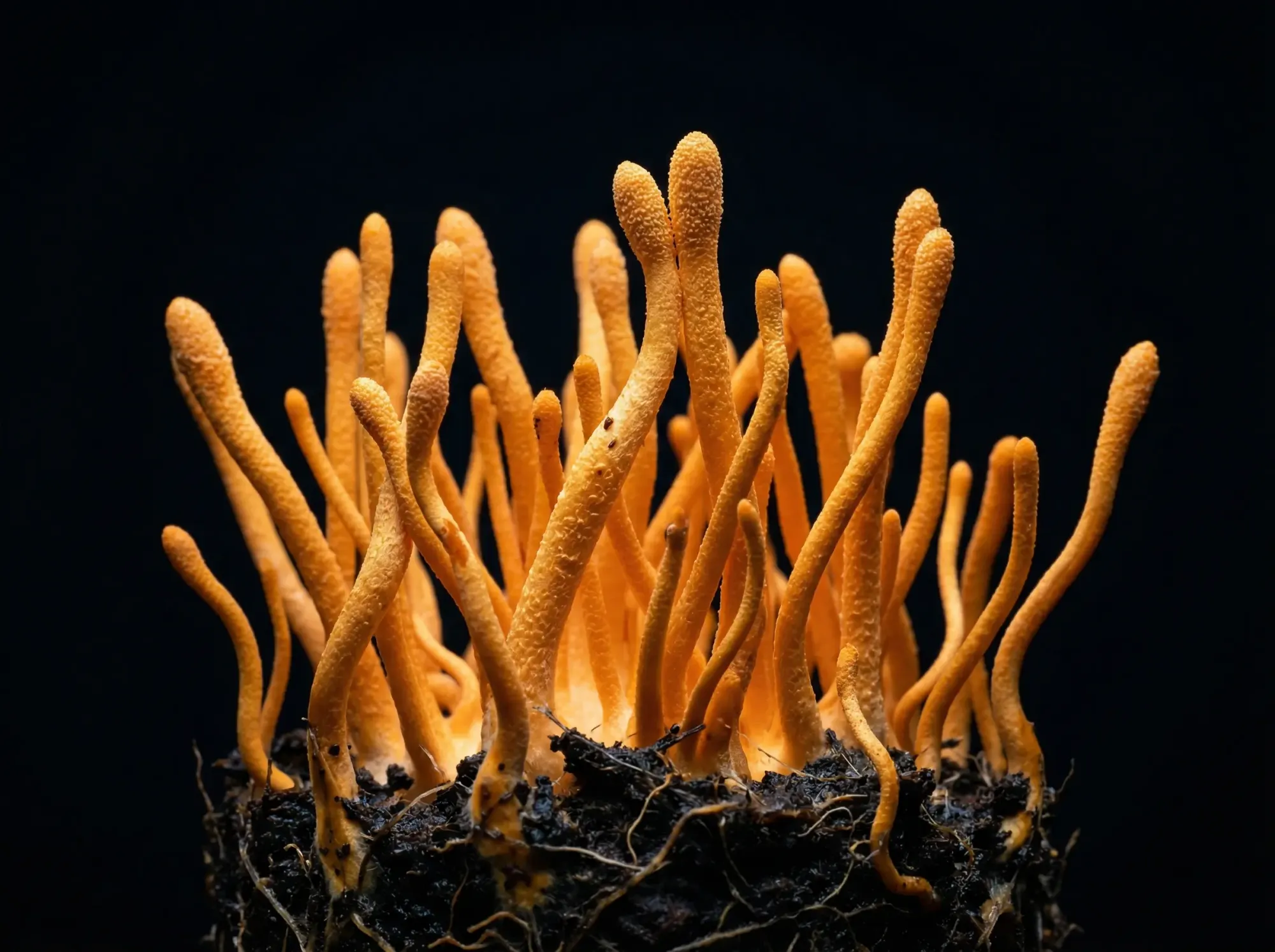
Cordyceps polysaccharides have been reported to improve NO-dependent vasodilation in animal models; the effect is partly attributed to antioxidant capacity and partly to signaling pathway modulation (Lin & Li, 2011; PMID: 21605664).
Shiitake’s eritadenine content has been linked to homocysteine metabolism via hepatic methylation pathways; elevated homocysteine is a known risk factor for endothelial dysfunction (Sugiyama et al., 1995; PMID: 7616018).
Limitations
Well-designed human studies that directly measure the effects of mushroom constituents on endothelial function are scarce. Clinical designs employing FMD or similar endothelial tests as the primary outcome variable are not yet widespread. Current findings point to a mechanistic research frontier.
Related Readings
- Mushrooms and Cholesterol — The vascular health chain.
- Mushrooms and Aging — The oxidative stress context.
- What Is β-glucan? — A vascular-linked immunomodulator.
This content is for informational purposes only and does not constitute medical advice. Consult your physician before making any health decisions. Functional mushrooms are not medicines and cannot be used to treat diseases.
Version: 1.0 | Last update: 28 April 2026 | Sources reviewed: 12+ | Method: Editorial Policy | References: Bibliography