Meshimakobu (Phellinus linteus): The Definitive Species Compendium
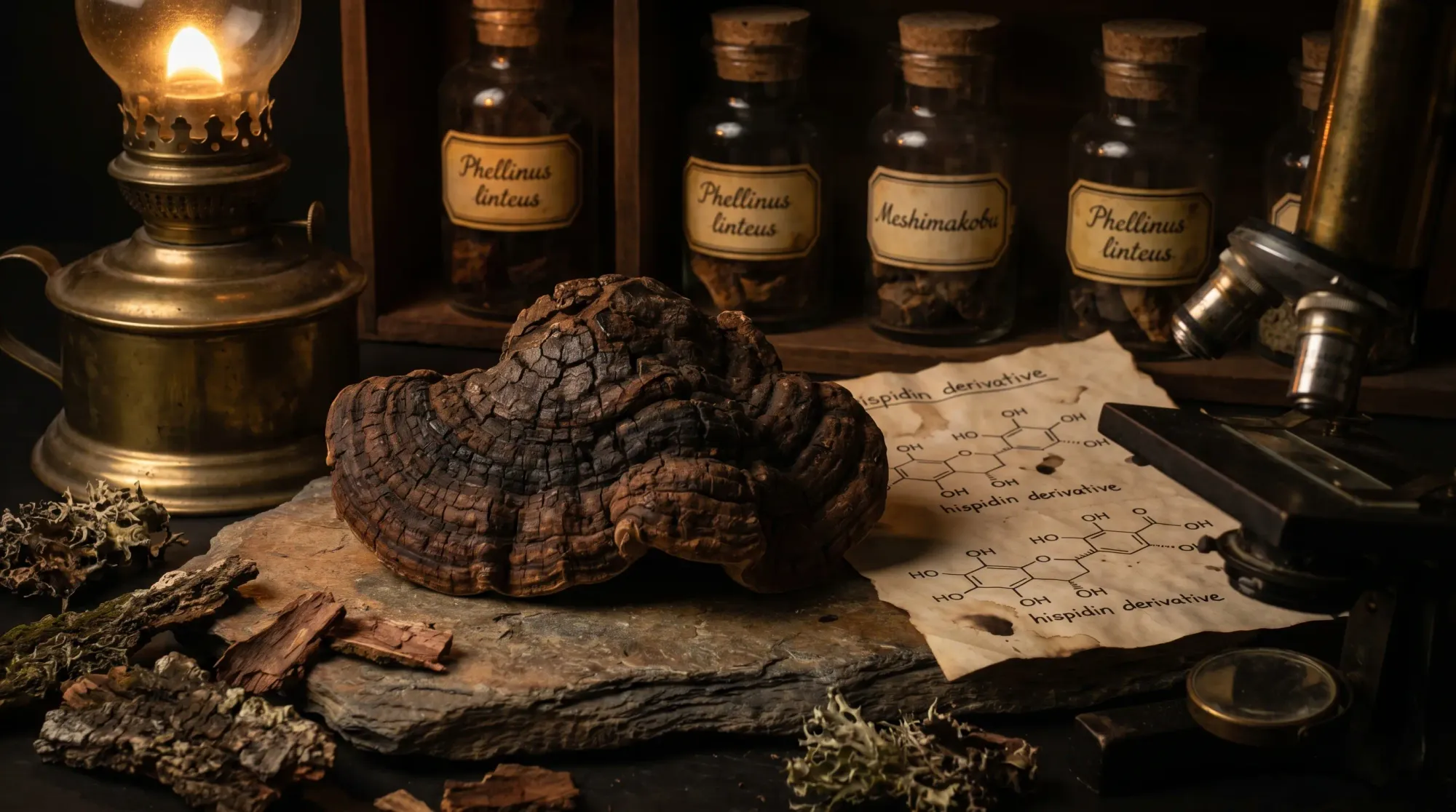
Phellinus linteus, known as meshimakobu in South Korea, is a wood-inhabiting mushroom that has drawn sustained attention from Japanese and Korean research groups since the 1990s. It forms a hard, cinnamon-colored, fan-shaped fruiting body on host trees and holds a well-established place in traditional East Asian medicine.
Scientific Classification
Phellinus linteus is a polyporoid Basidiomycota species belonging to the family Hymenochaetaceae. Its polypore habit sometimes invites confusion with Reishi, although the two differ in colour and growth form. The fungus grows on mulberry, fig, and other hardwoods.
Due to ongoing taxonomic revisions, the species is also cited under the names Inonotus linteus or Sanghuangporus linteus; current literature uses these designations variably.
Bioactive Profile
The bioactive profile of P. linteus has been investigated across several molecular classes:
- Hispidin — the most prominent polyphenol; demonstrates powerful antioxidant activity (high values in DPPH and ABTS assays)
- Inoscavin and caffeic acid derivatives — secondary stilbenoid polyphenols
- Beta-glucan fractions — hetero‑ and homopolysaccharides examined in immune activation studies
- Proteoglycan complexes — protein–polysaccharide conjugates; structures that serve as reference points in PSK‑like activity research
Oncology Research
P. linteus has been included in oncology support research programmes in Japan and Korea. In vitro studies report apoptosis induction and angiogenesis inhibition across various cancer cell lines. Animal models have also shown tumour growth‑slowing effects.
However, clinical‑level studies for Phellinus linteus remain exceedingly limited; the current evidence base is considerably weaker compared with that for PSK or lentinan.
Comparison with Chaga
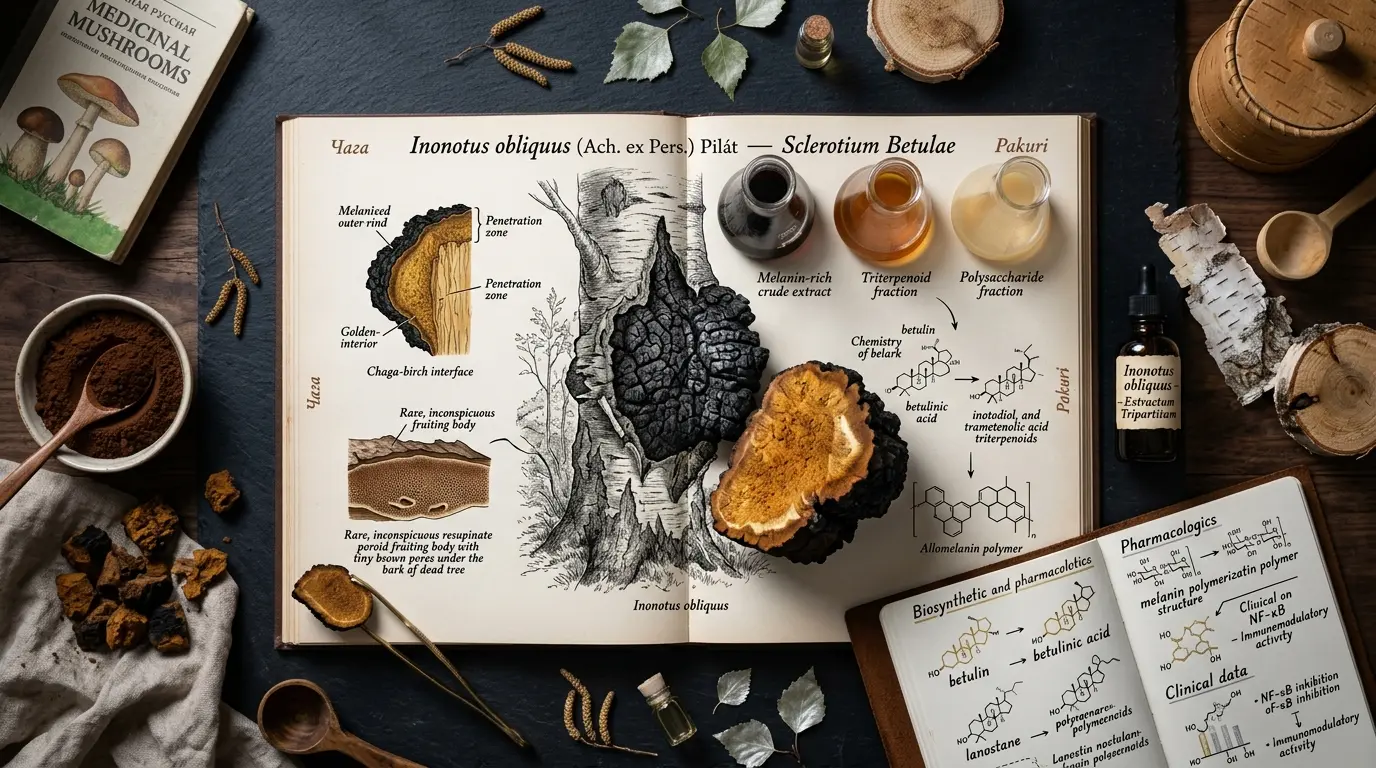
Both Phellinus linteus and Chaga (Inonotus obliquus) are wood‑dwelling mushrooms of the Hymenochaetaceae family. Both contain hispidin. However, Chaga distinguishes itself through melanin accumulation, its specific association with birch trees, and its Siberian medicinal tradition, whereas P. linteus is embedded in endemic East Asian practices.
Related Reading
- Hispidin: The Polyphenol Profile of Chaga and Phellinus
- Chaga: Species Encyclopedia
- Mushrooms and Oncology Research
This page was prepared within the MYCOVITA Mycology Library. It is intended for scientific reference only and does not constitute medical advice. Source: mycovita.bio · Content Policy v1.0