Hericium coralloides: A Comprehensive Species Encyclopedia
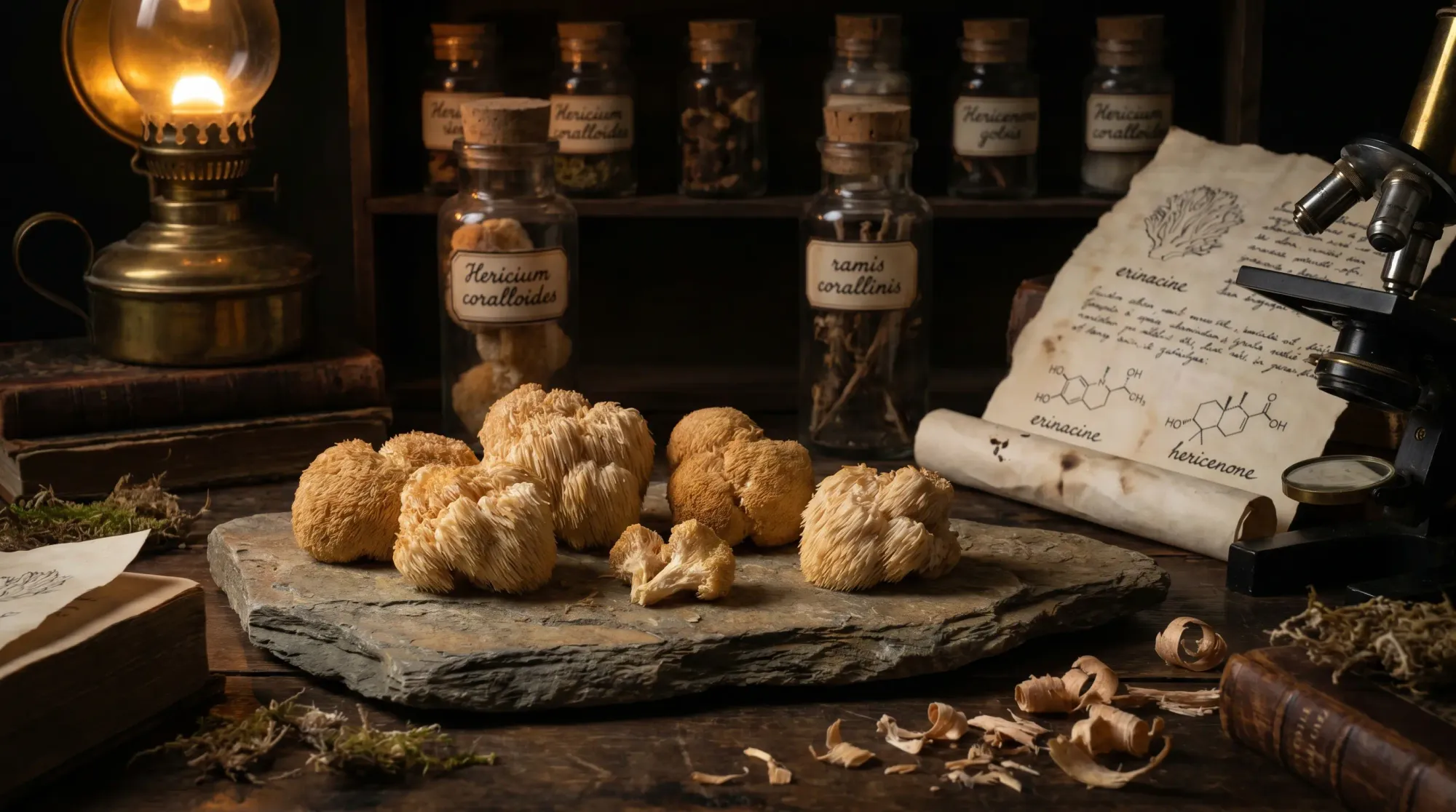
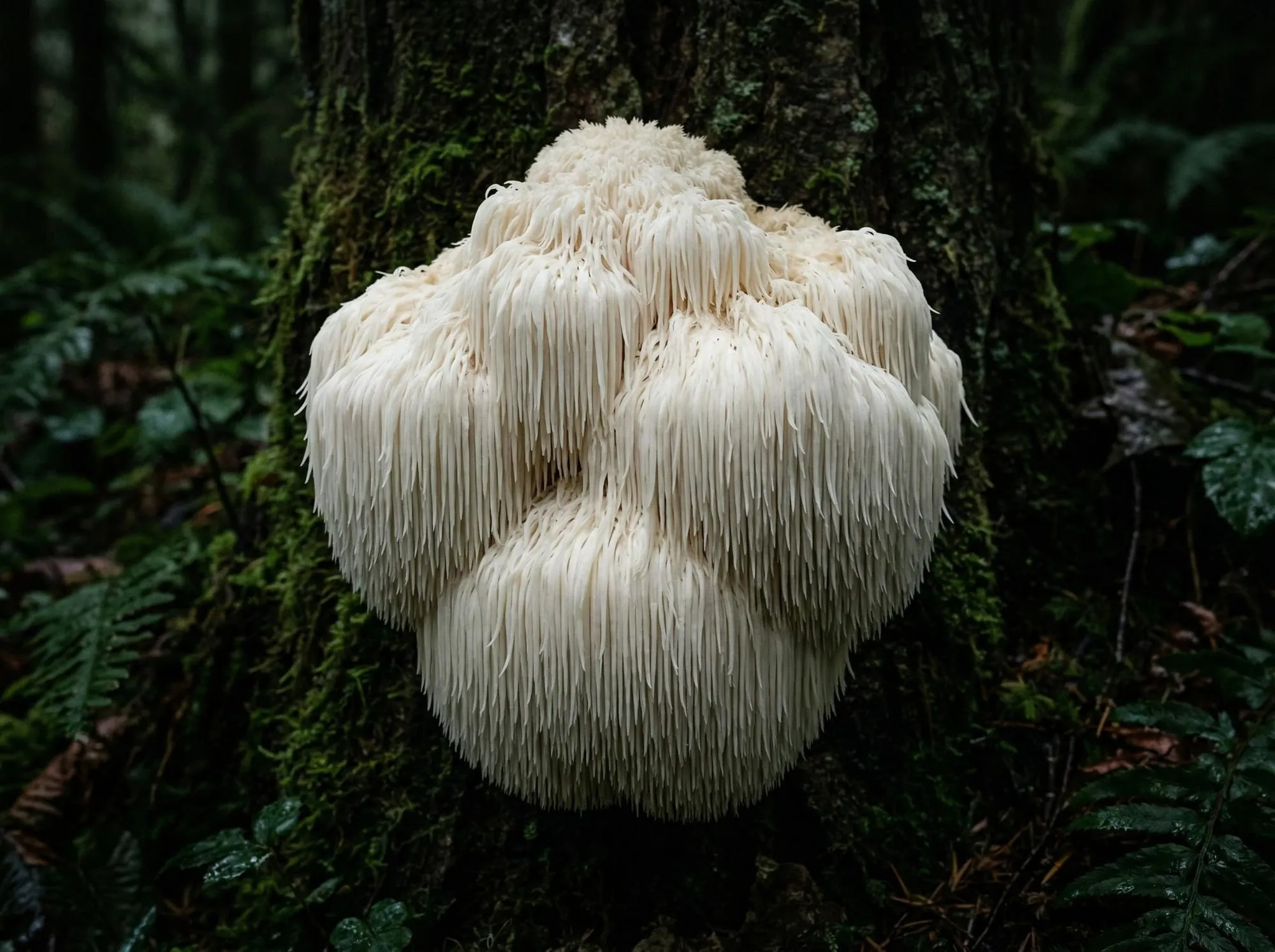
While Lion’s Mane (Hericium erinaceus) remains the best-known member of the genus, Hericium coralloides is the most widespread representative in Turkey—a strikingly beautiful fungus with a coral-like branching structure that appears on beech and oak trunks in the upper forest layers.
Scientific Classification
A saprotrophic Basidiomycota species belonging to the family Hericiaceae. The white to cream, coral-like branched form and pendant tooth-like spines at the tips define the species. It lacks a cap; the entire fruiting body is composed of spines.
Compared to H. erinaceus, H. coralloides is more highly branched and smaller in scale. H. americanum, a North American relative, is sometimes treated as synonymous with H. coralloides.
Bioactive Profile
The biochemical profile of H. coralloides has been far less studied than that of H. erinaceus. Available data include:
- Hericenone analogs — cyathane diterpenoid compounds similar to those in H. erinaceus have been reported, although differences in concentration and composition remain debated.
- Beta-glucan fractions — polysaccharide content consistent with the general Hericium genus profile.
- Antioxidant activity — DPPH free radical scavenging capacity has been demonstrated in vitro.
Whether the effects on NGF (Nerve Growth Factor) synthesis are specific to H. erinaceus or shared across all Hericium species has not yet been clarified. This question represents a critical uncertainty that opens the door for interspecies comparative research.
Distribution in Turkey
Hericium coralloides occurs in the beech–oak forests of Turkey’s Black Sea region and western Anatolia. Appearing in early autumn on old or fallen trunks, this species is known from striking photographs frequently shared by nature enthusiasts.
Systematic distribution mapping for this species is absent from Turkish mycological literature; amateur mycology communities remain the most important source of observational data.
Related Reading
- Lion’s Mane: The Biological Legacy of Hericium erinaceus
- What Are Hericenones?
- Wild Mushroom Diversity of the Black Sea Region: A Geographical Profile
This page is prepared within the MYCOVITA Mycology Library. It is intended for scientific reference; it does not constitute medical advice. Source: mycovita.bio · Content Policy v1.0