Daily Dosage Recommendations for Functional Mushroom Species
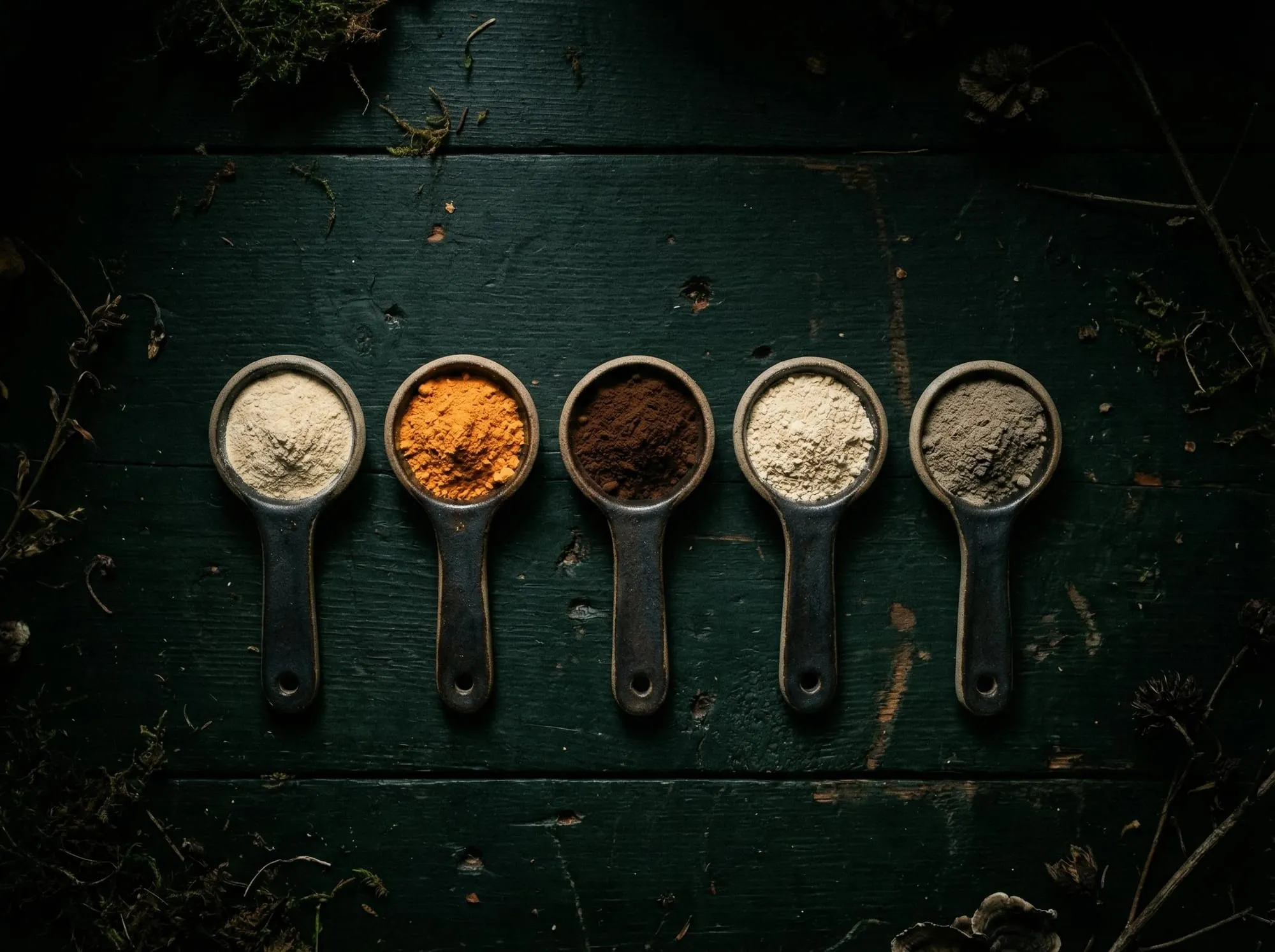
Mycelium Library — No.25
"How much should I take daily?"
This question is simultaneously the most legitimate and paradoxically the least answered inquiry in functional mushroom use. Labels state '1–2 g.' But where does that number originate? What do the studies say? Will too little be ineffective, and will too much cause harm?
Before delivering a definitive answer, a framework must be established — because the dosage question is actually multiple questions in one.
Why Research Dosage Differs from Daily Usage Dosage
The vast majority of functional mushroom dosage research has been conducted in two formats: standardized extract capsules and whole fruiting body powder. A bioavailability gap exists between these forms.
A standardized extract guarantees a specific percentage of a target compound — for example, a Lion’s Mane extract containing 30% beta-glucan. Whole fruiting body powder delivers the entire compound spectrum, but the concentration is variable and typically lower than that of an extract.
Therefore, directly applying an extract study dose to whole powder is misleading. To achieve an equivalent effect, a substantially higher amount of whole powder may be required. MYCOVITA products are whole fruiting body powder — keeping this distinction in mind is essential.
Research Dosages by Species
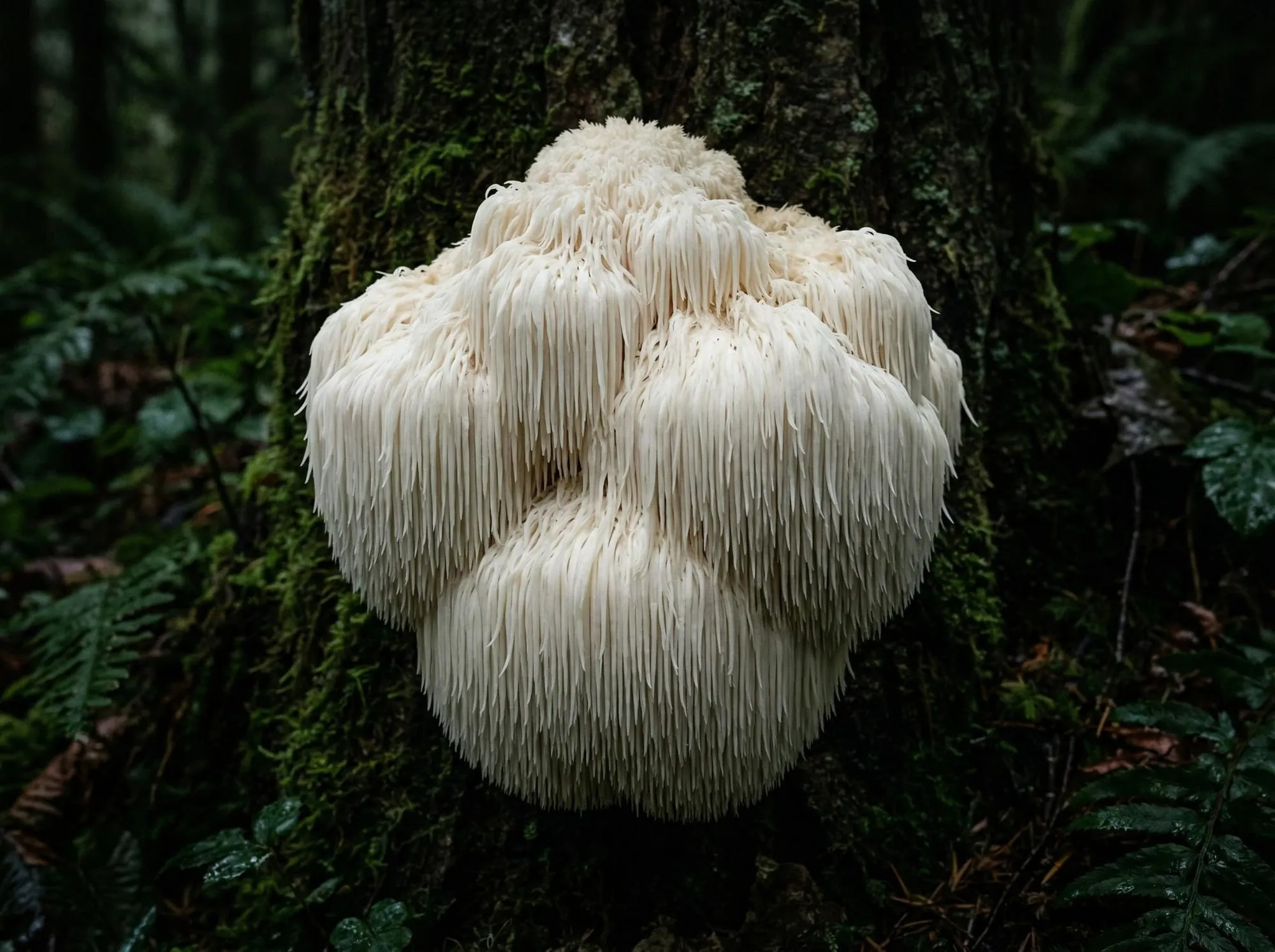
Lion’s Mane (Hericium erinaceus): The most frequently used dose in studies falls between 500 mg and 3 g daily. Mori et al. (2009) employed 3 g/day over a 16‑week period. For MYCOVITA whole powder, 1–2 g per day is a sound starting point — taken in the morning, with coffee or tea.
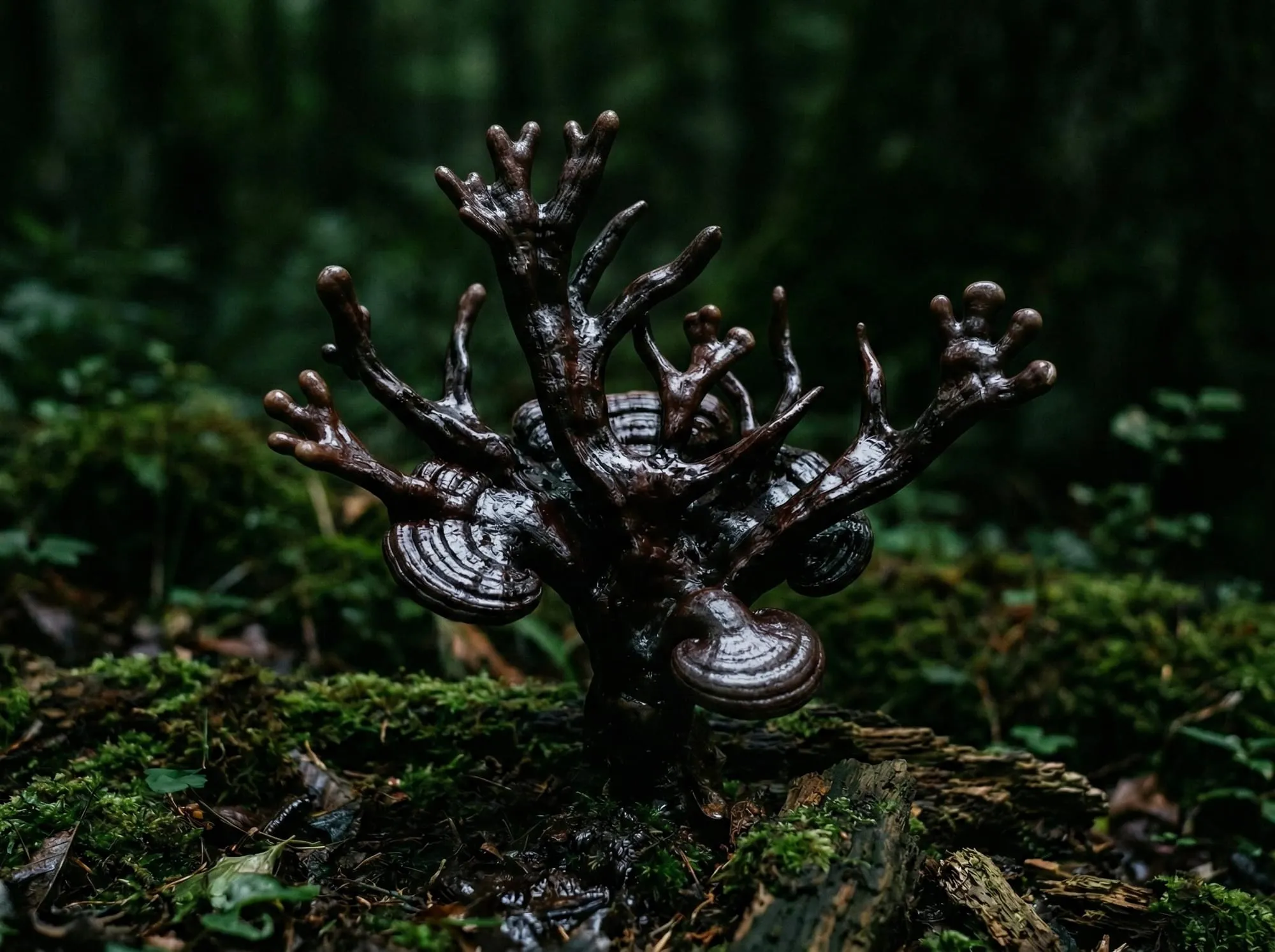
Reishi (Ganoderma lucidum): Extract studies display a wide dosage window, from 1.5 to 9 g daily. Keeping triterpenoid content in mind, 1–2 g of whole powder is appropriate. Integrate it into an evening protocol; combining it with a fat‑containing liquid enhances triterpenoid absorption.
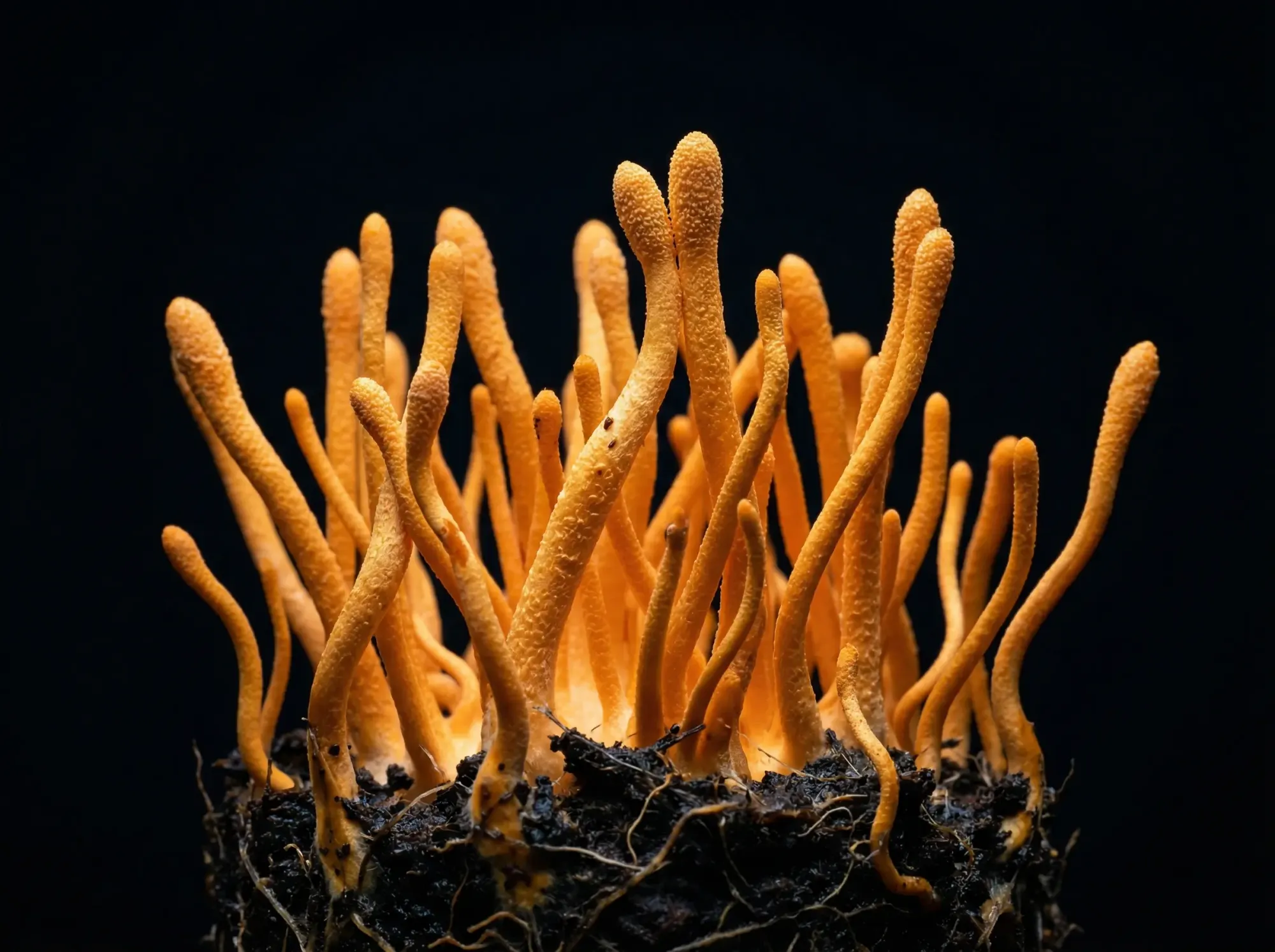
Cordyceps (Cordyceps militaris / Ophiocordyceps sinensis): Exercise‑performance research commonly uses doses between 1.5 and 4 g daily. For everyday use, 1–1.5 g is both practical and aligned with the literature. Ideal timing is pre‑workout or in the morning.
Turkey Tail (Trametes versicolor): PSK clinical trials report 1–3 g/day. A 1–2 g daily intake of whole powder serves as a reliable base protocol, taken with lunch or dinner.
Sparassis crispa (Cauliflower mushroom): Human dosing studies are scarce. Given its high beta‑glucan density (40%+), a starting dose of 0.5–1 g is recommended.
What Is the Daily Maximum?
Functional mushroom powders are foods that have been consumed in sizable quantities for centuries. In Asian cuisines, daily intakes of 5–10 g of Shiitake are normal — nobody classifies this as a “high dose.” From this perspective, the biological safety profile is remarkably favorable.
Serious adverse effects are rare and predominantly limited to allergic reactions. During the initial phase some individuals may experience a digestive adaptation period; mild gas or bloating is a transient sign of adjustment and does not warrant discontinuation.
Drug interactions: Reishi may exhibit a potential interaction with medications that affect blood coagulation (such as warfarin). Individuals undergoing cancer treatment should consult their oncologist. A cautious approach is advised during pregnancy and breastfeeding.
Daily Total Dosage Recommendation
If using a single species: 1–2 g/day.
For a 2–3 species combination: 3–4 g/day total. Approximately 1–1.5 g per species.
Full protocol (4–5 species): 4–6 g/day total. 1 g per species.
“More is better” does not apply in this category. Exceeding the optimal dose does not confer meaningful additional benefit. Consistency is far more important than dosage.
Cumulative Effect: At Least 8 Weeks
The effects of functional mushroom constituents are largely cumulative. The overwhelming majority of studies examine usage periods spanning 4 to 16 weeks. Using a mushroom for one week and concluding “it doesn’t work” reflects an expectation that falls outside the research protocol.
Recommendation: Begin with a single species. Continue for 4 weeks. Become familiar with its profile. Then transition to a combination phase. This gradual approach both strengthens observational capacity and allows you to monitor any personal reactions. Do not rush — this is a marathon, not a sprint.
Related reading: Combination Usage Protocols · Morning Protocol
MYCOVITA’s manufacturing philosophy and transparency principles: Why MYCOVITA?
— SCIENTIFIC REFERENCES —
Mori, K. et al. (2009). Improving effects of the mushroom Yamabushitake on mild cognitive impairment. Phytotherapy Research, 23(3), 367-372. [Lion’s Mane: 3 g/day, 16 weeks]
Wachtel-Galor, S. et al. (2011). Ganoderma lucidum (Lingzhi or Reishi). Herbal Medicine, CRC Press. [Reishi: 1.5–9 g/day]
Chen, S. et al. (2010). Effect of Cs-4 on exercise performance. JACM, 16(5), 585-590. [Cordyceps: 1–3 g/day]
Nanba, H. (1997). Maitake D-Fraction: Healing and Preventing Potentials. Townsend Letter, 15-22. [Maitake: equivalent to 3–7 g/day fresh]
You Might Be Interested In
→ Travel Protocol — How Do I Use It While Traveling?
→ Can You Grow Mushrooms at Home? — A Beginner’s Guide
This content is for informational purposes only and does not constitute medical advice. Consult your physician before making any health‑related decisions. Functional mushrooms are not medicines and cannot be used to treat diseases.
Version: 1.0 | Last updated: 20 Apr 2026 | Sources reviewed: 5+ | Method:Editorial Policy | References:Bibliography