GMP Explained: The Molecular Science Behind Umami Synergy
— THE HOOK —
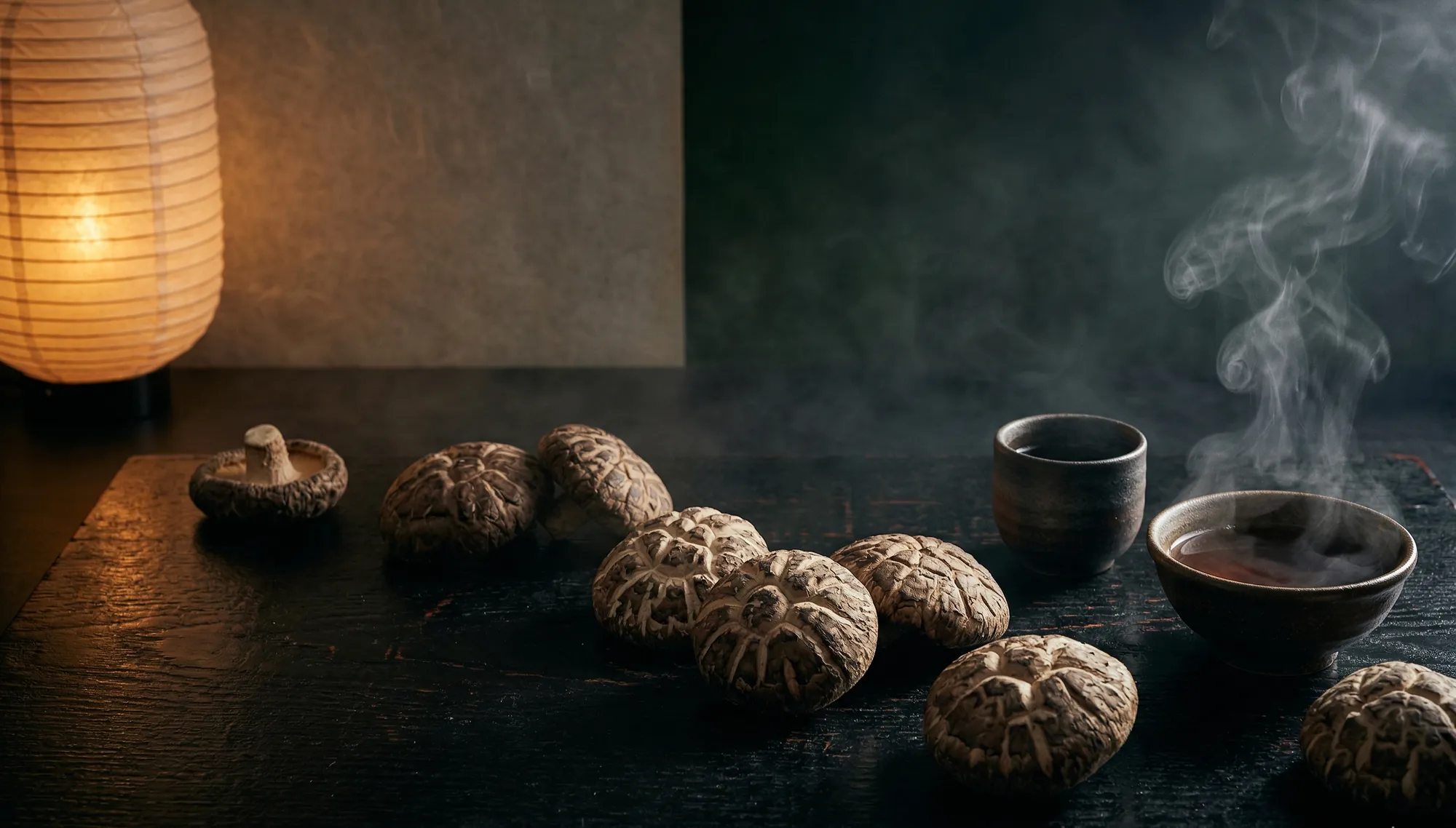
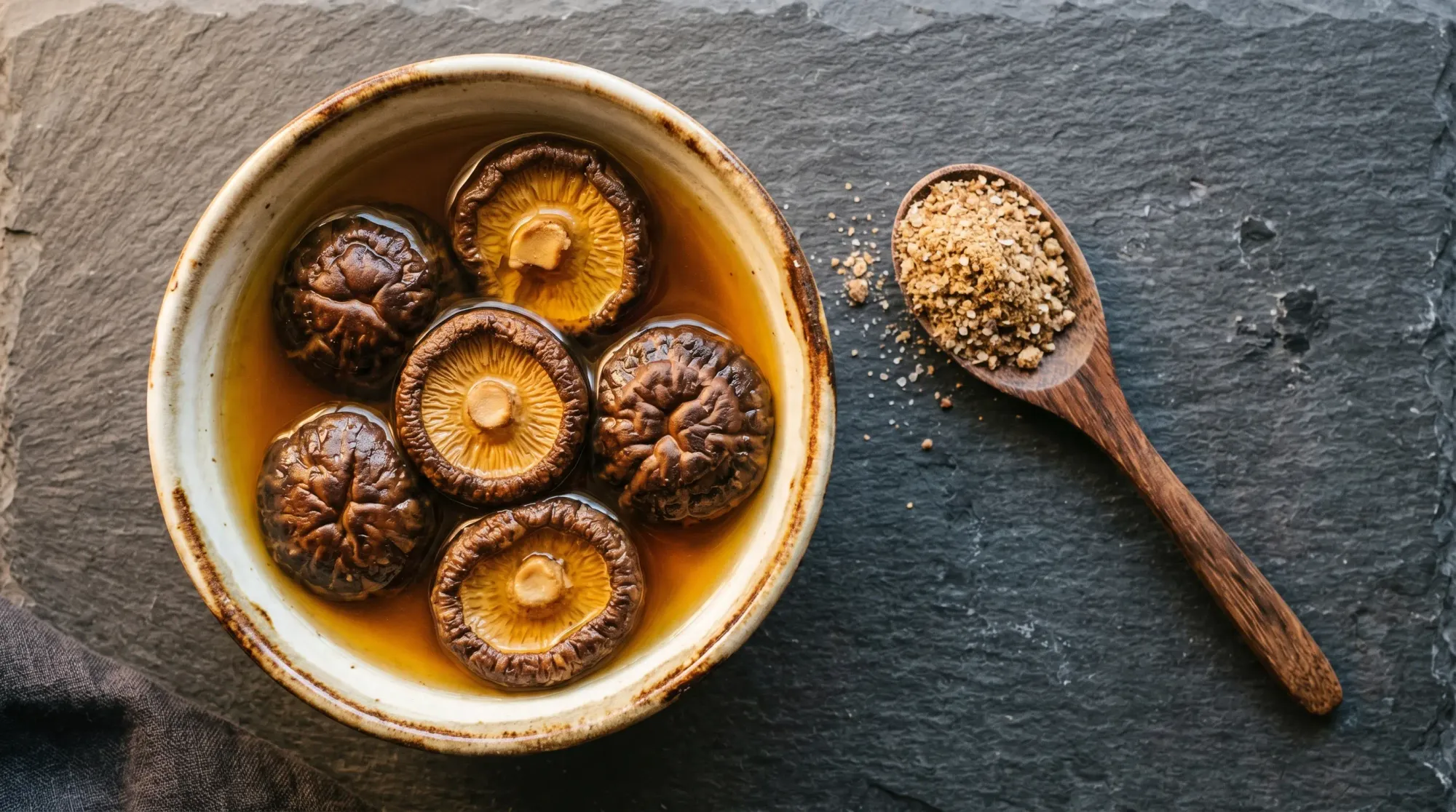
Cook a Shiitake mushroom with its soaking water and you experience a flavor explosion. Even with nothing but salt, the dish tastes magnificent. Why?
The answer comes in three letters: GMP.
And the synergy this molecule creates when it meets glutamate is the mathematical explanation of the umami experience.
— WHAT IS GMP? —
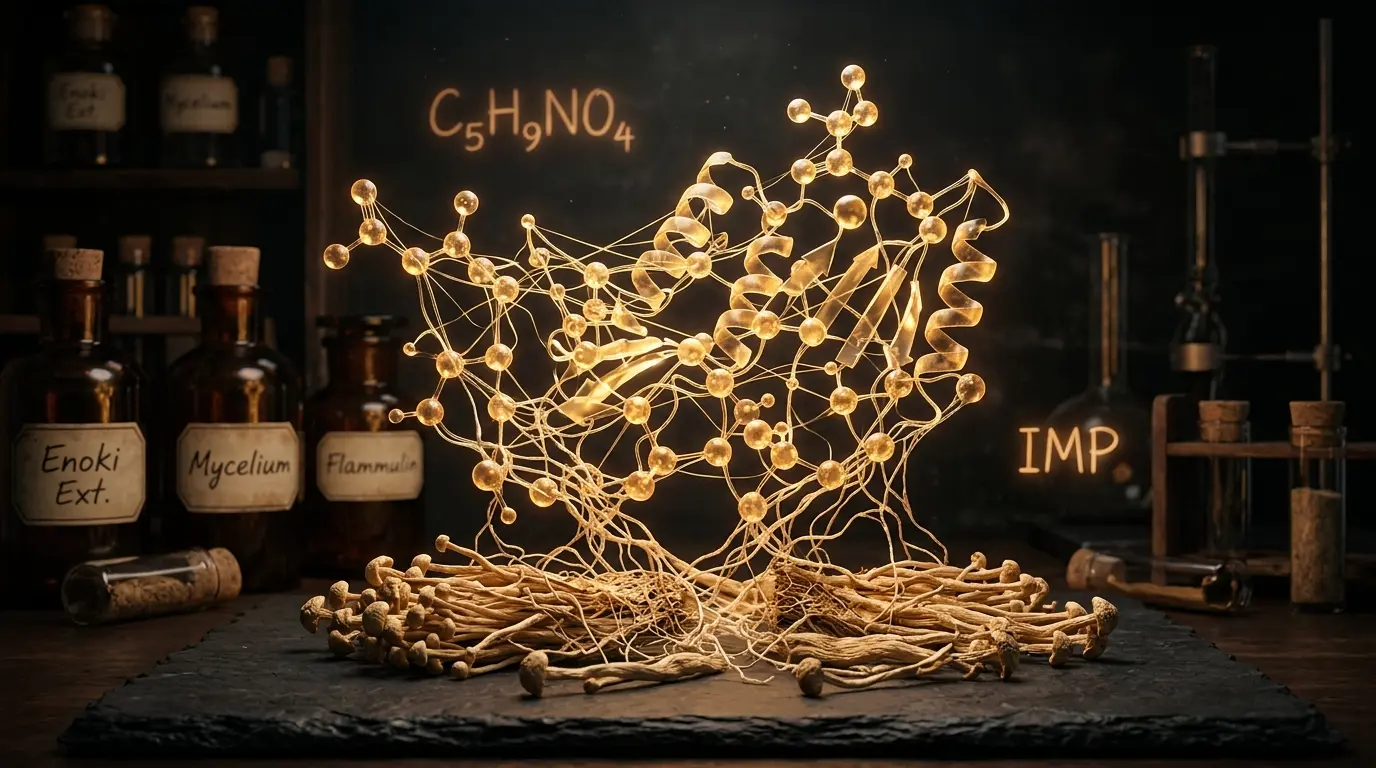
GMP — Guanosine 5'-Monophosphate — is a ribonucleotide. It is one of the building blocks of RNA and exists in all living cells.
But in food science, GMP carries a different meaning: umami amplifier.
GMP alone delivers a mild flavor. Yet when combined with glutamate (MSG or naturally occurring glutamic acid), it amplifies umami perception by a factor of 8 to 15. This is known as the synergistic umami effect.
In the 1960s, Japanese scientist Shizuko Yamaguchi described this synergy mathematically: GMP + glutamate = far more than the sum of its parts.
— GMP IN MUSHROOMS —
Mushrooms are among nature's richest sources of GMP. And not every species contains the same amount.
Shiitake: The GMP champion of the fungal kingdom. Dried Donko-grade Shiitake, in particular, exhibits the highest GMP concentration. The drying process disrupts the cell wall and liberates GMP, making it bioavailable.
King Oyster: Moderately high GMP content. Cooking via the Maillard reaction deepens its umami profile.
Maitake: Moderate GMP levels. Produces powerful synergy when paired with other umami sources such as soy sauce or Parmesan cheese.
— THE SYNERGY MECHANISM —
Umami perception occurs at the T1R1/T1R3 receptors on the tongue. When glutamate binds to this receptor, an umami signal is generated.
GMP binds to a different site on the same receptor and dramatically increases the receptor's sensitivity to glutamate. This phenomenon is called allosteric modulation.
The practical implication: when Shiitake Donko soaking water (rich in natural glutamate) and the dried Shiitake itself (rich in GMP) are used together, the umami effect can reach up to 8 times that of either component used alone.
The dashi tradition of Japanese cuisine is built upon this very synergy. Kombu (glutamate) + Shiitake (GMP) = a 1,000-year-old umami formula.
— CULINARY APPLICATION —
Rules for GMP extraction:
1. Drying enhances extraction: In fresh mushrooms, GMP is locked within the cell. Drying fractures the cell wall and liberates GMP. This is why Donko-grade Shiitake delivers exponentially more umami than fresh Shiitake.
2. Never discard the soaking water: Both GMP and glutamate are water-soluble. The soaking liquid from dried mushrooms (modoshi-jiru) is the most concentrated GMP source available. Pouring it away means discarding the most valuable component.
3. Temperature is critical: The ideal water temperature for GMP extraction is 60–70°C. Boiling water denatures enzymatic structures and reduces GMP yield. Cold water, by contrast, proves insufficient.
4. Combination: A GMP source (Shiitake) + a glutamate source (kombu, Parmesan, tomatoes, soy sauce) = a synergistic umami explosion.
— GMP vs MSG —
MSG (monosodium glutamate) is a pure glutamate source. GMP, on the other hand, is a glutamate amplifier.
The two are distinct: MSG delivers flavor; GMP multiplies it. The combination of GMP and glutamate derived from natural sources produces a more complex and deeper umami profile than synthetic MSG alone.
Mushrooms naturally contain both — free glutamic acid and GMP. This is why they are often referred to as "nature's MSG."
— SCIENTIFIC REFERENCES —
Yamaguchi, S. (1967). The synergistic taste effect of monosodium glutamate and disodium 5'-inosinate. Journal of Food Science, 32(4).
Kuninaka, A. (1960). Studies on taste of ribonucleic acid derivatives. Journal of the Agricultural Chemical Society of Japan, 34(6).
Zhang, Y. et al. (2013). Determination of 5'-nucleotides in mushrooms. Food Chemistry, 138(2-3).
You May Also Like
→ What Is Umami? — A Molecular Gastronomy Guide
→ KÜLT | Shiitake Donko — The Gastronomy Encyclopedia
→ Shiitake Donko in the Kitchen — A Cooking Guide
→ Mushroom Dashi — Japanese Foundation Stock from Scratch
→ Notes from a Restaurant Chef
Related Readings
- Umami: The Molecular Science of the Fifth Taste — Umami: The Molecular Science of the Fifth Taste
- B Vitamin Content of Mushrooms and Their Natural Source Profile — B Vitamin Content of Mushrooms and Their Natural Source Profile
- The 5,000-Year History of Mushrooms and Their Encounter with Modern Science — The 5,000-Year History of Mushrooms and Their Encounter with Modern Science
This content is for informational purposes only and does not constitute medical advice. Consult your physician before making any health-related decisions. Functional mushrooms are not pharmaceutical drugs and cannot be used to treat diseases.
Version: 1.0 | Last updated: 20 Apr 2026 | Sources reviewed: 5+ | Methodology: Editorial Policy | References: Bibliography