A Comprehensive Scientific Guide to Mushroom Allergies and Sensitivities
— HOOK —
"I have a mushroom allergy." Have you ever heard this statement? Is it truly a mushroom allergy, a chitin sensitivity, or a spore allergy?
Mushroom allergy is more complex than commonly believed. Moreover, there are critical differences between functional mushroom powders and fresh mushrooms.
— WHAT IS MUSHROOM ALLERGY? —
True mushroom allergy — IgE-mediated type 1 hypersensitivity — is rare but does exist. It is an exaggerated immune response to mushroom spores or mushroom proteins.
Symptoms include itching, urticaria (hives), swelling of the lips/tongue, nausea, and, in rare instances, anaphylaxis.
Mushroom spore allergy is more common — but it is a respiratory allergy, not a food allergy. High environmental spore concentrations (autumn, damp settings) can trigger asthma and allergic rhinitis.
Critical distinction: Most individuals with a mushroom spore allergy can consume cooked or processed mushroom products without any problem. Allergy to spores and allergy to dietary mushrooms operate through different mechanisms.
— CHITIN SENSITIVITY —
Chitin is a structural component of the mushroom cell wall. The human digestive system cannot fully break down chitin — chitinase enzyme activity varies from person to person.
In some individuals, high-chitin foods may provoke digestive discomfort: bloating, gas, abdominal pain. This is not an allergy; it is a digestive intolerance.
The mushroom powder difference: In dried and ground mushroom powder, the chitin wall is partially degraded. When consumed with hot water (tea, coffee), the chitin barrier opens further. This is why people who cannot digest fresh mushrooms can often tolerate mushroom powder.
Nevertheless, beginning with a low dose (0.5 grams) and observing tolerance remains the safest approach the first time.
— CROSS-REACTIVITY —
Individuals with a mushroom allergy may experience cross-reactivity:
Mold allergy: Mushrooms and molds belong to the same fungal kingdom. Cases of cross-reactivity to certain mushroom species have been reported in people with Penicillium or Aspergillus allergy.
Yeast allergy: Rare cross-reactivity has been reported in those allergic to Saccharomyces (brewer’s yeast).
This cross-reactivity is not absolute — each individual responds differently. If a known mold or yeast allergy exists, an allergist consultation is recommended before starting any mushroom product.
— FUNCTIONAL MUSHROOMS AND ALLERGY —
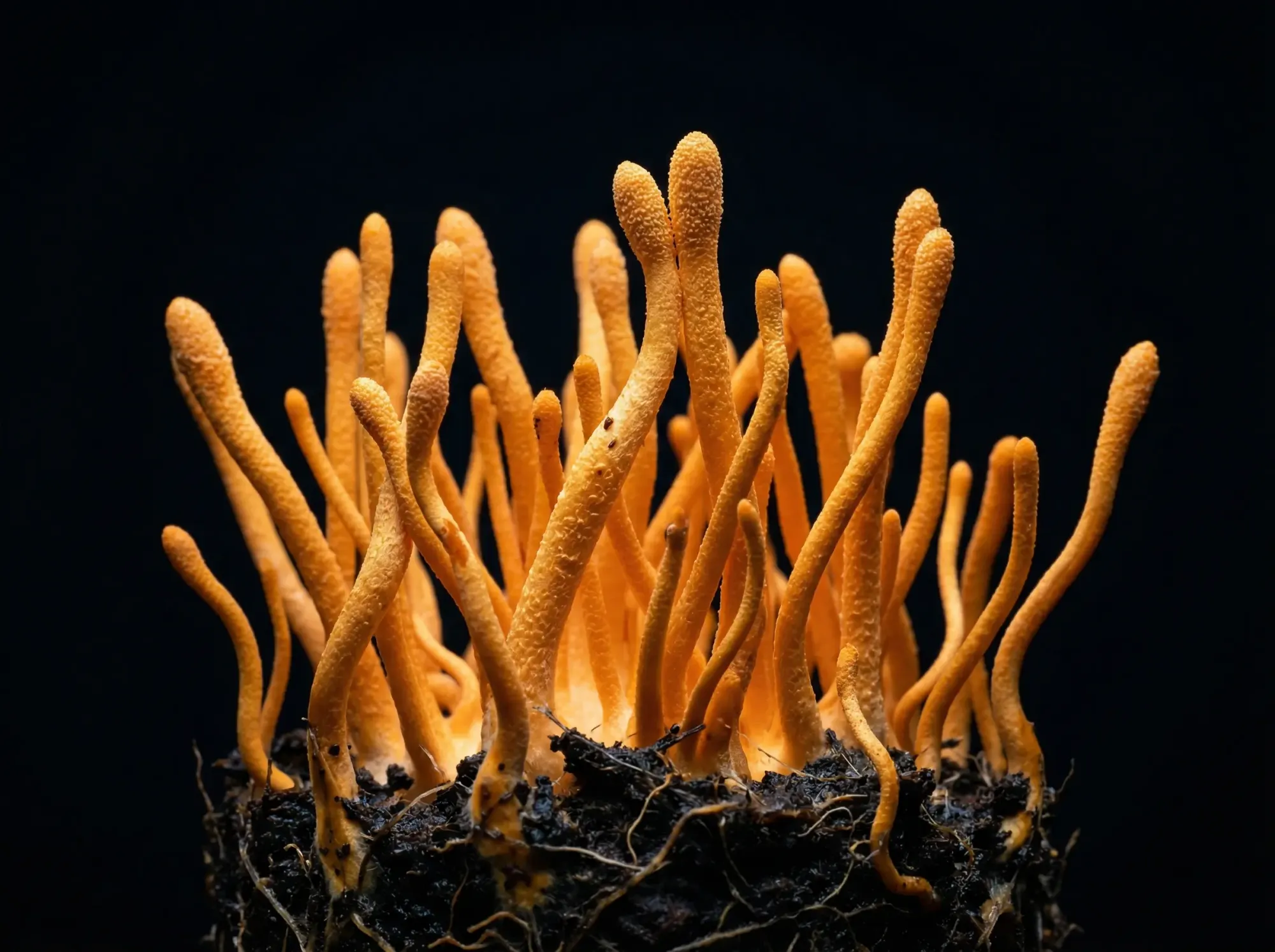
Allergy reports related to functional mushroom powders (Lion’s Mane, Reishi, Cordyceps, etc.) are quite rare. Clinical studies contain very few reports of serious allergic reactions.
However, "rare" does not mean zero:
⚠ Rare cases of dermatitis (skin rash) have been associated with Lion’s Mane. This appears to be dose-dependent.
⚠ Rare cases of dry mouth, itching, and nausea have been reported with Reishi.
⚠ With any mushroom product, mild digestive discomfort (bloating, gas) upon first use may indicate chitin sensitivity.
— WHAT SHOULD I DO? —
If you have a known mushroom/mold allergy: Consult your allergist before starting any functional mushroom product.
If you are trying it for the first time: Start with 0.5 grams. Wait 48 hours. If no rash, itching, swelling, or breathing difficulty appears, increase the dose gradually.
If you experience digestive discomfort: This is most likely chitin sensitivity, not an allergy. Reduce the dose. Take it with hot water (opens the chitin wall). Try it with a meal.
Severe reaction (signs of anaphylaxis): Discontinue use immediately and seek emergency medical help.
— SCIENTIFIC REFERENCES —
Helbling, A. et al. (2002). Mushroom allergy: a review. Clinical & Experimental Allergy, 32(7).
Koivikko, A. et al. (1988). Allergenic cross-reactivity of fungi. Allergy, 43(3).
Meletis, C.D. (2005). Allergenic potential of medicinal mushrooms. Alternative & Complementary Therapies, 11(5).
You Might Also Like
→ What Is Chitin? — The Mushroom’s Invisible Shield
→ Is Mushroom Supplementation Safe?
→ Does Lion’s Mane Have Side Effects?
→ Reishi Side Effects and Safety Profile
→ Daily Dosages for Functional Mushrooms
Related Reading
- Guide to Functional Mushroom Use for the Elderly — Guide to Functional Mushroom Use for the Elderly
- Travel Protocol for Using Mushrooms on the Go — Travel Protocol for Using Mushrooms on the Go
- Why a Mycelium Library Exists: Our Information Philosophy — Our Information Philosophy
This content is for informational purposes only and does not constitute medical advice. Consult your physician before making any health decisions. Functional mushrooms are not drugs and cannot be used to treat diseases.
Version: 1.0 | Last updated: 20 Apr 2026 | Sources reviewed: 5+ | Method: Editorial Policy | References: Bibliography