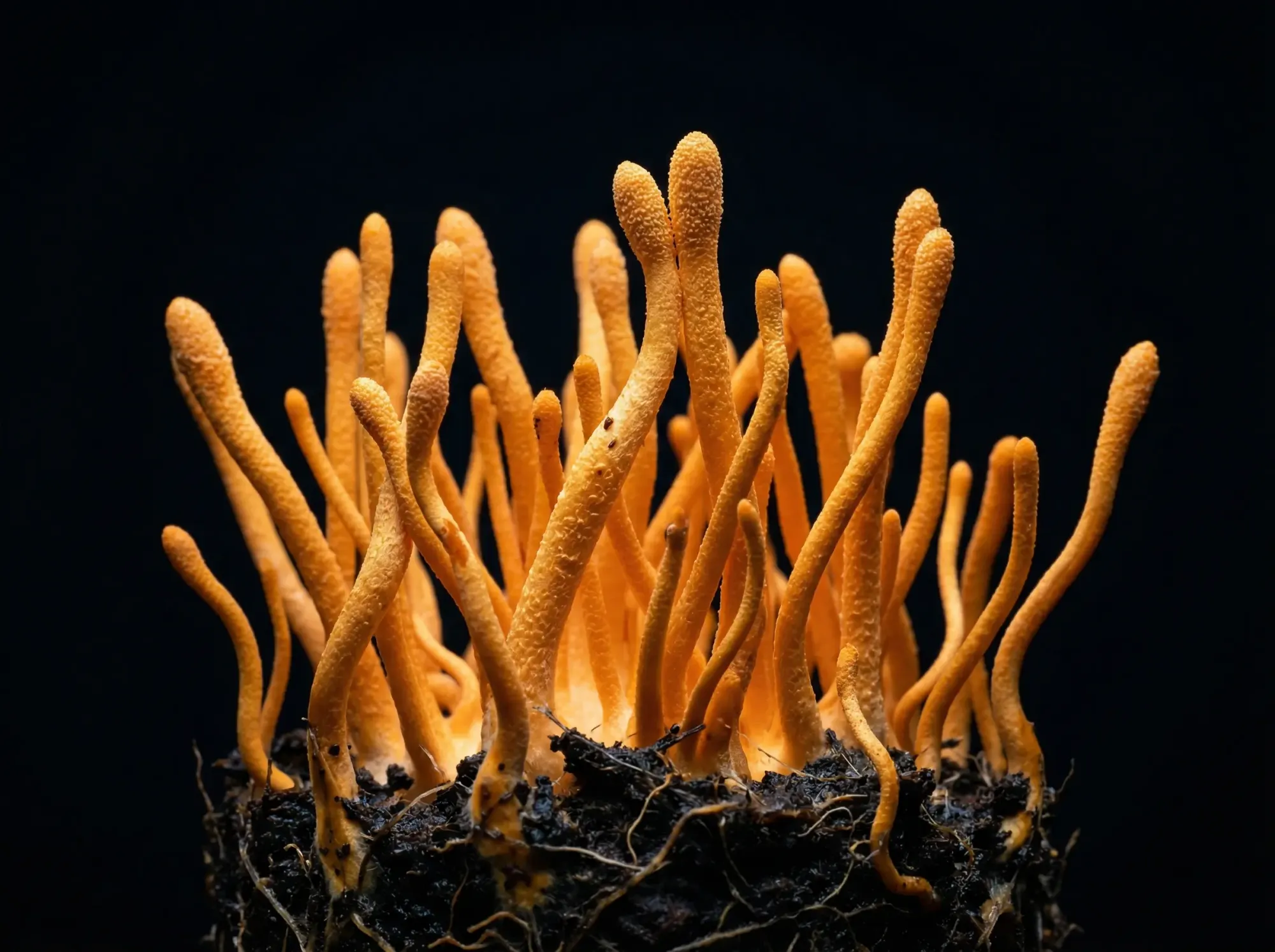
Functional Mushrooms and Drug Interactions: A Comprehensive Safety Guide

— THE PROBLEM —
Information about Lion's Mane side effects exists. Reishi has its own page. Cordyceps too. But everything is scattered across separate articles.
This page consolidates all known drug interactions for functional mushrooms into a single reference. Anyone taking prescription medications should bookmark this page.
— THE OVERRIDING PRINCIPLE —
Before using any functional mushroom product — if you take prescription medications regularly — consult your physician or pharmacist. This is not a general suggestion; it is a safety imperative.
Functional mushrooms contain bioactive compounds. Bioactive means they exert a physiological effect in the body. Pharmaceuticals are also bioactive. When two bioactive substances are introduced simultaneously, the potential for interaction exists.
— BLOOD THINNERS (ANTICOAGULANTS AND ANTIPLATELETS) —
Drugs: Warfarin, Heparin, Aspirin, Clopidogrel (Plavix)
Implicated mushrooms: Reishi, Cordyceps, Maitake
Mechanism: In vitro data indicate these mushrooms may exhibit antiplatelet and anticoagulant activity. Concomitant use with blood thinners may elevate bleeding risk.
Recommendation: ❌ Do not use without physician consultation. INR monitoring may be required.
— ANTIHYPERTENSIVE MEDICATIONS —
Drugs: ACE inhibitors, ARBs, Beta-blockers, Calcium channel blockers
Implicated mushrooms: Reishi, Maitake
Mechanism: Studies suggest Reishi and Maitake can lower blood pressure. Combined with antihypertensive drugs, there is a risk of excessive hypotension.
Recommendation: ⚠ Consult your physician. Monitor blood pressure. Discontinue use if dizziness or fatigue occurs.
— DIABETES MEDICATIONS —
Drugs: Metformin, Insulin, Sulfonylureas
Implicated mushrooms: Reishi, Cordyceps, Maitake
Mechanism: Animal studies indicate these mushrooms may lower blood glucose levels. Concurrent use with diabetes medications carries a risk of hypoglycemia.
Recommendation: ⚠ Consult your physician. Monitor blood glucose. Watch for hypoglycemia symptoms (tremor, sweating, dizziness).
— IMMUNOSUPPRESSIVE DRUGS —
Drugs: Cyclosporine, Tacrolimus, Azathioprine, Mycophenolate, Corticosteroids
Implicated mushrooms: All functional mushrooms (especially Turkey Tail, Sparassis, Reishi)
Mechanism: The immunomodulatory activity of functional mushrooms directly opposes the therapeutic goal of immunosuppressive treatment. Risk of organ transplant rejection or autoimmune flare-up.
Recommendation: ❌ Do not use. Absolutely contraindicated for organ transplant recipients and patients undergoing autoimmune therapy.
— CHEMOTHERAPY DRUGS —
Implicated mushrooms: Potentially all
Mechanism: Theoretical concerns exist that certain mushroom constituents may alter the metabolism of chemotherapeutic agents. PSK and Lentinan are employed as adjuvants in Japan, but this occurs exclusively in controlled clinical settings under oncologist supervision.
Recommendation: ❌ Do not use without explicit oncologist approval. Never make this decision independently.
— PSYCHIATRIC MEDICATIONS —
Drugs: SSRIs, SNRIs, MAO inhibitors, Benzodiazepines
Implicated mushrooms: Reishi (GABA modulation), Lion's Mane (NGF effects)
Mechanism: Reishi's interaction with the GABA system may produce additive sedation with benzodiazepines. The neurotrophic effects of Lion's Mane and their interaction with psychiatric medications remain insufficiently studied.
Recommendation: ⚠ Consult your psychiatrist. Those taking MAO inhibitors should exercise particular caution.
— THYROID MEDICATIONS —
Drugs: Levothyroxine, Antithyroid agents
Implicated mushrooms: Limited data exist — however, research indicates Reishi and Cordyceps may affect the endocrine system.
Recommendation: ⚠ Thyroid patients should consult their physician. Thyroid function test monitoring is advised.
— PRIOR TO SURGERY —
Discontinue all functional mushroom products at least 2 weeks before any scheduled surgical procedure. Rationale: antiplatelet activity elevates bleeding risk, and there is potential for anesthesia interaction.
Disclose all supplements you are taking to your surgeon.
— THE SAFE POPULATION —
In healthy adults who take no medications, have no known chronic diseases, and are not pregnant or breastfeeding, the safety profile of functional mushrooms is generally favorable.
In this population: at standard doses (1–2 grams/day) with cyclical usage (8–12 weeks on, 2–4 weeks off), the risk of serious adverse events is low.
— QUICK REFERENCE TABLE —
Reishi: Blood thinners ❌ | Antihypertensives ⚠ | Diabetes meds ⚠ | Immunosuppressants ❌ | Psychiatric meds ⚠
Cordyceps: Blood thinners ⚠ | Diabetes meds ⚠ | Immunosuppressants ❌ | Cardiac meds ⚠
Lion's Mane: Blood thinners ⚠ | Psychiatric meds ⚠ | Overall safety profile favorable
Turkey Tail: Immunosuppressants ❌ | Chemotherapy — oncologist only ⚠ | Overall safety profile favorable
Maitake: Blood thinners ⚠ | Antihypertensives ⚠ | Diabetes meds ⚠
Sparassis: Immunosuppressants ❌ | Overall safety profile favorable (limited data)
❌ = do not use (without physician consultation) | ⚠ = use with caution (under medical supervision)
You May Also Find Interesting
→ Are Mushroom Supplements Safe?
→ Reishi Side Effects and Safety Profile
→ Cordyceps Side Effects and Safety Profile
→ Does Lion's Mane Have Side Effects?
→ Mushroom Guide for Older Adults
Related Reading
- Safety Profile of Functional Mushroom Supplements — Safety Profile of Functional Mushroom Supplements
- What Mushroom Powder Does: Constituents and Usage Guide — What Mushroom Powder Does: Constituents and Usage Guide
- Reishi Mushroom Side Effects and Safety Profile — Reishi Mushroom Side Effects and Safety Profile
This content is for informational purposes only and does not constitute medical advice. Consult your physician before making any health-related decisions. Functional mushrooms are not pharmaceutical drugs and are not intended to treat, cure, or prevent any disease.
Version: 1.0 | Last updated: 20 Apr 2026 | Sources reviewed: 11+ | Methodology: Editorial Policy | References: Bibliography