Encyclopedia of Cordyceps militaris: The Definitive Species Reference
— THE HOOK —
You train. You watch your nutrition. You sleep. Yet performance hits a ceiling you cannot break through. Recovery is slow. The morning weight lingers.
This is not a question of talent. It is a question of mitochondrial efficiency.
And the answer begins with an observation made by yak herders at 4,000 meters.
— THE STORY —
Tibet. Circa 620 CE.
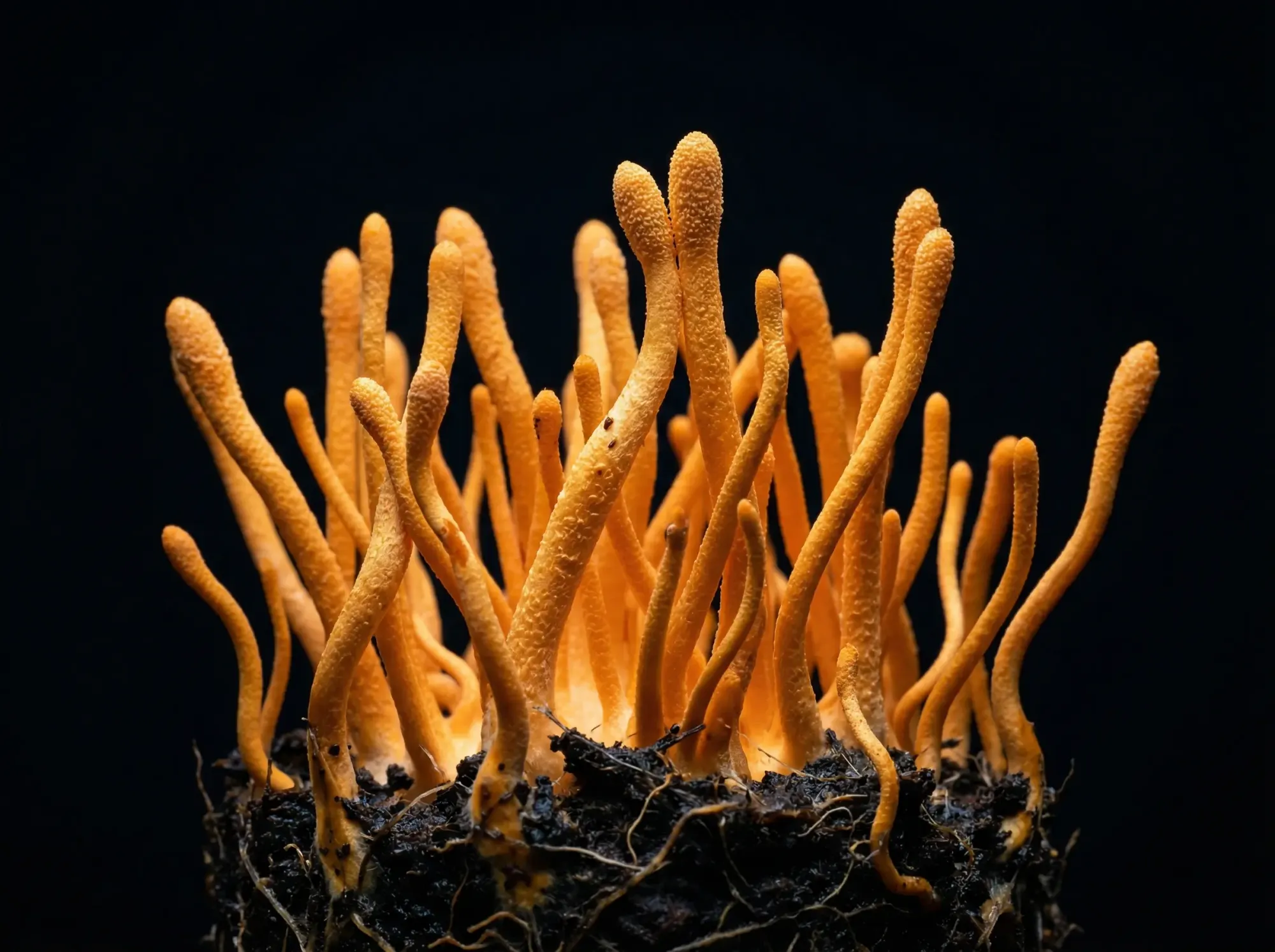
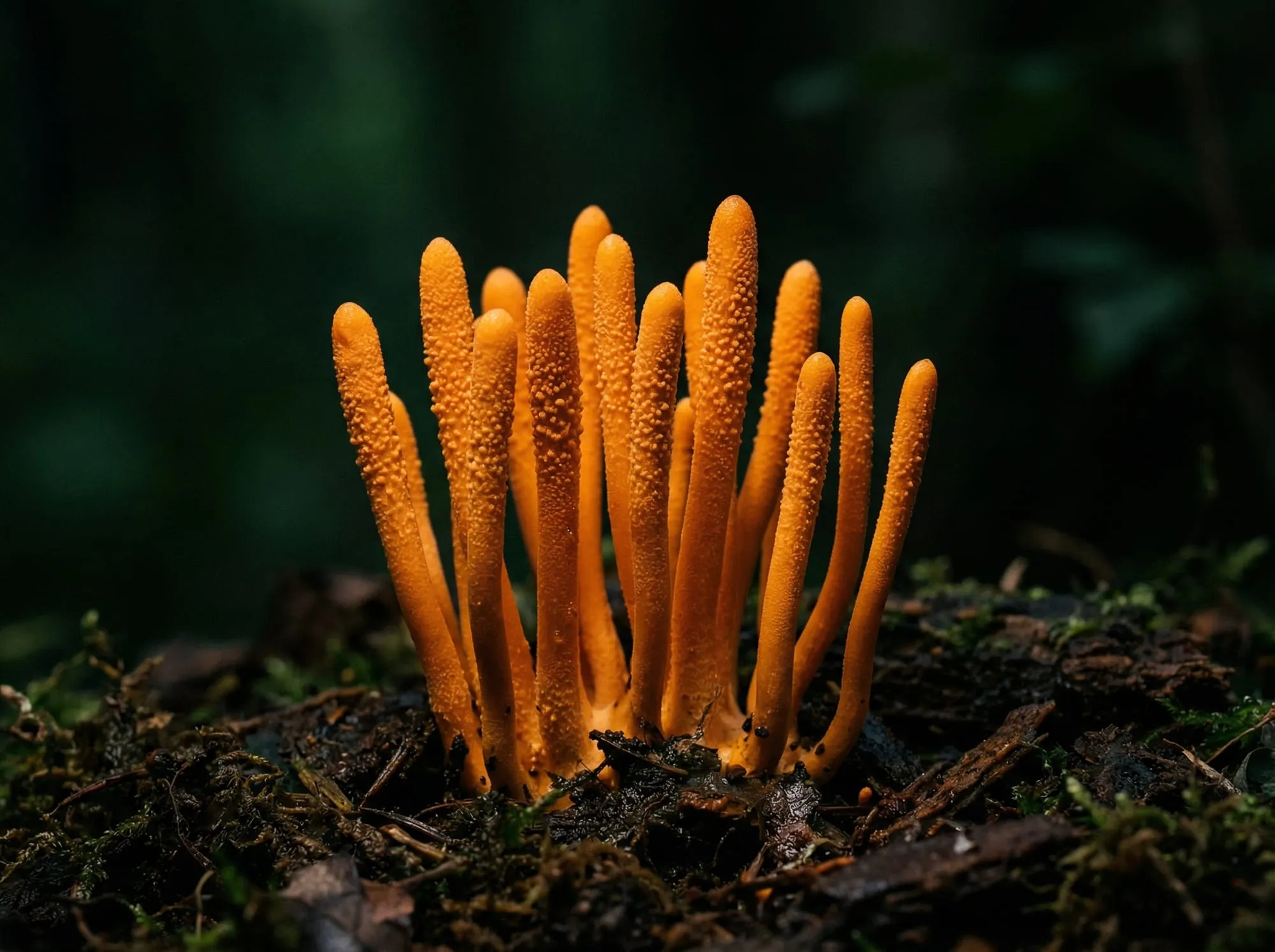
Herdsmen on the high plateau noticed that yaks grazing in certain pastures during spring exhibited extraordinary energy and endurance. When they examined these areas, they found something strange in the soil: small orange fingers emerging from the bodies of dead insect larvae. Half plant, half animal.
Yartsa Gunbu — Tibetan for “winter worm, summer grass.”
This observation marked the beginning of one of the most intriguing functional food discoveries in human history. Li Shizhen’s 16th-century Ben Cao Gang Mu — the most comprehensive encyclopedia of Chinese pharmacology — recorded Cordyceps as a tonic that strengthens the kidneys and lungs and dispels fatigue. It was a standard preparation in Qing Dynasty court medicine.
Then came 1993.
Stuttgart. World Athletics Championships. The Chinese women’s national team shattered multiple world records in the 1,500 m, 3,000 m, and 10,000 m. The performance gains were so dramatic that doping suspicions arose instantly. Coach Ma Junren offered a single answer to the questions: intense training, turtle blood, and mountain mushroom.
That mushroom was Cordyceps. The doping tests came back clean.
From that day forward, Cordyceps has never left the sports physiology literature.
C. sinensis or C. militaris? The natural Tibetan Cordyceps — C. sinensis — grows only in the Himalayan highlands as a parasite on specific insect larvae, is nearly impossible to cultivate, costs more than gold per kilogram, and 99% of the market supply is counterfeit. Cordyceps militaris, by contrast, can be grown under controlled conditions and is the primary reference species in scientific research. Moreover, cordycepin concentration is typically higher in militaris than in sinensis — controlled production optimizes compound accumulation.
— DEFINITION AND MORPHOLOGY —
Cordyceps militaris (L.) Fr. — a member of the family Cordycipitaceae and one of the most unusual organisms in the fungal kingdom in both morphology and life cycle. The name Cordyceps derives from Latin: cord (club) and ceps (head), referring to its spear-shaped fruiting body. Militaris means “military,” alluding to its upright, orderly growth habit.
In nature, it grows as a parasite on insect larvae. The mycelium colonizes the host internally, then pushes slender orange‑amber fruiting bodies out of the head. Commercial production does not require a natural host — it is cultivated on rice‑based substrate in bottles or jars. The orange‑amber color is preserved; this pigment is a visual indicator of cordycepin synthesis.
MYCOVITA cultivates this species at its production center in Ordu on a substrate of rice plus a proprietary broth formulation.
— BIOACTIVE COMPOUNDS —
Cordycepin (3′-deoxyadenosine) is the most distinctive and extensively studied compound of C. militaris. It is a modified form of the adenosine nucleoside — found in very small amounts, or not at all, in other mushroom species. Its effects on ATP synthesis, oxygen utilization efficiency, and mitochondrial function are the subject of comprehensive investigation.
Reference: Tuli, H.S. et al. (2014). Biological importance of Cordyceps species. Journal of Biological Research.
Adenosine is the fundamental building block of ATP metabolism. It plays a central role in energy transfer and cellular signaling. Higher concentrations have been detected in C. militaris compared to other mushroom species.
Reference: Zhu, J.S. et al. (1998). The scientific rediscovery of Cordyceps sinensis. Journal of Alternative and Complementary Medicine.
Beta‑glucan 8–15% A polysaccharide fraction referenced in immunomodulatory activity research. Effects on macrophage activation and NK cell proliferation have been studied.
Reference: Shin, K.H. et al. (2003). Immunostimulating effects of polysaccharides from Cordyceps militaris. Korean Journal of Pharmacognosy.
Ergothioneine — 782.3 mg/kg This concentration, measured in C. militaris fruiting bodies, exceeds that of the vast majority of other mushroom species. A potent antioxidant amino acid.
Reference: Jędrejko, K.J. et al. (2021). Cordyceps militaris: an overview of chemical constituents. Foods, 10(11), 2634.
Strain Degeneration Warning: Cordyceps loses genetic stability over repeated production cycles — the color fades and cordycepin levels decline. MYCOVITA sources fresh strains from Dutch‑certified facilities every 3–4 cycles. This additional cost is essential for a consistent cordycepin profile.
— CURRENT RESEARCH —
Exercise Physiology A clinical study in healthy adults (Dudgeon et al.) reported that a mushroom blend supplement containing C. militaris increased VO₂max and time to exhaustion during exercise compared to placebo.
Reference: Dudgeon, W.D. et al. (2018). Effects of mushroom supplementation on aerobic performance. Journal of the International Society of Sports Nutrition.
Oxygen Utilization Efficiency Findings published in mouse models indicate that C. militaris extract enhances mitochondrial respiratory chain activity and optimizes cellular ATP production.
Reference: Chen, S. et al. (2010). Cordyceps militaris enhances aerobic performance. Journal of Medicinal Food.
Anti‑Fatigue In a treadmill model, C. militaris polysaccharides increased swimming endurance and reduced blood lactate levels.
Reference: Song, J. et al. (2015). Anti-fatigue activity of Cordyceps militaris polysaccharides. International Journal of Biological Macromolecules, 76, 169-175.
Kidney Protection Nephroprotective effects have been demonstrated in experimental kidney injury models — the modern counterpart of the traditional “strengthens the kidneys” use.
Reference: Zhao, Z. et al. (2015). Protective effects of Cordyceps militaris on kidney injury. Evidence-Based Complementary and Alternative Medicine.
— MYCOVITA —
Cordyceps is the most delicate species in the MYCOVITA portfolio.
Growth: Room 4, 16–21°C, 90–95% humidity. Light is critical — blue LED (450–470 nm) is essential for the orange pigment. This pigment is the visual indicator of cordycepin synthesis; the right color means the right compound profile.
Substrate: Rice + proprietary broth formulation. Cordycepin synthesis is optimized with this composition.
Harvest: Stromata — orange/red heads — are harvested just before full maturity, prior to sporulation. At this stage, cordycepin concentration is at its peak.
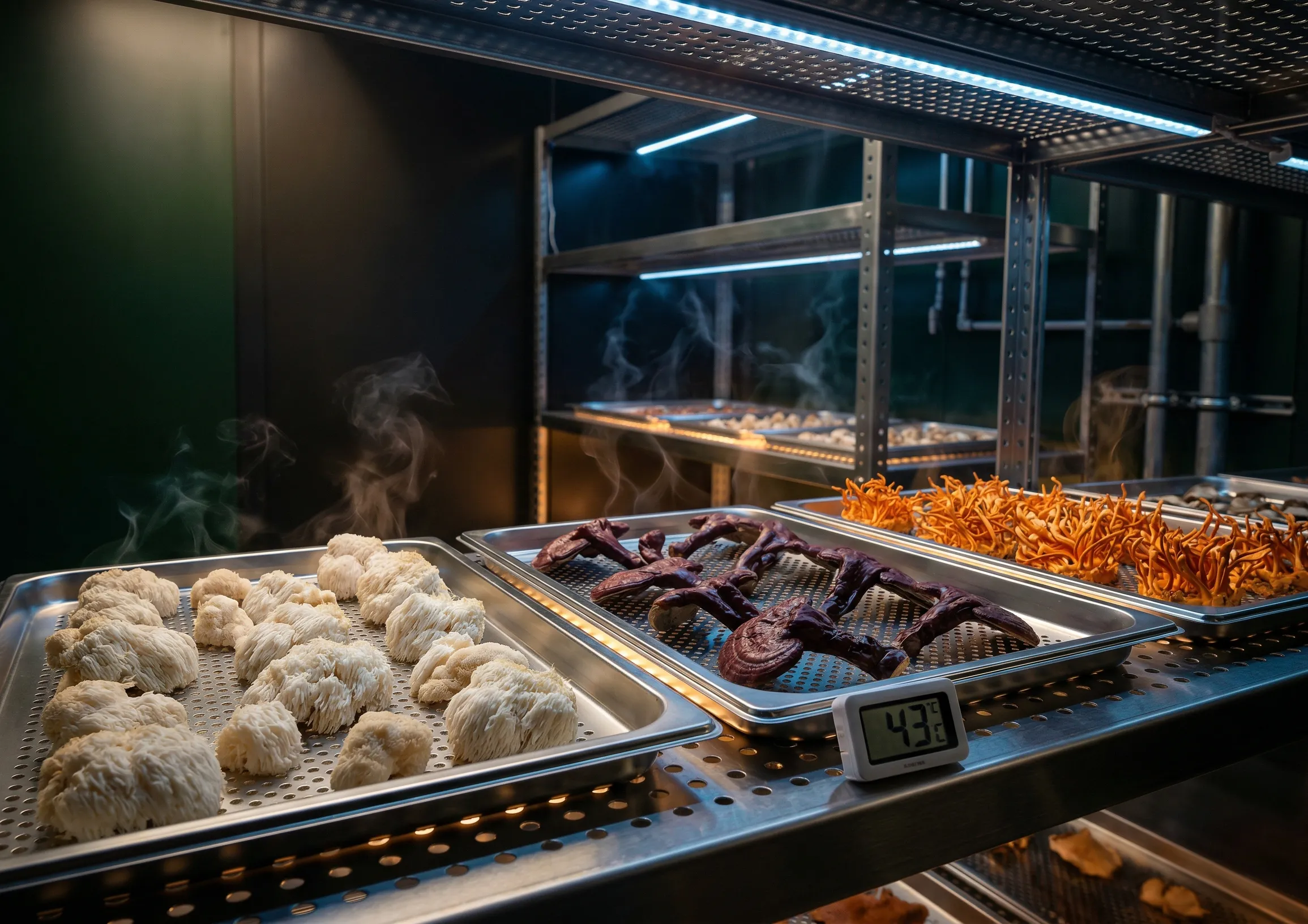
Drying: 40°C constant — the lowest drying temperature in our portfolio, due to cordycepin’s heat sensitivity.
100% fruiting body. Each batch documented with a Certificate of Analysis.
— HOW TO USE —
The most common protocol in research: 45–60 minutes before training or as part of the morning routine. Consistent daily use enhances the cumulative effect.
Classic Espresso Protocol Steep 1 g powder in water at 80–85°C for 5 minutes, add to a double espresso. Caffeine + cordycepin morning combination — a performance‑oriented start.
Hot Brew (Basic) 1–1.5 g / 200 ml · 80–85°C · 5–7 minutes. With coffee, black tea, or plain. Slightly sweet, with the characteristic earthy note of Cordyceps.
Cold Cordyceps Tonic (prepare overnight) 500 ml cold water · 2–3 g · Steep in the refrigerator 10–12 hours · Strain in the morning. Add lemon and ginger. For the morning of training days.
Cacao Adaptogen 1 g Cordyceps + 1 teaspoon raw cacao + 200 ml coconut milk · 80°C · 7 minutes · Add honey. Energy + antioxidant profile. Suitable for both morning and post‑workout recovery.
Sports Combination 0.75 g Cordyceps + 0.75 g Lion’s Mane · 80°C · 7 minutes. Energy + focus. For training sessions requiring sustained concentration.
Taste profile: Slightly sweet, faint earthy note. Pairs exceptionally well with coffee and cacao.
Related reading: What Is Cordycepin? · What Is Ergothioneine? · Does Cordyceps Work Like Caffeine? · Mushroom Protocol for Athletes
About MYCOVITA’s production philosophy, technical infrastructure, and transparency principles: Why MYCOVITA?
Cordyceps militaris is classified as a food under the Turkish Food Codex. The scientific research compiled on this page is drawn from the academic literature and is intended for informational purposes.
MYCOVITA’s Cordyceps militaris products are food products. They do not claim to treat, prevent, or cure any disease. Individuals using blood thinners and those facing surgical procedures are advised to consult their physician.
— SCIENTIFIC REFERENCES —
Jędrejko, K.J. et al. (2021). Cordyceps militaris: an overview of chemical constituents. Foods, 10(11), 2634. Tuli, H.S. et al. (2014). Pharmacological and therapeutic potential of Cordyceps. 3 Biotech, 4(1), 1-12. Zhu, J.S. et al. (1998). The scientific rediscovery of Cordyceps sinensis. Journal of Alternative and Complementary Medicine, 4(3), 289-303. Dudgeon, W.D. et al. (2018). Effects of mushroom supplementation on aerobic performance. Journal of the International Society of Sports Nutrition. Song, J. et al. (2015). Anti-fatigue activity of Cordyceps militaris polysaccharides. International Journal of Biological Macromolecules, 76, 169-175. Chen, S. et al. (2010). Cordyceps militaris enhances aerobic performance. Journal of Medicinal Food, 13(6), 1420-1426. Shin, K.H. et al. (2003). Immunostimulating effects of polysaccharides from Cordyceps militaris. Korean Journal of Pharmacognosy. Zhao, Z. et al. (2015). Protective effects of Cordyceps militaris on kidney injury. Evidence-Based Complementary and Alternative Medicine.
Corporate & B2B: Restaurants, hotels, wellness centers, and bulk supply: [email protected].
You Might Also Like
→ Travel Protocol — How to Use While Traveling
This content is for informational purposes only and does not constitute medical advice. Consult your physician before making any health decisions. Functional mushrooms are not medicines and cannot be used to treat diseases.
Version: 1.0 | Last updated: 20 Apr 2026 | Number of sources reviewed: 10+ | Methodology: Editorial Policy | References: Bibliography